

Is it okay to wear contact lenses while sleeping?
When drowsiness starts to overwhelm you and your eyelids feel heavy, you might be reluctant to force yourself to open your eyes to remove your contact lenses.
But this is something that absolutely needs to be done, according to the latest research from the CDC.
Wearing contact lenses to bed can increase the risk of eye infections eightfold. And with 45 million Americans wearing contact lenses, this infection could cause permanent eye damage.
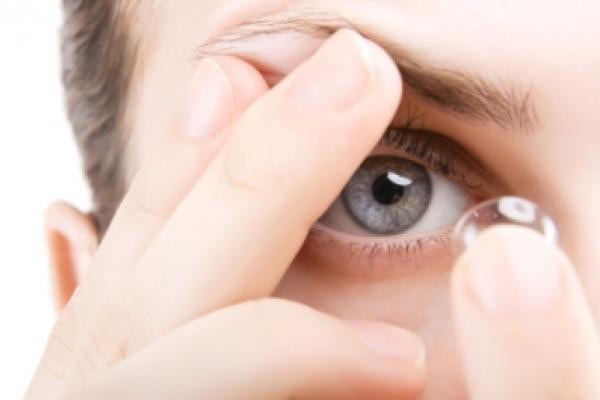
The majority of Americans—75%—need glasses to help with their vision. While most people wear eyeglasses, contact lenses make life easier for the 11% of people with imperfect vision.
Contact lenses offer several safety advantages, especially for athletes or those participating in outdoor activities, as they are less likely to break or fall out.
But the eye is a delicate organ, and needs a proper balance of water, salt, oxygen, and good nutrition.
Contact lenses help you avoid eye strain and see more clearly. But they can also cause the eyeball to "suffocate," especially if worn for too long.
Without enough oxygen, the eyes are vulnerable to all sorts of bacteria that normally live peacefully on the skin or in the mouth—like other bacteria, such as those that cause measles or even sexually transmitted infections—but don't belong in the eyes.
The conjunctiva, the outermost membrane covering the eye, normally provides robust protection against these invading agents.
But a lack of oxygen weakens this protective barrier and creates tiny holes in the cornea, allowing bacteria to enter.
This can cause infectious keratitis, which, if left untreated, can lead to permanent corneal damage and blindness.
In 2010—the most recent year for which the CDC has comprehensive data—one million people visited emergency rooms across the United States for treatment of eye infections.
Only 1,075 of those cases involved contact lenses, but the latest report shows that falling asleep with contact lenses on is the most common reason for contact lens harm to wearers.
"Among the many behaviors that increase the risk of contact lens-related corneal infections, wearing lenses to sleep is one of the most dangerous and one of the most commonly reported behaviors among contact lens users, both adolescents and adults," the CDC report stated.
These occurrences are quite common, with about one-third of contact lens users admitting to occasionally falling asleep or dozing off while wearing their contact lenses.
Researchers have compiled six case studies demonstrating why this habit should be abandoned.
A 17-year-old girl who regularly wore soft contact lenses to bed developed such a severe infection that it formed an ulcer in her eye, causing permanent corneal scarring.
Another man discovered an eye infection after a two-day hunting trip. He noticed a "clicking" sound when he wiped his eyes after showering. The patient also had corneal ulcers, but the condition was far worse.
He required an emergency corneal transplant, and even though he underwent cataract surgery a year later, his vision would never fully recover.
An 18-year-old man had been wearing over-the-counter contact lenses for cosmetic purposes. He usually wore them to bed and had been wearing them for a year. Doctors successfully treated the infection, but his vision was permanently affected.
The CDC notes that all types of contact lenses are regulated and no one should receive them—even if not for vision correction—without a doctor's prescription.
The agency warns that while some types of contact lenses are permitted to be worn overnight, it's best not to.
The FDA classifies overnight-wearing contact lenses in the same category as pacemakers because they pose the “greatest risk of harm,” according to a CDC report.