

Why is Russia rushing to buy gold reserves?
Russia is aggressively selling off US government debt and buying gold. A lot of gold.
According to CNN, official figures show that the Russian Central Bank is aggressively buying gold reserves, adding nearly 29 tons in July, the largest monthly increase since November 2017. Prior to that, the Russian Central Bank added 20 tons of gold in May and 17 tons in June.
|
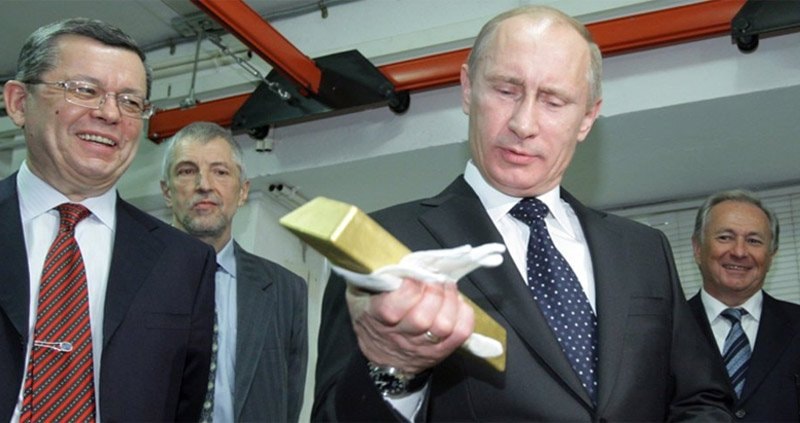
| Putin holds a gold bar while visiting the gold vault of the Central Bank of Russia in Moscow in January 2011. (Photo: Reuters) |
Russia's total reserves of this precious metal have increased by 37% since the beginning of 2016, and are now estimated to be worth $76 billion.
Russia's policy of increasing gold purchases coincides with a sharp reduction in its holdings of US Treasury bonds, which fell by 84% between March and May to $14.9 billion. These bonds now represent only 17% of the Russian Central Bank's reserves.
Eugene Chausovsky, a senior Eurasian analyst at the geopolitical intelligence firm Stratfor, suggests that Russia's aggressive gold purchases are aimed at reducing its dependence on the US dollar amid strained Russia-US relations. Additionally, Moscow may be concerned that sanctions could prevent it from selling US Treasury bonds in the future or prohibit Russian banks from using the dollar for transactions.
According to Chausovsky, Russia benefits from distancing its economy from the US dollar ahead of stricter sanctions from Washington.
Earlier in August, Finance Minister Anton Siluanov announced that Russia would continue selling US debt in response to sanctions. "We have significantly reduced our investments in US assets," Siluanov said. "In fact, the dollar – considered an international currency – is becoming a risky instrument of payment."
The World Gold Council has confirmed that Russia has rapidly climbed the ranks of countries holding the most gold reserves, surpassing China earlier this year. The United States remains the largest gold holder with a total of 9,000 tons.