

Teachers in Nghe An province propose cross-marking in the National High School Graduation Examination.
(Baonghean.vn) - The 2019 National High School Graduation Examination is a matter of concern for officials and teachers working in the education sector, especially after the Ministry of Education and Training introduced six solutions to limit negative practices.
Mr. Nguyen Van Phuong - Principal of Nghi Loc 4 High School:
The exam questions are still too difficult for students' practical skills.
The 2018 National High School Graduation Examination was implemented relatively well. However, there were a few shortcomings that need to be addressed. These include the question setting process for some subjects, especially Mathematics, which was relatively difficult for students' practical abilities. Some invigilators did not fully understand the importance of organizing the exam. Furthermore, it must be acknowledged that the technology used to support the exam has not been modernized.
Based on these shortcomings, I believe the 2019 exam needs attention in several areas. Firstly, the exam format needs to be changed to provide reassurance to teachers, parents, and students; secondly, the awareness of those invigilating the exam needs to be improved; and thirdly, the exam question design must foster students' abilities. Students should not be required to solve hundreds of calculations within a short time (90 minutes).
 |
| Inspecting the examination process at the Nguyen Duy Trinh High School examination site. Photo: My Ha |
Fourth, it is necessary to replace some stages of the exam organization process with technology, such as the grading process, to ensure rigor and fairness, avoiding the manual processes seen in 2018 in multiple-choice exams. For essay exams, technology should also be used in some stages to enhance the Ministry's oversight (perhaps not direct, but indirect).
Fifth, the grading process. Currently, in 2019, the Ministry of Education and Training is promoting cross-grading. This is a rather good model and has been implemented before. However, with the current changes in the examination method, cross-grading is a strength, creating fairness among localities and candidates. Cross-grading should be done in different localities and provinces to ensure objectivity.
TeacherCao Thanh Bao - Principal of Huynh Thuc Khang High School:
The process of grading multiple-choice tests must be as isolated as the test paper preparation process.
Recently, the Ministry of Education and Training sought opinions from provincial education departments regarding the organization of the 2019 high school graduation exam. The proposed solutions did not significantly impact students and mainly focused on technical measures to ensure the exam was conducted seriously, safely, and to prevent cheating.
I also see that the proposed solutions address the problems that have existed for several years. For example, regarding exam organization, although it has been done quite well in recent years, if we strengthen the responsibility of universities in coordinating with localities, and in cases where localities cannot handle it, the Ministry can assign universities to take the lead or coordinate between local universities and universities under the Ministry, this will limit negative aspects in exam organization.
 |
| Checking candidate records is a crucial step in the 2018 National High School Graduation Examination. Photo: My Ha |
Regarding grading, for multiple-choice tests, grading should be organized in clusters and concentrated across multiple provinces. Furthermore, to ensure accuracy and integrity, isolation, similar to the exam paper preparation process, must be maintained. Because the multiple-choice answer sheets are individually named and numbered, the personnel involved in this process need to be completely isolated.
For essay-based exams, we just need to review the procedures to make them more rigorous, from the exam paper assignment process and the paper distribution and grading process. Then, there would be no need to swap papers between different localities; each province would only need two grading centers, ensuring that teachers don't grade papers from their own students or from their own district...
Teacher Tran Ba Tien - Head of Training Department - Vinh University:
Universities need to participate in the grading process because they are responsible for receiving the results.
I believe that, among the proposed solutions for improving the 2019 exam, there are three key areas to focus on: question setting, exam organization, and grading. From our perspective, we support the cluster-based grading system because it would involve the active participation of universities and provincial education and training departments, ensuring objectivity.
At the same time, the cluster-based grading system will lay the groundwork for future progress, as the Ministry of Education and Training aims to establish national research centers. Organizing grading in clusters will gradually allow us to gain experience in grading and evaluating national exams in the future.
In addition, to ensure objectivity, besides the organizational aspects, security measures need to be strengthened to guarantee objective grading in accordance with regulations.
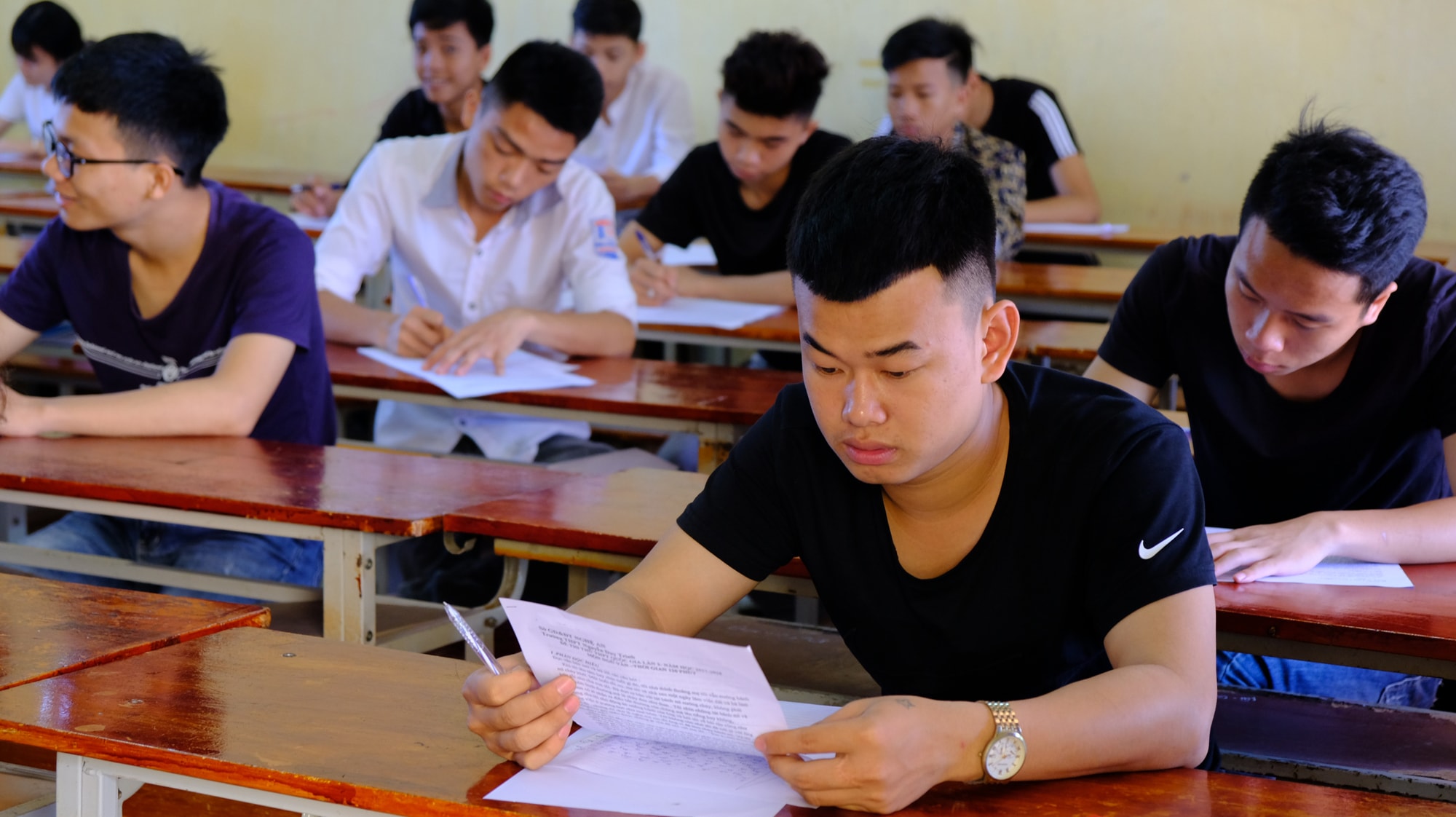 |
| Candidates participating in the 2018 National High School Graduation Examination. Photo: My Ha |
The cluster-based grading process requires close coordination between universities and Departments of Education and Training. This also increases the responsibility of the relevant units, as universities are the recipients of the admission results and are responsible for benefiting from them, thus avoiding collusion.
Assigning the grading process to reputable universities with experience in organizing admissions could minimize, or even eliminate, negative aspects of the grading process.
Mr. Phan Trong Dong - Principal of Dien Chau 2 High School:
The human factor determines the success of the exam.
Maintaining the national high school graduation exam in its 2-in-1 format is reasonable and correct because it avoids disruption to the psychology of students and parents. Changing the exam format and method every year would cause confusion and prevent students from having enough time to review and prepare.
The 2-in-1 exam itself serves both the purpose of recognizing graduation and university/college admissions. However, following the incidents in Ha Giang, Lang Son, and Hoa Binh, shortcomings and limitations in the technical organization of the exam have become apparent. Therefore, the Ministry's solution, focusing on adjusting and changing the exam organization techniques, is correct.
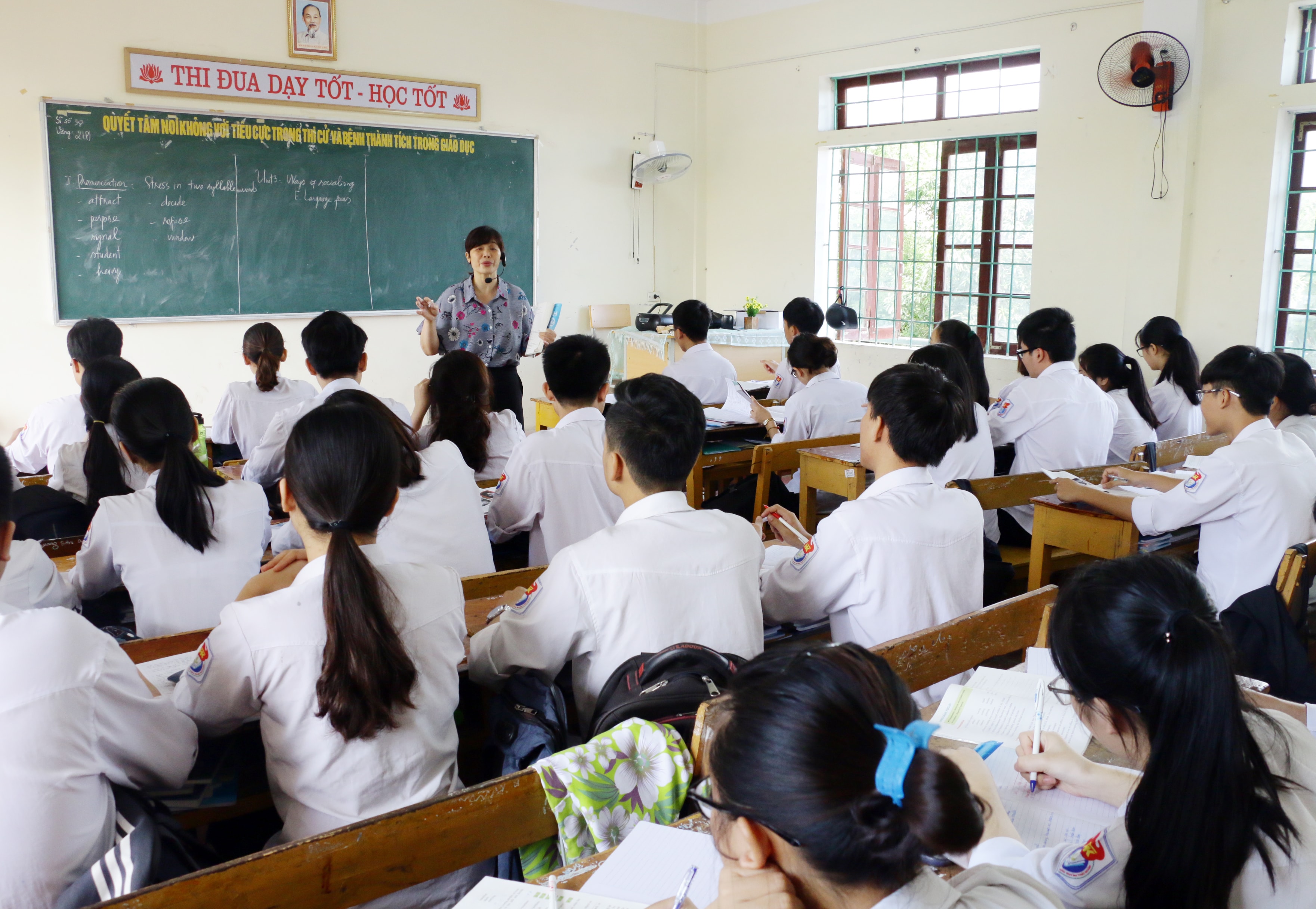 |
| Foreign language class for 12th grade students at Huynh Thuc Khang High School. Photo: My Ha |
In particular, inspection, examination, and supervision work needs to be further strengthened. Along with that, more thorough training is needed on the duties, powers, and roles of each person at each stage of the examination. Regardless of the examination format or the amount of technology and equipment used, the human element remains the most decisive factor, because it is people who will use and implement those technical procedures.
The examination process needs more inspection teams from the Ministry of Education and Training.
In 2019, the Ministry of Education and Training maintained the same method for the national high school graduation exam but implemented adjustments and solutions to mitigate negative aspects of the exam, with six groups of solutions:
Firstly, the Ministry will conduct a comprehensive review of all regulations and procedures of the exam to clarify the provisions in the regulations and guidelines. This will include a clearer definition of the responsibilities of all parties involved in organizing the exam and the penalties for violations.
Secondly: Continue to build a high-quality exam question bank, ensuring that the official exam questions meet the requirements for the nature of the exam and the time allotted for candidates.
Thirdly: Improve and strengthen the application of information technology in all stages of examinations. This includes improving examination software, enhancing security, and supporting fraud detection.
Fourth: Research and consider the organization of exam grading. The Ministry is considering a direction where examiners will not grade papers from candidates in their own province.
Fifth: The selection of personnel involved in the examination process will be given high priority. Simultaneously, more thorough training on examination procedures will be provided to the staff.
Sixth: Improve the quality and effectiveness of inspection and supervision at examination clusters, examination locations, and all examination rooms. In particular, the role of universities will be enhanced in the 2019 examination.