

A collective effort for the cause of nurturing future generations.
(Baonghean) - From 2013 to the present, Resolution No. 29-NQ/TW VIII (11th Congress) on fundamental and comprehensive reform of education and training has become the "backbone" for Nghe An's education to continuously advance.
Alongside its successes, this reform process is still facing many difficulties and challenges that require the efforts of all levels, sectors, localities, and the entire society.
Change in disadvantaged areas
Developing a teaching staff that meets the requirements of innovation – this is a key requirement and also a highlight of Nghe An's education sector's success in recent years, and each locality has its own way of effectively implementing this requirement. In Ky Son district, the "assessment exam" is a good initiative of the Department of Education and Training, organized by schools at the beginning of the school year, to evaluate, organize, and reassign the teaching staff.
Mr. Doan Chi Trung, Principal of Bac Ly 2 Primary School, said: "Through each assessment, the school will plan to improve the quality of teachers through professional development activities, assigning subject groups to mentor and train teachers, or sending teachers for further professional training. Through the assessment, teachers themselves become more aware of the need to innovate and improve their teaching methods."
 |
| Teachers in disadvantaged areas light lamps to teach their students. Photo: Dao Tho |
The "examination" stems from the unfortunate reality of Ky Son district: low quality of mass education; few students admitted to universities and colleges; the number of administrators and teachers is sufficient, but the structure is unreasonable, the quality is low, and many teachers were trained through government-sponsored programs. For example, in the 2013-2014 school year, the entire district still had 284 out of 837 teachers who did not meet the standards, accounting for 33.9%, and 125 out of 468 secondary school teachers, accounting for 26.7%, were trained through government-sponsored programs.
According to Mr. Nguyen Hong Hoa, Head of the Education and Training Department of Ky Son District: Thanks to the examinations, the quality of teachers has improved. Currently, 59.6% of primary school teachers in the district have university degrees, while only 4.7% have intermediate-level qualifications; 87.8% of secondary school teachers have university degrees, while only 10.9% have college degrees... Many teachers who are weak and unable to meet job requirements have been reassigned to other jobs such as support staff, librarians, and school equipment managers. From the 2013-2014 school year to the present, the district has transferred 31 teachers to support staff positions, and 8 have retired due to not meeting requirements. In the 2018-2019 school year, 22 teachers voluntarily requested transfers because they felt they could not meet job requirements.
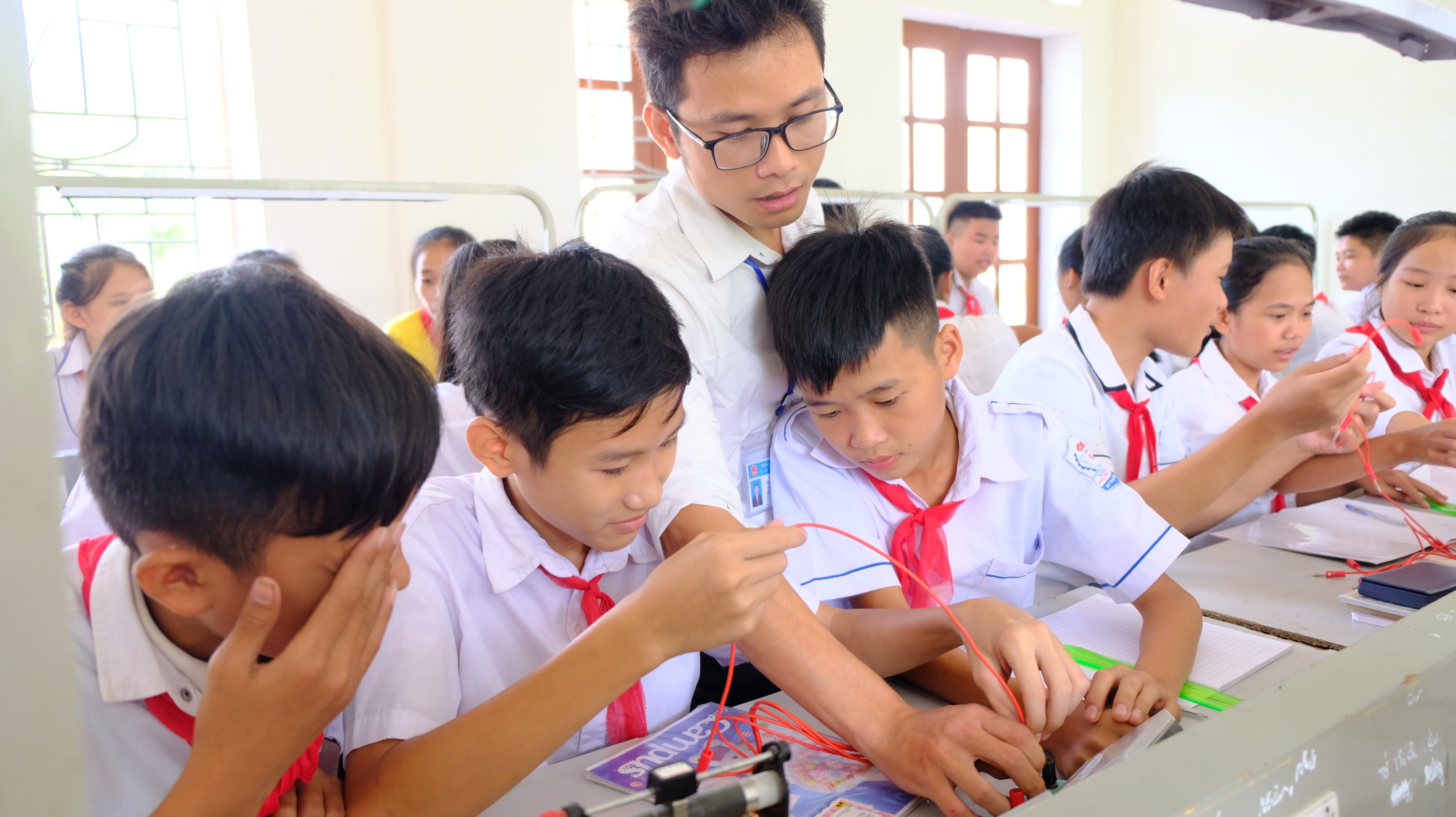 |
| Students of Hoi Nga Ethnic Boarding Junior High School during a physics practical session. Photo: My Ha |
Besides developing the teaching staff, changing the school model system is also a highlight and creates innovation, especially in disadvantaged areas... Currently, Nghe An has 6 ethnic boarding secondary schools that have been invested in on a large scale and are well-equipped.
In addition, the province has also merged and established 33 ethnic boarding schools and 84 primary, secondary, and junior high schools with ethnic minority boarding students... This new model not only maximizes the enrollment of children of school age and maintains student attendance but also significantly contributes to improving the quality of education in mountainous areas.
In Que Phong district, the Que Phong Ethnic Boarding Junior High School has become a shining example of the district's education sector. In the last three years alone, the school has consistently ranked first in the district in the percentage of students achieving excellent results at the district level. The school has 15 students who excelled at the provincial level, and over 200 out of 290 students have been recognized as outstanding or advanced students. The percentage of students admitted to the provincial Ethnic Boarding School is also consistently among the highest.
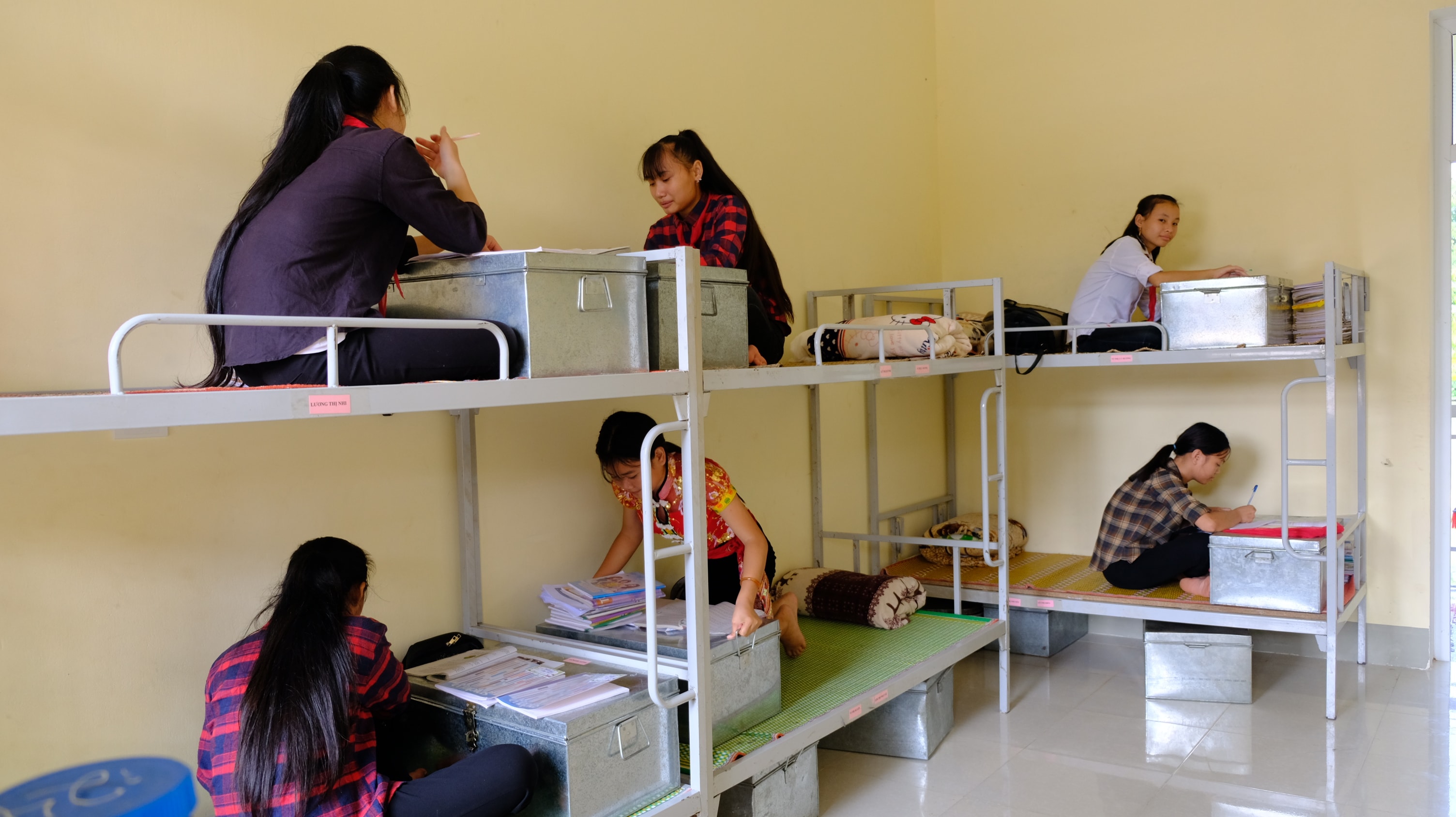 |
| A spacious dormitory room for boarding students in Quy Chau. Photo: My Ha |
Over the past five years, effectively implementing educational reforms in accordance with Resolution 29-NQ/TW, Nghe An province has added 228 schools meeting national standards, bringing the total number of schools meeting standards to 1,043 as of June 30, 2018, reaching 68.66% (compared to 52.95% in June 2013); 866 schools have undergone external accreditation, reaching 54.9%; the quality of universal education has achieved breakthrough results; the quality of general education has been firmly established, with students consistently ranking among the top 3 in the country in national and international competitions.
Nghe An province has also done quite well in the area of student placement. Therefore, in mountainous areas, the percentage of junior high school students transitioning to vocational training reaches 50-60%. At the high school level, the number of students participating in the national high school graduation exam but not intending to apply to universities or colleges has increased: 37.2% in 2015; 42.2% in 2016; and 37.3% in 2017.
Over the years, the sector's activities have also undergone many innovations, proactively and positively, meticulously preparing the conditions in terms of policies, directions, personnel, and facilities to approach and implement the new textbook program in the 2019-2020 school year with the main goal of developing the qualities and competencies of learners and human resources.Notably, the decentralization of autonomy to educational institutions and teachers in deciding on curriculum distribution and classroom organization methods aligns with a learner-centered approach.
Implement integrated, interdisciplinary teaching themes; incorporate life skills and values education into various subjects; enhance experiential activities and practical applications; deploy educational models in schools linked to local production and business practices; and actively participate in science and technology competitions.
Innovations in teaching methods, techniques, and assessment are oriented towards developing students' competencies... The network of vocational education institutions is also increasingly strengthened, and the scale and quality of training are gradually improving, initially meeting the demand for technical personnel in the labor market both within and outside the province.
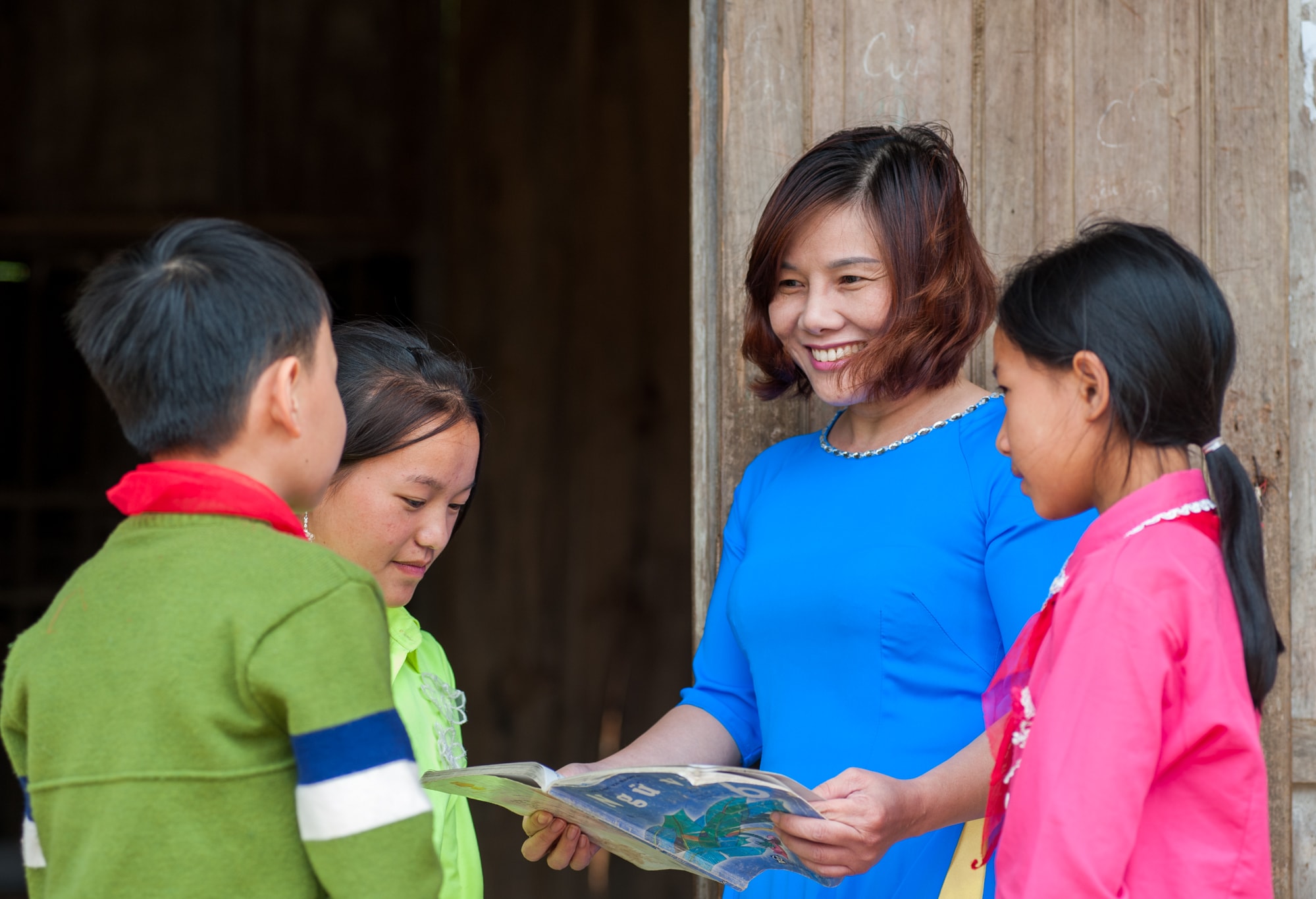 |
| The teacher and students discuss the lesson together. Photo: HP |
Aiming for a bright spot, a regional center.
At the conference summarizing the five-year implementation of Resolution No. 29-NQ/TW, recently organized by the Nghe An Provincial Party Committee, the subjective causes were clearly identified: Some Party committees, governments, agencies, and units have not truly considered innovation as a regular, long-term task, and have not been diligent in their leadership and guidance; some management staff and teachers have limited capacity, so their ability to adapt to innovation is not keeping pace with the current period; limited resources and the vast scale and network of schools have led to many difficulties in school infrastructure... This has hindered the innovation process and the goal of making Nghe An a shining example and center of education and training in the North Central region by 2020.
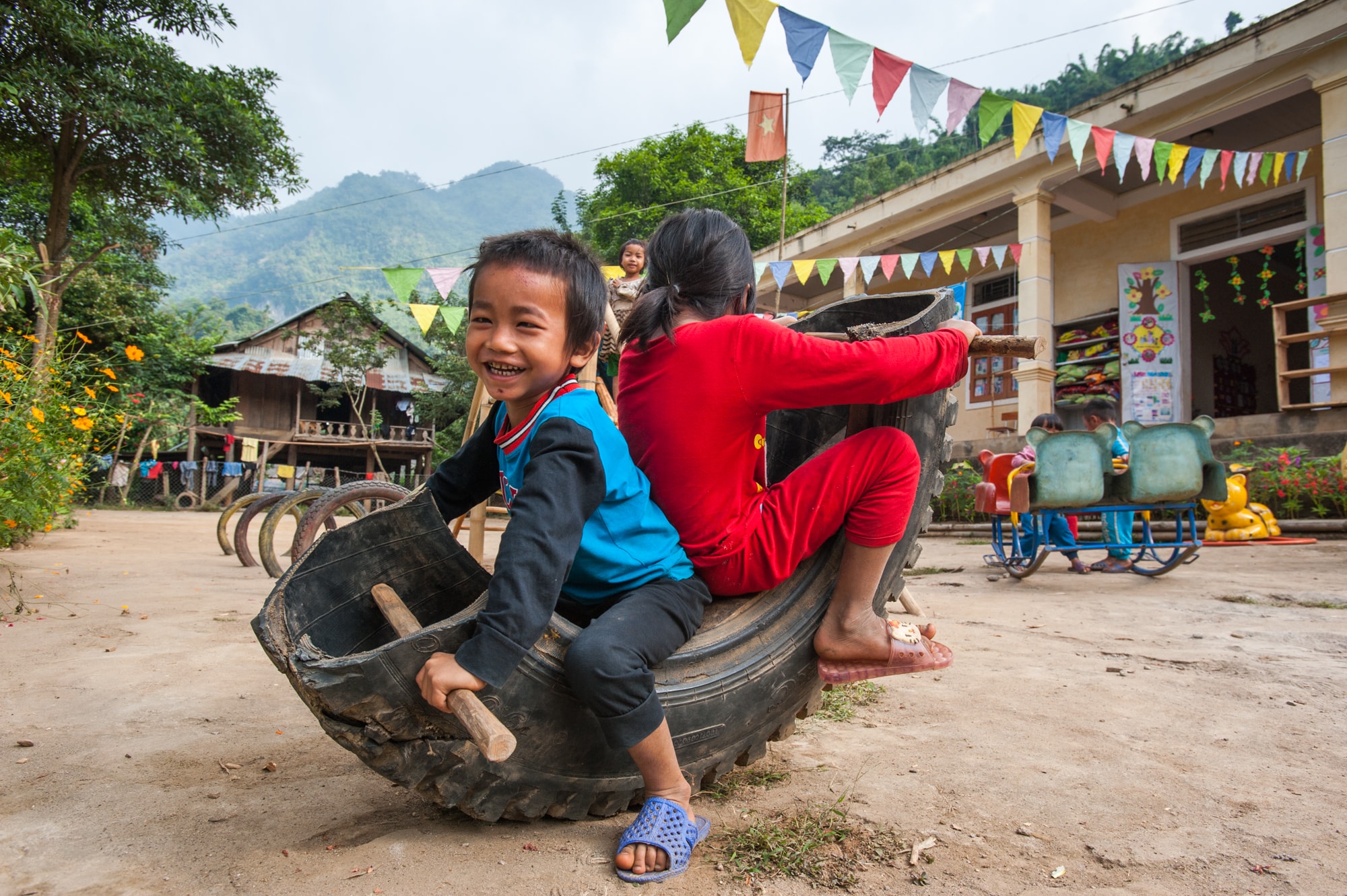 |
| Preschool children in mountainous areas and toys made by teachers and parents themselves. Photo: D.T. |
Also at the conference, the Standing Deputy Secretary of the Provincial Party Committee and Chairman of the Provincial People's Council, Nguyen Xuan Son, emphasized the spirit of educational reform that Nghe An will focus on in the coming period: Party committees, governments at all levels, agencies, and units must uphold their responsibilities, identifying education and training as a top national priority; investing in education is investing in development, and it should be given priority in all socio-economic development plans and policies.
Continue to innovate in educational management, increase the autonomy and accountability of units; overcome the tendency towards superficial achievements and formalism in leadership, direction, and organization of educational and training work.
Implement specific and decisive solutions to build a high-quality teaching staff with an appropriate structure; maintain and improve the overall quality of education at all levels, the quality of universal education, and the streaming of students after graduating from lower secondary school.
Strengthening legal education, ethics, character development, and life skills for students. Coordinating the effective implementation of the three educational environments: school, family, and society. Prioritizing the promotion of learning and talent, and building a learning society... Comprehensive educational reform requires the efforts of all levels, sectors, localities, and the entire society.