

The "chronic" ailment of teachers.
A common ailment among teachers after many years in the classroom is hoarseness. Hoarseness in teachers is usually caused by three main factors: chronic laryngitis, vocal cord nodules, and vocal cord polyps.
Inside the larynx is a structure called the vocal cords. As air is inhaled and exhaled, it vibrates the vocal cords, creating sound. Speaking excessively, loudly, shouting, or speaking for extended periods can damage the vocal cords (e.g., teachers, actors, salespeople, stock exchange employees...).
When using a vocal cord endoscope, various types of lesions can be seen on the vocal cords, such as: thickened and stiff vocal cords with poor vibration (in chronic laryngitis), fibrous nodules on the vocal cords (in vocal cord nodules), or a "fleshy growth" on the vocal cords (also known as a vocal cord polyp).
Lesions such as vocal cord nodules or polyps, if left untreated for a long time, or treated incorrectly, or if surgery is flawed, will cause the vocal cords to become "recessed" (at this point, the patient will have a "feminine" voice, meaning men speak with a female voice and women speak with a male voice).
Chronic laryngitis:
Prolonged and excessive talking can cause chronic inflammation of the laryngeal mucosa, leading to hoarseness, sometimes loss of voice, or a raspy voice. This condition is easily detected during laryngoscopy. Once diagnosed, the following treatment methods should be followed:
- Rest, limit talking, avoid talking too much or too loudly, and use assistive devices such as microphones and speakers.
- Drink plenty of fluids, especially warm tea. Supplement with vitamins and fresh fruits.
- Regularly clean your nose and throat. Treat and cure conditions such as sore throat, sinusitis, and tonsillitis completely.
- Avoid irritants: cold, dust, cigarette smoke; wear a mask, and wear a warm scarf.
- Apply a warm compress to the neck, rinse your mouth frequently with tea, and suck on a mixture of honey and lemon.
- Avoid drinking ice water and spitting, as these can affect the vocal cords.
- Create a balance between pronunciation and breathing.
- Steam inhalation with aromatic leaves containing volatile plant-based antibiotics such as: chrysanthemum leaves, lemon leaves, pomelo leaves, lemongrass... Nebulization, topical application, and daily laryngotracheal infusion.
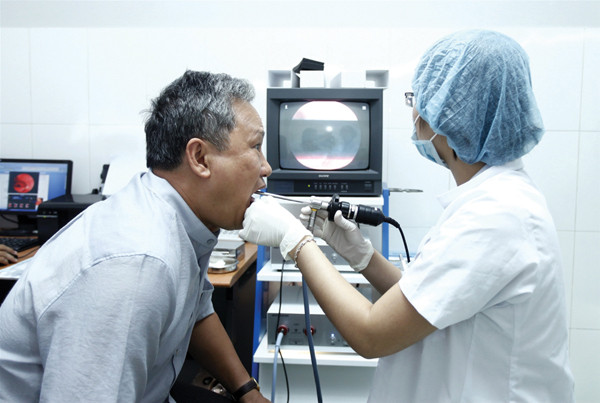 |
| Chronic inflammation of the laryngeal mucosa is easily noticeable during endoscopic examination of vocal cord nodules. |
The presence of nodules on both vocal cords causes them to close improperly or vibrate unevenly. This results in a heavy voice, progressively hoarseness, shortness of breath, and strain when speaking. The degree of hoarseness depends on the size of the nodules. Hoarseness worsens with colds, sore throats, or excessive shouting and singing. The following treatment principles should be followed:
- Temporarily stopping speaking: This is the first treatment step to improve voice quality by reducing edema and shrinking nodules, but hoarseness does not completely disappear. Hoarseness may gradually worsen, except by adjusting the frequency and intensity of speech (i.e., changing the habit of speaking loudly or excessively).
- Using anti-inflammatory medication: This reduces swelling, thereby alleviating hoarseness, but it does not address the root cause of hoarseness.
- Voice training: A treatment method. The purpose of voice training is to help patients recognize the situation and bad speaking habits that cause vocal cord nodules, thereby helping them find ways to reduce the impact on the vocal cords. However, this method is only effective when detected early and requires a lot of time and effort. Voice training helps the vocal cords become softer and more flexible, thereby improving the quality of the voice.
- Nodular resection: In most cases, when nodules have been present for a long time and other treatments have been repeated many times without improving hoarseness, this method will address the root cause of hoarseness.
Vocal cord polyps:Besides hoarseness, patients also feel like something is stuck in their throat, requiring frequent coughing and spitting. The definitive treatment is endoscopic polyp removal.