

Key policies effective from January 2019
Many prohibited behaviors on the internet, increases in regional minimum wages, the CPTPP Agreement... are some of the policies that came into effect on January 1, 2019.
Regional minimum wage
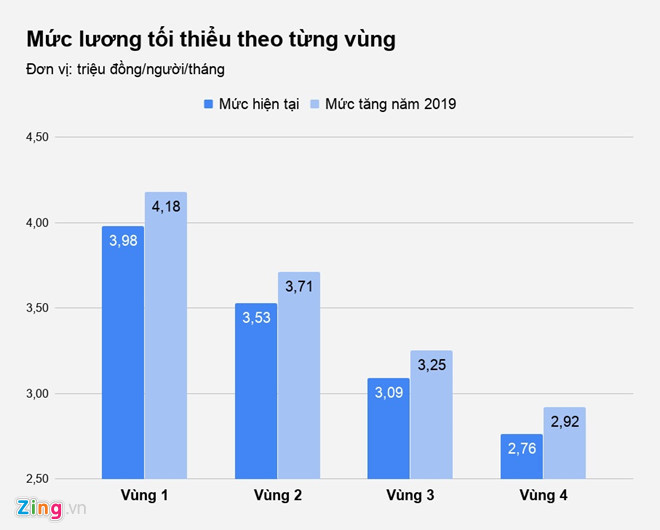
Government Decree No. 157/2018/ND-CP, which stipulates the regional minimum wage levels from 2019, will take effect from January 1st. Accordingly, employees working under labor contracts will receive a higher minimum wage ranging from 160,000 VND to 200,000 VND, depending on the region.
|
| The regional minimum wage was increased from January 1, 2019. Photo:Quang Thắng. |
Clause 3 of Article 24 stipulates that complaints that do not fall within the jurisdiction of the receiving authority will not be processed. This applies even if a complaint that does not fall within the jurisdiction of the receiving authority is sent simultaneously to multiple places.
|
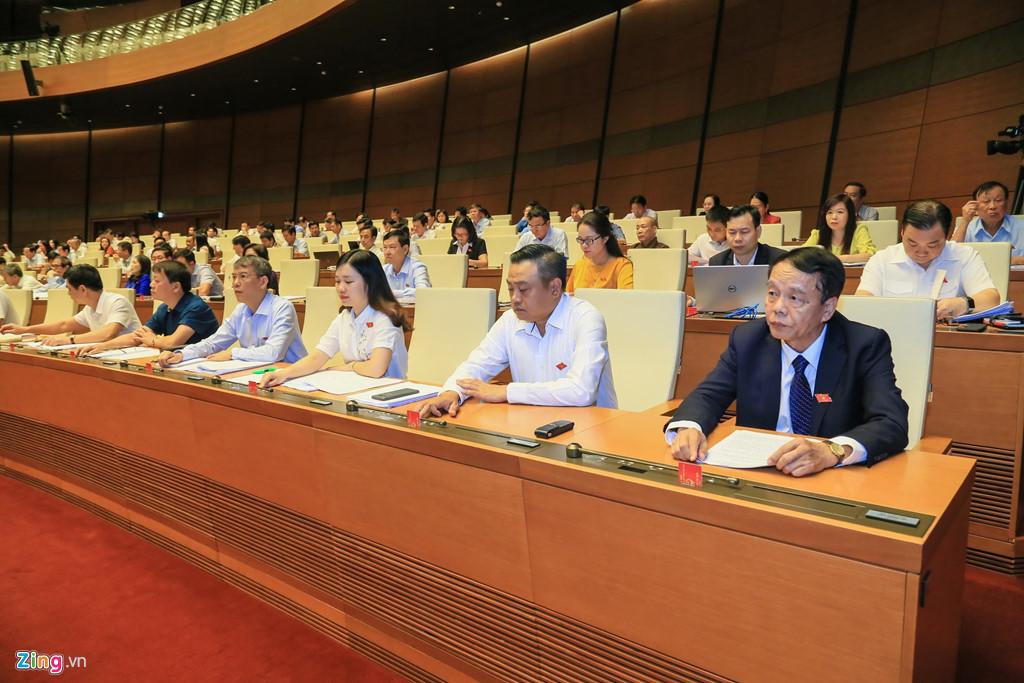
| The Law on Whistleblowing (amended) was passed by the National Assembly on June 12, 2018. Photo:Ming army. |
In cases where an organization or individual has the authority to handle the complaint or has provided guidance, but the complainant still sends the complaint to an unauthorized party, the receiving party will not process the complaint.
Clause 1 of Article 25 stipulates that when receiving information containing allegations but the name and address of the complainant are unclear, or the complainant cannot be identified, or the complainant uses someone else's name, the competent agency, organization, or individual shall not process the complaint.
However, if the information contains clear allegations and specific documents and evidence, the receiving agency will conduct an inspection or investigation within its jurisdiction, or forward it to the competent authority for inspection or investigation to serve management purposes.
The time limit for resolving a complaint is no more than 30 days from the date of receipt of the complaint (the old law stipulated 60 days). For complex cases, the resolution period may be extended once, but not exceeding 30 days. For exceptionally complex cases, the resolution period may be extended twice, each time not exceeding 30 days.
Many behaviors are prohibited in cyberspace.Effective from January 1st, the Cybersecurity Law, comprising 7 chapters and 43 articles, regulates activities related to protecting national security and ensuring social order and safety in cyberspace; and the responsibilities of relevant agencies, organizations, and individuals.
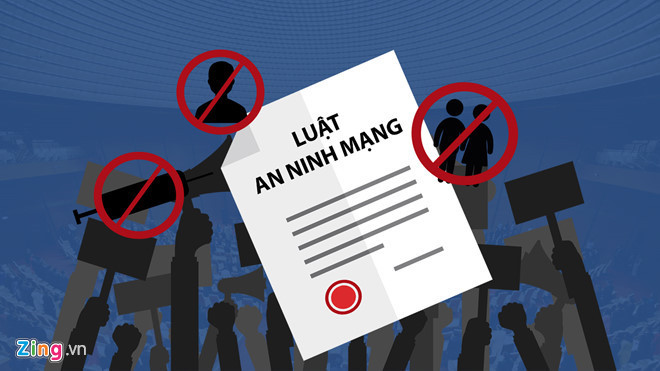
Notably, six groups of behaviors are strictly prohibited in cyberspace, including:
1. Using cyberspace, information technology, and electronic means to violate national security and social order; engaging in anti-state activities; distorting history, insulting religion, discriminating on the basis of gender, or racial discrimination; inciting riots, disrupting security, or disturbing public order.
|
| Six types of behavior are prohibited online. (Image)Huu Nhan. |
Disseminating false information, defamation, and slander; violating economic management order, prostitution, social vices, human trafficking, and inciting, luring, or instigating others to commit crimes.
2. Engaging in cyber warfare, cyber attacks, cyber terrorism, cyber espionage, and cybercrime; causing incidents, attacks, intrusions, hijacking, falsification, disruption, paralysis, or destruction of information systems critical to national security.
3. Producing or using tools, equipment, software, or engaging in any behavior that obstructs or disrupts the operation of computer networks or telecommunication networks; distributing harmful computer programs that affect the operation of computer networks, telecommunication networks, or electronic devices; or illegally accessing the computer networks, telecommunication networks, or electronic devices of others.
4. Resisting or obstructing the activities of cybersecurity forces; illegally attacking, disabling, or rendering ineffective cybersecurity measures.
5. Exploiting or abusing cybersecurity activities to infringe upon national sovereignty, interests, security, social order and safety, the legitimate rights and interests of organizations and individuals, or for personal gain.
6. Other acts using cyberspace that infringe upon national security, social order and safety, the legitimate rights and interests of organizations and individuals, or violate the provisions of this law.
Article 9 of the law also stipulates the handling of violations of cybersecurity. Specifically, anyone who violates the provisions of this Law shall, depending on the nature and severity of the violation, be subject to disciplinary action, administrative penalties, or criminal prosecution; if damage is caused, compensation must be paid in accordance with the law.
Nearly 100 tariff lines cutThe Comprehensive and Progressive Trans-Pacific Partnership Agreement (CPTPP), ratified by the National Assembly on November 12, 2018, will come into effect on January 14, 2019.
|
| The CPTPP agreement helps improve the business environment. Photo:Hoang Hiep. |
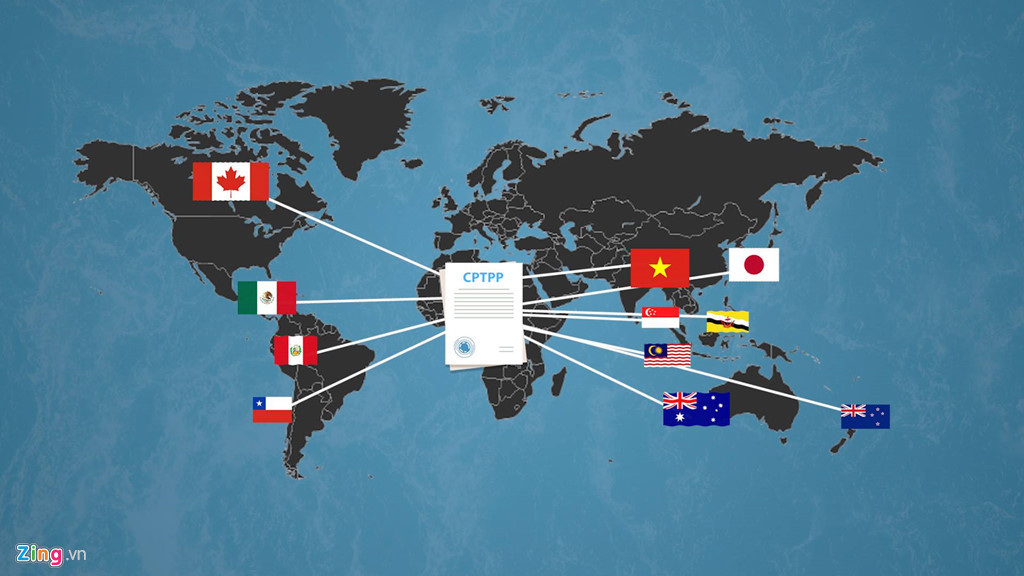
Prior to Vietnam, six countries had ratified the CPTPP: Mexico, Japan, Singapore, New Zealand, Canada, and Australia. The agreement came into effect for these six countries on December 30, 2018.
Vietnam has committed to reducing nearly 100% of tariff lines; commitments regarding public procurement; commitments regarding the state-owned enterprise sector; commitments to allowing workers to establish workers' organizations that are not necessarily affiliated with the Vietnam General Confederation of Labor; commitments on environmental issues, e-commerce, etc.
Vietnam will amend several laws and decrees during the legal review process to align with CPTPP regulations, directly applying many commitments, particularly in the areas of service and investment liberalization.
Institutional reforms help improve the business environment, maintain and increase foreign and domestic investment, focus on export items to take advantage of the CPTPP market, and enhance the level and competitiveness of Vietnamese goods; on the other hand, they attract high-tech investment.
Businesses exporting and importing within the CPTPP bloc will not be subject to tariffs, which will help shift supply chains and create opportunities for Vietnamese businesses to participate. Regarding exports, there will also be benefits, primarily from markets without FTAs such as Canada, Mexico, Peru, and even Japan.
In addition, many laws and decrees also came into effect in January, such as: the Law on National Defense, the Law on Physical Education and Sports, the Law amending some laws related to planning, and the Decree detailing regulations on the implementation of grassroots democracy at the workplace...