
Is it difficult to issue fines for traffic violations "on the spot" (informal enforcement)?
(Baonghean) - After more than a year of implementation, the traffic camera system has gradually proven effective in detecting and handling traffic safety violations, contributing to raising people's awareness when going out on the road. However, the actual implementation still faces many difficulties that need to be addressed soon.
Initial effectiveness
"Cold" processing of traffic violations can be understood as a form of administrative punishment in the field of road traffic through the use of results obtained from technical equipment, specifically video recording devices (cameras). Through camera images, the extraction process ensures that all four legal elements are recorded: the location and time of the violation, the type of violation, and the license plate number of the offending vehicle. Based on this, the vehicle registration and management department will verify the vehicle owner; coordinate with the local police force to send a notice inviting the violator to the Traffic Police Department headquarters for questioning.
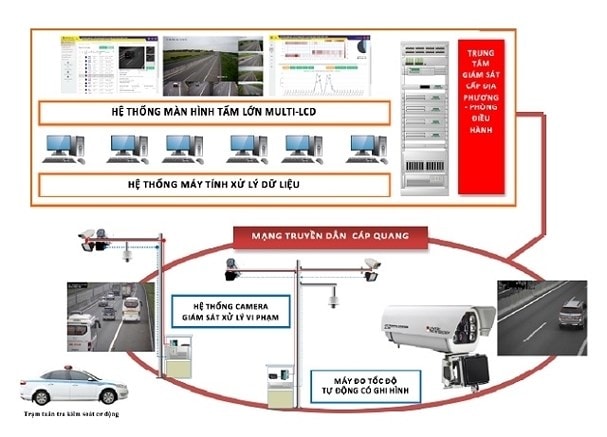 |
| This diagram illustrates the operating method of the intelligent traffic monitoring system installed on National Highway 1. |
The use of camera systems to penalize traffic violations is specifically regulated in Clause 1, Article 64 of the Law on Handling Administrative Violations. According to Lieutenant Colonel Le Hong Son, Deputy Head of the Traffic Police Department of the Provincial Police: "The 'cold penalty' system is essentially the same as the normal system, but it provides additional images so that violators are aware. This system operates 24/7, helping road users understand that there is always a monitoring system in place, thus improving their awareness of law compliance. Furthermore, it raises awareness among vehicle owners when lending or transferring their vehicles, because when a vehicle violates the law, the traffic police will only contact the original owner."
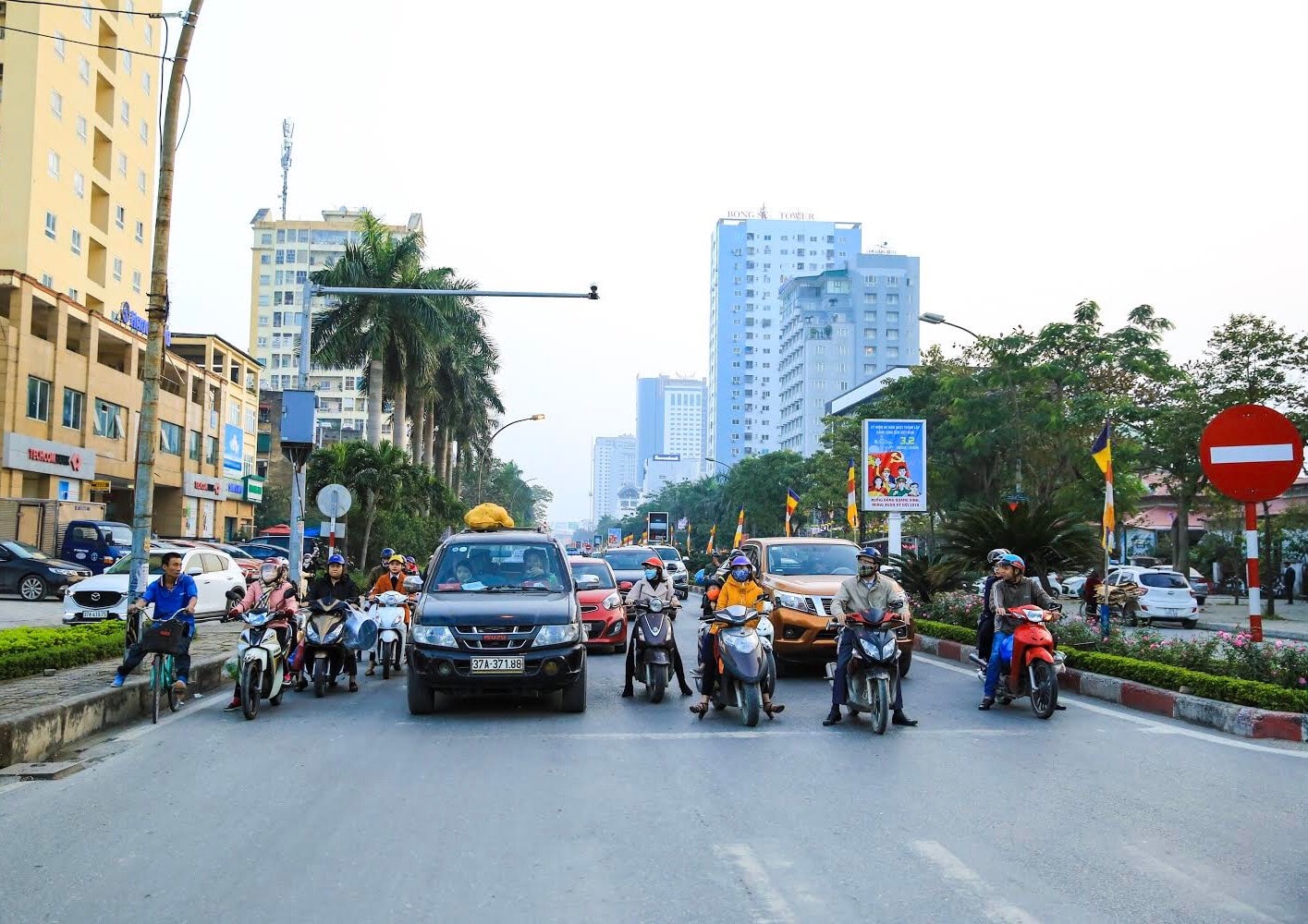 |
| Traffic surveillance camera at the Quang Trung-Nguyen Thai Hoc intersection. Photo: Hai Vuong |
Currently, the unit is handling violations through video recording and "on-the-spot fines" mainly on major traffic routes in Vinh City, including: the intersection of Quang Trung and Nguyen Thai Hoc streets; the intersection of Le Mao extended and Tran Phu streets; the Vinh Market intersection; and the Vinh University intersection. These are routes with high traffic density and are always "hot spots" with a high potential for traffic accidents.
The "on-the-spot fine" system, in addition to reducing the density of traffic police on the route, also demonstrates transparency and reduces the likelihood of corruption such as bribery, thereby raising awareness among vehicle owners when participating in traffic. The number of traffic law violations by vehicle owners has decreased significantly, even in cases where there are no law enforcement officers present. According to statistics from the time of implementation, from August 2017 to the present, at locations with "on-the-spot fine" recording, the number of violations requiring processing has decreased by over 25% compared to the same period before.
Mr. Nguyen Tinh Cuong (residing in Quy Hop district), who was previously fined for running a red light as recorded by a camera, said: "It was only 'because I was in a hurry' that last month I had to travel from Quy Hop to the provincial traffic police department to sign and pay the fine. Therefore, now, no matter what road I'm on, whether there are traffic police or cameras, I always observe and control my speed."
There are still many difficulties.
It must be acknowledged that traffic fines issued remotely have gradually proven effective in detecting violations, contributing to raising public awareness when on the road. However, in practice, there are still many difficulties. According to Lieutenant Colonel Nguyen Nam Hong, Deputy Head of the Road and Rail Traffic Police Department (Provincial Police), one of the biggest difficulties in remote fine enforcement is identifying the violator or vehicle owner due to the inability to find the owner's address. Currently, the buying and selling of motor vehicles, where owners only complete the purchase and sale procedures without transferring ownership as required by current regulations, is still quite common. In addition, vehicle owners changing residences, being away for extended periods, or providing incorrect addresses mean that by the time violators receive notifications, too much time has passed, making it difficult to process administrative fines.
Mr. Tran Minh, the owner of a self-drive car rental business in Vinh City, said: "According to strict regulations, customers renting a car must have all the necessary documents, especially a driver's license. However, there have been cases where customers violated traffic rules while driving and were caught on camera. As the car owner, I am the one who receives the notification. However, in this case, it is very difficult to find the customer to hold them accountable for their violation, because at that time we no longer have any of their documents or belongings. Or even if we can contact them, they say they are busy or away, so we are helpless." According to Mr. Minh, the purpose of the penalty is to raise awareness among traffic participants. However, I am not the one who violated the rules. So, in this case, is this penalty targeting the right people?
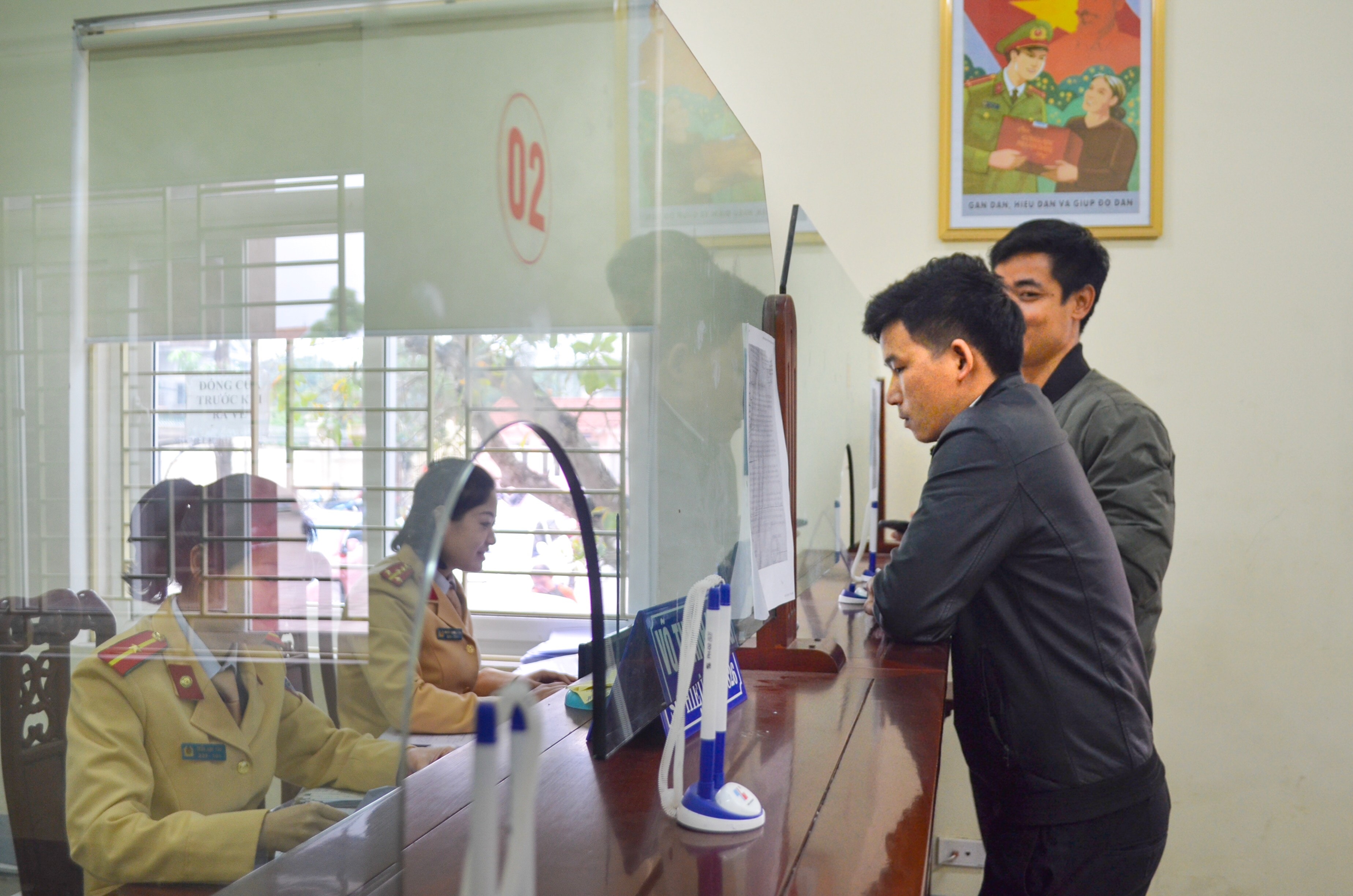 |
| The offender completes the procedure to pay the fine at the Road and Rail Traffic Police Department (Provincial Police). Photo: Dang Cuong |
Under current regulations, many road users believe that paying fines becomes even more difficult if the violation occurs in another locality. Reflecting this, Mr. Cong Hung (Da Nang) said: "When I received a notification from the Traffic Police Department of Nghe An province via mail regarding a traffic violation, according to regulations, I had to be present within 7 days to cooperate in resolving the issue. Because of the long distance, limited time, and being busy with end-of-year work, I called to inquire about the procedure for paying the fine through a bank or treasury, but was told I had to go to Nghe An to cooperate in the process and sign the penalty decision. 'I think that's too difficult. There needs to be a more convenient method for people to pay fines; this makes it hard to even fulfill my obligation,' Mr. Hung said."
Regarding these issues, Lieutenant Colonel Nguyen Nam Hong stated: Currently, the department has instructed the Vehicle Registration and Management Team, upon receiving applications for vehicle transfer or relocation, to check the "Administrative Violation Processing" software to verify any previous violations captured on camera. If violations are found, a violation notice will be printed, and the vehicle owner and related parties will be requested to cooperate in resolving the violation. Only after the administrative violation has been processed will the vehicle owner be allowed to proceed with the vehicle transfer or relocation registration as per regulations.
“Going forward, the entire National Highway 1A will be equipped with cameras. We have also proposed to higher authorities measures such as: Requiring all transactions involving the buying and selling of vehicles (initially cars) to comply with legal regulations on ownership transfer. Based on that, each vehicle owner can be assigned an email address with complete information to facilitate sending violation notices and receiving feedback from violators. This will improve the effectiveness of state management of traffic vehicles and the handling of violations, and it will also make it easier for violators to fulfill their responsibility to pay fines,” said Lieutenant Colonel Nguyen Nam Hong.
Traffic violations are being processed through video recording and "cold fines" (fines issued after the fact), primarily on major traffic routes in Vinh City. From August 2017 to the present, the Nghe An Provincial Police's traffic police have sent notifications to the residences of over 500 violators. However, only about 200 organizations and individuals with violating vehicles have cooperated in the processing of these cases, resulting in fines totaling over 300 million VND.
.
Dang Cuong