
The Victory of Ngoc Hoi - Dong Da: A glorious chapter in the nation's history.
(Baonghean.vn) - 230 years ago, Emperor Quang Trung led his army north to fight against the 290,000 invading Qing Dynasty troops, achieving the victory at Ngoc Hoi - Dong Da. This is one of the most glorious victories in the history of resistance against foreign invaders and will forever be a source of national pride.
WinHistory of Ngoc Hoi - Dong Da
230 years ago, in the spring of 1789, under the brilliant leadership of the hero Quang Trung - Nguyen Hue, the Tay Son rebels achieved the Ngoc Hoi - Dong Da victory with an unprecedentedly swift march, crushing the Manchu invaders, liberating Thang Long, and regaining independence and freedom for the nation.
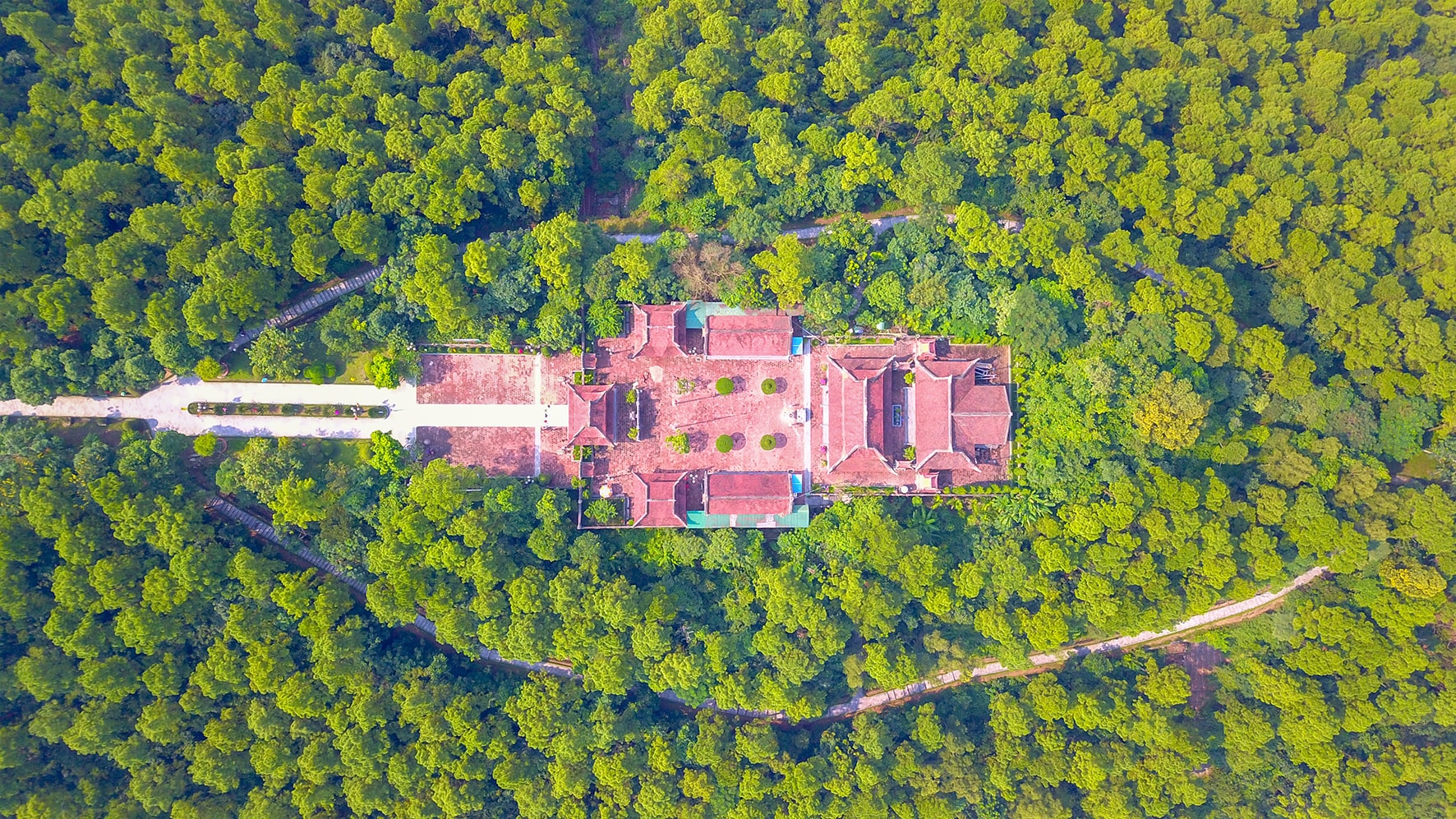 |
| The temple dedicated to Emperor Quang Trung is located on Dung Quyet Mountain (Vinh City) at an altitude of 95m above sea level. (Photo: Archival material) |
Upon receiving this news, Prince Nguyen Hue of Bac Binh decided to hold a coronation ceremony, taking the regnal name Quang Trung, and led his army north. After only a short time, in early January of the year Ky Dau (1789), the Tay Son rebels arrived at Tam Diep, joining forces with General Ngo Van So to prepare to advance into Thang Long and declare war on the Qing army.
On the night of the third day of the Lunar New Year in 1789 (Year of the Rooster), the Tay Son army surrounded and controlled the Ha Hoi fort (about 20 km from Thang Long), threatening, controlling, and dispersing a large Qing army force, marking the beginning of the campaign to liberate Thang Long. On the fourth day of the Lunar New Year in 1789, the rebel army approached the Ngoc Hoi fort, coordinating with other troops to prepare to capture and liberate Thang Long.
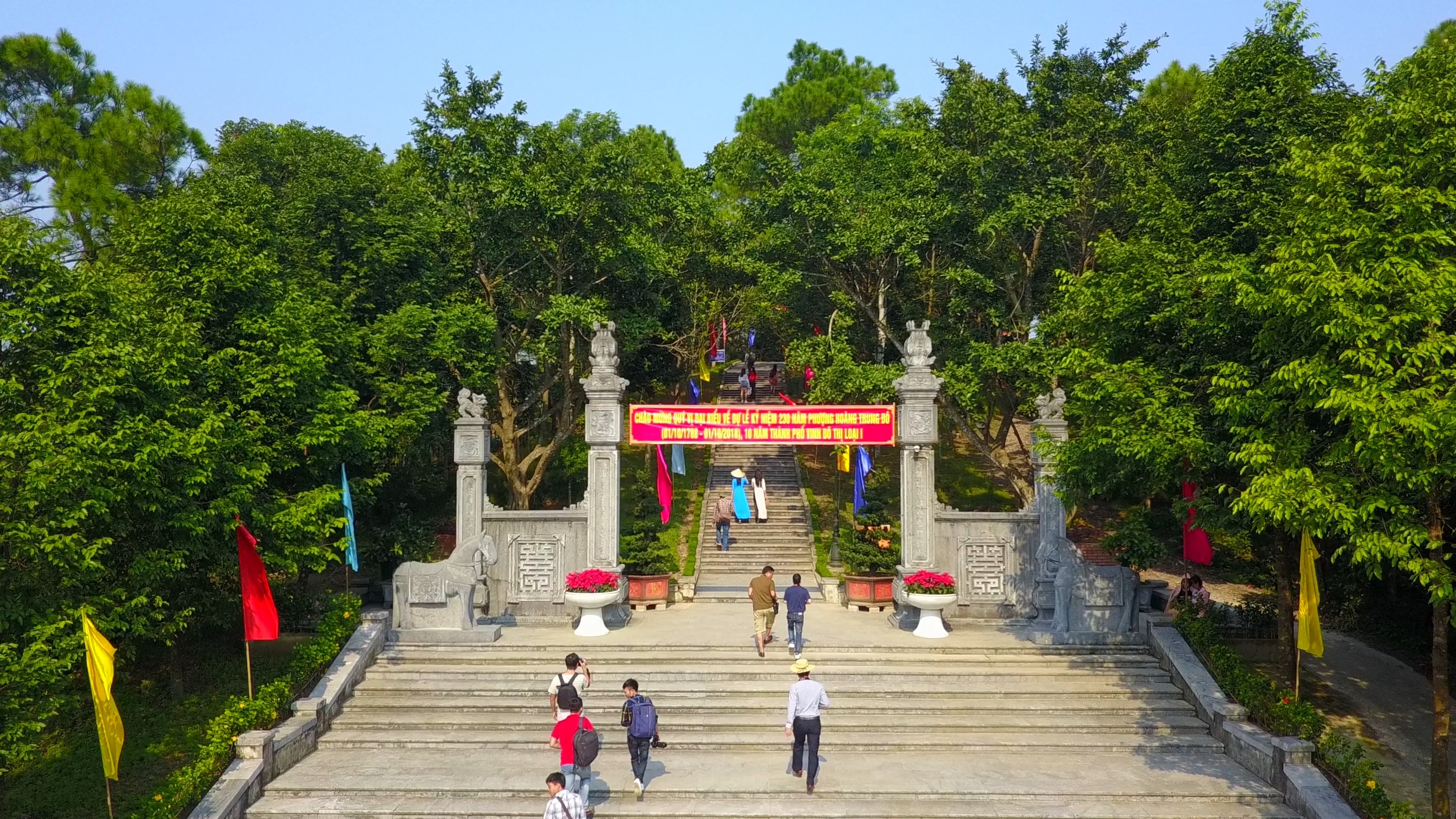 |
| Tourists visiting the Temple of Emperor Quang Trung. Photo: Archival material. |
Early in the morning of the 5th day of the Lunar New Year of the Year of the Rooster 1789, the Tay Son army launched attacks everywhere, destroying fortifications, outposts, and the entire defense system south of Ngoc Hoi fort. Simultaneously, in coordination with General Dang Tien Dong's army, they launched a surprise attack into the Dong Da fort area, quickly penetrating key positions of the Qing army and destroying the enemy's command post.
The Qing army suffered 5,000 casualties, their corpses piling up like a tidal wave against the overwhelming offensive of the Tay Son rebels. The enemy general, Sam Nghi Dong, was forced to hang himself at his command post, and the Tay Son rebels continued their pursuit, besieging the camp of their leader, Ton Sy Nghi.
Ton Sy Nghi hastily crossed the pontoon bridge over the Nhi Ha River (Red River) to escape. Seeing this, the remaining Qing troops also rushed across the pontoon bridge, pushing and shoving until the bridge broke, resulting in tens of thousands of enemy soldiers dying and their bodies floating in the river. Thang Long was completely liberated, and the country gained independence.
The great victory at the Battle of Ngoc Hoi - Dong Da demonstrated the military art of the "hero in simple clothes, with a red banner" Quang Trung Nguyen Hue, which was: swift, bold, and unexpected. With this great victory, our nation crushed the Qing invasion, completely liberated Thang Long capital, and preserved national independence.
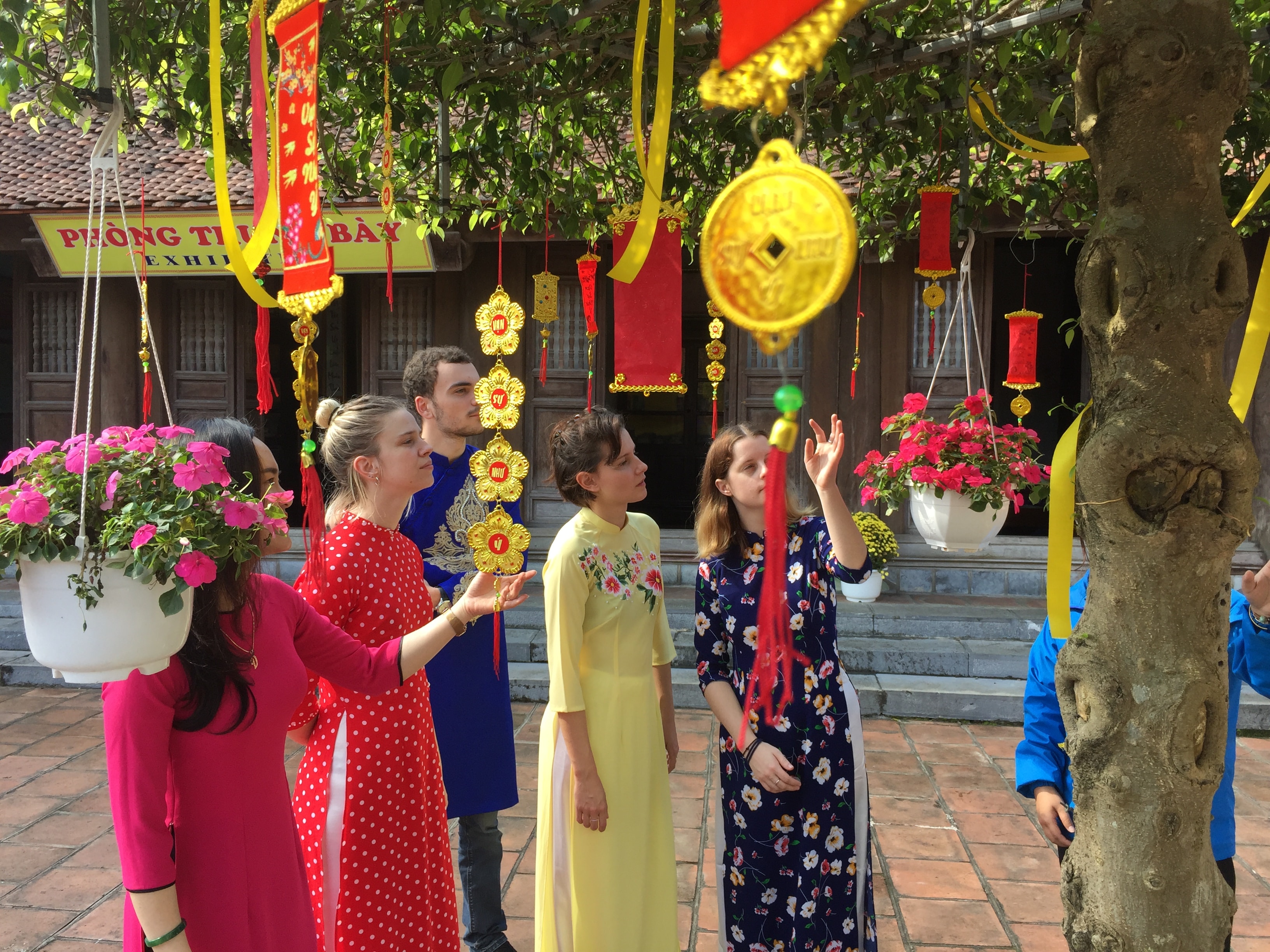 |
| The Quang Trung Temple is a special spiritual destination in Vinh City. Photo: Archival material. |
This victory also marked the official replacement of the Le dynasty by the Tay Son dynasty in governing Northern Vietnam and in relations with the Qing dynasty.
The victory at Ngoc Hoi - Dong Da was a great achievement, of profound historical significance and a prime example in the history of Vietnam's resistance against foreign invaders.
Returning to our roots
HangEach year, the Quang Trung Emperor Temple has two major festivals: the 29th day of the 7th lunar month – the anniversary of Emperor Quang Trung's death, and the 5th day of the 1st lunar month – the anniversary of the Ngoc Hoi - Dong Da Victory.
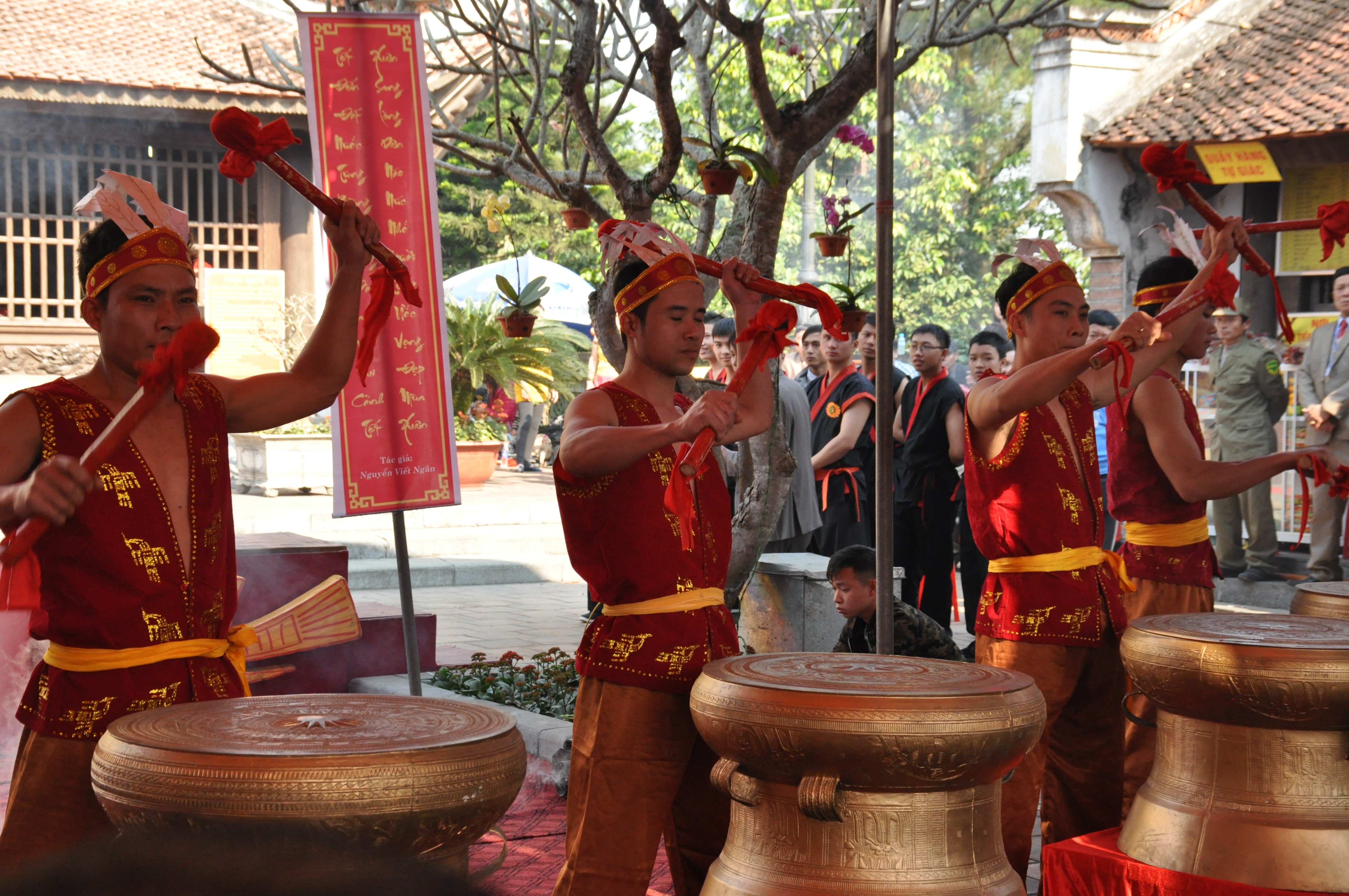 |
| Bronze drum performance at the commemoration ceremony of the death anniversary of Emperor Quang Trung - Nguyen Hue. (Photo: Thanh Thuy) |
To honor the immense contributions of the national hero Quang Trung – Nguyen Hue in fighting foreign invaders and unifying the country, and to meet the people's need to enjoy and create cultural, spiritual, and emotional values towards Emperor Quang Trung; to continue to widely promote and develop the cultural and spiritual values of the Quang Trung Temple, in conjunction with activities aimed at developing services and tourism.
The 230th anniversary of the Ngoc Hoi - Dong Da victory will be solemnly celebrated at the Quang Trung Emperor Temple on Dung Quyet Mountain (Vinh City) on the 5th day of the first lunar month of the Year of the Pig 2019.
To ensure thorough preparation for this year's 230th anniversary celebration of the Ngoc Hoi - Dong Da victory, the Organizing Committee planned months in advance, assigning specific tasks to each member; and coordinated publicity efforts through mass media to inform the public and tourists.
To ensure the commemoration of Emperor Quang Trung's death anniversary is meticulously organized, even before the Lunar New Year of Mau Tuat 2018, the Management Board of the Quang Trung Emperor's Temple developed a detailed plan, assigning specific tasks to each member, with public awareness campaigns being the top priority.
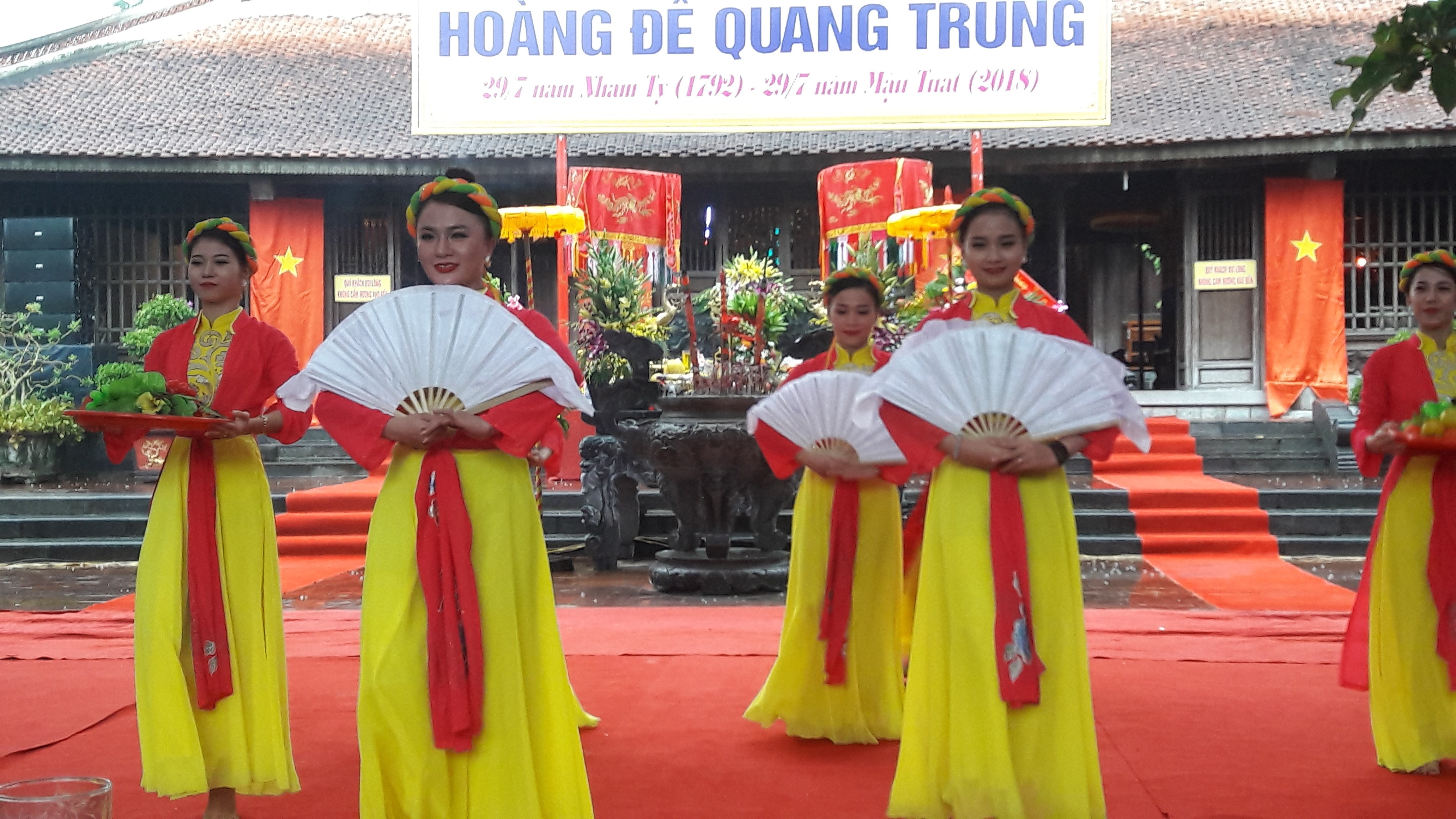 |
| An art program commemorating the merits of Emperor Quang Trung. Photo courtesy of Thanh Thủy. |
Specifically, in addition to producing news reports for Nghe An Provincial Radio and Television Station, Nghe An Newspaper, and the city's Radio and Television Station, propaganda was also organized through the local radio systems of wards and communes; banners and slogans were hung along roads and in central areas of the city, especially focusing on the section from Ben Thuy Bridge intersection to the Temple of Emperor Quang Trung; banana flags and ceremonial flags were placed along both sides of the road from the parking lot to the Temple; and two sets of billboards announcing the commemoration program were erected at the foot of the mountain at the beginning of the road to the Temple and at the parking lot…
The annual 230th anniversary celebration of the Ngoc Hoi - Dong Da victory has become a much-anticipated event for many people in the area. Ms. Hoang Thi Hien (Trung Do ward), 48 years old, said: "In the days leading up to Tet, besides promoting the beautiful traditions of the Lunar New Year, the ward's broadcasting system also dedicates time to publicizing the 230th anniversary of the Ngoc Hoi - Dong Da victory on the 5th day of Tet. This is a celebration that everyone eagerly awaits. For example, my family, not only on the 15th and 1st days of the lunar month, but also during Tet and the anniversary of Emperor Quang Trung's death, we always make time to go to the temple to light incense and commemorate this great figure who made significant contributions to protecting the country."
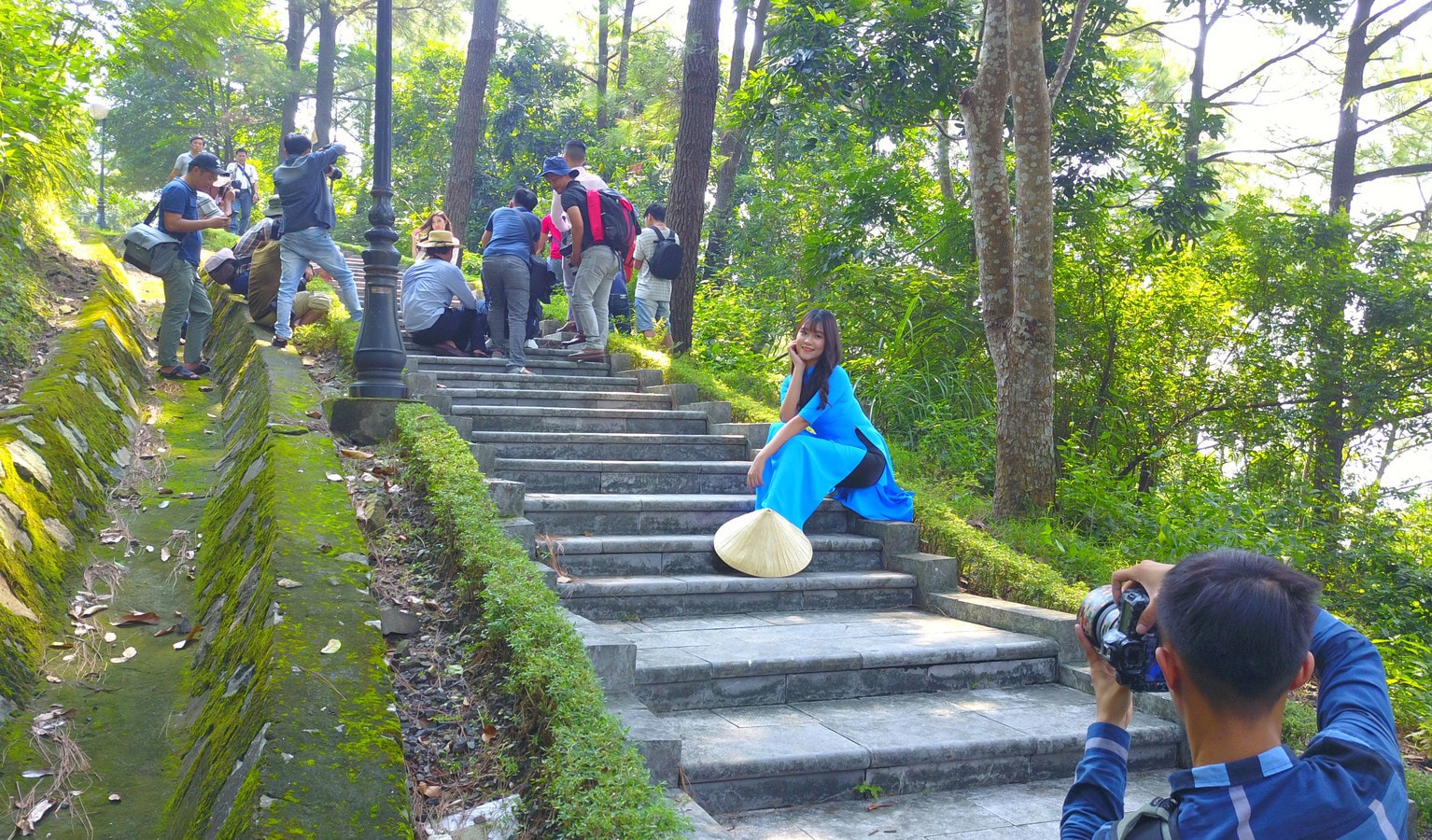 |
| Dung Quyet Mountain and the Temple of Emperor Quang Trung have become attractive destinations for young people, locals, and tourists alike. (Photo courtesy of Nguyen Sach) |
For Ms. Ngo Thuy Ha (37 years old) in Truong Thi ward (Vinh city), the Quang Trung Emperor Temple has long been a cultural and spiritual tourist destination for her family during the Lunar New Year. Her children also enjoy visiting the Quang Trung Emperor Temple, as it has long been a significant site for educating the younger generation about patriotic traditions and evoking a sense of pride in the hearts of the city's residents.
Mr. Vu Hong Duc, Head of the Management Board of the Quang Trung Emperor Temple, said: This year's 230th anniversary celebration of the Ngoc Hoi - Dong Da victory, along with activities such as the commemoration ceremony for Emperor Quang Trung and the heroic martyrs, will also include: laying flowers, offering food, martial arts performances, and singing folk songs praising Emperor Quang Trung.
The commemoration ceremony was held solemnly, safely, and economically. The solemn ceremony commemorating Emperor Quang Trung created a sacred atmosphere, reflecting a connection to the roots, and was carried out in accordance with the procedures and guidelines of the relevant authorities.
Program for the 230th Anniversary Celebration of the Ngoc Hoi - Dong Da Victory
From 7:30 AM to 8:15 AM: Spiritual ceremony of the Phật An Buddhist community.
From 8:15 AM to 8:30 AM: Welcoming delegates
From 8:30 AM to 8:55 AM: Welcome art performance.
From 8:55 AM to 9:05 AM: Opening ceremony and introduction of delegates.
From 9:05 AM to 9:15 AM: Reading of the ceremony speeches.
From 9:15 AM to 9:30 AM: Incense offering ceremony
From 9:30 AM: Tug-of-war competition for men and women, and other Spring Festival activities.
Thanh Hien