

"Igniting the flame" in a challenging land.
(Baonghean) - Persistently bringing knowledge and enthusiasm to help the people build a new life in the resettlement area, the Party members of Thanh Binh village Party branch (Thanh Son commune, Thanh Chuong district) are working together to rekindle the flame of prosperity and happiness in every home in this difficult land.
Tea plants and their journey of "awakening the soil"
The Khmu people have traditionally lived off the forest, going there to hunt deer and stags, gather bamboo shoots, and cultivate fields. However, everything has changed for the people of Thanh Binh village, a Khmu village in Tuong Duong district, since they moved to a new area – Thanh Son resettlement commune (Thanh Chuong district).
In the new countryside, the people learned to go into the forest to plant acacia and tea. Then, when the hills were covered with greenery, they went down to the valley to sow rice, build pens, and set up farms. Day by day, life changed.
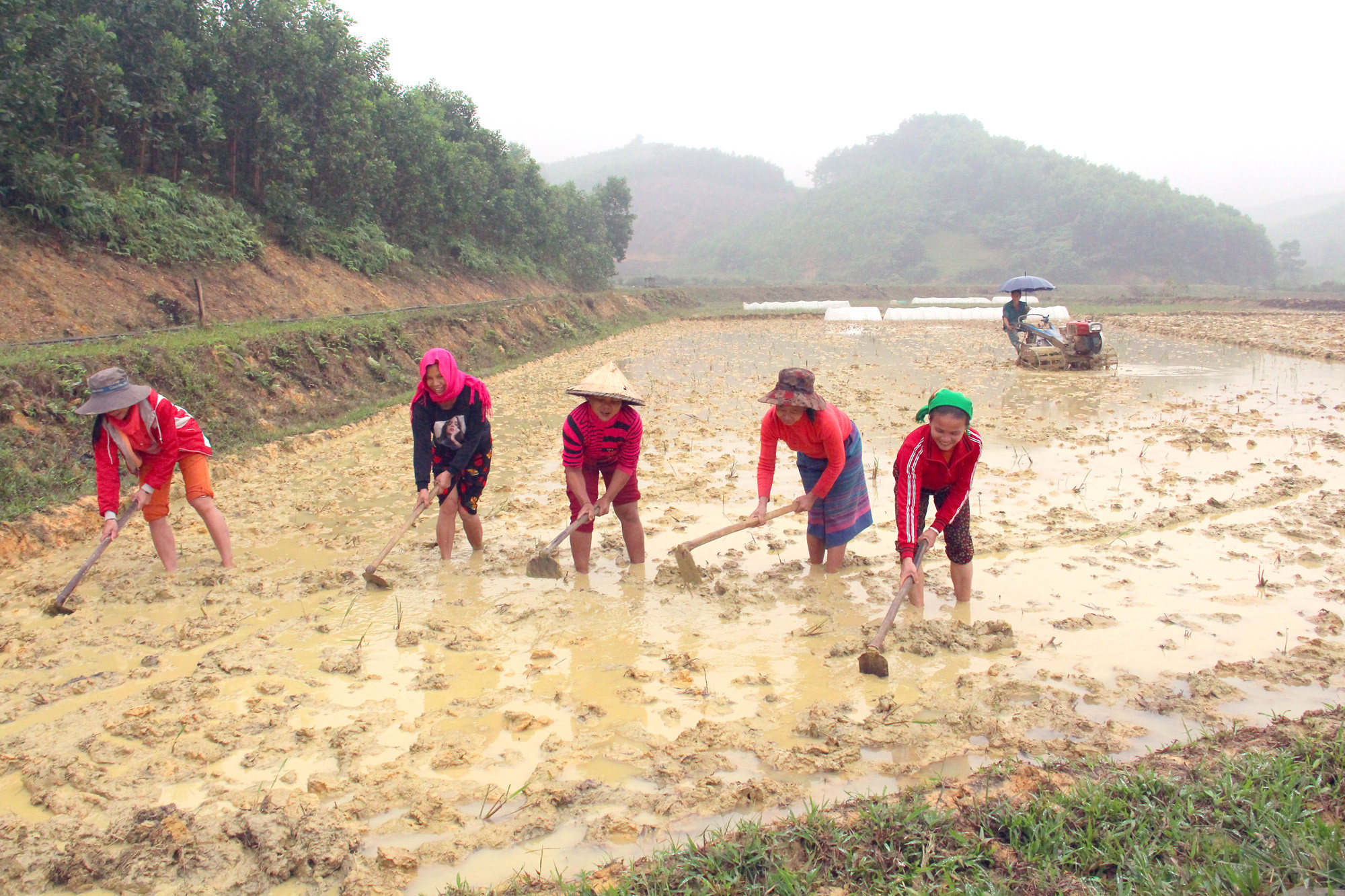 |
| Khơ mú people in Thanh Bình village are reclaiming land in Khe Cam to cultivate rice paddies. Photo: Thanh Quỳnh |
Recalling the early days of leaving his old hometown of Tuong Duong to move to his new place of residence, Mr. Lu Xuan Bich - Secretary of the Party Branch of Thanh Binh village - said that Thanh Binh was one of the latest resettlement villages in Thanh Son, with the villagers only moving here in 2012.
In the early days of moving to the new land, with limited arable land and people unfamiliar with the new environment, many families considered returning to their old village. Understanding that mere words without action would not win their respect, Mr. Bich and 12 other Party members in the Party branch joined forces to overcome difficulties and stay on the land to work, setting an example for the villagers to follow.
Simply talking without acting won't win the people's respect, so the Party members in the branch have joined forces to overcome difficulties and stay on the land to work, setting an example for the people to follow.
Two months after settling into their new home, Mr. Bich invested all his compensation money in reclaiming land in the Khe Cam hilly area to plant tea. His wife and he couldn't manage it all themselves, so he had to hire people to help him dig the soil, weed, and clear the wild vegetation on an area of nearly 1 hectare. The family was even more motivated after learning that the government was providing tea seedlings to resettled people for land reclamation and economic development.
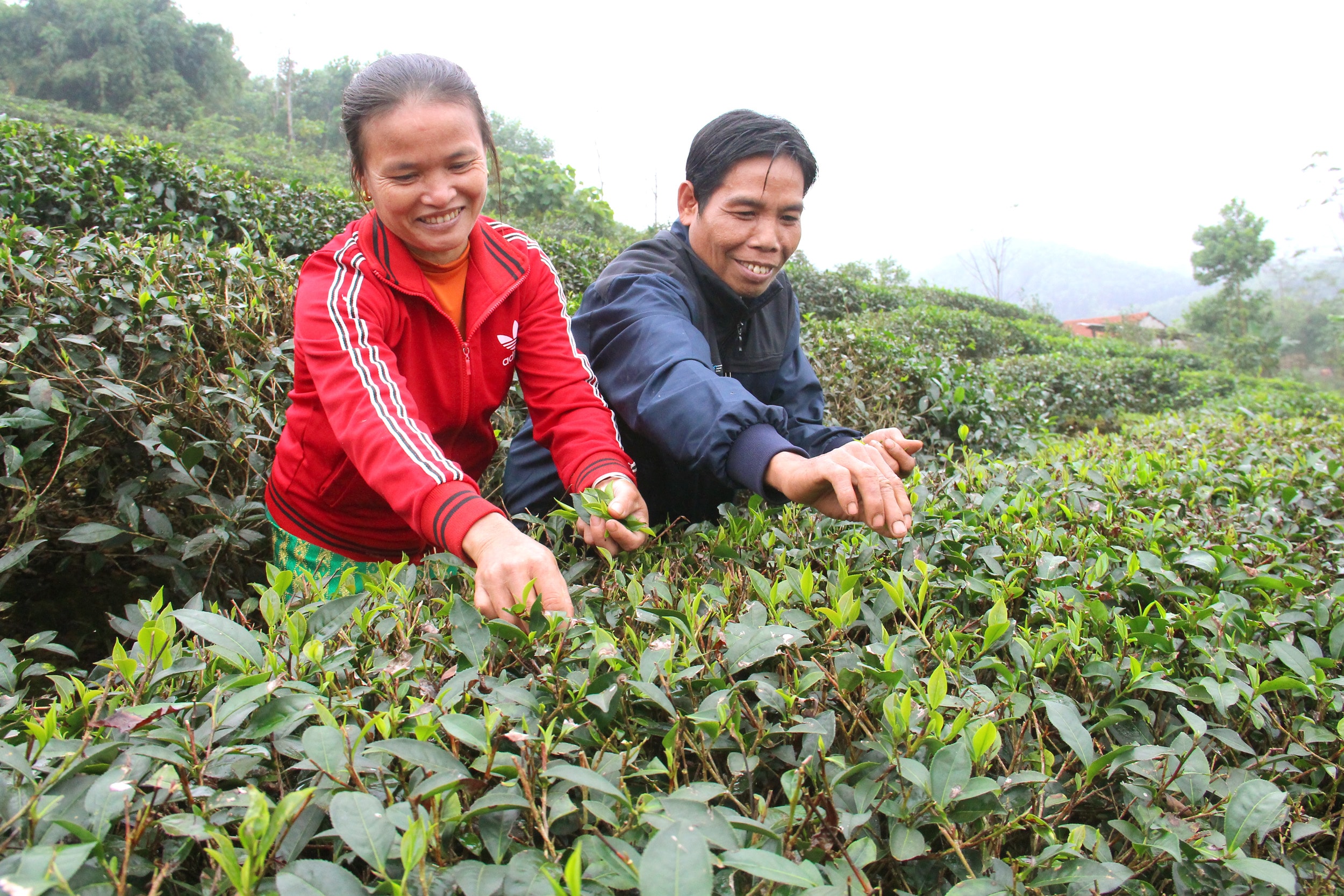 |
| Mr. and Mrs. Lu Xuan Bich – Secretary of the Thanh Binh village Party branch – are pioneering households who have settled on tea cultivation after resettlement. Photo: Thanh Quynh |
Then, the land rewarded his efforts; the tea plants took root, and water was channeled from Khe Cam to transform the once barren land into fertile and lush soil. Following Mr. Bich's success, the people of Thanh Binh village took him as an example to cling to the land and make a living.
Some households, like Moong Cong Cuong and Quat Van Xuan, have expanded their tea cultivation area to 1.5 hectares. Now, the total tea area in the village has reached over 10 hectares, cultivated by 36 households. Of that, nearly 7.5 hectares are ready for harvest, yielding tens of tons of finished product each year. Thanks to the healthy growth of the tea plants, traders come directly to the village to buy the tea as soon as it's picked.
A significant part of that success was the enthusiasm and proactive approach of the Party Branch Secretary, who not only set an example but also closely guided the villagers every step of the way.
These are the key figures who "walk the talk."
Tea cultivation is not the only miracle of this land; there are many more stories that the elders of Thanh Binh village still recount to their descendants today, as a source of pride about the arduous days of pioneering this land. Leading us through the neatly arranged rice paddies being diligently plowed by the villagers in preparation for the upcoming spring planting season, Mr. Hung Ngoc Que – Deputy Secretary of the Party Branch and Head of Thanh Binh village – happily shared: “Previously, the villagers relied on the subsidized rice from the project and neglected production. Now, many households have rice reserves so they no longer worry about food shortages when the subsidy period ends.”
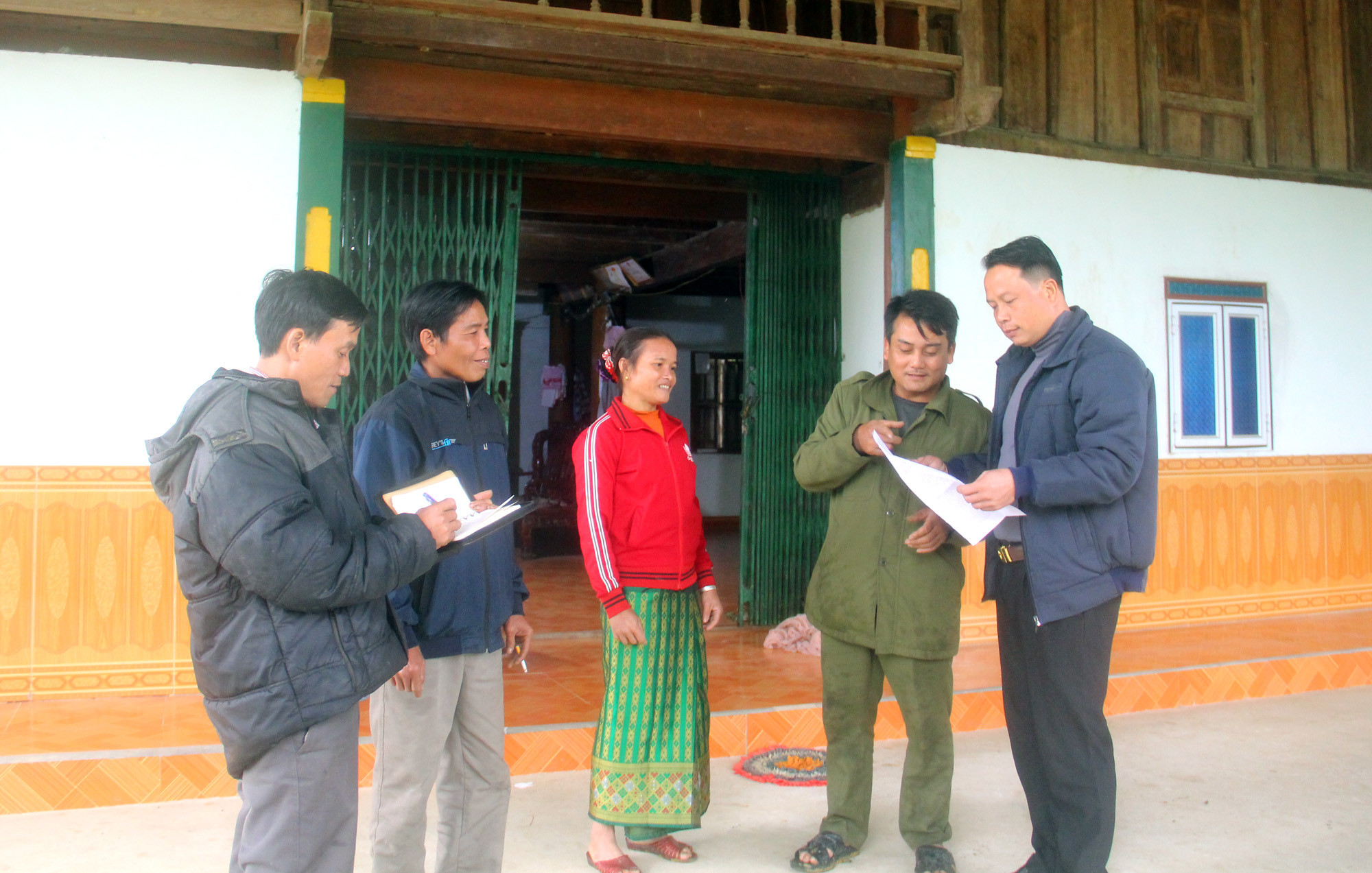 |
| Mr. Lu Xuan Bich and Mr. Hung Ngoc Que (far left) during a policy dissemination session for villagers. Photo: Thanh Quynh. |
Stopping before his family's three acres of lush rice paddies, Mr. Que recalled the early days of hardship as he worked alongside his neighbors to reclaim land, bring in water, and cultivate rice. His hands, accustomed to holding straw and planting rice seedlings, now felt strange digging with hoes and transplanting rice plants. However, through technical training courses, those initial difficulties faded. The three acres of rice paddies, laden with grain, yielded nearly 600 kilograms of rice each harvest, ensuring Mr. Que's family no longer suffered from food shortages during the lean season.
Previously, people relied solely on subsidized rice, but now many households have rice reserves, so they no longer worry about food shortages during the lean season.
He spoke and acted, continuing to work alongside the Party branch to mobilize villagers to reclaim more land so they could work together, overcome difficulties, and prosper. Thanks to his efforts, nearly 6 hectares of barren land along Khe Cam stream in the village were embanked, water was brought in to improve the soil, and new crop varieties were introduced for production according to the trained procedures.
The villagers have seen firsthand that growing wet rice is less strenuous than growing dry rice, and the yield and efficiency are much higher. Therefore, no one is thinking of abandoning their resettlement land to return to their old village.
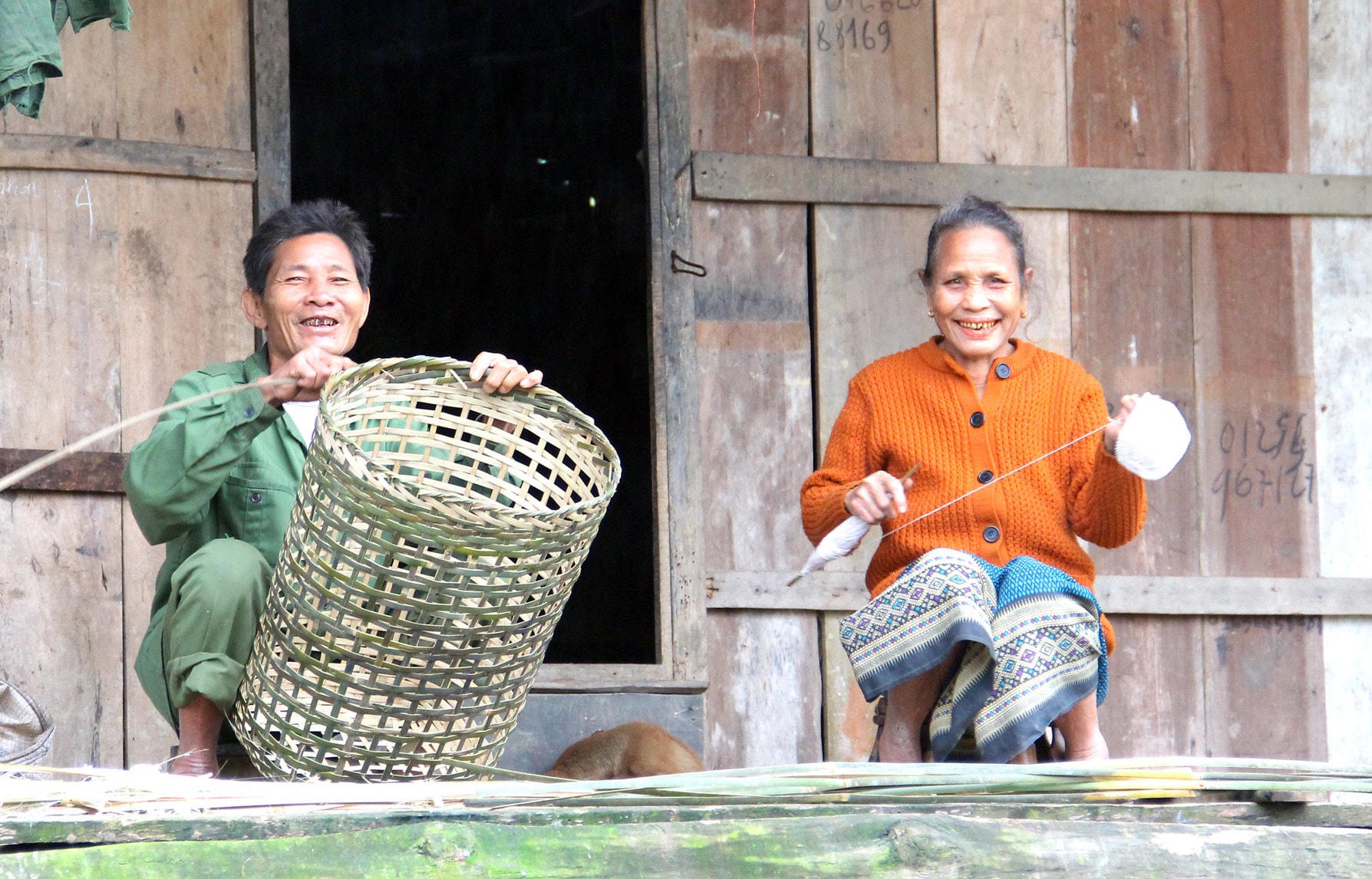 |
| Life has revived in Thanh Binh village. Photo: Thanh Quynh |
Besides planting acacia trees and rice, the people of Thanh Binh village have also made good use of government support programs to develop nearly 42 hectares of acacia trees, 4 hectares of cassava, and many livestock farms. Thanks to stable production, the poverty rate in the village has decreased significantly. While in 2010, when the villagers first settled here, the poverty rate was 100%, it is now only over 60%.
The average per capita income has also reached approximately 9-10 million VND per year. Although this is a modest achievement, it has initially created motivation for people to strive to build a better life in this new land.
Bidding farewell to Thanh Binh, Mr. Lo Van Nguyen - Deputy Secretary of the Party Committee of Thanh Son commune - remarked: "As a difficult area with rugged terrain, Thanh Binh was once a village that faced many challenges when we encouraged people to leave their old homes and settle here. But then, thanks to the resilient and persistent 'red seeds' who spearheaded the reclamation of this barren land, a wave of change has emerged, transforming the mindset and customs of the people in economic activities. From here, the face of Thanh Binh has undergone many positive and sustainable changes."
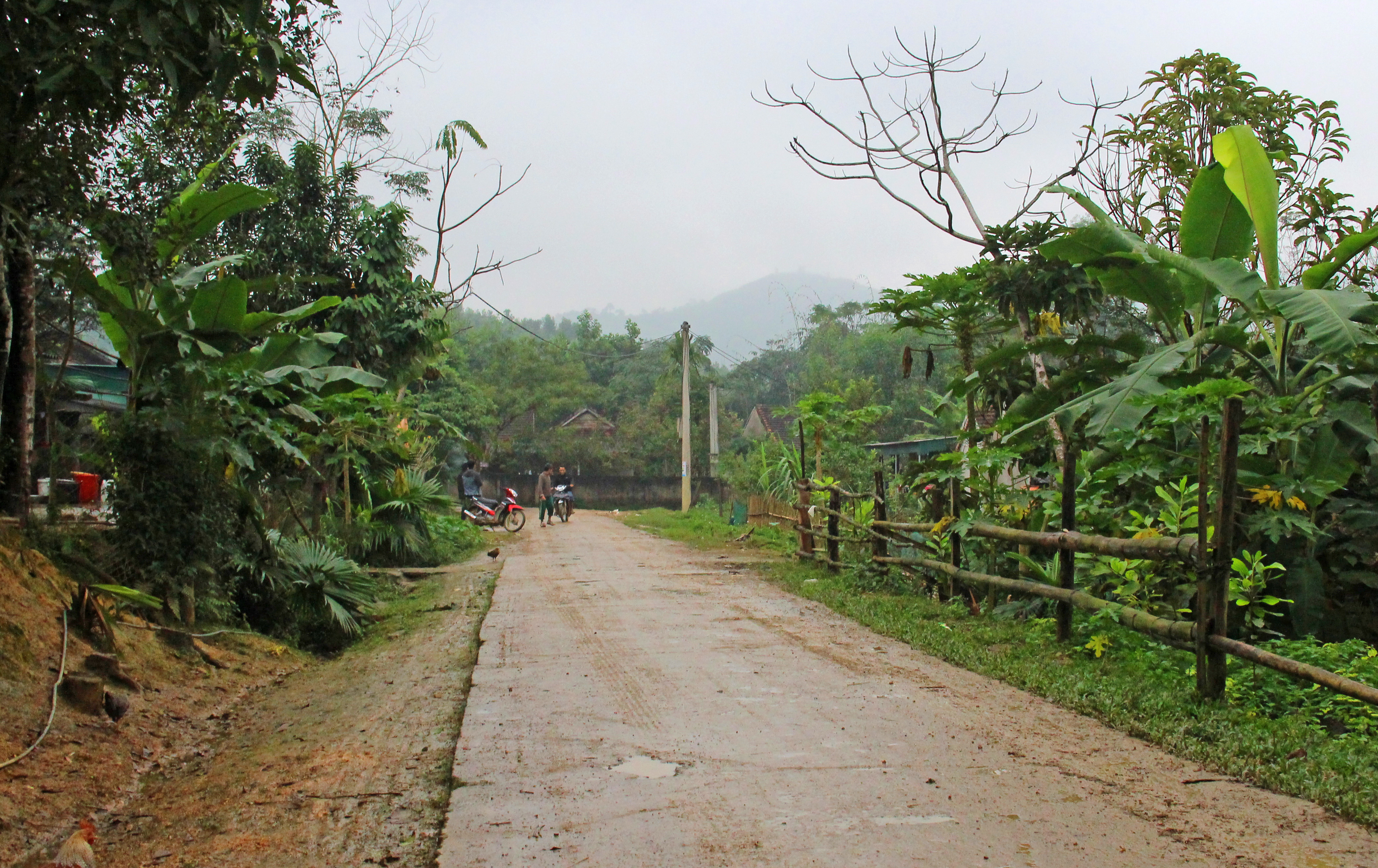 |
| A concrete road extends all the way to Thanh Binh village. Photo: Thanh Quynh |