
Women's desire to embrace Buddhism
(Baonghean) - In Vietnamese culture, temples have always been a familiar place for women. Women choose to go to temples to fulfill their psychological, spiritual, and mental needs, both to alleviate hardships, losses, and disadvantages in daily life, and to find a place to share with friends and fellow Buddhists.
Going to the temple brings peace of mind.
Therefore, it's easy to see that in groups of people going to temples, whether during holidays or on ordinary days, women still make up the majority.
According to preliminary statistics reported in the press, Nghe An currently has 55 large temples under the care of the Buddhist Association, with designated abbots managing them, attracting over 50,000 regular Buddhists. This number is likely modest, as tens of thousands more visit temples but do not identify themselves as Buddhists. Women constitute an overwhelming proportion of temple-goers. Particularly in areas with many ancient temples, where Buddhism has a long history, such as Vinh City, Dien Chau, Yen Thanh, Quynh Luu, and Do Luong, the number of women attending temples is even higher.
In many areas of Yen Thanh, Dien Chau, Quynh Luu, and Vinh City, many women form groups of friends to go to temples. They not only regularly visit temples near their homes to worship Buddha, but at the beginning of the year, they also organize trips by renting vehicles for the whole group to go on pilgrimages to various other temples.
"Going to the temple is very good, especially for older women. After years of hard work caring for their families, they now need to rest. Going to the temple helps them feel relaxed and at ease, free from anger and resentment towards their children and grandchildren. My friends and I in the temple-going group often participate in charitable activities with the temple, reciting Buddhist scriptures to pray for peace and well-being for our families. Or sometimes, it's simply about going to the temple to feel peaceful and relaxed, escaping the hustle and bustle of life, and avoiding many illnesses and misfortunes..."
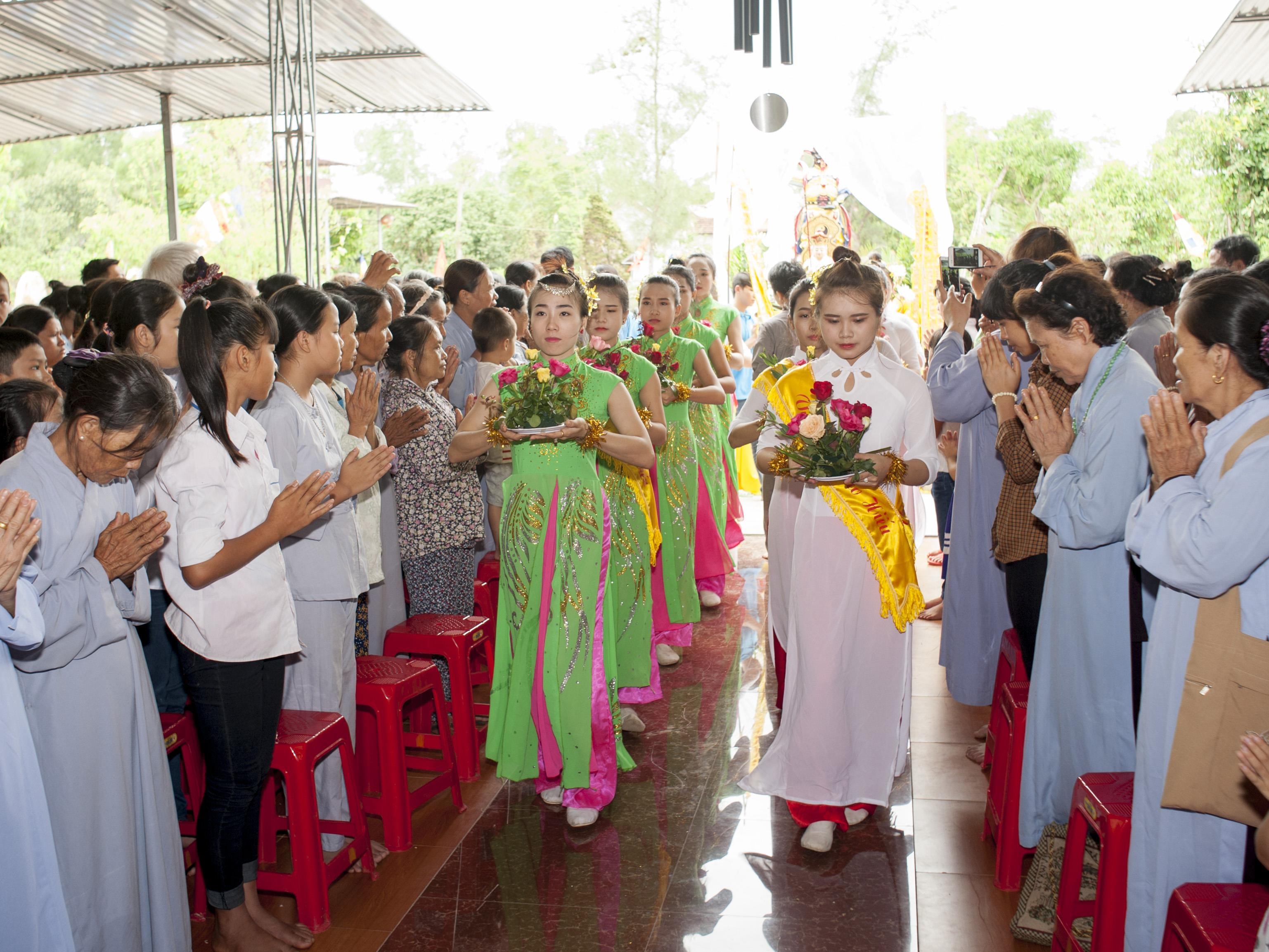 |
| The Vu Lan festival at a temple attracts a large number of female Buddhist followers. Photo: Thanh Cuong |
In a small survey of 116 women aged 16 to 70 living in Vinh City and Yen Thanh District, 98 women (over 84%) visited temples in January, with 67 being regular temple-goers, while the rest visited only 1-4 times a year. Regarding occupation, those engaged in trade and self-employment visited temples the most, followed by government officials (both working and retired), and then others.
In terms of purpose, most people go to temples to pray for peace and blessings for their families; some also pray for wealth and prosperity, while others simply visit to admire the scenery. A common characteristic is that most go in groups. Many elderly people tend to choose temples near their homes and visit more frequently.
"As I get older, I go to the temple for peace of mind. Now that I can't do heavy work anymore, I go to the temple to relax and pray for Buddha's blessings and protection for my children and family, wishing them peace and happiness. Especially in January, it's even more important to go to the temple to worship Buddha and pray for a year of peace and safety for the family."
Ms. Khanh, 69 years old, from Vinh City.
Of course, nowadays, visiting temples is not just a habit of the elderly. Many young women also choose to go to temples at the beginning of spring.
"Going to the temple makes me feel so much more relaxed. All year round, I'm busy with business, rushing around, struggling to make ends meet, with work and life. Sometimes I succeed, sometimes I fail, and I'm always worried. Only when I go to the temple do I feel at ease. That's why I still go to the temple every month. In January, I visit almost all the temples in the province that I know of, to pray for a lucky and happy year for my whole family."
Giang, a 21-year-old girl, during a religious visit to Chi Linh Pagoda (Yen Thanh).
Striving towards truth, goodness, and beauty.
Regarding the role of women, when they come to the temple, women have the opportunity to more fully express their role as women in society according to the Buddhist principle of "Accumulating Good Deeds." This means they have the opportunity to show love, protection, and spiritual support for their family members.
Furthermore, they can participate in charitable activities organized by the temple (as a representative) (such as assisting the temple on the first and fifteenth days of the lunar month or ancestral commemoration days, participating in promoting the benefits of vegetarianism, distributing free porridge at hospitals, visiting and helping poor students and people in areas affected by natural disasters...). This helps women feel that they have a more positive and meaningful role in their families and society.
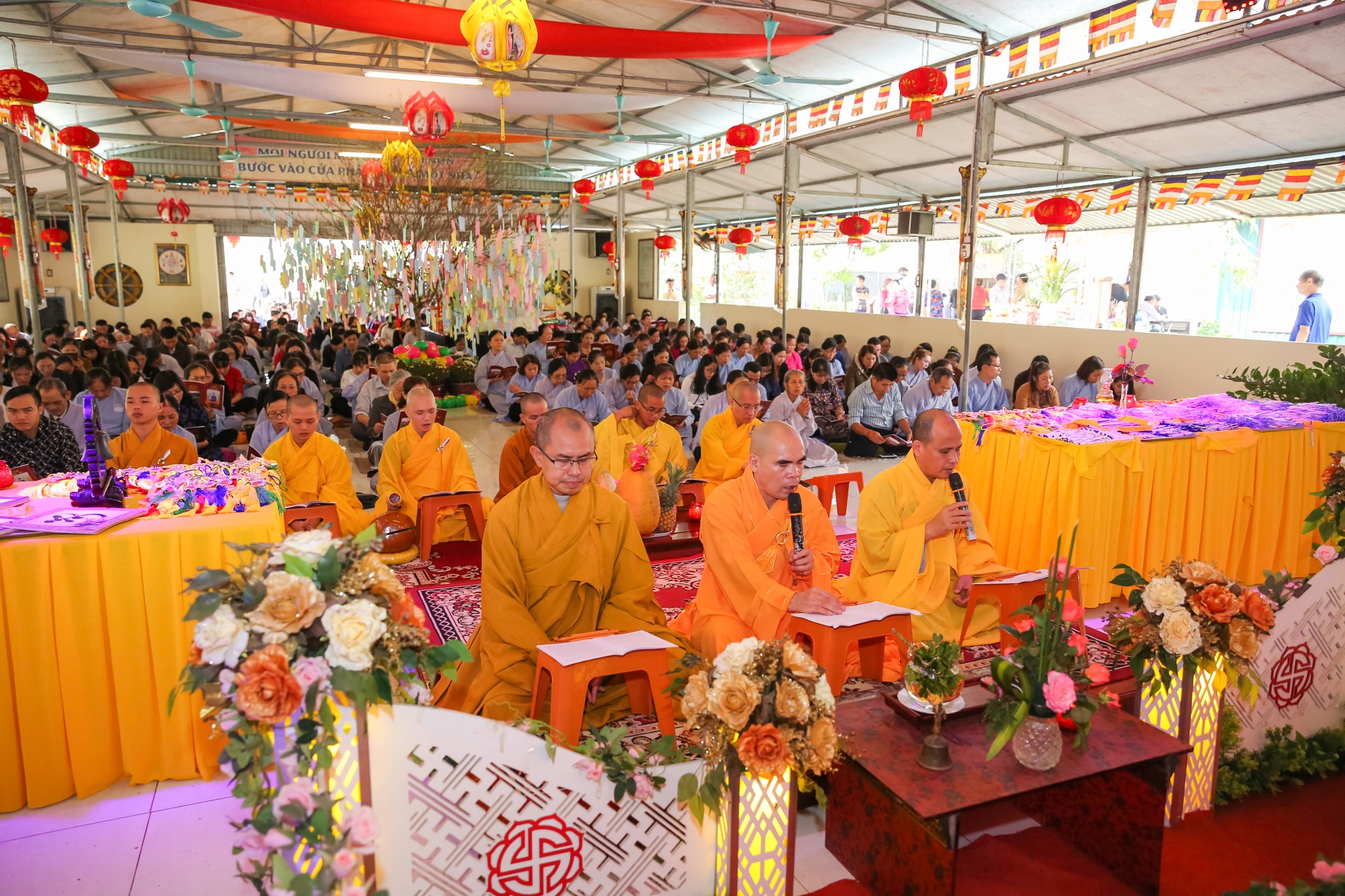 |
| Prayer ceremony at Duc Hau Pagoda, Vinh City. Photo: Duc Anh |
It could be said that Buddhism teaches women to demonstrate a positive (good) role but does not teach them to demand anything from society or family. Therefore, when they come to the temple, they are almost never opposed or ridiculed... It is truly peaceful when they remain themselves, and both family and society accept what they do at the temple as good and virtuous!
Economically, women find it easier to find a community that shares their economic burdens: when they are in need, the temple is ready to help and share, whether it's providing vegetarian meals or assisting with chores. When they earn less, they voluntarily and willingly contribute a small amount to the temple as a token of respect, or they may contribute to building temple bells, repairing temple gates, fixing leaky roofs, etc., without any mandatory regulations.
Explaining why temples and Buddhism have become more accessible to women, Dr. Dang Hoang Giang (Hanoi University of Social Sciences and Humanities) stated: Women have historically been a vulnerable group in society, generally easily hurt and disadvantaged, so they always need religion to protect their spiritual lives, their families, and those they love. Before 1945, communal houses were exclusively for men, while temples were spaces for women. Women have long been close to temples, and temples also have a more feminine character than other sacred spaces. Furthermore, due to their psychological characteristics, women tend to observe and experience life through emotions, making them more receptive to Buddhism. In Vietnam today, many women are nuns and preach Buddhist teachings. Technology has brought their voices to women more often, thus attracting more participation.
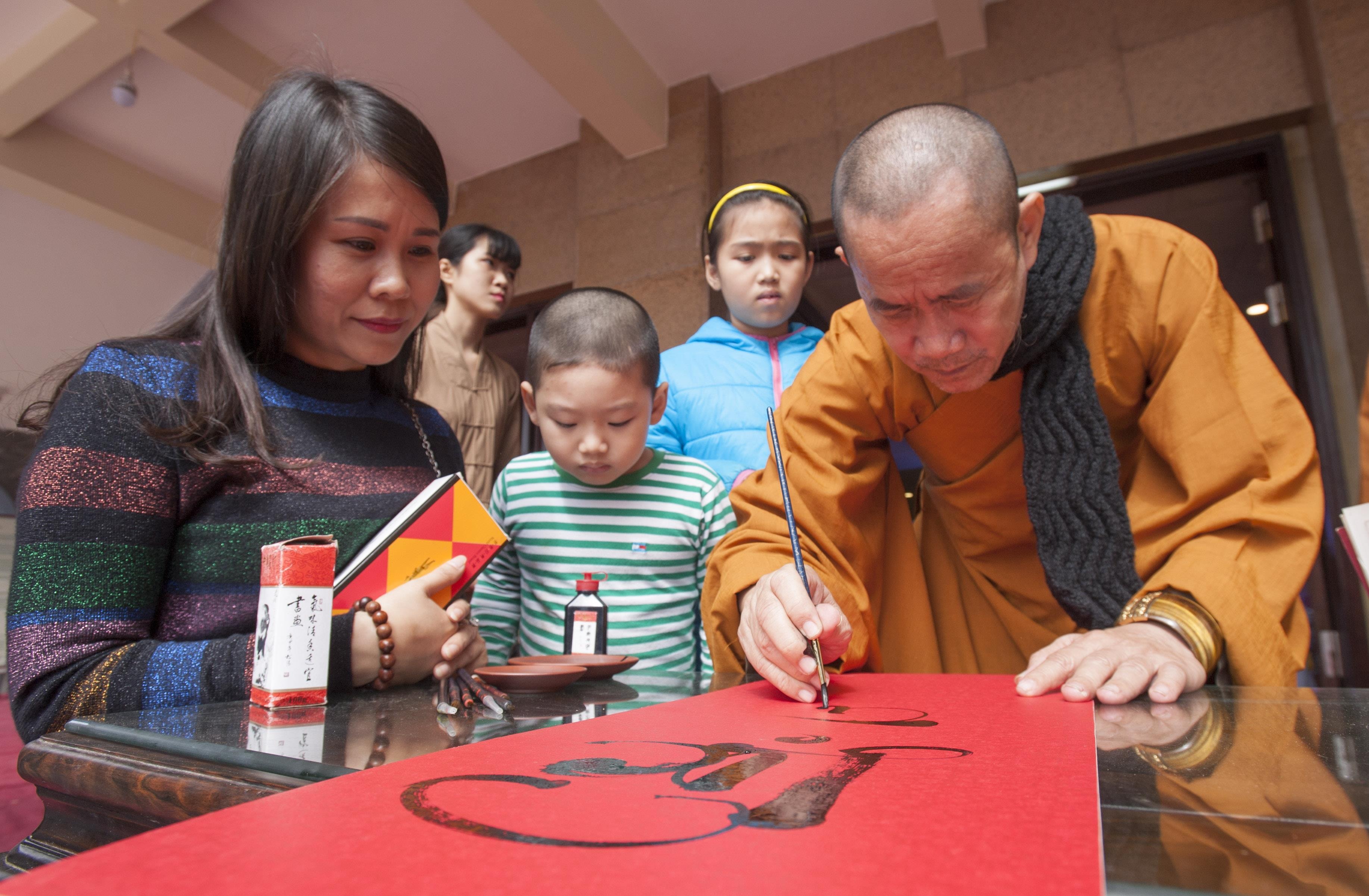 |
| Seeking auspicious calligraphy at temples and pagodas at the beginning of the year attracts many participants. (Photo: Thanh Cuong) |
Meanwhile, with a more in-depth perspective, Associate Professor Dr. Hoang Thi Tho (former Head of the Buddhist Philosophy Department, Institute of Philosophy, Vietnam Academy of Social Sciences) provides a clearer analysis from many aspects. In terms of psychology and spirituality, women appear more sensitive, vulnerable, and easily hurt than men...; they are often more inclined to follow what others say, even without understanding. For example, before starting their own families and while still living with their parents, daughters tend to follow their mothers and grandmothers to temples more often than sons. As they grow older, go to school, and when facing personal relationship issues in their youth, they often lack special counseling, so they follow their friends to temples to pray and beg for help with their studies and finding a partner. This is a psychological aspect of teenagers that is neglected by their families, schools, and society as a whole, leaving them to figure things out on their own.
Coming to a good temple is a stroke of luck because Buddhist teachings offer some guidance on mastering the mind and analyzing the root of all suffering as ignorance (ignorance) which gives rise to greed, hatred, and delusion, thus bringing suffering upon oneself... However, upon arriving at the temple, many girls have embraced Buddhism and become nuns... seeing that they can hide (though not necessarily solve) the impasses of their lives there.
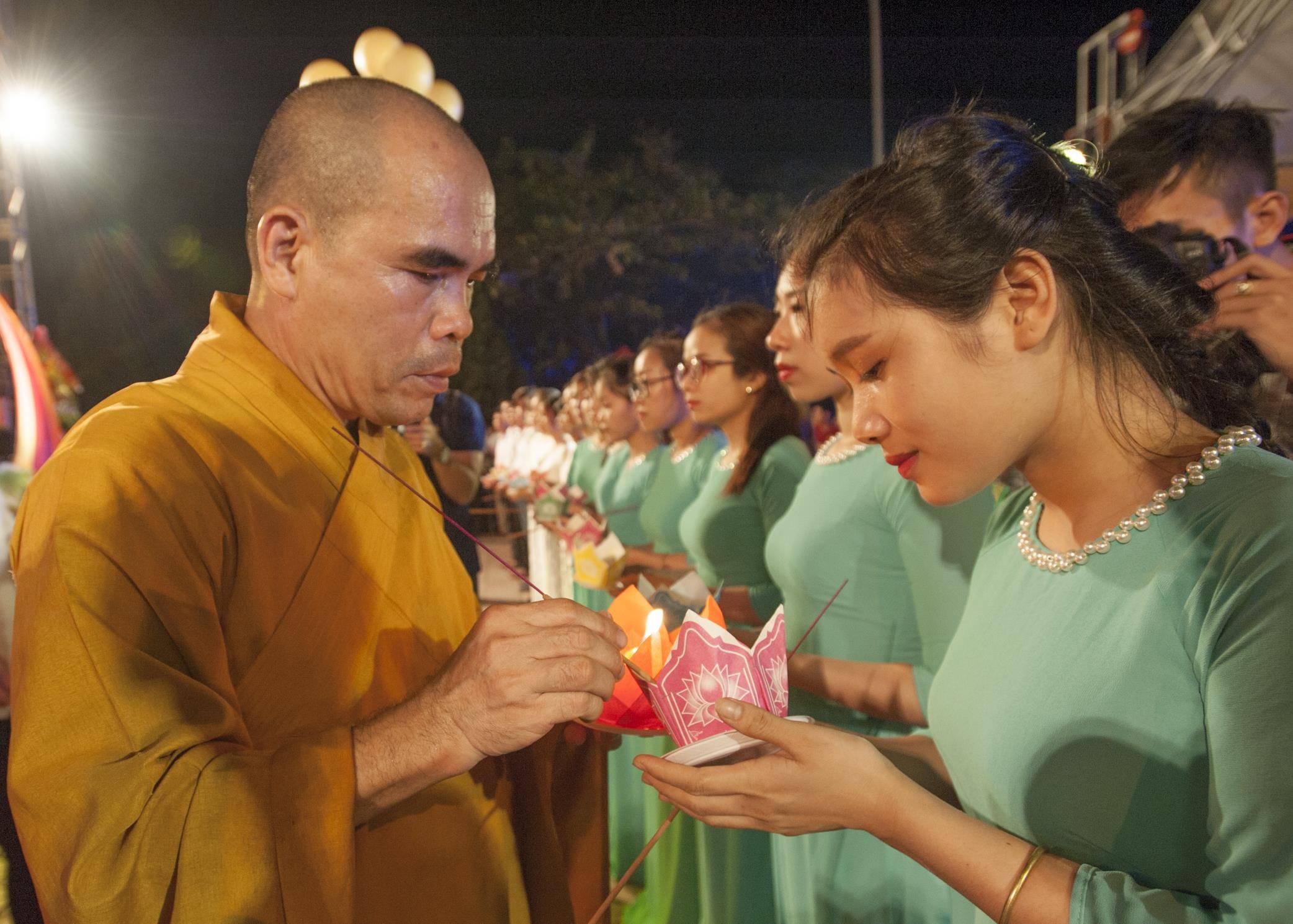 |
| Candlelight ceremony to commemorate War Invalids and Martyrs Day, July 27th. Photo: Thanh Cuong |
In terms of art, Buddhism focuses on the inner self, so literature, painting, and architecture all seem quiet and nostalgic, sharing contemplation. Therefore, when women come to Buddhism, they can easily find solace and even experience it for themselves.
Especially in village festivals, which are often associated with the village's cultural center, the communal house and pagoda, many folk art forms and activities are added to the content and art forms of the festival (cooking, cuisine, specialties, traditional crafts, folk songs, etc.) and require the participation of young women as well as older female artisans.
Thus, women visiting temples at the beginning of the year is an activity they pursue for many reasons. Besides praying for blessings and peace for their families, they also want to affirm their self-worth, experience life objectively, and explore their inner lives.
In short, the increasing number of women visiting temples today is a manifestation of a return to the roots of Buddhist culture, as women have had a long-standing connection with Buddhism throughout history. In the context of an increasingly complex modern society, where people face many risks, visiting temples helps relieve anxiety, so the trend of visiting temples will likely continue to increase in the near future.
Sy Hao