

Identifying pain by its location within the body's organs.
Upper left abdominal pain is related to the stomach, lower middle abdominal pain is usually the bladder, and lower right abdominal pain is due to appendicitis.
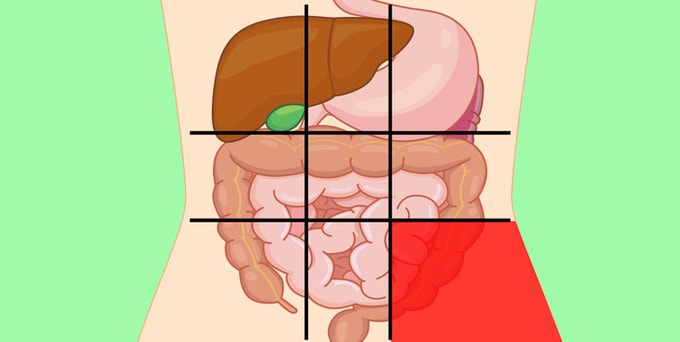 |
| Lower left abdominal pain:A large portion of the large intestine is located in this part of the abdomen. When experiencing abdominal pain accompanied by cramping, bloating, diarrhea, or constipation, you may have irritable bowel syndrome. |
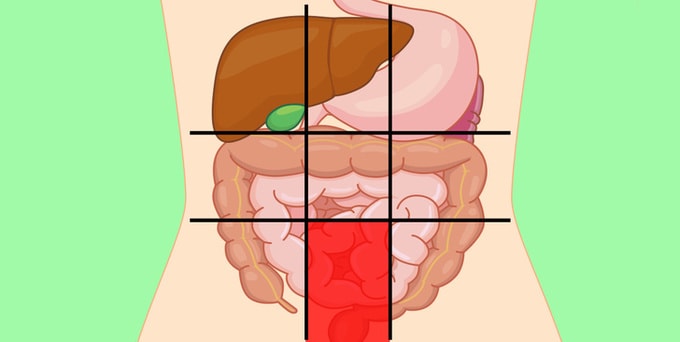 |
Lower abdominal pain in the middle:The bladder and reproductive organs are located in this part of the abdomen. Abdominal cramps, burning sensation during urination, and changes in urine color can be signs of a bladder infection. Sudden, persistent pain in this area and the pelvic region lasting for months are symptoms related to the reproductive organs. |
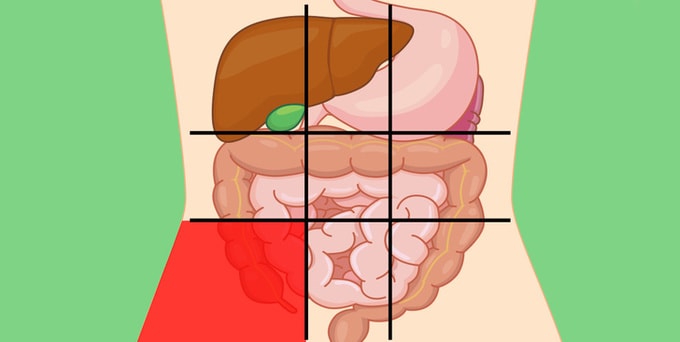 |
| Pain in the lower right abdomen:This part of the abdomen is where the appendix is located. Sharp pain, loss of appetite, nausea, and fever are the most common symptoms of appendicitis, and you need immediate medical attention. |
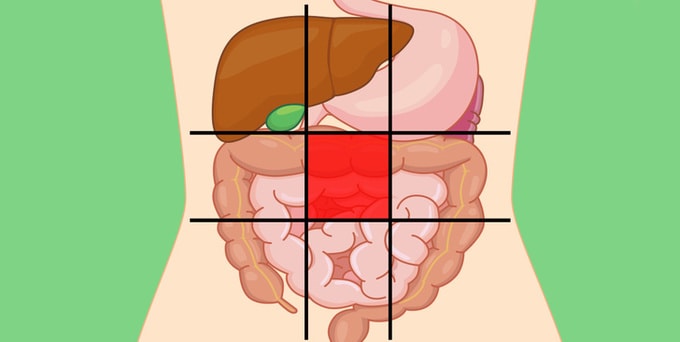 |
Pain in the middle of the abdomen:The small and large intestines are located here. Pain accompanied by cramping, severe diarrhea, fatigue, fever, and weight loss are signs of inflammatory bowel disease. If you experience pain and are unable to pass gas or have a bowel movement, it could be an early sign of a small bowel obstruction. Swelling or bulge in the area near the navel is called an umbilical hernia. |
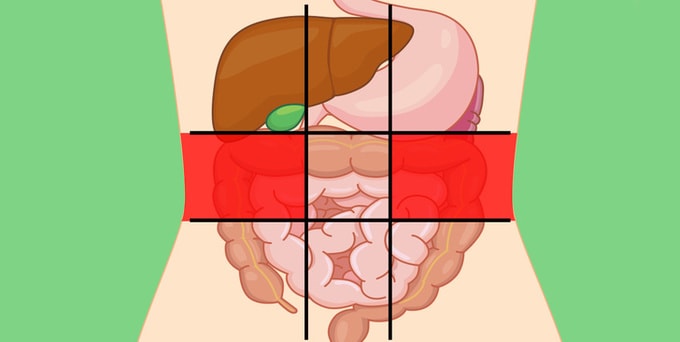 |
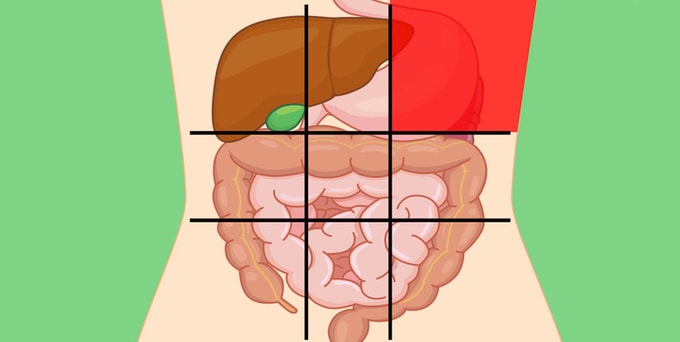
Pain in the middle of the abdomen, left and right:The kidneys are located in the middle of the abdomen, on the right and left sides of the spine. Pain in this area can also be caused by problems with the large intestine. Pain radiating to the back accompanied by fever, diarrhea, and nausea could be a sign of a kidney infection. If the pain radiates to the lower abdomen, you experience frequent urination, and there is blood in your urine, you may have kidney stones. |
 |
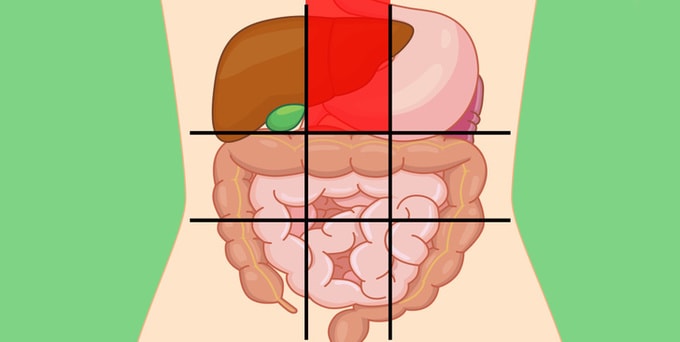
Upper left abdominal pain:Any pain in this area is usually a stomach problem. Severe, persistent pain accompanied by nausea or vomiting can be a sign of gastritis. If the pain is often more intense when the stomach is empty, you may have a stomach ulcer. |
 |
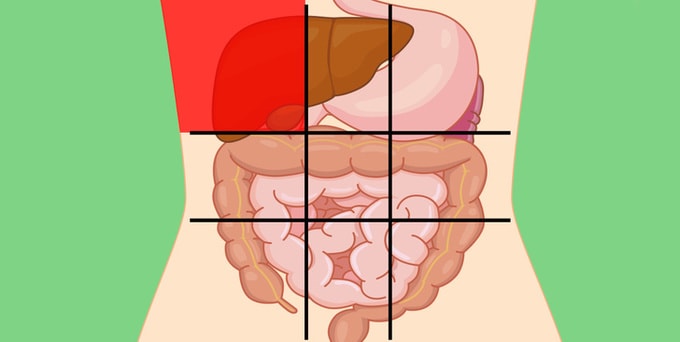
Upper middle abdominal pain:This part of the abdomen includes the duodenum, the first part of the small intestine, and a large portion of the pancreas. Frequent pain radiating to the back and worsening after eating, especially fatty foods, is a symptom of pancreatitis. Severe abdominal pain accompanied by vomiting, diarrhea, and abdominal swelling may be due to an epigastric hernia. If the pain worsens between meals or in the middle of the night, it could be a symptom of a duodenal ulcer. A burning sensation in the chest, coughing, sore throat, an acidic taste in the mouth, nausea, and bloating are often symptoms of heartburn or indigestion. If heartburn worsens when you bend over or lie down, along with chest pain and belching, you may have a hiatal hernia. |
 |
Pain in the upper right abdomen:This part of the abdomen contains the gallbladder and liver. Sudden, severe abdominal pain radiating to the right shoulder, occurring after eating fatty foods, may indicate gallstones. A dull, cramping pain radiating to the right shoulder or back and lasting for several hours is a sign of cholecystitis (inflammation of the gallbladder). Intermittent, sharp pains may indicate hepatitis. |