

Never let your car's transmission fluid run low, as it's life-threatening.
Driving with low transmission fluid is extremely dangerous if the driver doesn't detect and address the problem promptly.
When you open the hood, next to the engine oil dipstick you may see the transmission fluid dipstick (usually labeled A/T OIL), or you may not see it.
Nowadays, many luxury car manufacturers have long since removed the dipstick from most of their models, and recently many other mainstream car manufacturers have also done the same on many of their newer models. This issue may seem simple, but it is quite complex and poses potential risks of damaging the transmission if the user lacks knowledge about transmission fluid.
A missing gearbox can cause gear jamming.
 |
Inside a manual transmission, the primary roles of lubrication, cleaning, and cooling are lubrication, cleaning, and cooling. A lack of lubrication or dirty oil inside a manual transmission can make shifting more difficult for the driver, or worse, cause gears to get stuck.
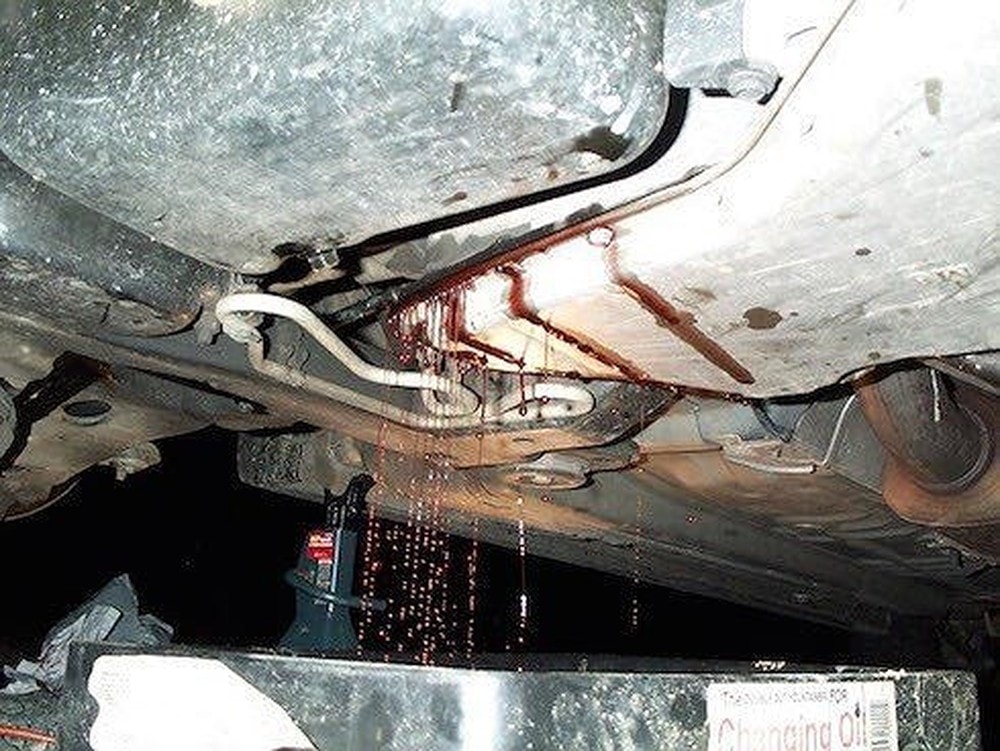
Leaking oil will wet the undercarriage components of the vehicle.
 |
When there is a lack of transmission fluid, the hydraulic pump system operates inefficiently, resulting in insufficient torque, causing the friction plates to slip. Consequently, the engine still revs higher, but the vehicle is very weak, acceleration is poor, and in severe cases, the friction plates may slip excessively and burn out, preventing gear changes. The worst-case scenario is complete transmission failure.
Transmission fluid loss can be dangerous due to a leaking gasket.
One simple thing every driver can do is to monitor for signs of transmission fluid leakage. Observe your parking spot overnight. If you see oil leaking onto the floor near the transmission, take your car to a reputable garage immediately for inspection and repair.
Using the wrong type of transmission fluid can quickly damage the transmission.
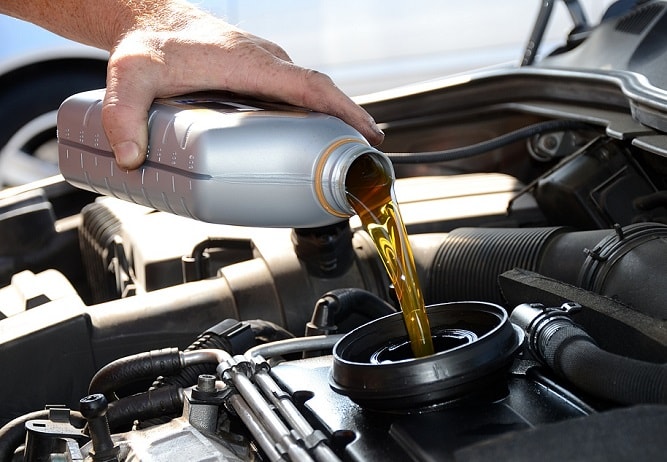 |
Using the wrong grade of transmission fluid can also cause transmission failure. Many car manufacturers, such as Bentley, BMW, and Mercedes, have specific types of fluid for their newer models. Differences in viscosity and heat resistance can be factors that disrupt transmission operation.
Furthermore, transmission fluid that has been used for too long without replacement, becoming dirty and containing a lot of metal particles, can also be another cause of automatic transmission damage. The valves and hydraulic pumps inside the automatic transmission are very precise components and are very susceptible to clogging or jamming, causing the transmission to malfunction with symptoms such as inappropriate gear changes, jerking, and poor acceleration.