

Concerns about restocking herds in the face of African swine fever.
(Baonghean) - African swine fever is developing unpredictably, therefore, many livestock farmers in the province are implementing the motto "empty pens, no pigs," saying no to importing pigs from outside to minimize the spread of the disease.
No restocking in affected areas.
These days, Mr. Nguyen Van Nhan in Nam Xuan commune (Nam Dan district) is focusing on cleaning his pig farm to prevent disease outbreaks. In early March, before African swine fever appeared in Nghe An, he had already sold a batch of 7 pigs.
Since then, his pig pens have remained empty, with no new litter added. Mr. Nhan shared: "Following the news and media, I see that African swine fever is developing complicatedly. Although I have been raising pigs continuously for 20 years, I am not importing pigs at this time because I am worried that the breeding pigs may be infected with the disease."
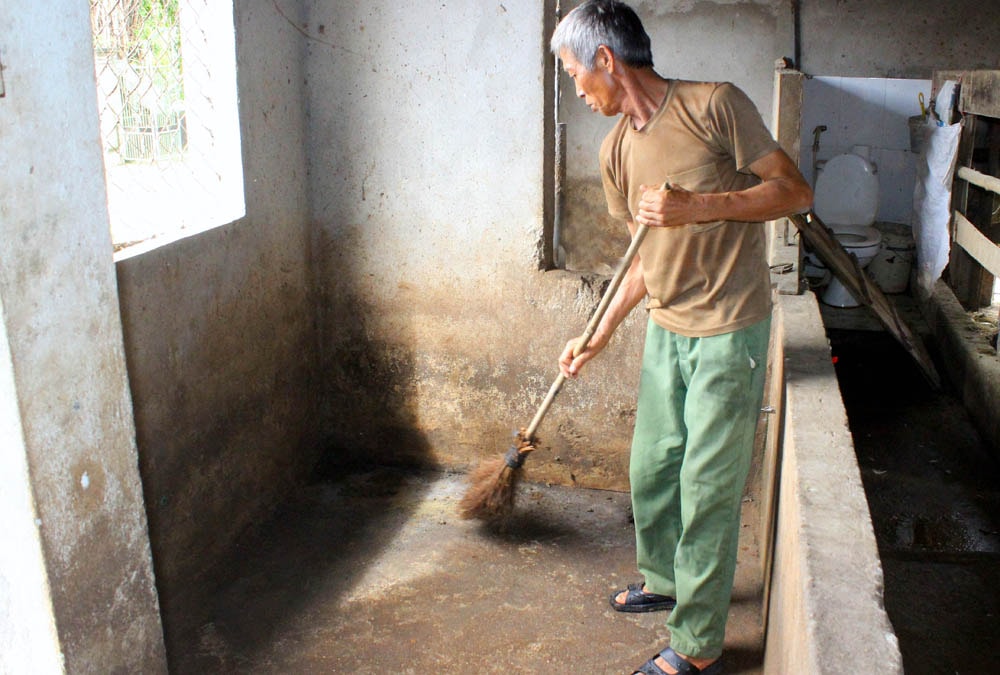 |
| Mr. Nguyen Van Nhan in Nam Xuan commune (Nam Dan district) cleans his livestock pens and refrains from restocking during the epidemic. Photo: Quang An |
That is also the general sentiment among livestock farmers in Nam Xuan commune - one of the localities with a large pig population in Nam Dan district.
Following the outbreak in Nam Dan district, Nam Xuan commune intensified its awareness campaigns for residents and allocated funds to purchase 300 kg of lime powder and 30 liters of disinfectant chemicals. Because it is located in a buffer zone of the outbreak, the authorities advised livestock farmers to maintain their existing herds and not import pigs from outside. Those who had already sold pigs were advised not to restock at this time to avoid risks.
Meanwhile, in Nghi Loc district, after the outbreak in Nghi My commune on April 30th, livestock farmers implemented a "closed doors and locked gates" policy, resolutely refusing to import pigs from outside, especially from areas close to Nghi My commune.
As a locality with a large livestock population and located near Nghi My commune, where an outbreak has occurred, the authorities and people of Nghi Van commune (Nghi Loc district) are currently raising their vigilance and prioritizing disease prevention and control.
Mr. Nguyen Van Khanh, Vice Chairman of the Nghi Van Commune People's Committee, said: According to surveys, in recent times, many livestock farmers in the commune have not imported breeding pigs due to concerns about disease outbreaks; many households have left their barns empty or switched to raising other livestock and poultry such as chickens, ducks, cows, and goats... This both limits disease outbreaks and helps maintain income from livestock farming.
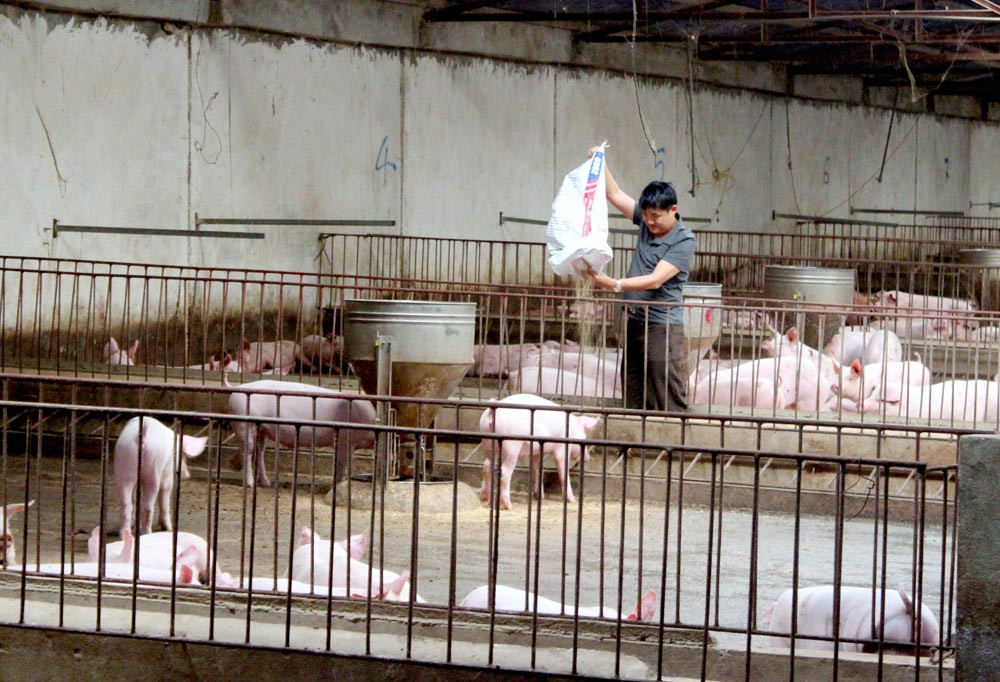 |
| People in Nghi Van commune (Nghi Loc district) raise pigs with the motto of keeping the doors locked and bolted. Photo: Quang An |
Due to farmers limiting restocking, the price of piglets is currently falling sharply. Mr. Cao Van Hoang, owner of a 1,200-pig farm in Hamlet 1, Nghi Van Commune (Nghi Loc District), said: Before the outbreak, each piglet weighing 7 kg cost between 1.2 and 1.3 million VND, but now it only ranges from 900,000 to 1 million VND and is still difficult to sell.
The entire district has approximately 40,000 pigs. In addition to prohibiting the trading and transportation of pigs into and out of the affected area, advising people not to restock their herds at this time is also a safety measure to prevent African swine fever from spreading to other localities.
Exercise caution in areas where the epidemic has been declared over.
After the People's Committee of Quynh Luu district announced the end of the African swine fever outbreak in Quynh My and Quynh Hung communes, the purchase, slaughter, and consumption of pork have returned to normal in the area. However, the district also advised households whose pigs were affected by African swine fever not to rush to restock their herds and to continue implementing disease prevention measures.
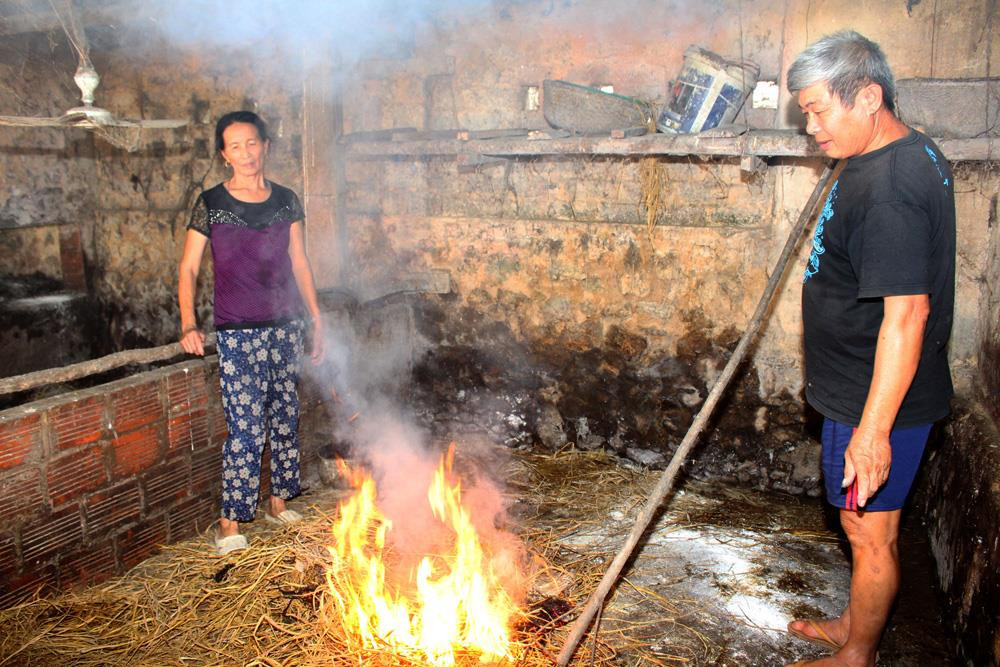 |
| Livestock farmers in Quynh Hung commune, Quynh Luu district, are cleaning their barns and are not rushing to restock their herds even though the epidemic has ended. Photo: Viet Hung |
The family of Mr. Hoang Van Lan in Hamlet 7, Quynh My Commune (Quynh Luu District) was the first household in Nghe An to experience African swine fever, with a total of 22 pigs having to be culled (including 2 sows and 20 piglets). More than a month after the outbreak was declared over, the family is not in a hurry to restock their herd but is still focusing on cleaning the pigpens and spraying disinfectant daily.
Mr. Lan said that African swine fever is developing in a complex manner and could reappear at any time. Although the outbreak has been declared over, his family has not yet restocked their herd. Veterinary officials from the commune and district have advised and guided them on how to clean the pigpens, spread lime powder, and spray disinfectants. The family plans to resume pig farming in about two months.
During the recent disease control campaign, the commune used 30 liters of disinfectant chemicals and 4 tons of lime powder to spray and disinfect at commune entrances and livestock farms. Although the outbreak has ended, the local authorities continued to purchase an additional 1 ton of lime powder and distributed it to livestock farmers to spread throughout their barns. They also advised affected farmers not to rush into restocking their herds, but to continue disease prevention and disinfection measures, waiting 2-3 months before resuming livestock farming.
During the discussion, Mr. Nguyen Van Lap, Deputy Director of the Department of Agriculture and Rural Development, stated: For localities currently experiencing African swine fever outbreaks, the province does not encourage restocking due to the potential risk of disease spread, especially given the unpredictable weather conditions.
For localities that have declared the outbreak over or have never had a swine flu outbreak, farmers can restock their herds based on the actual situation in the locality. However, they must carefully check the source of the pigs and ensure that they are fully vaccinated when restocking.
However, if the lack of restocking continues, there is a high possibility that after the epidemic ends, the supply of pork will decrease significantly, prices will be driven up, and farmers and consumers will face difficulties. Therefore, restocking must be monitored and rationally planned by local authorities, relevant agencies, and the people.