

Predictions of a 'no-deal Brexit earthquake'
The forecasts compiled by the UK Cabinet Office outline the most likely consequences of a “no-deal Brexit earthquake.”
Britain would face fuel, food, and medicine shortages if it leaves the European Union without a deal, disrupt border crossings, and risk having to re-establish a hard border with the Republic of Ireland. This is part of a document from the UK Cabinet Office forecasting the consequences of a "hard Brexit," as Britain remains torn between numerous scenarios.
|
| Illustration photo: BBC. |
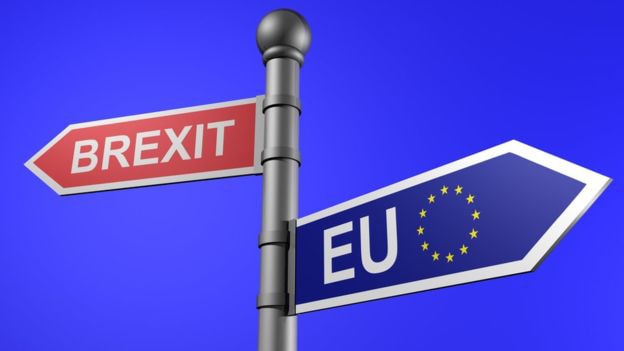
The British newspaper The Times reported that the forecasts compiled by the UK Cabinet Office outline the most likely consequences of a “no-deal Brexit earthquake,” rather than mentioning “worst-case scenarios” as previously suggested. Accordingly, a no-deal Brexit would disrupt operations at border crossings, particularly the one between the UK and France, through which 85% of the country’s imported cars pass.
The disruption at border crossings could last up to three months before traffic improves. The root of the problem stems from the hard border between the British territory of Northern Ireland and the Republic of Ireland. The government's current plans to prevent customs checks will not be effective.
This could be considered a rare document providing the most comprehensive assessment of Britain's readiness to mitigate risks to national infrastructure should it leave the EU without a deal. The British government is facing immense pressure, both internal and external, including the risk of a constitutional crisis and an uncompromising confrontation with the European Union.
Prime Minister Boris Johnson has repeatedly stated that he will leave the bloc on October 31st, whether or not a deal is reached, unless the bloc agrees to renegotiate the separation agreement. After more than three years of Brexit overshadowing all EU issues, the bloc has resolutely refused to reopen negotiations on the separation agreement, including the backstop clause aimed at preventing the re-establishment of a hard border between Northern Ireland and the Republic of Ireland.
Prime Minister Boris Johnson will meet with French and German leaders next week to reaffirm his country's position that the British Parliament will be unable to prevent Brexit and that a new deal must be reached if Britain wants to avoid leaving the EU without a deal.
“Europe remains resolute in its refusal to compromise, despite the UK Parliament rejecting the withdrawal agreement three times. Therefore, the longer this situation continues, the more likely we are to be forced to leave the EU without a deal. This is not what I want or aim for. However, we also need our European friends to compromise,” said Prime Minister Boris Johnson.
The British Prime Minister is facing increasing pressure domestically as opposition Labour leader Jeremy Corbyn this week publicly expressed his intention to "overthrow" Prime Minister Boris Johnson and is rallying support from various parties. The goal is to delay Brexit and prevent a no-deal Brexit. However, it remains unclear whether lawmakers can agree on using parliamentary power to prevent a no-deal Brexit. If it happens, it would be the first such event in Britain since World War II.
Opponents of a "hard Brexit" argue that such a move would be a disaster for what was once lauded as one of the most stable democracies in the West. A disorderly split would hurt global growth, disrupt financial markets, and undermine London's position as a leading global financial center. Supporters, however, say that while there might be short-term disruption from a no-deal Brexit scenario, the economy would thrive if freed from what they see as a failed integration experiment that has left the EU lagging behind China and the US.