

Is America's longest war about to end?
(Baonghean.vn) - The US President Donald Trump's special envoy for Afghanistan revealed on September 2nd that the US and the Taliban have reached an agreement "in principle" and are now awaiting final approval from the White House. Is this a positive sign that the protracted war, which has lasted nearly two decades, is about to end?
According to CNN, special envoy Zalmay Khalilzad told Afghanistan's TOLOnews that the draft agreement would require the US military to withdraw from five bases scattered across Afghanistan within 135 days, provided the Taliban meet the conditions set out in the agreement.
Let the Afghans decide their own fate.
If the agreement is implemented, the troop withdrawal could mark the beginning of the end of America's longest-running war, a conflict that has lasted nearly 18 years, sparked by the terrorist attacks of September 11, 2001. The war in Afghanistan is estimated to have cost billions of dollars in taxpayer money and claimed the lives of 2,300 Americans.
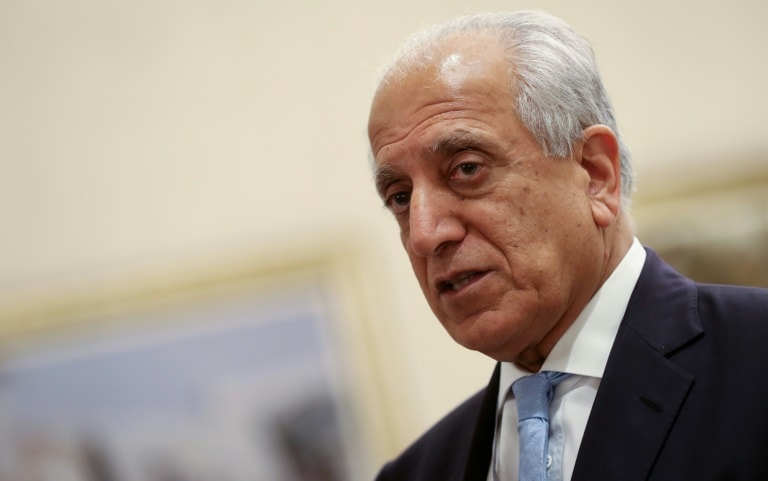 |
| US envoy Khalilzad spent about a year meeting with the Taliban in an effort to end the war in Afghanistan. Photo: AFP |
On the other hand, the agreement could also lead to the gradual withdrawal of nearly 14,000 US troops currently stationed in Afghanistan, contributing to the fulfillment of President Trump's long-term goal and campaign promise, amidst the most intense phase of the 2020 election campaign.
According to TOLOnews, Khalilzad confirmed: “Yes, we have reached an agreement in principle. Of course, this is not the final version until US President Donald Trump agrees. So, at this moment, we are in that process.”
Information about the agreement was released amid a sharp escalation of violence in Afghanistan, with the most recent attack occurring just hours after Khalilzad's interview.
A car bomb targeted a police station in Kabul on September 2nd, right in the middle of a heavily guarded area that houses many foreign embassies and international organizations.
According to Afghan Interior Minister Nasrat Rahimi, the attack killed at least five people and injured 50 others, who were taken to hospitals for treatment.
The Taliban launched attacks on two Afghan cities in two days. These attacks also followed the deaths of three American soldiers in operations over the past two weeks.
Earlier this week, Khalilzad said that the agreement with the Taliban had been “split” into a main agreement, accompanied by a second document addressing the details of the points of contention in the agreement.
Since taking on the "hot seat" as special envoy a year ago, Khalilzad has held nine rounds of talks with the Taliban, focusing on four key issues: the withdrawal of US troops, counter-terrorism guarantees, a ceasefire, and intra-Afghan negotiations.
A representative for Mr. Trump stated that the U.S. would not accept the "re-emergence" of the Taliban's harsh Islamic rule, and affirmed that the Trump administration wanted a government established after peace talks within Afghanistan were unanimously agreed upon by the entire Afghan population.
Even so, senior intelligence officials have repeatedly warned that Afghanistan remains extremely fragile, and, as when the Taliban allowed Al Qaeda to take refuge ahead of the 9/11 terrorist attacks, could once again become a terrorist stronghold.
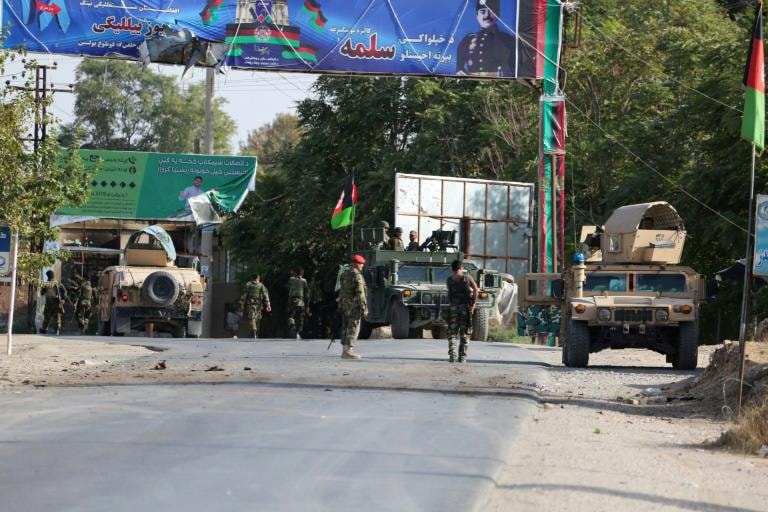 |
| Afghan security forces at the scene of a suicide attack on the outskirts of Kunduz on September 2. Photo: AFP |
Khalilzad said that the US withdrawal from the five bases depended in part on the security situation and a significant reduction in violence in those areas, but added that he "couldn't call it a ceasefire, because they agreed that the term ceasefire belongs to peace talks within Afghanistan."
Khalilzad's negotiations with the Taliban have marginalized the Afghan government, leading President Ashraf Ghani to express some skepticism.
The Taliban have made it clear that they will only negotiate a ceasefire and political solution with the Afghan government and other Afghan political forces after the US has completed its troop withdrawal.
Is the curtain about to fall?
According to the same source, the Afghan government has been informed of all aspects of the negotiations, including the withdrawal of US forces from the country, counter-terrorism guarantees, and a ceasefire.
Special envoy Khalilzad further revealed that President Ghani and Afghan Chief Executive Abdullah Abdullah had both read the agreement, but had not yet received copies.
He said the agreement allows for early initiation of dialogues within Afghanistan, and that these will take place in Afghanistan before the country's presidential election on September 28.
For its part, the US prefers these negotiations to take place in Norway, especially since that country is believed to be actively working to host these talks.
Ghani's spokesman, Sediq Seddiqi, said the Afghan president had "seen" the agreement and that the "key details" of the document had been shared with him. The Afghan government will carefully study the agreement and provide feedback to special envoy Khalilzad.
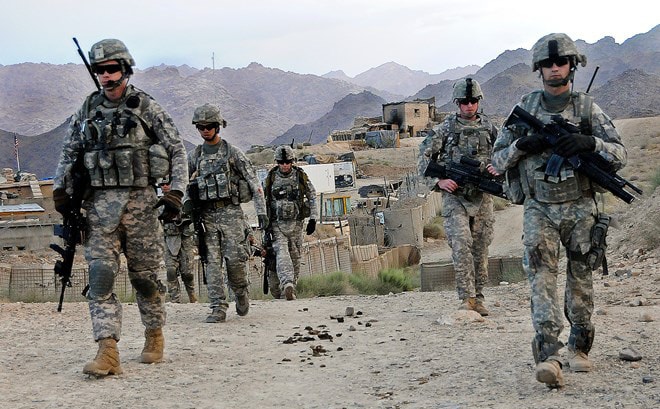 |
| US troops in Afghanistan. Photo: Khaama Press |
In August, US President Trump told Fox News that he planned to withdraw thousands of US troops from Afghanistan, but would keep 8,600 troops there, at least for the time being.
The occupant of the Oval Office stated that the United States would make decisions based on what was happening on the ground, while emphasizing that the US could have a quick victory if Trump wanted to kill 10 million people in Afghanistan, but the reality was that the leader did not want to.
Trump asserted that the US would withdraw a “very large number” of troops, and that maintaining a presence there remained important because he likened Afghanistan to the “Havard of terrorists.”
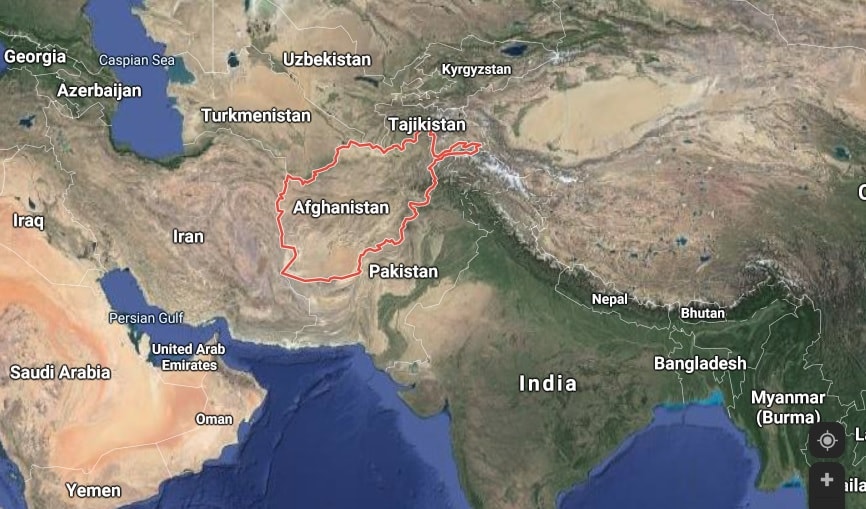 |
| General Joseph Dunford, Chairman of the Joint Chiefs of Staff, stated that any agreement with the Taliban must ensure that Afghanistan does not become a "haven" for extremists. (Image: Google Maps) |
To date, President Trump has consistently shown caution regarding the prospect of troop withdrawal put forward by Republicans in the U.S. Congress. Last week, one of America's top generals, Joseph Dunford, Chairman of the Joint Chiefs of Staff, stated that it was too early to talk about "withdrawing troops" from Afghanistan.
Like many others, he argued that any agreement with the Taliban must ensure that Afghanistan does not become a "haven" for extremists.