

Portrait of the New Managing Director of the International Monetary Fund
(Baonghean) - Following Christine Lagarde's resignation to take on the leadership role at the European Central Bank (ECB), the International Monetary Fund (IMF) Executive Board has officially approved Kristalina Georgieva's nomination as the new IMF Managing Director.
Following in the footsteps of Ms. Largarde, the IMF's second female Managing Director, with her impressive experience in economics and finance, is expected to bring new dimensions to her tenure over the next five years.
Nevertheless, given the still bleak outlook for the global economy, the road ahead for Georgieva is expected to be anything but easy!
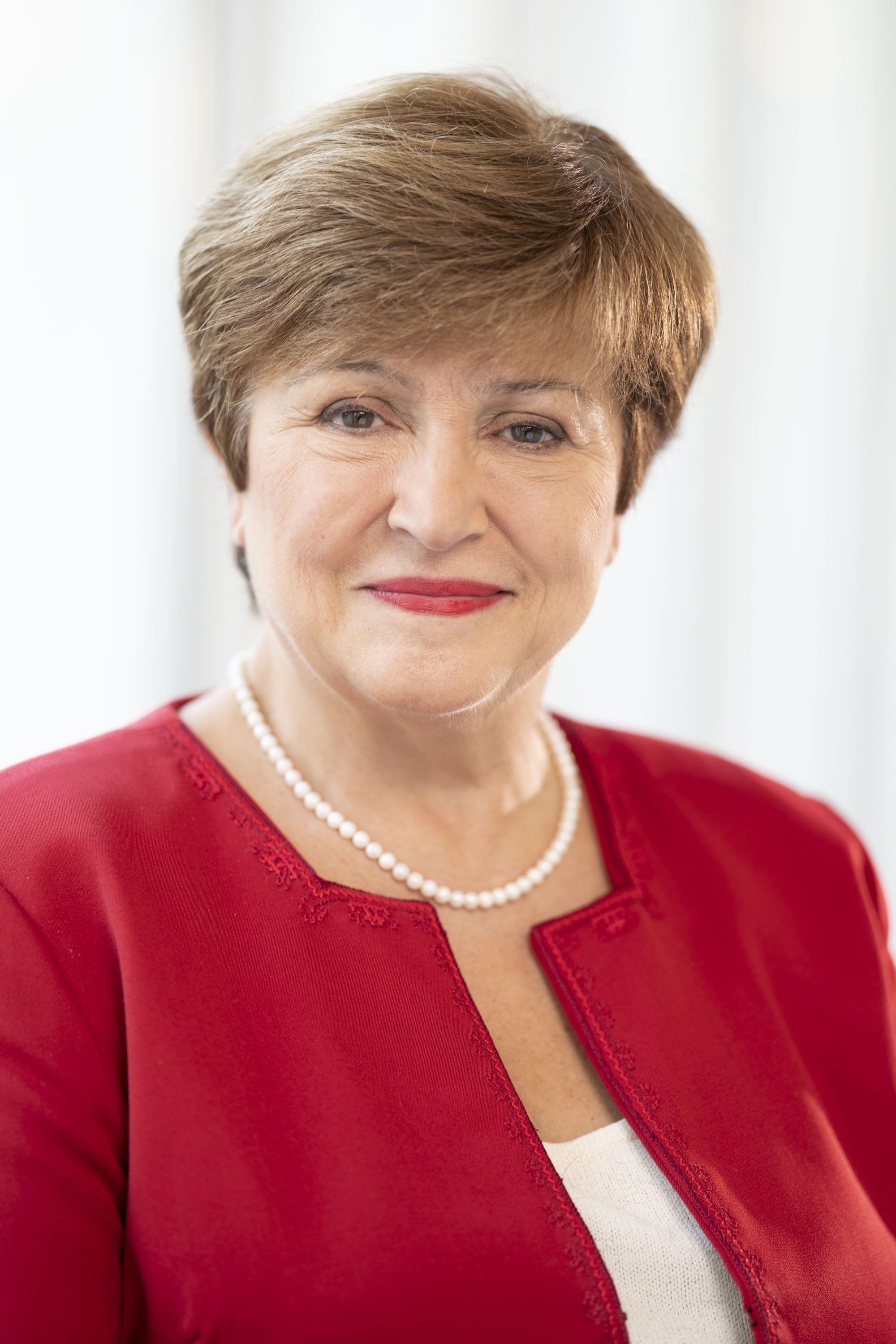 |
| Portrait of the new IMF Managing Director, Kristalina Georgieva. Photo: IMF |
Extensive experience
Born on August 13, 1953, Bulgarian economist Kristalina Georgieva is the daughter of a civil engineer. She holds a PhD in economic sciences and a Master's degree in political economy and sociology from the National and World Economic University in Sofia, Bulgaria. At this university, she also served as an Associate Professor from 1977 to 1993.
During her studies and research, she became a British Council scholar at the London School of Economics and the Massachusetts Institute of Technology. Building upon these foundations, Georgieva independently developed a solid experience to begin working at leading institutions such as the World Bank and the European Commission, where she held various senior roles.
During her time at the European Commission, Georgieva helped shape many of the European Union's agendas. For example, as Vice President of the European Commission on Personnel and Budget – overseeing a €161 billion budget and 33,000 staff – Georgieva was involved in proposing effective solutions to address the European debt crisis as well as the 2015 refugee crisis.
At the World Bank (WB), her senior positions include Vice President, WB Director for Sustainable Development, WB Environment Director, and Director for Environmental and Social Development in East Asia and the Pacific. A significant milestone was her tenure as Managing Director of the WB from January 2017. From February 1st to April 8th, 2019, she also served as Acting President of the WB for three months until David Malpass, a former senior official at the US Treasury Department, took over the position in April.
On July 26th, the IMF Executive Board, comprising 24 delegates representing 189 member countries, began discussions to select the Managing Director of the world's leading financial institution. With an impressive resume and exceptional interview results, Kristalina Georgieva – the sole candidate – was officially chosen.
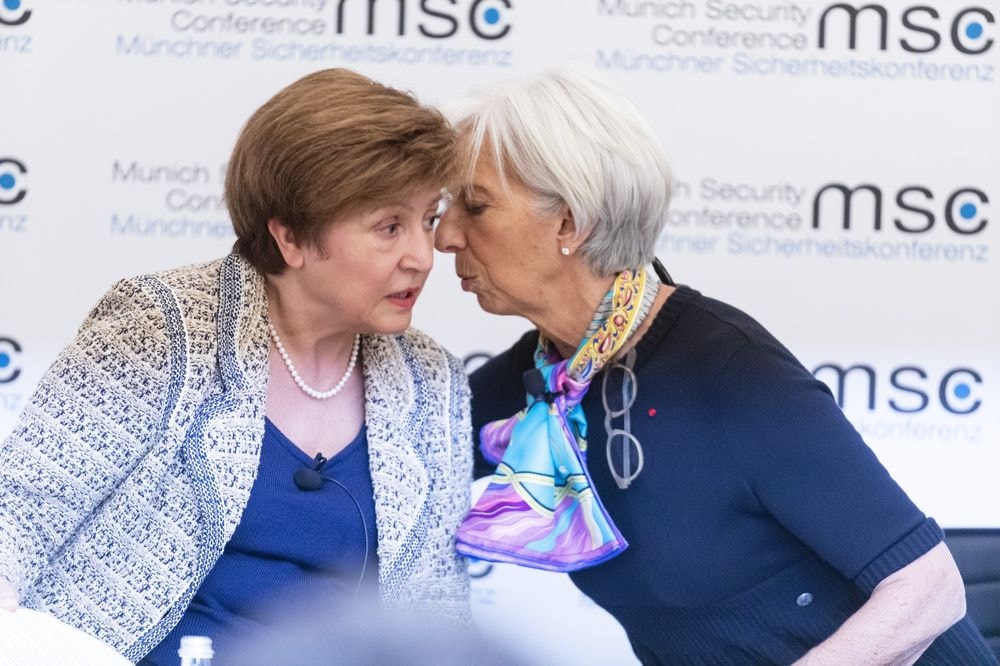 |
| The transfer of power between the two female Managing Directors of the IMF. Photo: Bloomberg |
With this decision, Ms. Georgieva becomes the first person from an emerging economy, Bulgaria, to lead the IMF since its founding in 1944. With a rather calm demeanor, lacking the sharp wit of her predecessor Christine Lagarde, but with extensive experience, Ms. Georgieva is expected to continue the successes of her previous term; and to implement new policies to ensure the stability of the global economic and financial system. Ms. Georgieva's term will begin on October 1st.
A high-pressure term
In her new role, Kristalina Georgieva will lead a team of approximately 2,700 people along with four deputies for the next five years. In a speech posted on the IMF's official website, Georgieva expressed her honor at being chosen to lead the IMF. She emphasized that this is also an enormous challenge at a time when global economic growth continues to disappoint, trade tensions are constantly escalating, and debt levels are at historically high levels.
Acknowledging the challenges facing the global economy, Ms. Georgieva emphasized that her priority in her new role is to support member states in mitigating the risks of economic crises and preparing for recessions. However, she stressed that long-term goals of building stronger economies and improving the lives of people worldwide should not be lost. These goals must be achieved on a foundation of sound monetary, fiscal, and structural policies. This also means the world needs to focus on addressing long-term challenges such as inequality, climate change, and the rapid advancements in science and technology.
According to Ms. Georgieva, protecting the IMF's financial strength is essential for its readiness to act. Therefore, it is necessary to strengthen oversight and capacity building efforts, paying more attention to the needs of IMF members. Of course, during their term, the new IMF Managing Director also needs to maintain and enhance the role of the global cooperation forum on trade, financial stability, and exchange rates. This is also the financial institution that provides aid to help prevent economic crises and finance development projects in member countries, with total funding reaching $1 trillion.
 |
| The International Monetary Fund continues to lower its forecast for global economic growth – this is one of the major challenges in the tenure of the new IMF Managing Director, Kristalina Georgieva. Photo: Reuters |
These tasks are likely to become even more challenging now that the IMF has once again lowered its forecast for global economic growth in both 2019 and 2020 to 3.2% and 3.5% respectively – both down 0.1% from the April forecast. It's worth noting that growth of 3.3% or less would be the lowest growth rate for the world economy since 2009. With uncertain growth and a series of unfavorable developments such as the US-China trade war, the Brexit crisis, declining investment and confidence, and disruptions in global supply chains, all of these are creating immense pressure on the new IMF Managing Director, Kristalina Georgieva, for her next five-year term!