

Restricting intermediaries in land auctions through indirect voting.
(Baonghean) - To date, 11 districts, cities, and towns in the province have piloted the implementation of land auctions using indirect secret ballot. This activity has initially created positive changes, but in reality, there are still limitations and shortcomings that need to be studied and amended soon.
Limit the number of land brokers.
Attending the auction of 15 residential land plots in Hau Thanh commune (Yen Thanh district) at the end of July 2019, it was clear that there was no longer any crowding or disturbances caused by land brokers; nor was there the presence of police forces providing security both inside and outside the auction area as in previous auctions.
Under the close supervision of the District Supervisory Council, the auction was conducted publicly, transparently, and in accordance with the law. In just two hours, all 15 land plots in Hau Thanh commune were successfully auctioned, with the highest bid exceeding 1.302 billion VND and the lowest 381 million VND. The total amount collected was 8.339 billion VND, exceeding the starting price by 4.338 billion VND.
Mr. Nguyen Van Thanh, a local resident, said: “After receiving the ballot, I filled in the information about the price I was paying and the lot number. Then, I put it in an envelope and signed my name over the sealed edge to ‘seal’ it and put it in the ballot box to wait for the announcement. I think with this method, buyers feel more comfortable and don’t have to endure pressure from brokers like before.”
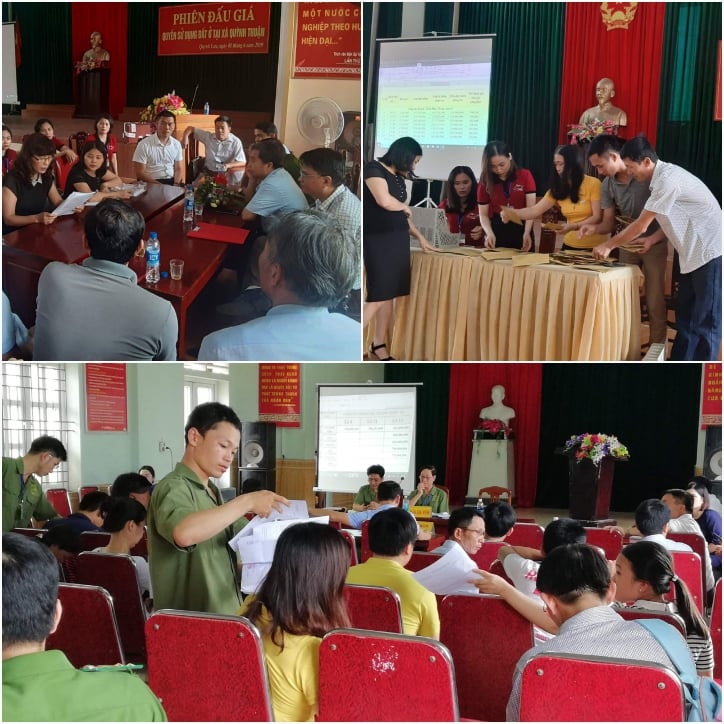 |
| Land auctions conducted through indirect voting proceeded in an orderly manner in various localities. (Photo: Archival image) |
According to a representative of the Yen Thanh District Supervisory Council: Yen Thanh District, a hotbed of land auction activity due to collusion among brokers, price manipulation, disorder, public discontent, and budget losses, was chosen by the province as a pilot area for changing the auction method from direct to indirect voting. This new land auction method has proven effective, increasing revenue for the budget and ensuring land reaches those in need; the practice of land brokers enticing and coercing people has significantly decreased.
Although not among the selected pilot areas, Nghi Loc district still implemented a pilot program for land auctions using indirect voting. In August 2019, the Nghi Loc District People's Committee coordinated the organization of a secret ballot land auction for 12 land plots in Hamlet 6 and Hamlet 7, Nghi Thinh commune. This was the first auction using this new method held in the district.
Twenty-six applications were submitted for the auction. Accordingly, in just one session, 10 out of 12 land plots were successfully auctioned. The highest bid was over 1.8 billion VND, and the lowest was 800 million VND (two plots were ineligible for auction due to having only one applicant each). The local government collected over 16.72 billion VND for the budget from the auction of these 10 land plots.
According to compiled data from the Department of Justice, in Official Letter No. 8443/UBND-NC dated November 2, 2018, the Provincial People's Committee selected six units, including Vinh City, Dien Chau, Quynh Luu, Nam Dan, Yen Thanh districts and Hoang Mai town, to pilot the application of indirect bidding in land use rights auctions. In addition, five units have already applied indirect bidding in land use rights auctions: Hung Nguyen, Nghi Loc, Thanh Chuong, Do Luong and Cua Lo town.
In the first nine months of 2019, these units signed 77 contracts for land use right auction services, applying the indirect bidding method, with a total starting price of VND 620,510,093,985, and a winning bid price of VND 709,327,100,482, a difference of VND 169,781,006,487, exceeding the starting price by 27.36%.
Overall, the effectiveness of indirect auctions was high, with the average winning bid price significantly exceeding the starting price (27.36%). Notably, security and order at the auctions remained stable, with virtually no instances of collusion or negotiation between participants, nor any disruption by "auction brokers" or "gangsters," interference, intimidation, or coercion of bidders. This allowed people with genuine land needs to purchase land without pressure or the need for intermediaries.
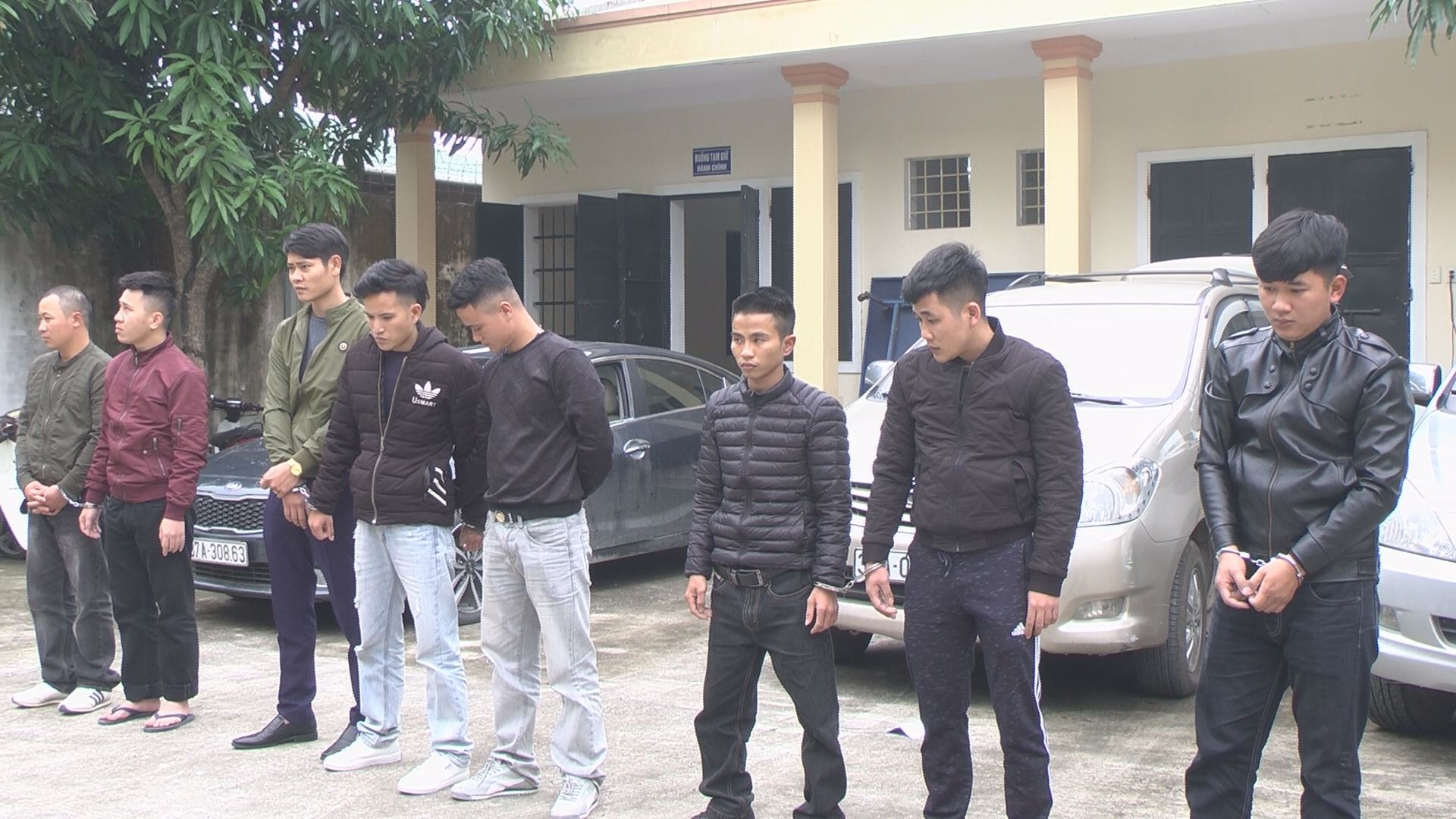 |
| Dien Chau District Police successfully cracked Case 1217G, summoning 13 individuals belonging to two groups of land brokers at the end of 2018. Photo: Mai Giang |
During a monitoring visit to the Legal Committee of the Provincial People's Council on land use rights auctions in October, representatives from the Cua Lo Town People's Committee reported that from January 2018 to September 2019, Cua Lo town successfully organized 17 land auctions, including 15 direct auctions and 2 indirect auctions. A total of 268 land plots were successfully auctioned, generating over 214.3 billion VND in winning bids, a 15.7% increase compared to the starting price.
According to Mr. Vo Van Hung, Vice Chairman of the People's Committee of Cua Lo town: "Organizing land auctions in person attracts many participants, creating excitement, and during the auction process, some land plots increase in value after 2-3 rounds, reaching significantly higher auction values than the starting price. However, the limitation of direct auctions is that they cannot filter out "dummy bidders," where people who do not need to buy land also participate in the auction, distorting the market and causing chaos in security and order."
Based on that experience, the town piloted two indirect auctions, which initially showed that it reduced the number of brokers and allowed those who wanted to buy land to determine their own capabilities before participating, with the highest bidder winning.
Addressing shortcomings and limitations
Although indirect land auction by ballot has many advantages over direct auction by ballot, its implementation still reveals some limitations. Specifically, because it is a new method, auction organizations lack experience in handling certain situations during the process of receiving applications and announcing auction results. Most people are unaware of market prices, making it difficult for them to determine the price they need to pay to win the auction.
Notably, the auction organizer is responsible for selling auction participation documents and ensuring the confidentiality of registered bidders, making it difficult to monitor the security of this information. In reality, the regulation requiring bidders to register with the auction unit which land lot they will be bidding on before casting their votes inadvertently creates loopholes that allow land brokers to negotiate and arrange deals with potential buyers.
Among the 11 units implementing the indirect auction method, most had winning bids significantly exceeding the starting price. However, in three units, namely Thanh Chuong, Quynh Luu, and Hoang Mai town, the winning bids did not increase significantly above the starting price (5.42% - 7.53%). Many believe this situation is unusual. Although it is not yet possible to conclude whether or not there was collusion, if this situation continues, the goal of curbing land brokers will not be fully achieved...
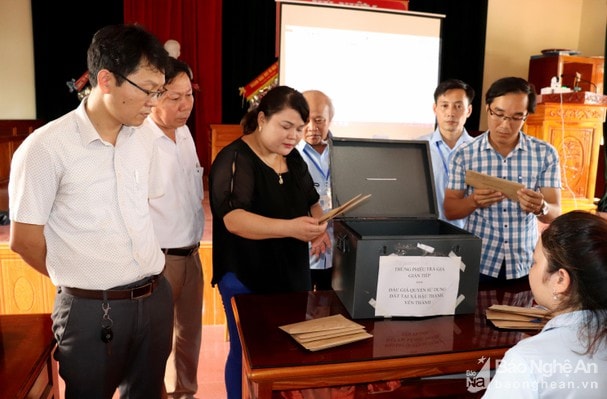 |
| Customers check the seals on the ballot box and envelope after the ballot box is opened at a land auction in Hau Thanh commune (Yen Thanh district). (Photo: Thai Duong) |
In an interview with us, Ms. Nguyen Thi Que Anh, Deputy Director of the Department of Justice, stated: "The indirect land auction method using ballots initially shows that, in addition to the winning bids exceeding the starting price significantly, the rampant activity and chaos caused by land brokers at auctions in localities have decreased considerably, and people who needed to buy land have been able to purchase the land they wanted."
However, because the indirect land auction method using secret ballots is a new implementation, some shortcomings are unavoidable. Therefore, in the coming time, along with continuing implementation in the selected pilot localities, as well as in many other districts, cities, and towns, based on feedback from these localities, relevant departments and agencies will collect and study the information to further refine the method.