

China postpones the implementation of tariffs on US goods.
(Baonghean) - The Tariff Commission of the State Council of China announced on December 15 that China has postponed the implementation of tariffs on US goods that were scheduled to take effect on the same day. This decision comes after the two largest economies in the world reached a "phase one" trade agreement on December 13.
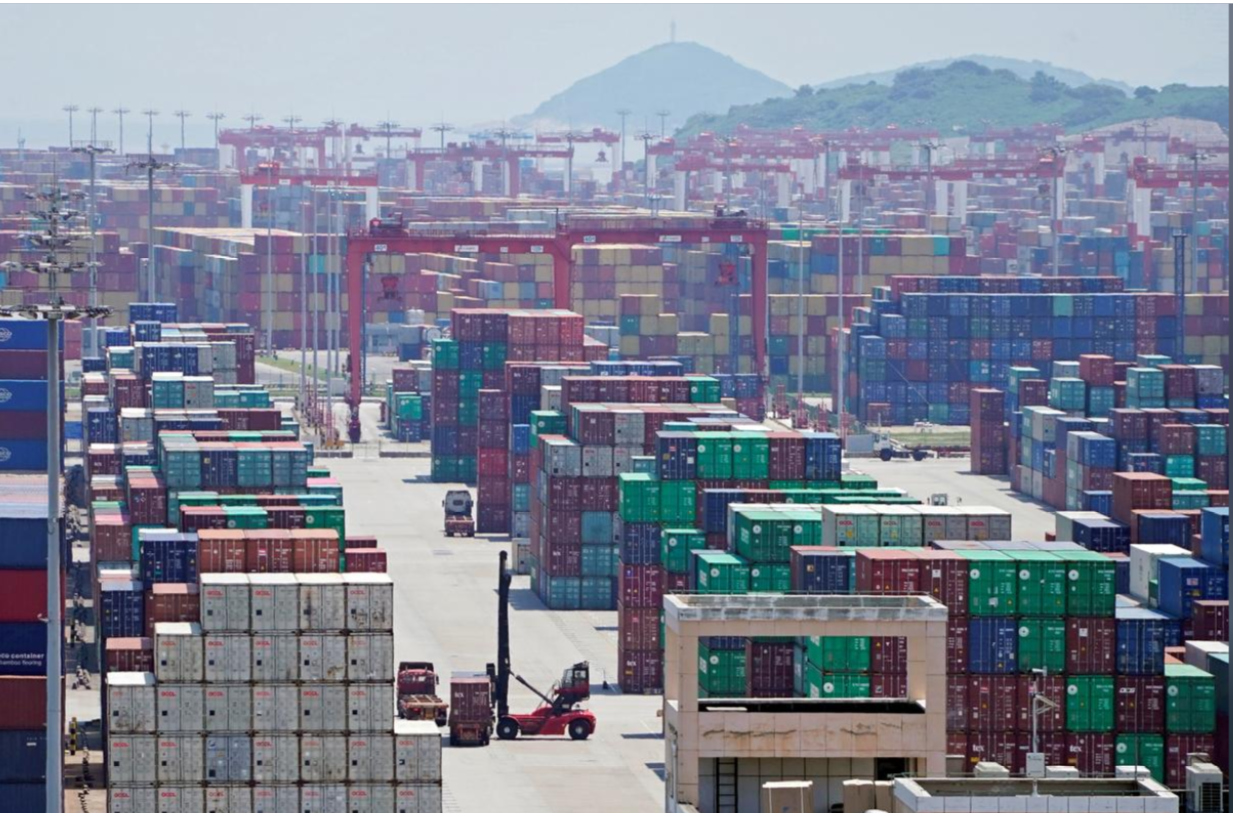 |
| Container trucks at Yangshan port, Shanghai, China, on August 6, 2019. Photo: Reuters |
Other tariffs that China imposes on U.S. goods are likely to remain in place, the Tariff Commission said in a statement posted on the government's website.
"China believes that, based on the principles of equality and mutual respect, China will work with the U.S. to fully resolve each other's concerns and encourage the sustainable development of economic and trade relations between the two countries," the Tariff Commission stated in its post.
Beijing has decided to spend at least $200 billion more on imports of U.S. goods and services over the next two years to surpass 2017 levels, senior U.S. trade negotiators said on December 13. Prior to the U.S.-China trade war, China had already spent $186 billion on U.S. goods and services in 2017, according to the U.S. Bureau of Economic Analysis.
According to Reuters, the U.S. Trade Representative's office said Washington will maintain the 25% tariff on $250 billion worth of imports from China, while the tariff on another $120 billion worth of goods will be reduced to 7.5%. The next round of tariffs, planned for later this week and targeting $160 billion worth of goods, will be canceled.
After nearly two years of confrontation in the trade war, the US and China announced on December 13th that they had reached a phase one agreement and are expected to sign the document in early January, after legal review and ensuring that the English and Chinese versions have equivalent language.