
Mikhail Mishustin - chosen for change
(Baonghean) - An unexpected scenario unfolded in Russian politics at the beginning of the new year when Prime Minister Dmitry Medvedev and the entire Russian government resigned. Immediately afterwards, President Vladimir Putin nominated Mikhail Mishustin – a figure shrouded in mystery to the world – to head the government.
Reform options
Russian Prime Minister candidate Mikhail Mishustin is a rather mysterious figure to the press and the public. He is 53 years old and currently serves as the head of the Federal Tax Service. President Putin's nomination, made immediately after his State of the Union address on January 15th, led many to believe that a major personnel reshuffle within the Russian government had been meticulously planned. Even within Russian politics, Putin's nomination of Mishustin came as a big surprise to many. This move recalls the day, exactly 20 years ago, when the late President Boris Yeltsin nominated a relatively unknown man named Vladimir Putin to succeed him, ushering in a new era in Russian political history, and for Putin himself.
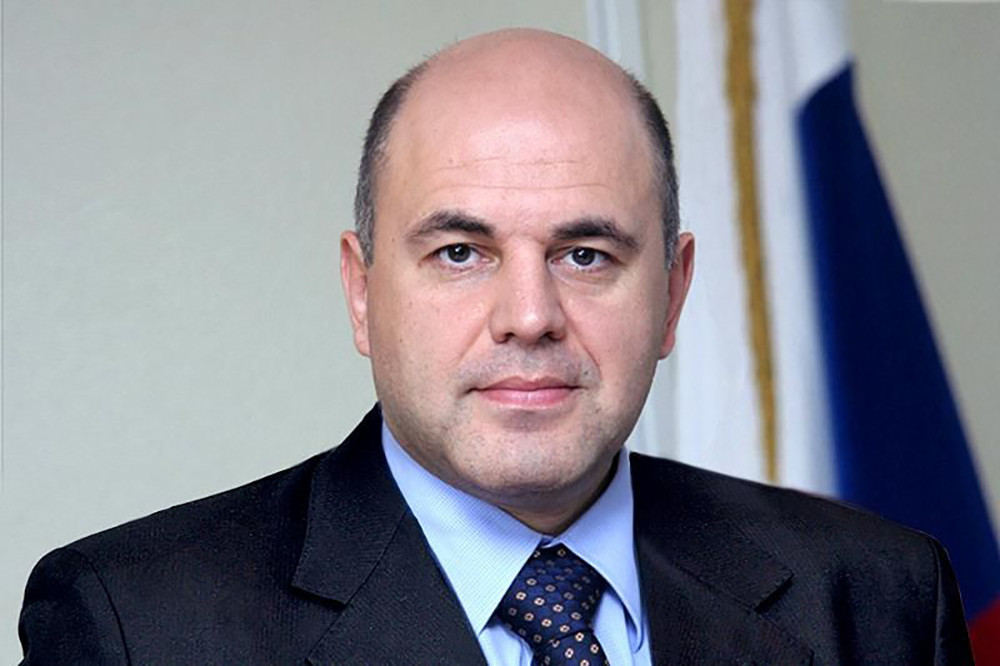 |
| Russian prime ministerial candidate Mikhail Mishustin. Photo: TASS |
Mikhail Mishustin was born in Moscow and graduated from the Moscow Institute of Machine Tools (now Moscow State University of Technology “Stankin”). His specialization was computer systems engineering. He also earned a doctorate in economics there. During the 1990s, Mishustin worked at the International Computer Club, which attracted information technology to the country. In 1996, he headed the organization's board of directors. Mishustin's career took a new turn when he decided to work in the state sector from 1998 – in the field of taxation. Initially, he was an assistant to the head of the State Tax Service, in charge of accounting and control information systems, and later as Deputy Director. He held a similar position when he moved to the Ministry of Taxation and Collection. He served in this role until 2004 under three leaders: George Boos, Alexander Pochik, and Gennady Bukaev.
His career took off in 2009 when Mishustin was included in the Russian President's pool of potential candidates. He was promoted to head the Federal Tax Service in 2010 and was dubbed "the tax officer of the future" by the Financial Times. His efforts in streamlining the work of the nationwide tax system were recognized. His efforts nearly brought about a major overhaul of the Russian tax system. The obvious beneficiaries were the Russian people, as this reform simplified tax filing and payment procedures. Mishustin's method, known as the "One-Stop Shop" system, reduced paperwork by digitizing many processes and building a unified database last year. Consequently, Russian government revenue increased rapidly.
“Mishustin understands technology better than anyone, and that understanding allows him to use machines to solve problems,” commented Vyachslav Fetisov, former Russian hockey legend and now a politician, on Russia’s new Prime Minister. Fetisov also called Mishustin “very responsible” and “has a systems mind, a quality that is very important today.”
Prior to this, Mikhail Mishustin also held a leadership position at the Federal Land Administration. In 2007, he headed the Federal Agency for the Management of Special Economic Zones, but he left the position after only one year. In 2008, Mishustin left the public sector entirely to try his hand at an investment company for two years. He is considered one of the three wealthiest officials in Russia. Forbes magazine estimates Mishustin earned approximately 78 million rubles (equivalent to over $2 million) as Chairman of UFG Capital Partners and managing partner of UFG Asset Management.
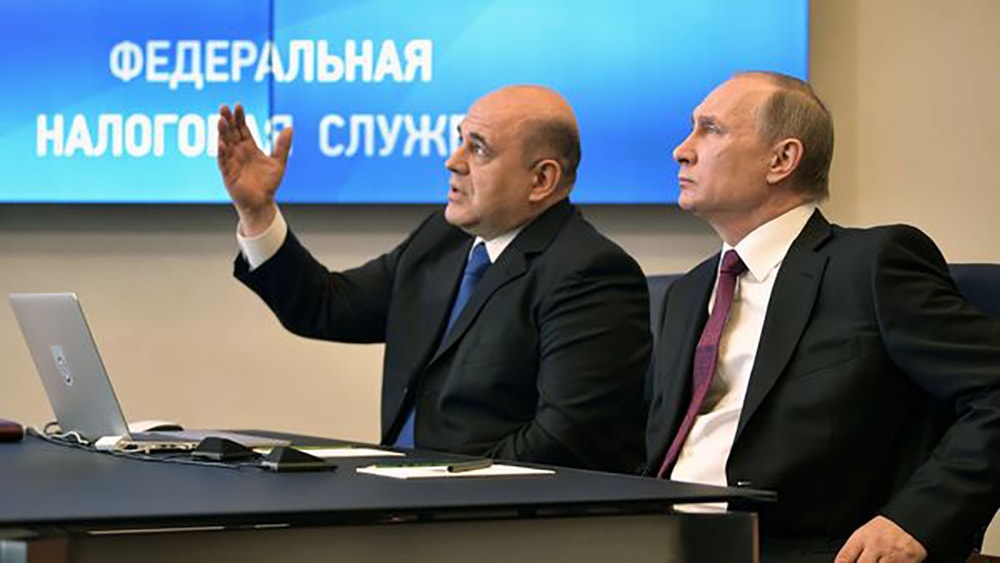 |
| Mikhail Mishustin as head of the Russian Federal Tax Service and President Vladimir Putin. Photo: Reuters |
Open-minded and dynamic
Beyond his professional success, Mikhail Mishustin is considered an open and dynamic leader, contrasting with the dry and formal nature of the work he undertakes.
Mr. Mishustin is a keen sports enthusiast. In 2006, he participated in a swimming demonstration at the opening ceremony of the Russian Swimming Championships at the Olilliysky Sports Complex. Politicians and athletes competed in the 50m freestyle. Another of Mishustin's hobbies is ice hockey – a passion very similar to that of the then-President Vladimir Putin. Mishustin personally plays on the field and is also on the supervisory board of the CSKA ice hockey club. “Mr. Mishustin has good connections within law enforcement agencies. He is often seen at ice hockey games with high-ranking officials from the Federal Security Service (FSB) and the Ministry of Internal Affairs,” a source said in 2010. But there are also some differences between the two; while President Putin rarely uses technology, Mishustin believes Russia needs to adapt to the digital age and artificial intelligence, otherwise it will fall behind. "We are entering the Fourth Industrial Revolution, which is a digital world," he said.
The successor?
Mikhail Mishustin is becoming the focus of attention in Russia after being nominated by President Putin as the new prime minister, a highly likely successor to Putin. Mishustin's rise to prominence is being compared to Putin's departure from the presidency in 2008 to become prime minister under Medvedev, and Medvedev subsequently becoming prime minister when Putin was elected for a third term in 2012.
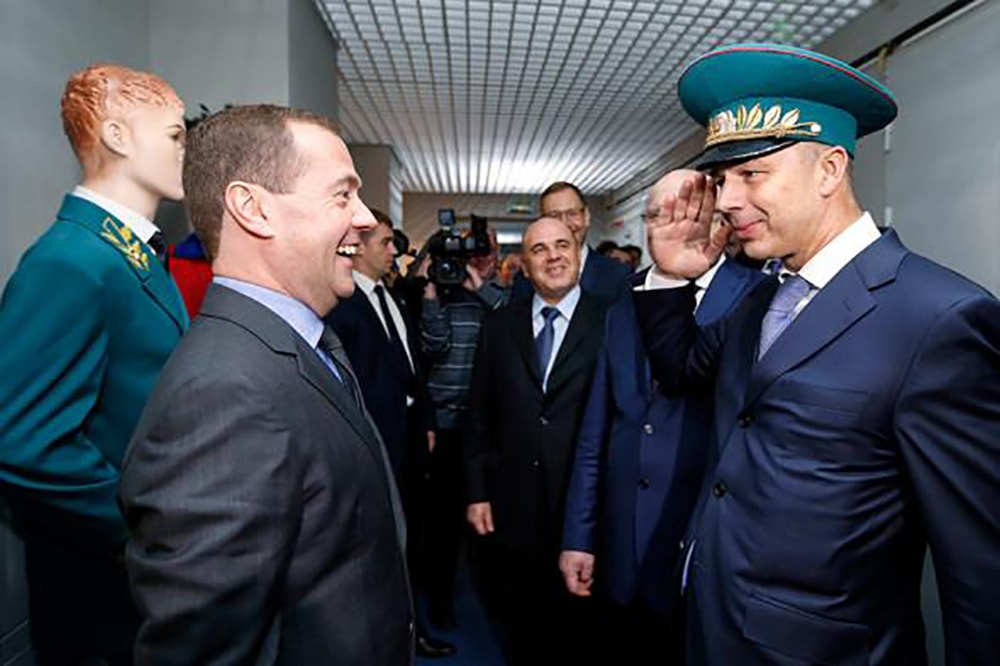 |
| Former Prime Minister Dmitry Medvedev, Finance Minister Anton Siluanov, and head of the Federal Tax Service Mikhail Mishustin during a visit to the Federal Tax Service Data Center No. 1 in Gorodets, 2015. Photo: TASS |
However, this is just the beginning for a technology expert and tax reformer. Politics is not the world of information technology, and certainly not a hockey rink. “Mishustin has no political experience, is not a popular figure with voters, and is not part of Putin’s inner circle,” commented Tatiana Stanovaya, a commentator at the Carnegie Moscow Center. She believes Mishustin’s chances of running for president in 2024 are very slim. Instead, he will likely take on the role of head of the Russian government because he is a technocrat – meaning he was chosen for his expertise, especially in economics, rather than political acumen. He was chosen as prime minister to create “a more capable leadership,” wrote Dmitri Trenin, head of the Carnegie Moscow Center.
Thanh Son