

World in the past week: 'The breaking point'
(Baonghean) - Just one day after South Korea convened a security meeting to express deep concern over Pyongyang's short-range ballistic missile test, Kim Yo-jong, the sister of North Korean leader Kim Jong-un, immediately issued a sharp criticism. Thousands of Syrian refugees are stranded at the border between Turkey and Greece, hoping to reach Europe to escape the conflict zone, raising fears of a migration crisis. These are some of the international issues of concern this past week.
North Korea's new tough stance
Kim Yo-jong, First Vice Chairwoman of the Central Committee of the Workers' Party of North Korea and sister of leader Kim Jong-un, is generally known for her moderate image, but her recent strong criticism of South Korea, calling it a "dog barking in fear," marks her first political statement and suggests North Korea is increasing pressure on South Korea.
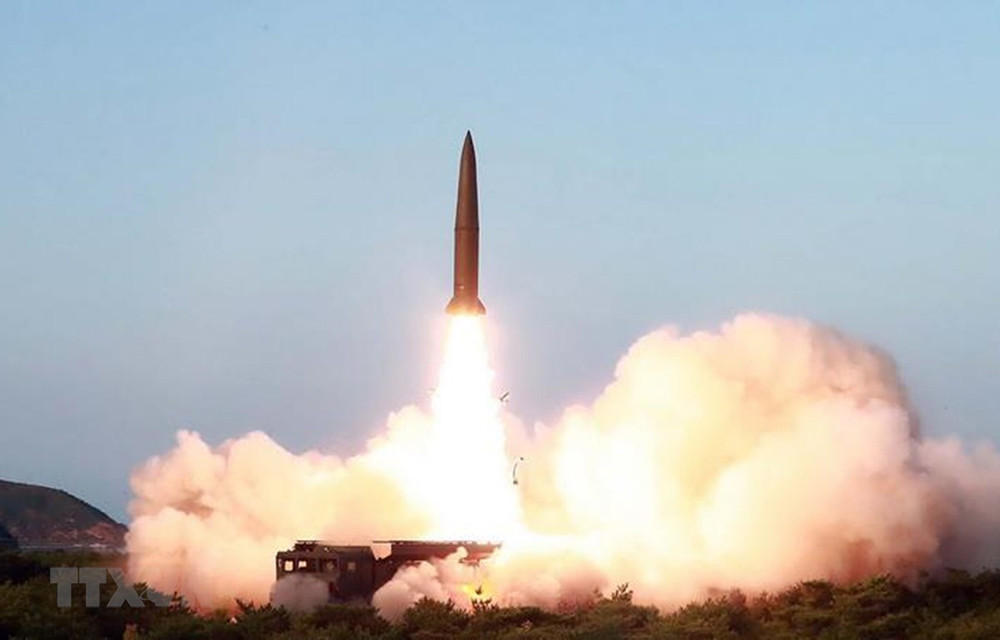 |
| A test of a new type of short-range strategic guided missile at an unspecified location in North Korea on July 25, 2019. Photo: AFP/VNA |
Kim Yo-jong's statement came after the Blue House (South Korean presidential office) convened a meeting of ministers on security matters, expressing deep concern over Pyongyang's testing of two short-range ballistic missiles and calling for an end to escalating activities. Kim Yo-jong argued that South Korea has no right to criticize North Korea, given that it has conducted military exercises with the United States. Therefore, Seoul's condemnation of Pyongyang is "truly meaningless." She asserted that such incoherent actions would only further amplify mistrust, hatred, and contempt between the two Koreas.
Kim Yo-jong is known as one of her brother's closest advisors – Leader Kim Jong-un. Her sharp tone in response is a stark contrast to her role as Kim Jong-un's special envoy to the Pyeongchang Winter Olympics in 2018, which ushered in a new era in inter-Korean diplomatic relations, which had been "frozen" for a long time.
Furthermore, analysts believe that the release of a political statement by Kim Yo-jong has highlighted her central role within the Pyongyang regime. Go Myong-hyun, an analyst at the Asan Institute for Policy Studies, stated: “Having been appointed First Vice Chair of the Central Committee of the Workers’ Party of Korea last January, those initial statements are a sign that she will advance further within the political system.”
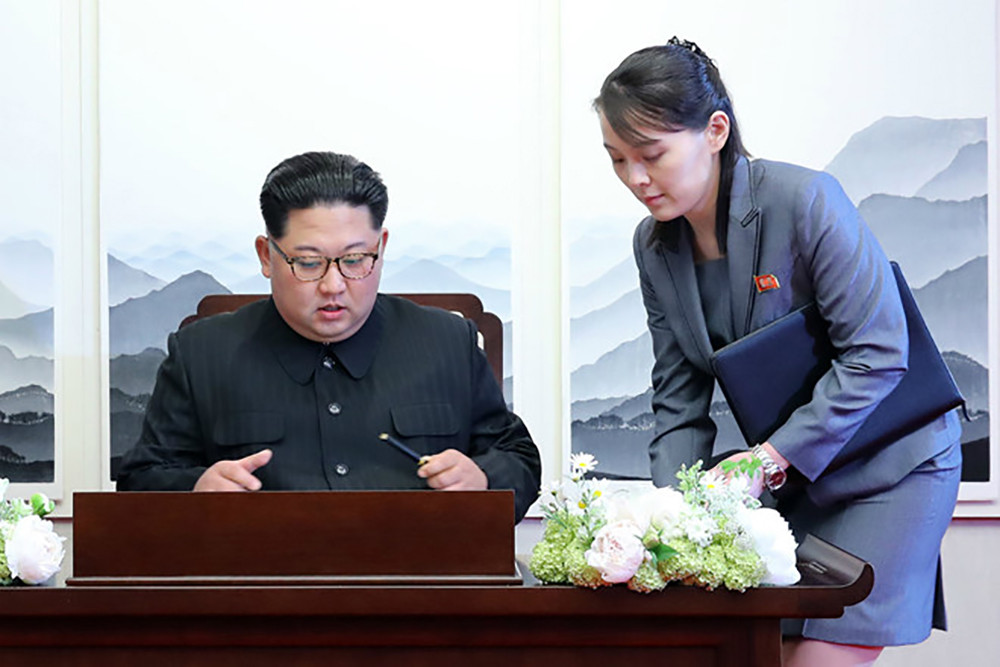 |
| Kim Yo-jong is known as the closest advisor to North Korean leader Kim Jong-un. Photo: AFP |
Previously, North Korean media released photos of Leader Kim Jong-un overseeing a drill firing a super-large multiple rocket launcher. The drill took place just days after the one-year anniversary of the summit between Leader Kim Jong-un and President Donald Trump in Hanoi, and after the deadline Pyongyang had given Washington had expired. Hong Min, a researcher at the Korea National Unification Institute, commented: “What’s noteworthy is how North Korean media reported on this activity. Previously, every move carried a message aimed at South Korea and the US; however, this time the information was relatively simple, merely describing it as an inspection by Leader Kim Jong-un.” Therefore, Pyongyang considers Seoul’s reaction completely unreasonable.
Inter-Korean relations have been stalled since the second US-North Korea summit in Hanoi in 2019 failed to make any progress. Pyongyang has urged Seoul to lift international sanctions and strengthen inter-Korean economic ties, but South Korea has refused. This has angered North Korea, and exchanges have stalled as a result. More recently, Pyongyang has not responded to Seoul's requests to ease travel restrictions to North Korea or cooperate in combating the Covid-19 pandemic.
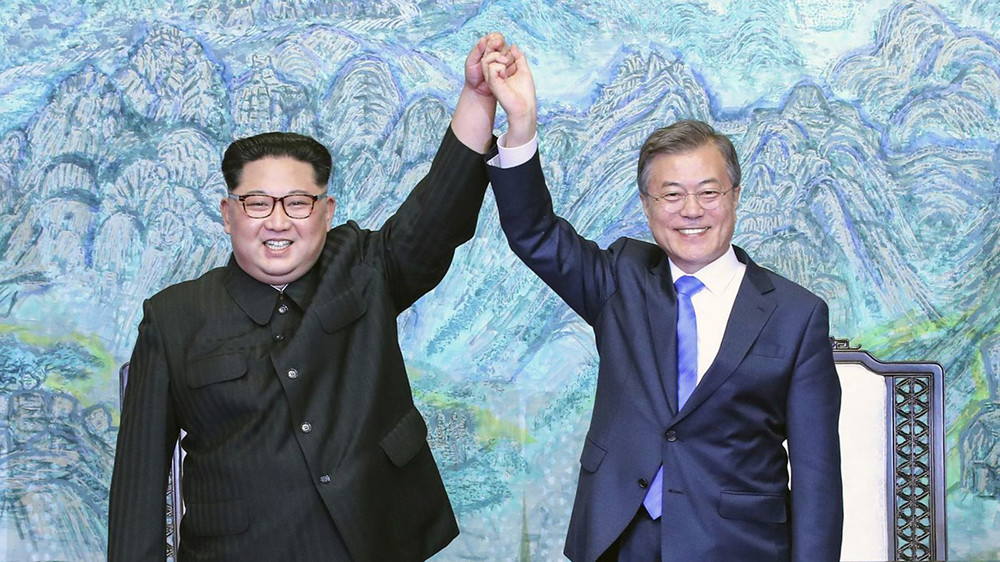 |
| Inter-Korean relations have been stalled since the second US-North Korea summit in Hanoi in 2019 failed to make any progress. In the photo: North Korean leader Kim Jong-un (left) and South Korean President Moon Jae-in raise their hands after signing the Panmunjom Joint Declaration on April 27, 2018. Photo: AP |
Lim Eul-chul, a professor at the Institute for Far Eastern Studies at Kyungnam University, argues that "Kim Yo-jong's initial statement should be interpreted as a sign of Kim Jong-un's strongest dissatisfaction with the South Korean government." Because after the promises and friendly handshakes, no agreement or proposal was actually implemented.
Stuck at the border
Thousands of refugees from Türkiye have flooded into Greece since President Tayyip Erdogan declared an "open door" for Syrian refugees to enter Europe, aiming to pressure the European Union (EU) on the conflict in Idlib province, Syria. In response to this massive influx, Greece declared a state of maximum alert to protect its borders and halted the processing of asylum applications. Meanwhile, Turkey deployed 1,000 special forces police to the border to prevent Athens from pushing the refugees back into Turkish territory. This has left refugees hoping to reach Europe stranded at the border between the two countries, raising concerns about a humanitarian crisis.
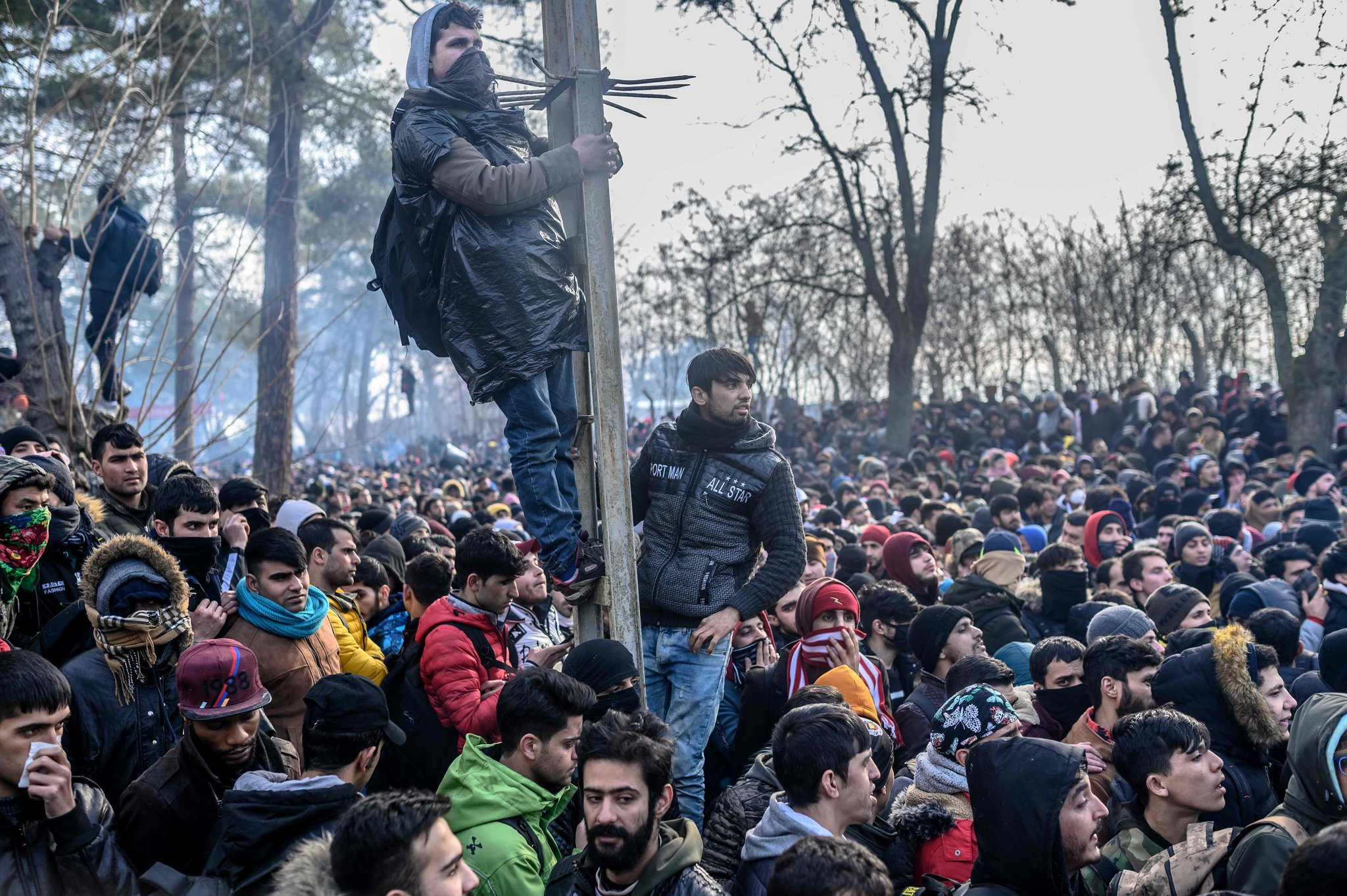 |
| Thousands of refugees are stranded at the Turkish-Greek border. Photo: NYT |
The appalling living conditions and overcrowding in Greek refugee camps have led to protests between migrants and security forces over the past few days. Conflicts escalated into violence as protesters threw stones at police and demanded their release, while security forces fired tear gas at the crowd. The escalating humanitarian crisis has left Syrians trapped between armed Greek soldiers and Turkish officials accused of exploiting the migrants' desperation as bargaining chips. Greece claims to have prevented 35,000 people from crossing the border in just a few days.
Turkey's decision to open its borders comes after President Tayyip Erdogan warned in recent months that he would open migration gateways to Europe if the EU did not support Ankara's plan in Syria. Turkey argues that it cannot accept any more Syrian refugees beyond the 3.7 million already settled, and blames the EU for not sharing the burden. Meanwhile, the EU has urged Turkey to uphold the 2016 agreement, in which the union provided Ankara with $6.6 billion to stem the flow of migrants.
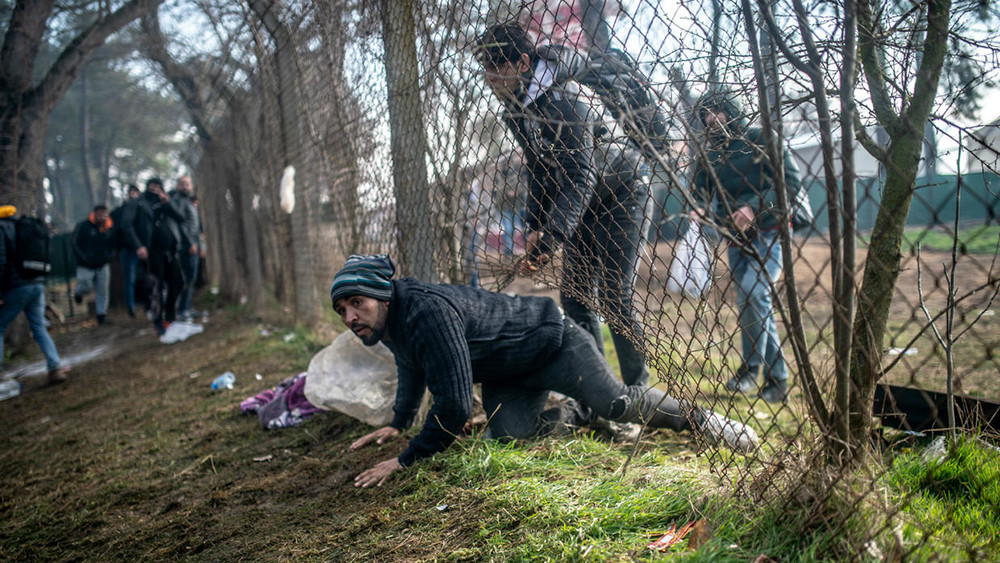 |
| Refugees attempt to cross the Turkish-Greek border. Photo: AFP |
Türkiye fears it could face another wave of migration as Syrian government forces, backed by Russia, continue fighting in Idlib province, which has driven hundreds of thousands of Syrian civilians fleeing toward the Turkish border since early December 2019. On March 5th, Turkish President Erdogan held talks with Russian President Putin and agreed on a ceasefire and other measures to resolve the situation in Idlib, Syria. However, Türkiye has not disclosed the duration of its migration policy.
Greece's borders are also Europe's borders. The EU does not want a repeat of the chaos of 2015-2016 when more than a million migrants and refugees, mainly from Central Asia, particularly from war-torn countries like Afghanistan and Syria, flooded into Greece in an attempt to reach Europe. Turkey's "refugee islands" have been overwhelmed recently, and the image of a 7-year-old Syrian boy dying on the beach after his boat capsized remains a haunting memory for Europe.