

16 trillion VND allocated for pandemic relief; don't use this as an opportunity for profiteering and illicit gain.
Tens of trillions of dong have been spent on combating the Covid-19 pandemic, a significant portion of which has been allocated to purchasing medical equipment. Without strict control, reckless spending and wasteful budgetary resources will occur.
In the supplementary report assessing the results of the 2019 state budget implementation and the situation of the 2020 state budget implementation submitted to the Standing Committee of the National Assembly, the Government anticipates needing to increase spending by approximately 52 trillion VND for epidemic prevention, control, and suppression, support for people facing difficulties due to the epidemic, and ensuring social security and safety.
Of that amount, approximately 12-16 trillion VND will be used to purchase medical equipment; and to implement some special measures in the prevention and control of the Covid-19 epidemic (allowances for epidemic prevention and control forces, food and medical examination and treatment costs for quarantined people, etc.).
Purchasing medical equipment and supplies for epidemic prevention is undeniable. However, the price and quantity of these purchases must be transparent and clear to prevent profiteering, corruption, and waste of public funds.
In fact, the procurement of medical equipment has been plagued by considerable controversy, most notably as evidenced by the State Audit Office's conclusions in 2018.
|
| The purchase of Covid-19 testing equipment is currently experiencing price gouging in many localities. |
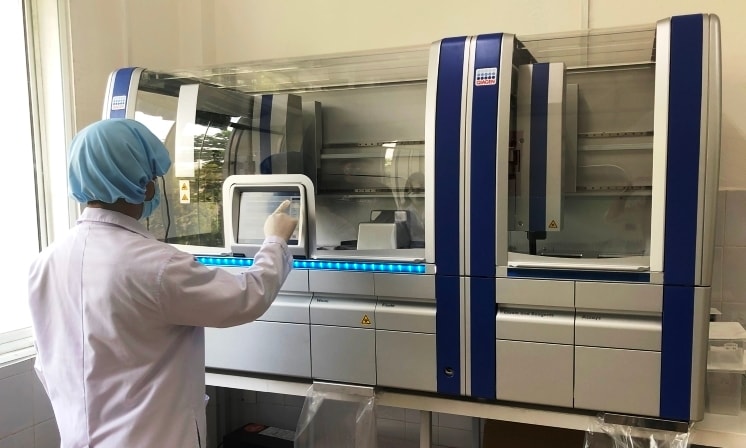
Through a thematic audit of investment, procurement, management, and use of medical equipment in 2015 and related years for the Ministry of Health and eight centrally-administered provinces and cities (including Hanoi, Hai Phong, Can Tho, Thai Nguyen, Lai Chau, Nghe An, Ha Giang, and Binh Duong), the State Audit Office discovered that investment and procurement lacked planning, procurement lists were not aligned with actual needs, and there was a lack of basis for establishing planned prices; bidding procedures lacked rigor and objectivity...
The State Audit Office has discovered that some units, due to failing to identify urgent needs or misjudging procurement needs in relation to infrastructure and human resources, have invested in equipment that is either not put into operation or is rarely used, resulting in waste of state budget resources.
According to audit results in 8 provinces and cities, the total number of damaged or underutilized equipment is 1,225, with a total original value of over 371 billion VND. Of these, 456 pieces of equipment are unused or rarely used, with a total original value of 151 billion VND. Notably, there are quite a few pieces of newly purchased equipment that have not been put into use or have already broken down shortly after being put into use...
With trillions of dong being spent on purchasing medical equipment and supplies for epidemic prevention, concerns have resurfaced about the rush to buy equipment that will not be used or will be used sparingly, leading to waste. There is even a risk of embezzlement and inflated prices for personal gain. The situation at the Hanoi CDC and signs of this in some provinces recently serve as a strong warning.
The downside of direct contracting.
In urgent situations, many contracts worth tens of billions of dong were awarded by various units to purchase medical equipment and supplies through direct contracting. "Direct contracting" is one of the reasons why many officials, including leaders who once held very high positions, have been involved in legal troubles.
|
| Mr. Nguyen Nhat Cam and his accomplices in the case at the Hanoi CDC. |
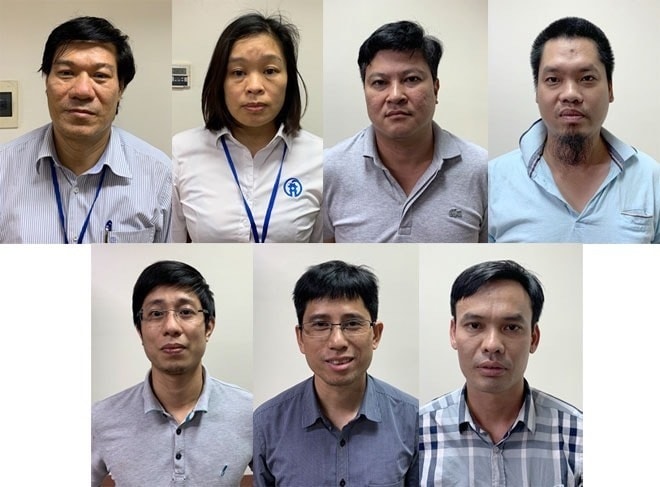
The case at the Hanoi CDC, with the leadership of Center Director Nguyen Nhat Cam, is the clearest example. From the beginning of 2020 to the present, the Hanoi CDC has announced 28 bidding plans related to the prevention and control of the Covid-19 respiratory disease with a total investment of 210 billion VND. All bidding packages under these 28 bidding plans used funds for epidemic prevention and control, and were awarded through direct contracting or simplified direct contracting. Mr. Nguyen Nhat Cam and his accomplices were prosecuted for violating bidding regulations causing serious consequences related to the purchase of Covid-19 testing equipment.
During the audit of medical equipment procurement, the State Audit Office also discovered instances of splitting tender packages into smaller ones to facilitate direct contracting. Furthermore, the appraisal of plans and the selection of contractors were found to be merely 형식적인 (formalistic) and inadequate, relying on price quotations collected by the investor from suppliers (not official importers), lacking analysis and evaluation by specialized units, thus failing to accurately and objectively reflect market prices.
Those conclusions of the State Audit Office remain valid when compared with recent controversies surrounding the procurement of medical equipment. They coincide with what a leader of the Department of Health revealed in the press. It's hard to believe that a piece of equipment was initially priced at 7.2 billion VND, but after "trouble," the price was reduced to 4.8 billion VND, and the purchasing unit even requested to return it.
In its annual bidding report published by the Ministry of Planning and Investment, the Ministry also pointed out the deliberate splitting of bidding packages to apply direct contracting or less competitive methods than open bidding... It also highlighted instances of collusion, dummy bidders, and arrangements between bidders and between bidders and the bidding authority...
Notably, according to a report by the Ministry of Planning and Investment, in 2017, the direct contracting method had the largest number of bidding packages with over 153,000 packages, ranking second in total package value with over 74 trillion VND. However, the savings from these bidding packages were the lowest.
Notably, competitive bidding ranked third in terms of total number of bids, total bid value, and total winning bid value. Restricted bidding, while having the fewest bids, yielded the highest savings rate.
The data above shows that direct contracting and simplified direct contracting are still favored, even though they don't save much for the budget. Yet, they continue to occur and persist, regardless of public opinion and the law. Everyone understands why, except for a few who deliberately ignore it for personal gain. All will eventually pay the price when law enforcement agencies intervene. Clearly, the tens of trillions of dong spent on COVID-19 prevention and control are testing the integrity of many officials in positions of power.
Following a report from the Ministry of Public Security, Prime Minister Nguyen Xuan Phuc directed the Ministry of Health and the People's Committees of provinces and centrally-administered cities to urgently review, rectify, re-evaluate, and inspect the implementation of procurement packages for medical equipment, consumables, and medicines... serving the prevention and control of the Covid-19 epidemic, especially procurement packages for biochemical testing machines, ventilators, medical masks, chemicals, and consumables; if there are signs of legal violations, the files and documents should be transferred to the investigating agency for investigation, clarification, and strict handling in accordance with the law.