

The Israeli Prime Minister's 'Double War'
(Baonghean) - While continuing to fight to retain his position as Prime Minister and facing a legal battle, Benjamin Netanyahu is confronting the biggest challenge of his political career.
A series of storms
Three consecutive elections in less than a year and a showdown with prominent former military leader Benny Gantz failed to defeat Israeli Prime Minister Benjamin Netanyahu. But one factor could threaten his career as Israel's longest-serving prime minister: his trial on corruption charges – one of the most serious crimes in the country.
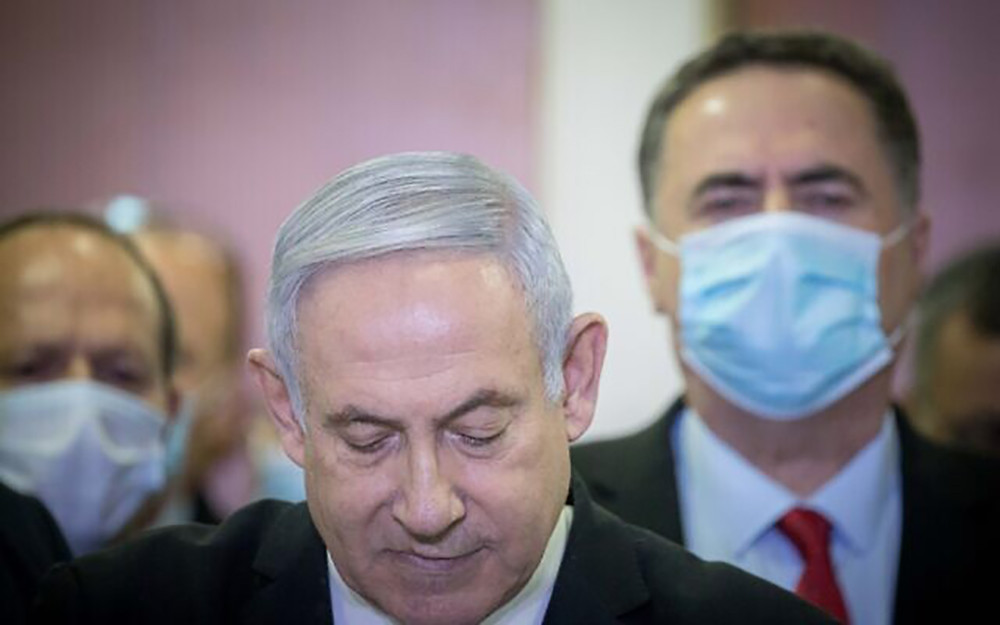 |
| Prime Minister Benjamin Netanyahu at his first court hearing on May 24, 2020. Photo: Times of Israel |
On Sunday afternoon (May 24), hours after chairing a meeting with his new cabinet, Netanyahu left his Jerusalem office, made a short trip to the courthouse in East Jerusalem, and sat in a very different chair: a hard wooden chair reserved for a criminal defendant. A prosecution against the incumbent Prime Minister has thrust him and the entire nation of Israel into an unprecedented situation.
In international politics, very few leaders since Charles I of Britain have faced trial on criminal charges. Netanyahu broke tradition by refusing to resign in order to protect himself and became the first sitting Israeli prime minister to stand trial. His predecessor, Ehud Olmert, was also convicted of bribery and sentenced to 16 years in prison six years ago, but that was after he had resigned.
Now, Netanyahu has no choice but to fight to the end and avoid the same fate as his predecessor. The 70-year-old Prime Minister is accused of bribery, breach of trust, and fraud. According to prosecutors, he is accused of receiving cigars, champagne, and jewelry from various tycoons totaling 180,000 euros in exchange for promises of assistance. He also allegedly favored the media in exchange for positive articles about him. He denies all charges, calling them "fabrications and ridiculous," a political "witch hunt" aimed at bringing him down.
The trial is expected to last a year or more. Following Sunday's hearing, which lasted about an hour, it's unclear when the next hearing will begin, as Prime Minister Netanyahu's defense team has requested more time to carefully review the evidence before proceeding. Facing a criminal trial will undoubtedly be a protracted battle, and if Netanyahu wants to maintain his current position, he will need a risky strategy.
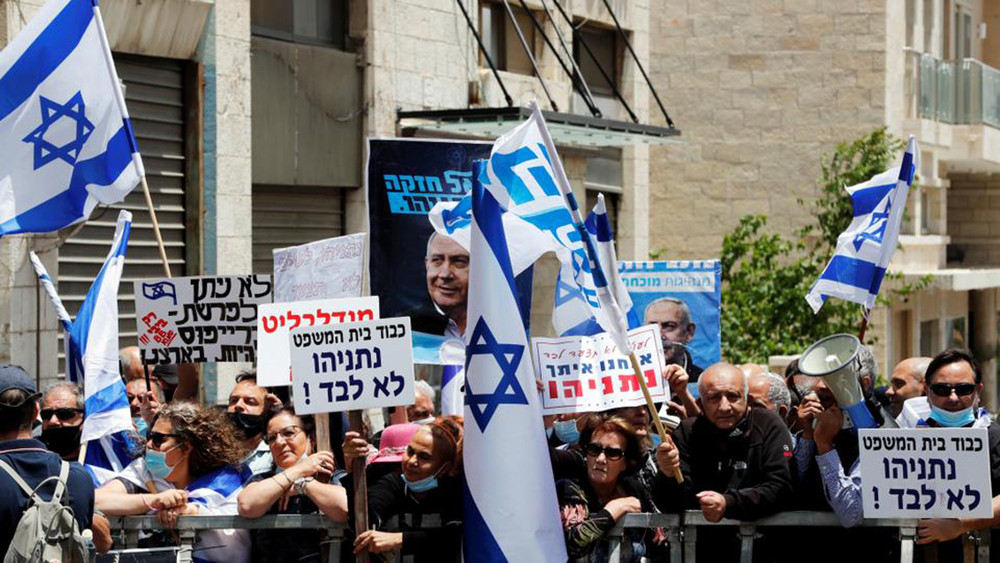 |
| Supporters of Israeli Prime Minister Benjamin Netanyahu waved flags and signs just before his trial began. Photo: Reuters |
However, regardless of the scenario, Netanyahu's political path remains extremely difficult. He has just gone through a long struggle to retain the Prime Minister's seat, but the outcome is quite precarious. Under the power-sharing agreement, Netanyahu will serve as Prime Minister for 18 months, after which he will hand over the position to Benny Gantz. Gantz, for his part, will serve as Deputy Prime Minister and Minister of Defense in Netanyahu's government.
During his time as Prime Minister, Netanyahu had the opportunity to "turn things around" if he ran for president in May 2021. If elected president, Netanyahu would gain an additional seven years of immunity. However, analysts believe that Benny Gantz's Blue and White party would be unlikely to tolerate these calculations of Netanyahu. Furthermore, within his 18 months in office, if Netanyahu wins his trial, he may continue his political career, but if convicted, all his political glory will be erased, and he will face many years in prison.
Is Israeli politics still unstable?
For Israel, putting its most powerful man on trial seems like a message of fairness and transparency within government institutions. As one Israeli political analyst put it, "it's a sign of strength." But some other observers argue that Netanyahu's decision not to resign under investigation, unlike his predecessors Yitzhak Rabin and Ehud Olmert, will damage the nation's image and could be a "weak point" if the trials drag on for too long.
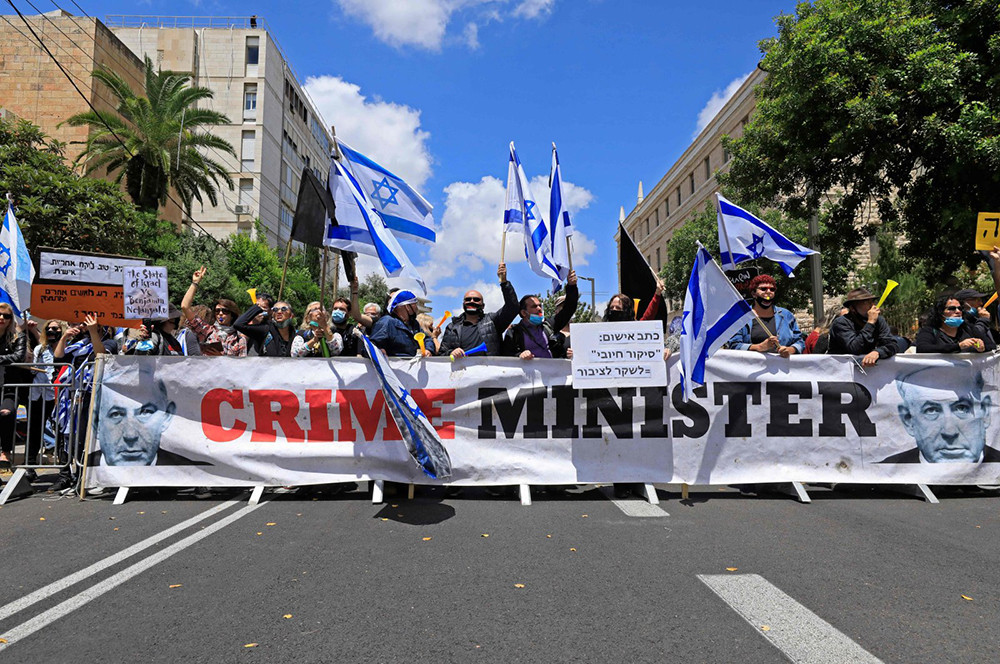 |
| And these are the people who oppose Netanyahu. Photo: AFP |
Objectively speaking, Israel is currently facing a series of both emerging and long-term challenges such as economic decline, rising unemployment, and the raging Covid-19 pandemic. Therefore, the trial of Netanyahu could stall pressing national issues and raise doubts. Under Israeli law, the Prime Minister is not obligated to resign or be suspended from office during trials, thus facing a "conflict of interest" situation. He holds the position of Prime Minister, thus being responsible for many important decisions, while also being accused of acting against government institutions. This means the leader is simultaneously in a position to lead the government and to undermine it. The question the people want answered is whether his decisions were truly in the best interests of the country.
Following his trial on April 24, the divide in Israeli opinion became evident, with thousands gathering to rally in support of him and describing him as "clean," while thousands more took to the streets accusing him of "holding the country hostage."
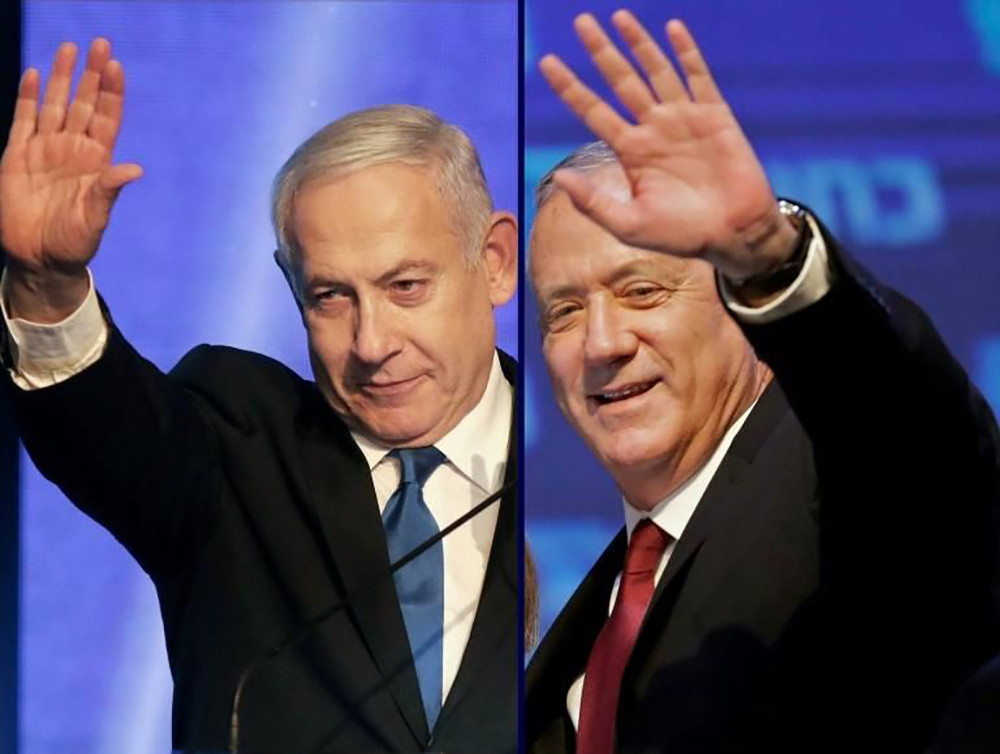 |
| Under the power-sharing agreement, Netanyahu will continue to serve as Prime Minister for 18 months before handing over power to his partner, Gantz. Photo: Getty |
That's not to mention the simmering undercurrents within Israeli politics. Many people don't truly trust the government they consider "gigantic." They argue that Israel, a small country, has the world's largest government with 32-36 ministers and two prime ministers. They believe this cumbersome apparatus isn't designed to run the country, especially as Israel is struggling to cope with the severe economic consequences of the Covid-19 pandemic, but rather its primary purpose is to divide power among factions, further increasing budgetary costs.
Within Prime Minister Netanyahu's Likud party and Benny Gantz's Blue and White bloc, not everyone is happy with the Netanyahu-Gantz government formation agreement. This lack of trust could trigger numerous conflicts, disputes, and even unpredictable scenarios for Israeli politics in the coming period. And the fact that Prime Minister Netanyahu is officially facing trial only increases the uncertainty surrounding this instability!