

Hoan Chau - Outpost of Dai Viet
(Baonghean.vn) - During the Ly and Tran dynasties, Hoan Chau/Nghe An, once a remote border region, made significant contributions to the defense and expansion of the country's territory. This period (approximately 400 years) also marked the flourishing economic and cultural development of Nghe An at that time.
PLACE NAMES AND BOUNDARIES
During the Ly Dynasty (1009-1225), Ly Thai To divided the country into 24 provinces, prefectures, districts, and finally villages and hamlets. Nghe An and Thanh Hoa were called "Trains". In the year Canh Tuat 1010, Hoan Chau and Dien Chau were designated as provinces. In 1025, Ly Thai To established Dinh Phien camp, encompassing land from the southern border to Hoanh Son. According to some sources, in the year Canh Ngo (1030), Ly Thai To changed Hoan Chau to Nghe An province. In the year Tan Ty (1101), Ly Nhan Tong again elevated Nghe An province to a prefecture.Nghe AnAt that time, Dien Chau was still an independent administrative unit from Nghe An.
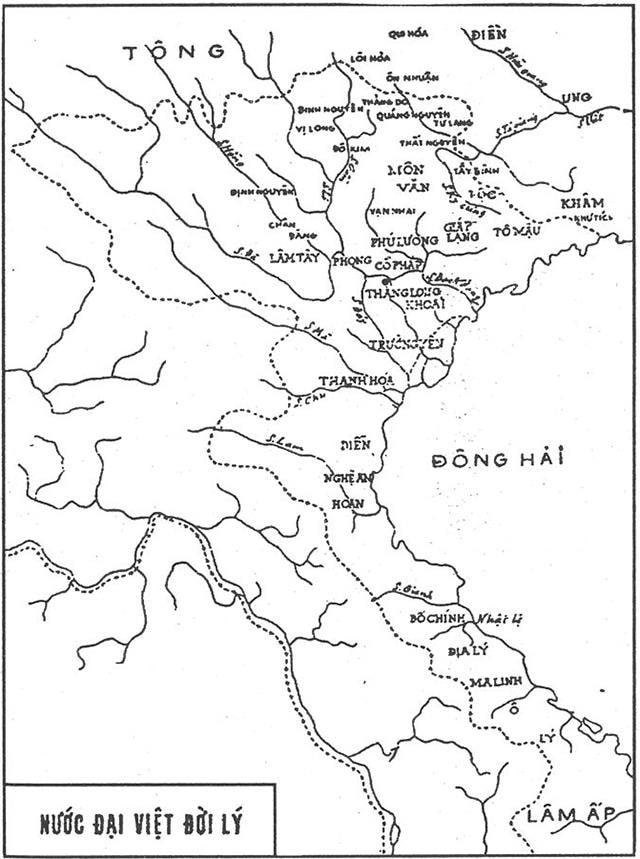 |
During the Trần Dynasty (1225-1400), present-day Nghệ-Tĩnh still comprised the two prefectures of Nghệ An and Diễn Châu, and the Định Phiên encampment. In the year Tân Mão (1231), the Định Phiên encampment was changed to Nhật Nam Châu. In the year Bính Thìn (1256), Nghệ An was again changed to an encampment. In the year Giáp Dần (1374), Diễn Châu was changed to a province. In the year Ất Mão (1375), “Hoan Châu was changed to Nhật Nam Province and the Nghệ An South, North, and Central provinces; Diễn Châu was changed to Diễn Châu Province”; Shortly after, according to Đại Nam nhất thống chí, it was again changed to a town..In the year Dinh Suu (1397), Nghe An province was changed to Lam An province and Dien Chau prefecture to Vong Giang province. Later, Ho Quy Ly changed Dien Chau prefecture to Linh Nguyen prefecture.
VITALITY OF THE REMOTE BORDER REGION
Continuing the legacy of the Early Le Dynasty, the Ly and Tran Dynasties, with their many progressive policies, brought about significant changes and development in the political, economic, and cultural situation of the Hoan-Dien/Nghe An region.
Politically, during the Ly Dynasty, the court extended its reach down to the villages and communes (huong and giap). During the Tran Dynasty, the court gradually built and consolidated the administrative apparatus into a solid system. Provinces and prefectures had the position of prefect, districts had the position of transport commissioner, and communes, depending on their size, had positions such as grand minister, junior minister, commune chief, commune supervisor, and commune historian. Because these were strategically important regions, the dynasties often appointed royal family members or talented individuals to govern them. For example, the Ly Dynasty appointed Ly Nhat Quang to collect taxes and then as the governor of Nghe An province…
Economically, the most noteworthy aspect of the Ly-Tran period was the reclamation of land and expansion of settlements. Along with the reclamation of land, expansion of cultivated areas, and dike construction to prevent flooding, there was a process of settlement, forming many new villages throughout the midland, lowland, and coastal areas, especially in the central regions of districts such as Do Gia (Huong Son), Nha Nghi (Nghi Xuan), Phi Loc (Can Loc), Chi La (Duc Tho), Tho Du (Thanh Chuong), and Dien Chau… Several large, prosperous, and densely populated villages emerged, such as Ngoc Son (Duc Thuan - Hong Linh town), Trao Nha (Dai Loc - Can Loc), Ta Ao (Xuan Giang - Nghi Xuan), Phat Ke (Da Son - Do Luong), Cao Xa (Dien Chau), and Trai Dau (An Phu - Vu Quang)...
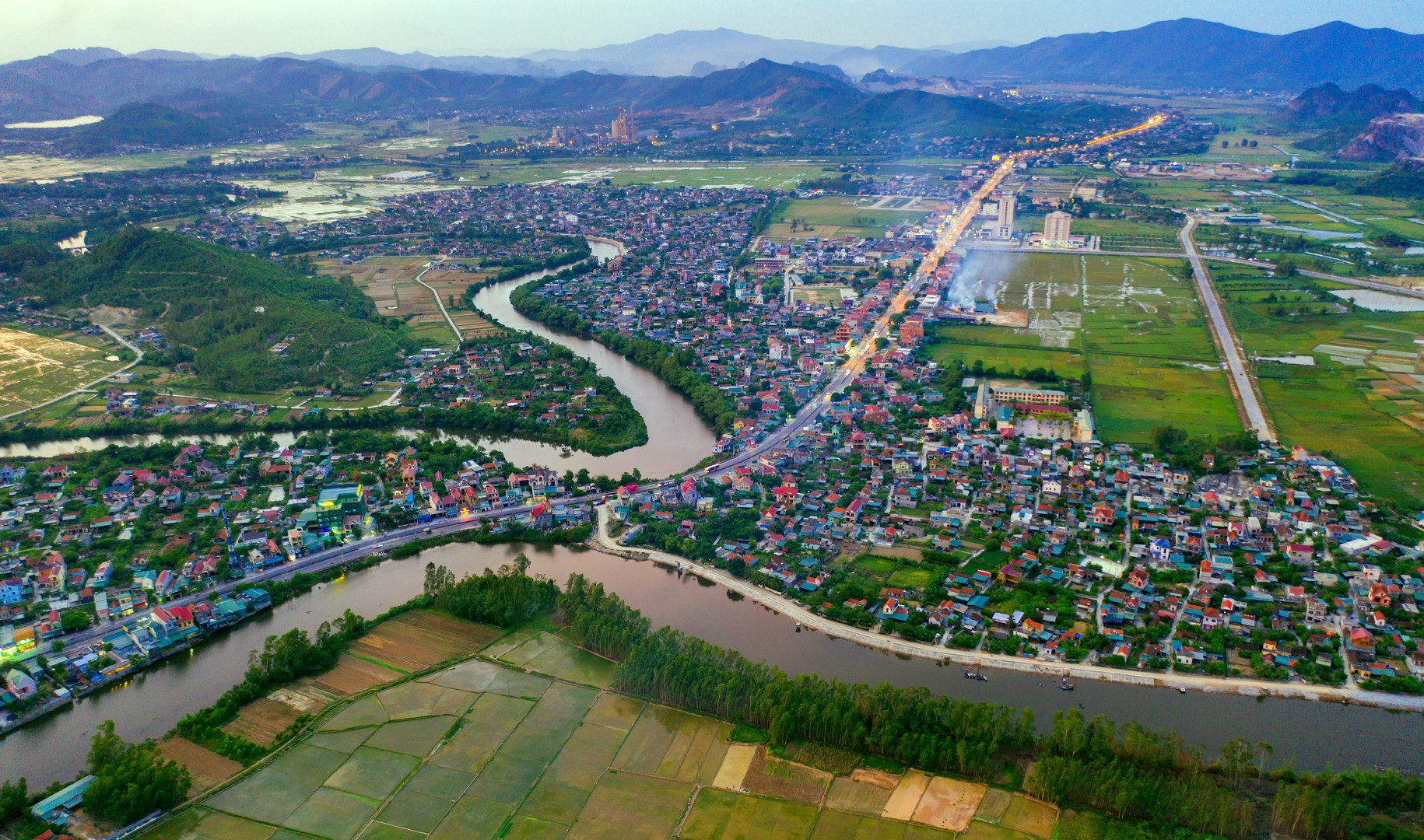 |
| The northern "gateway" region of Nghe An today. Photo: Ho Long |
During this period, irrigation was given priority. Several rivers and canals were opened and dredged, and many sections of dikes were newly constructed. As a result, not only was waterway transportation improved, but agriculture also developed.
Handicrafts also made significant progress during this period. Metallurgy and iron forging flourished in Nho Lam (Dien Chau), and several new craft villages emerged, such as blacksmithing in Trung Luong and Van Chang (Hong Linh town); bronze casting in Dien Chau and Thach Ha; salt production in Nghi Loc and Thach Ha; and silkworm farming became widespread in many places in Nam Dan, Thach Ha, Can Loc, and Huong Son, producing many famous products. Many new crafts also emerged with migrations from the North.
Trade and commerce also increased during this period. Many markets sprang up, including large and famous ones such as Sa Nam Market (Nam Dan), Luong Market (Do Luong), Trang Market (Hung Nguyen), Phu Luu and Truong Luu Markets (Can Loc), and Ha Hoang Market (Thach Ha)... Seaports like Cua Hoi and Cua Corn (Nghe An), and Cua Sot (Ha Tinh)... attracted many domestic and foreign ships for trade.
Culturally, according to ancient texts, Buddhism had penetrated deeply into this region since the Ly Dynasty. Many Buddhist architectural works were built. During the Tran Dynasty, many religious structures were built, such as Huong Tich Pagoda, Dien Quang Pagoda, and Corn Temple… At the same time, Confucianism developed rapidly, and a class of Confucian scholars began to form. In the year Bing Thin (1256), Bach Lieu (Nguyen Xa – Yen Thanh) topped the examination for the title of Trai Trang Nguyen (First Place Scholar). In the year At Mao (1275), Dao Tieu (Chi La – Duc Tho) topped the doctoral examination; followed by Ho Tong Thoc, Su Hy Nhan, Su Duc Huy, Nguyen Bieu… At this time, literary talents such as Tham Hoa Dang Ba Tinh also emerged…
THE OUTPOST OF DAI VIET
During the Ly and Tran dynasties, Nghe An was a frontier region of Dai Viet, constantly facing Champa, a powerful nation in Southeast Asia at the time. Nghe An served as a source of manpower and resources for the court's conflicts and wars with Champa. In Hoan-Dien/Nghe An during the Ly dynasty, there were approximately 10 clashes and wars between Dai Viet and Champa. Nghe An became a frontline against Champa's attacks, a springboard for counterattacks, and a means of expanding the court's territory.
In the years of Nhâm Tý (1252) and Tân Hợi (1311), the Trần kings themselves led troops to attack Champa. During the last nearly 30 years of the Trần dynasty, when the Đại Việt army was no longer as powerful as before, Đại Việt and Champa clashed 13 times, with Champa launching 4 raids on Thăng Long. Most of these clashes were directly or indirectly related to Nghệ An and Diễn Châu, causing significant losses of manpower and resources in the region.
During the Tran Dynasty, Laotian troops frequently raided and plundered the Nghe An and Thanh Hoa regions. Kings Nhan Tong, Anh Tong, and Minh Tong personally led numerous campaigns to suppress the rebels.
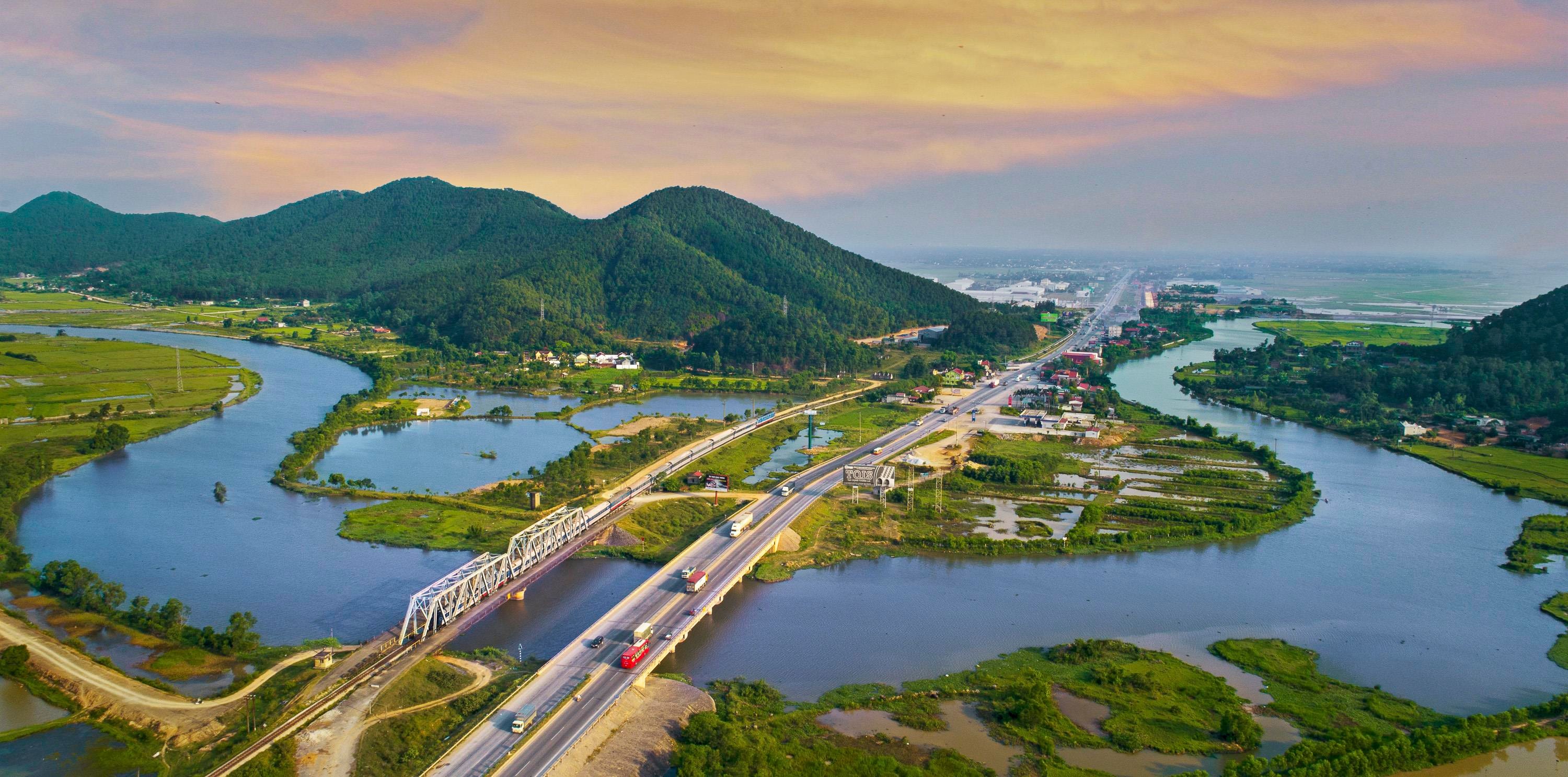 |
| View of Cam Bridge (Nghi Loc). Photo courtesy of Nguyen Thanh Hai. |
LET'S JOIN THE WHOLE COUNTRY IN FIGHTING THE MONGOL INVASION
Hoan - Dien during the Tran Dynasty was also closely associated with the national resistance wars against the Yuan-Mongol invaders. The most direct and significant example was the second resistance war (1285). On that occasion, the Yuan-Mongol army sent Toa Do with a navy to conquer Champa (1282) to create a pincer movement from the south against Dai Viet.
Recognizing the strategic importance of Nghe An - Dien Chau, after the first resistance war (1258), the Tran dynasty sent many generals to defend and build up forces in this area.
At the beginning of the year of the Rooster (1285), the Yuan army launched a massive attack on Dai Viet from two sides: Thoat Hoan attacked from the north, and Toa Do attacked from Champa territory. To counter this, the Tran dynasty sent Tran Nhat Duat to defend Nghe An. On January 28, 1285, Tran Quang Khai was sent as reinforcements. From the end of January 1285, Toa Do attacked Nghe An. At this time, Tran Quang Khai's reinforcements had not yet arrived, but the people and soldiers of Nghe An and Dien Chau, under the command of Tran Nhat Duat and Tran Quoc Toan, bravely resisted. Faced with the overwhelming enemy force, Tran Kien surrendered, Tran Quang Khai could not hold out, and the Nghe An front was broken. Although broken, the Nghe An front had depleted the enemy's strength and slowed their advance, creating conditions for the Dai Viet army to break the encirclement and launch a successful counterattack.
In this victory, and in all three resistance wars against the Mongol invaders during the Tran Dynasty, Nghe An and Dien Chau played a significant role. Hoang Ta Thon, Le Thach, and Ha Anh were among the many exemplary individuals from Hoan Dien who contributed to that achievement. Tran Nhan Tong once wrote in a poem:"The old events of Cối Kê should be recorded by the army/Hoan Diễn still has 100,000 soldiers."(Remember the old story of Coi Ke/Hoan Dien still has tens of thousands of troops).