

The Nghe Tinh Soviet - a flame that shines brightly forever with the nation and its land.
(Baonghean.vn) - Ninety years have passed, but the flame of the Nghe Tinh Soviet is not only a symbol of the indomitable fighting spirit of the nation with the unwavering will to "use our own strength to liberate ourselves"; but also a shining torch of revolutionary violence in the struggle for power in a sovereign country.
Fighting for the aspiration of independence and freedom.
At the end of the 19th century, our nation was under French colonial rule, and our people suffered under a double yoke of oppression, living in misery and misery under the shackles of colonial and feudal rule. Class contradictions and national contradictions in our country became increasingly profound. In that context, the Communist Party of Vietnam was born as a torch illuminating the revolutionary path; thoroughly liberating the leadership of "the revolutionary path and the revolutionary methods." This also created the conditions for our Party to undertake the historical mission of leading the Vietnamese revolution, placing the Vietnamese revolution within the orbit of the proletarian revolution and becoming a part of the world revolution.
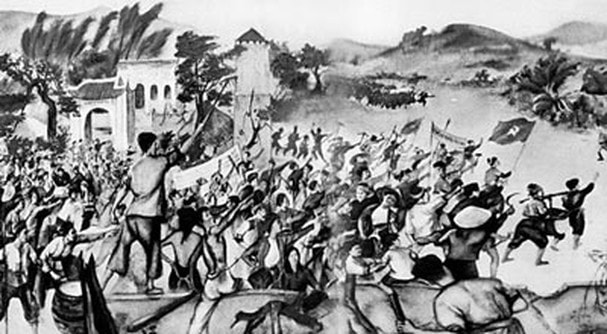 |
| The Nghe Tinh Soviet Movement 90 years ago in Nghe An province. (Historical archival photo) |
Under the leadership of the Party, the mass struggle movement erupted powerfully on an increasingly large scale. The continuous struggles of workers, peasants, and other working classes against colonialism and feudalism took place throughout the country, rapidly developing into the revolutionary high tide of 1930-1931, culminating in the Nghe-Tinh Soviet, marking the beginning of the national, democratic, and people's revolution organized and led by the Communist Party of Vietnam.
Nghe Tinh is a land with a rich cultural and historical heritage, where the people have a tradition of patriotism, resilience, and indomitable spirit in the struggle against foreign invaders. Vinh - Ben Thuy is one of the country's industrial centers, with a working class that has developed both in quantity and quality. Therefore, the Nghe An and Ha Tinh Party Committees were established early to lead the revolutionary movement. This was the prerequisite for the mass struggle movement in Nghe Tinh to develop into the peak of the revolutionary movement of 1930-1931.
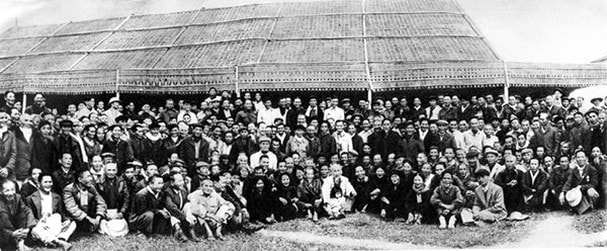 |
| On December 9, 1961, during his second visit to his hometown, President Ho Chi Minh took a photo with soldiers of the 1930-1931 movement. (Historical archive photo) |
Under the leadership of the Nghe An Provincial Party Committee, on International Labor Day, May 1, 1930, workers at the Match Factory and the Ben Thuy Sawmill, along with thousands of farmers from the surrounding Vinh-Ben Thuy areas, staged a massive demonstration, waving red flags with the hammer and sickle, and raising slogans demanding higher wages, shorter working hours, reduced taxes, and an end to political repression. This marked the first time workers and farmers stood side-by-side in the struggle against the enemy, initiating the Nghe-Tinh Soviet Uprising.
Building on this strong momentum, on August 1, 1930, a general strike broke out involving all workers in the Vinh-Ben Thuy industrial zone. People from Can Loc, Ha Tinh, marched to the district headquarters to protest. On August 30, approximately 3,000 farmers from Nam Dan destroyed the district headquarters and released political prisoners. On September 1, about 20,000 farmers from Thanh Chuong marched to burn down the district headquarters, released political prisoners, and punished the wicked reactionaries, marking a new era – an era of fierce struggle for democracy and national independence. Subsequently, numerous peasant struggles in the form of armed self-defense demonstrations took place throughout Nghe An and Ha Tinh provinces.
In particular, on September 12, 1930, more than 8,000 farmers from Hung Nguyen marched to the district capital demanding their rights, shouting slogans against imperialism, colonialism, and feudalism. The French colonialists brutally bombed the demonstration, killing and injuring hundreds. Undeterred by the enemy's bombs and bullets, the struggle of the people of Nghe An and Ha Tinh provinces intensified, spreading to many localities and developing into an armed struggle, paralyzing and disintegrating the imperialist and feudal administrative system in many places. Faced with the collapse of the enemy's government, the Party branches and Red Peasant Associations proactively established and managed all aspects of political and social life in the countryside, performing the duties of a people's government in the form of a Soviet, implementing many progressive and just policies for the people.
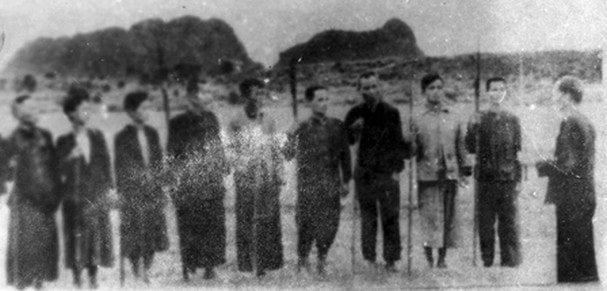 |
| The Red Self-Defense Team in Hoa Quan - Dong So - Nghe An during the Nghe An - Thinh Hoa Soviet Uprising of 1930-1931. (Archival photo) |
The Nghe-Tinh Soviet movement became a powerful source of inspiration for the working class and peasants throughout the country to rise up and fight. Many struggles broke out in the provinces of Thai Binh, Ha Nam, Quang Tri, and Quang Ngai.
Amidst the fervent revolutionary fervor and the blazing Soviet flame, the French colonialists and their collaborators intensified their repressive forces and carried out an extremely brutal white terror, drowning the people's struggles in a sea of blood. Many Party bases were suppressed, many Party members and the masses were arrested, imprisoned, and executed, and many villages were destroyed and burned down. Therefore, the revolutionary fervor of 1930-1931, culminating in the Nghe-Tinh Soviet, lasted only a short time and temporarily subsided at the end of 1931. Nevertheless, the image of the red flag with the hammer and sickle, along with a new type of government truly controlled by the people, remained deeply etched in the minds of the masses, a symbol of revolutionary heroism and the aspiration for independence and freedom, fueling the people's determination to carry out the revolution to the end.
The lesson about the power of national unity never gets old.
Nine decades have passed since the Nghe Tinh Soviet movement broke out, and our Party has concluded that, thanks to the unwavering unity and determination of the people, the Nghe Tinh Soviet movement dealt an immortal blow that terrified the French colonialists. Although many sons and daughters of Nghe An fell in this bloody struggle, it was a glorious fall for the nation's rise.
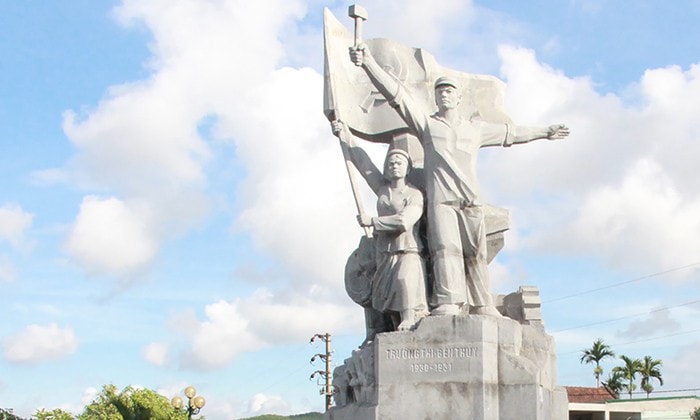 |
| Soviet-Nghe Tinh Monument. Archival photo. |
Ninety years have passed, and the ups and downs of history have never dimmed the fighting spirit of the people of Nghe An and Ha Tinh at that time. In other words, the revolutionary high tide of 1930-1931, especially the Nghe-Tinh Soviet movement, was a momentous historical event in the history of the Vietnamese revolution under the leadership of the Party.
The Nghe-Tinh Soviet was the first revolutionary upsurge of the working class and peasants after the founding of our Party, marking a fundamental shift from spontaneous to conscious struggle in the Vietnamese workers' movement; affirming the correctness of the Vietnamese nation's choice of the revolutionary path – "To save the country and liberate the nation, there is no other way than the proletarian revolution and the use of revolutionary violence"; affirming the revolutionary leadership capacity of the working class and its vanguard Party.
Compared to other Soviet forms in world history: the Paris Commune of 1871 (which lasted only 72 days), the Guangzhou Commune of 1927, the Russian Soviet of 1905, the Bavarian Soviet of Germany in 1919… the Nghe-Tinh Soviet lasted for 7 months and, although still rudimentary, left a positive mark as the first worker-peasant state, unprecedented in history, fulfilling the burning desire for independence and freedom of the enslaved people.
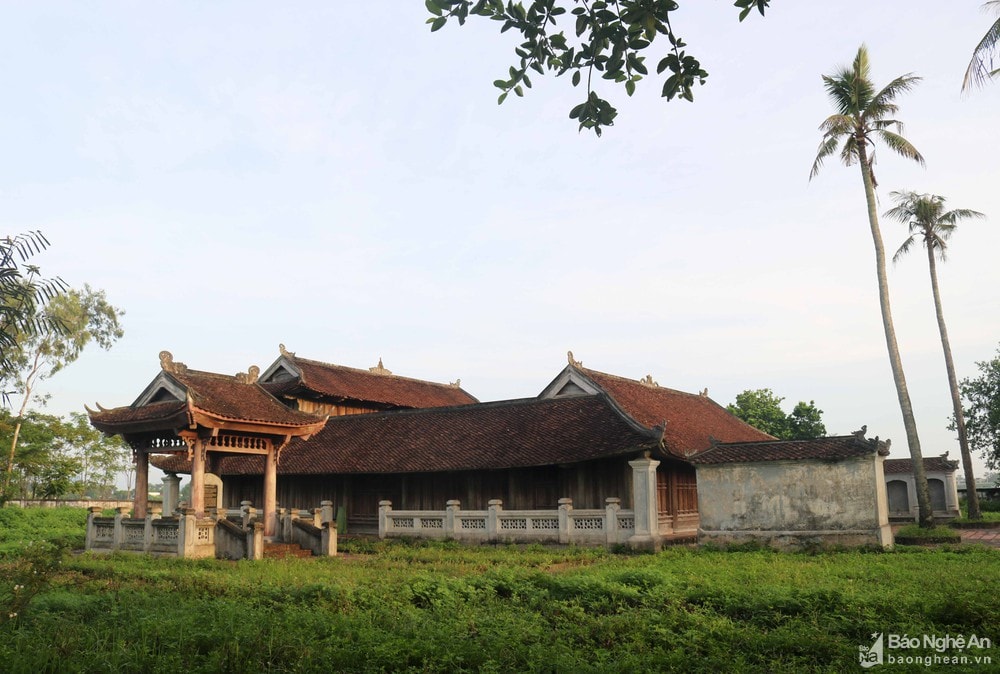 |
| Vo Liet communal house, located in Vo Liet commune (Thanh Chuong district), is also a place that marks many significant historical events in the Nghe-Tinh Soviet movement (1930-1931). In 1940, Vo Liet communal house witnessed the restoration of the Vo Liet Party branch. In 1945, it was one of the gathering points for mass forces fighting to seize power and a workplace of the revolutionary government. (Photo courtesy of Huy Thu) |
Assessing the immense historical significance of the revolutionary upsurge of 1930-1931, President Ho Chi Minh wrote: “Although the French imperialists suppressed that movement in a sea of blood, the Nghe-Tinh Soviet demonstrated the heroic spirit and revolutionary capacity of the Vietnamese working people. Although the movement failed, it forged the forces for the later victorious August Revolution.” Meanwhile, the late General Secretary Le Duan affirmed: “Without the earth-shattering class struggles of 1930-1931, in which the workers and peasants unleashed their extraordinary revolutionary energy, there could not have been the upsurge of 1936-1939.”
At its 11th Plenary Session on April 14, 1931, the 11th Plenary Meeting of the Executive Committee of the Communist International decided to recognize the Indochinese Communist Party as an independent branch directly under the Communist International. This event marked a great turning point for our Party on the path of leading the people in the struggle for national independence and towards socialism, contributing to the overall victory of the world revolution. This result demonstrated that the revolutionary high tide of 1930-1931, culminating in the Nghe-Tinh Soviet, was truly the first rehearsal of our people under the leadership of the Party, preparing for the victory of the August Revolution in 1945.
The 1930-1931 revolutionary movement, culminating in the Nghe-Tinh Soviet, left a great lesson about the Party's ability to attract and unite broad sections of the people through its correct policies, principles, and slogans that met the people's burning aspirations. From this, we can draw a valuable historical lesson: whenever the working people perceive their interests in the policies, strategies, and concrete actions of the ruling class, they will actively and voluntarily participate and respond. And from the very beginning, our Party helped the people perceive their fundamental and urgent interests through correct policies and slogans such as achieving independence from slavery, reclaiming land and factories for the workers and peasants, and implementing the first basic rights to life and democracy, thereby arousing and promoting revolutionary momentum among the people.
Today, in the comprehensive national renewal process and the implementation of the strategy for building and defending the socialist Vietnamese Fatherland, perfecting guidelines, policies, and mechanisms that align with the trends of the times and the legitimate aspirations and interests of the people, in order to create momentum and combined strength for the renewal process, is an urgent and immense task for our Party and State. The Communist Party of Vietnam upholds noble values, defining national unity as both a primary goal and a top priority, a guiding principle running through the Party's revolutionary line: "National unity is the strategic line of the Vietnamese revolution, a great driving force and resource for building and defending the Fatherland. Strengthening national unity on the foundation of the alliance between the working class, the peasantry, and the intelligentsia, under the leadership of the Party." The lesson of the strength of national unity and the worker-peasant alliance in the Nghe-Tinh Soviet movement will forever be a flame of strength for Vietnam in the new era, and it is being applied by the Party, Government, State, and people of Vietnam in the current fight against the "COVID-19 enemy".