

Take decisive action to address violations at the Tran Khac Family Ancestral Temple.
(Baonghean.vn) - From May 5, 2020, in Document No. 2695/UBND-VX regarding the handling of complaints related to the Tran Khac family church (Yen Thanh), the Provincial People's Committee assigned the Yen Thanh District People's Committee to direct the handling of violations and remediation of consequences in accordance with the law...
Clear violation
The Tran Khac family ancestral temple (Bui Bui hamlet, Cong Thanh commune) - a relic slated for provincial-level ranking, listed in the classification of relics and scenic spots in Nghe An province in Decision No. 1017/QD.UBND.VX dated April 1, 2011 - was dismantled by some members of the family and moved to a new place of worship starting in February 2020.
Some descendants of the Tran Khac family felt that this action violated the law and affected the ranking of the historical site, so they disagreed and submitted petitions to relevant authorities. Subsequently, the Department of Culture and Tourism directed the Management Board of Historical Sites and the Department's Inspectorate to conduct an investigation and clarify the matter (the Management Board of Historical Sites issued Document No. 54/BQLDT.TB dated March 6, 2020, and the Department of Culture and Tourism issued Document No. 874/BC-SVHTT dated April 23, 2020, reporting to the Provincial People's Committee). Based on the reports, the Tran Khac Family Ancestral Temple was confirmed to have historical and cultural value. Specifically, the Tran Khac Family Ancestral Temple was built in the 16th century in Ngoc Ha village (now the headquarters of Cong Thanh Commune People's Committee); in 1968, due to the war, it was moved to the current Bui Bui hamlet. The temple complex covers an area of approximately 500 m², surrounded by a fence. The architectural structures include: the main gate (with elephant and horse-shaped supports); a three-bay, two-gable worship hall with double trusses, built in the Nguyen Dynasty style; and a three-bay, two-gable rear hall with "gong-shaped" trusses, constructed in the year Tan Hoi, the 5th year of the Duy Tan reign (1911). Both buildings are roofed with yin-yang tiles, have antique wooden frames, and are paved with terracotta bricks.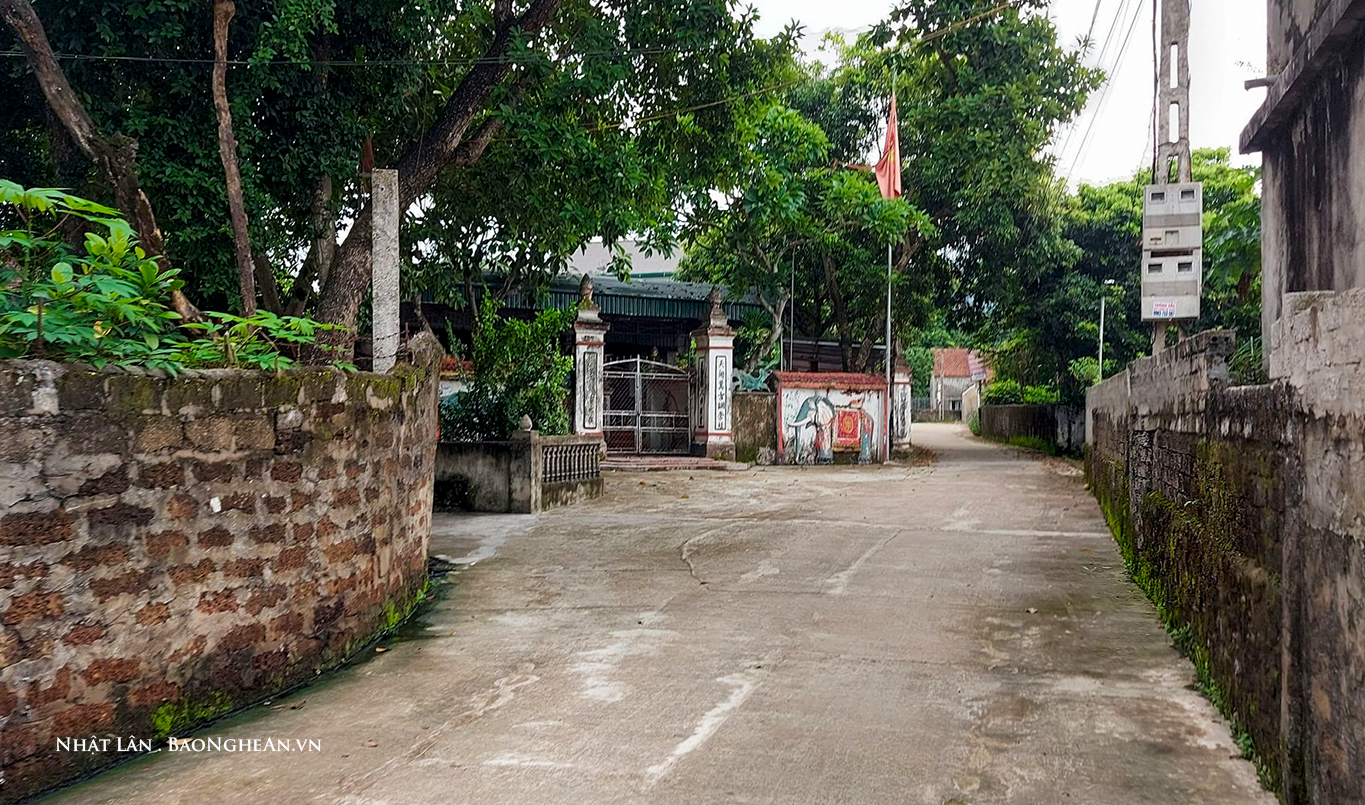 |
| The road leading to the Tran Khac Family Ancestral Church. Photo: Nhat Lan |
The ancestral temple still preserves many ancient artifacts such as: 1 altar, 3 altar beds, 1 ancestral throne, 2 sets of dragon thrones and ancestral tablets, 1 shrine, 1 mirror stand, 1 wooden mandarin's hat, 1 kneeling tea tray, a pedestal, a tray for offerings; 3 family genealogies, 1 horizontal plaque, 2 pairs of couplets, 18 imperial decrees, certificates, and orders. The prominent figures worshipped at the Tran Khac Ancestral Temple include: the founding ancestor Tran Khac Lieu, who held the position of "Advisory Minister, Supreme General of the State," credited with fighting against Champa; and the founding ancestor Tran Van Trai, who held the position of "Assistant Governor," credited with attracting people to settle and establish the village. Mr. Tran Khac Dan served as an official during the Le Trung Hung and Tay Son dynasties, holding the titles of "Hung Liet General, Quan Quan Su, Hien Thanh Hou" (one decree dated March 12, 1771, the 32nd year of Canh Hung; two royal decrees dated November 10, 1788, the 11th year of Thai Duc and November 2, 1796, the 4th year of Canh Thinh); Mr. Tran Khac Dieu held the title of Bac Bo, Phan Luc General... In addition, the Tran Khac family has 4 veteran revolutionaries and Party members from 1930-1931; 2 pre-revolution cadres; 14 martyrs; 2 Heroic Vietnamese Mothers; the Tran Khac family ancestral temple was the site of several historical events of the locality during the Nghe An - Tinh Hoa Soviet period; it was where documents of the Central Committee of the Central Region were printed in 1930-1931; and it was a place where revolutionary cadres were sheltered, including Comrade Ton Thi Que - a revolutionary cadre. The Provincial Party Committee directed the Party branches in Yen Thanh.
Based on the aforementioned artifacts and historical data, the Tran Khac family church was inventoried by the Nghe An Museum and the Management Board of Historical Sites and Scenic Spots in 1996 and 2003; it was identified as a historical and cultural relic; and the Provincial People's Committee included it in the list of classified historical sites and scenic spots in Nghe An province in Decision No. 1017/QD.UBND.VX dated April 1, 2011, with the expectation of provincial-level ranking and management assigned to Cong Thanh commune.
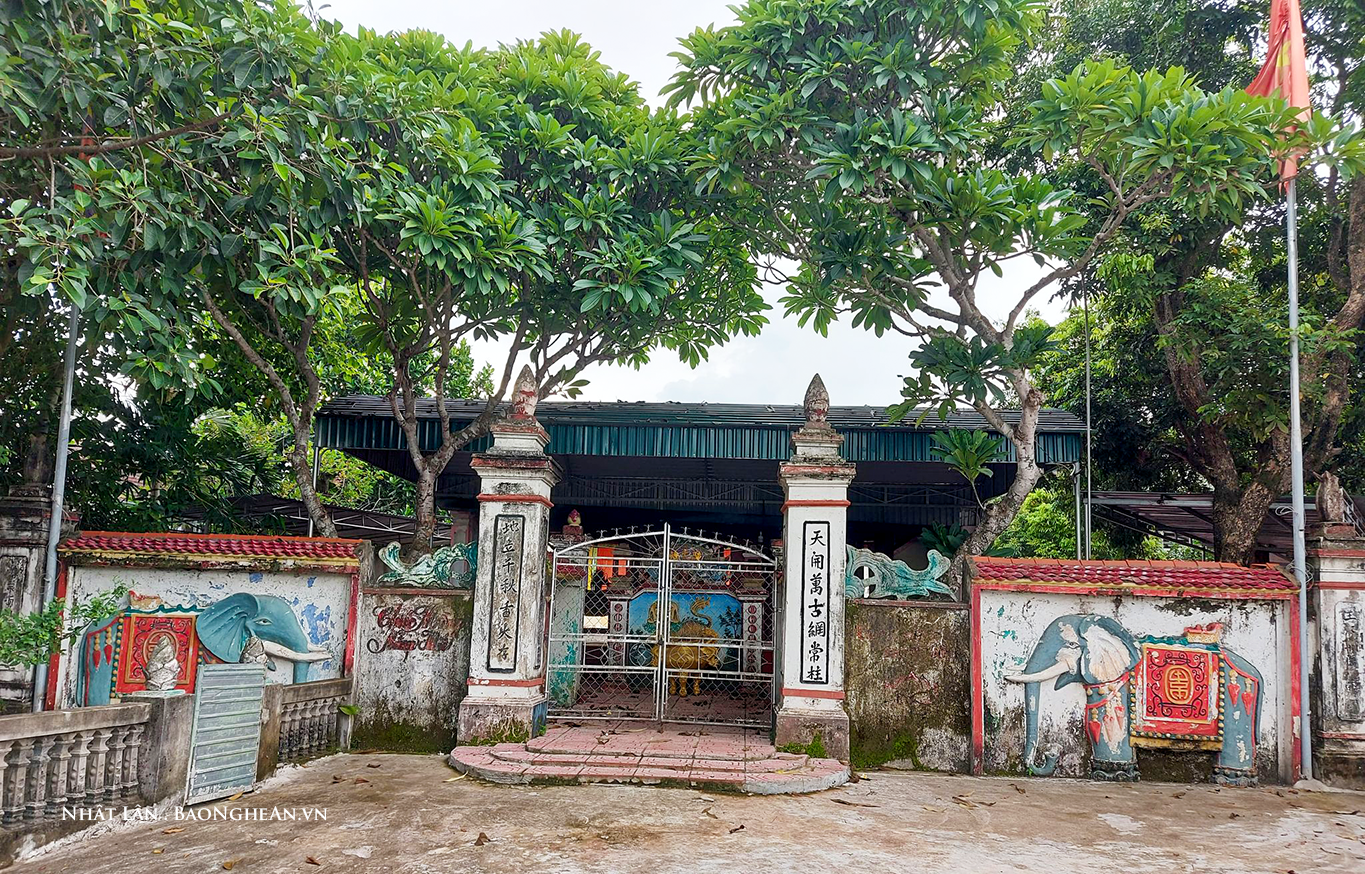 |
| The ceremonial gate of the Tran Khac family ancestral temple. Photo: Nhat Lan |
Regarding the violations, at the time of inspection on March 23, 2020, it was determined that the main hall (rear hall) had been dismantled and moved elsewhere, leaving only the incomplete surrounding wall. The reason was identified as some descendants of the Tran Khac family wishing to move the ancestral temple to a new location (currently under construction about fifty meters away) for more space and convenience during important ceremonies. The Department of Culture and Tourism and the Relic Management Board affirmed that the dismantling and relocation of the main hall by some descendants without the approval of the competent state management agency violated the Law on Cultural Heritage and Decision 27/2014/QD-UBND dated April 3, 2014, of the People's Committee of Nghe An province on the promulgation of regulations on the management, protection, and promotion of the value of historical and cultural relics and scenic spots in Nghe An province.
In Document No. 874/BC-SVHTT, the Department of Culture and Tourism also affirmed: "The People's Committee of Cong Thanh commune has been lax in its state management of heritage sites, which have been delegated to it by the Provincial People's Committee; handling of complaints and petitions has been slow and ineffective; and the measures to prevent this have not been decisive, leading to descendants of the family dismantling the main temple..."
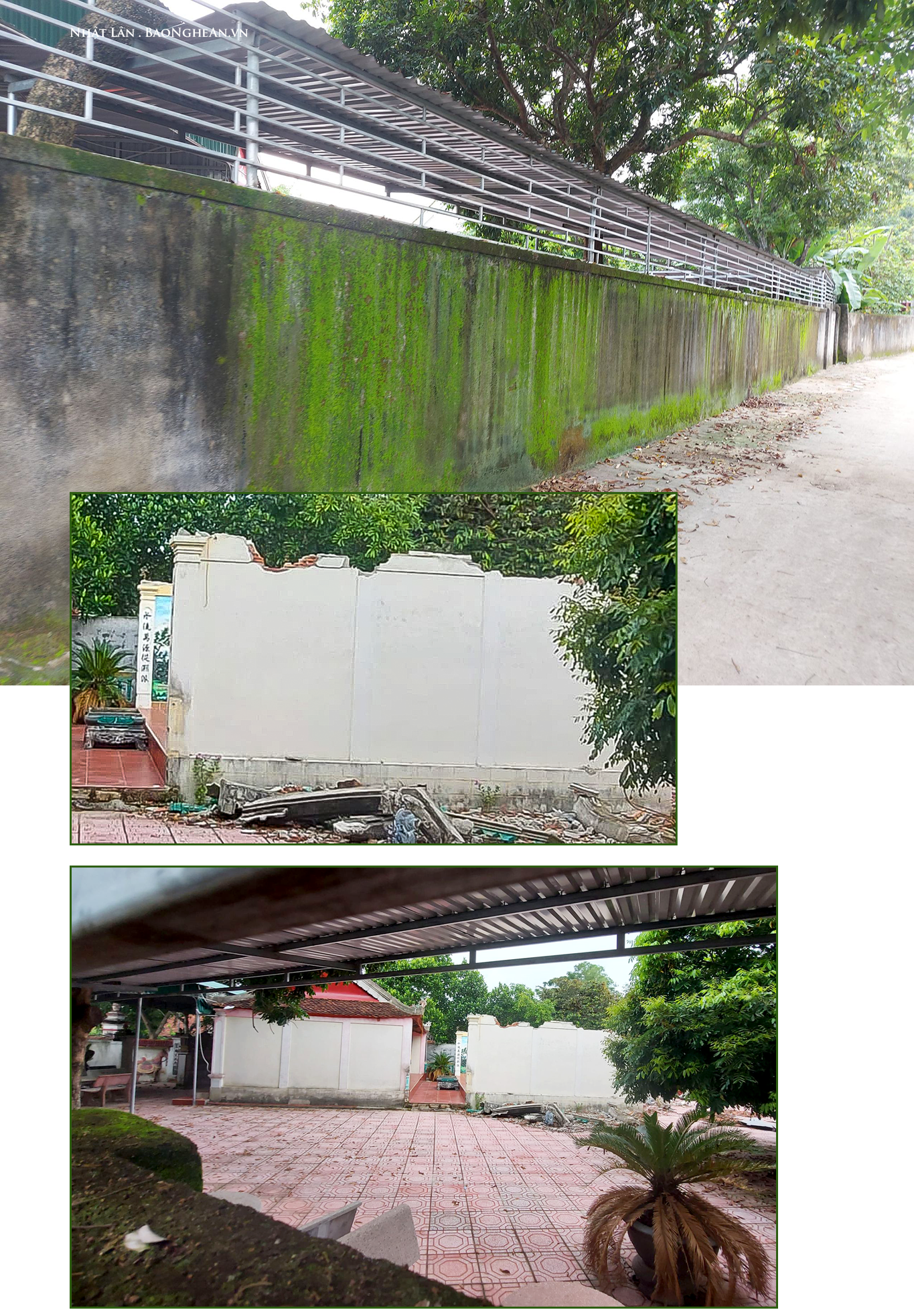 |
| The main hall of the Tran Khac family ancestral temple has been damaged, with only the surrounding wall remaining; The surrounding wall of the Tran Khac family ancestral temple. Photo: Nhat Lan |
Delay in implementing the directives of the Provincial People's Committee.
On May 5, 2020, the Provincial People's Committee issued Document No. 2695/UBND-VX regarding the handling of complaints related to the Tran Khac family ancestral temple (Yen Thanh district). In this document, the Provincial People's Committee instructed the Yen Thanh District People's Committee to direct the Cong Thanh Commune People's Committee to seriously implement Decision No. 1017/QD-UBND.VX dated April 1, 2011, of the Provincial People's Committee on the decentralization of management of historical sites and scenic spots in the province; to handle violations and remedy consequences according to the law. It also directed the Yen Thanh District People's Committee to strengthen inspection and supervision of the implementation of state management in the field of heritage in the district in general, and Cong Thanh commune in particular, especially regarding matters related to the Tran Khac family. The document also directed the Cong Thanh Commune People's Committee to find appropriate solutions to resolve the issue definitively, preventing prolonged or escalated complaints. Furthermore, it instructed the commune to conduct a thorough review of organizations and individuals with shortcomings in fulfilling their assigned duties and responsibilities.
In addition, the Provincial People's Committee also assigned the Department of Culture and Tourism to direct the Relic Management Board to coordinate with the Yen Thanh District People's Committee to survey and reassess the historical value of the Tran Khac family ancestral temple; requesting an objective and scientific assessment of the relic's criteria. If the conditions are met, guide the local authorities and relevant agencies to prepare a scientific dossier and submit it to the competent authority for consideration, evaluation, and assessment for relic ranking and management according to the law; if the conditions are not met for ranking, propose a plan to return it to the family for self-management...
Following the direction of the Provincial People's Committee, the Department of Culture and Tourism instructed the Relic Management Board to survey and reassess the historical value of the Tran Khac family ancestral temple. On May 28, 2020, the Relic Management Board submitted Document No. 176/BQLDT.PHGTDT to the Department of Culture and Tourism, stating: “From the survey, the working group assessed this as a relic with historical and cultural value that needs to be protected and classified...; The process of compiling a dossier for classifying the ancestral temple requires the consensus and agreement of the family, the locality, and relevant organizations. Therefore, for the time being, we request the People's Committee of the commune and the People's Committee of the district to direct the descendants of the Tran Khac family to preserve and protect the architectural structures, documents, and artifacts of the ancestral temple.”
On June 10, 2020, the People's Committee of Yen Thanh District issued Document No. 956/UBND-VHTT directing the People's Committee of Cong Thanh Commune, the Department of Culture and Sports, and the Department of Internal Affairs to implement the tasks assigned by the Provincial People's Committee. However, to date, the Tran Khac Family Ancestral Temple relic has not been restored; the situation remains unchanged: "The main hall has been dismantled and moved elsewhere, leaving only the incomplete surrounding wall"; complaints continue to recur; and the disciplinary action against organizations and individuals with shortcomings in performing their duties has not been carried out...
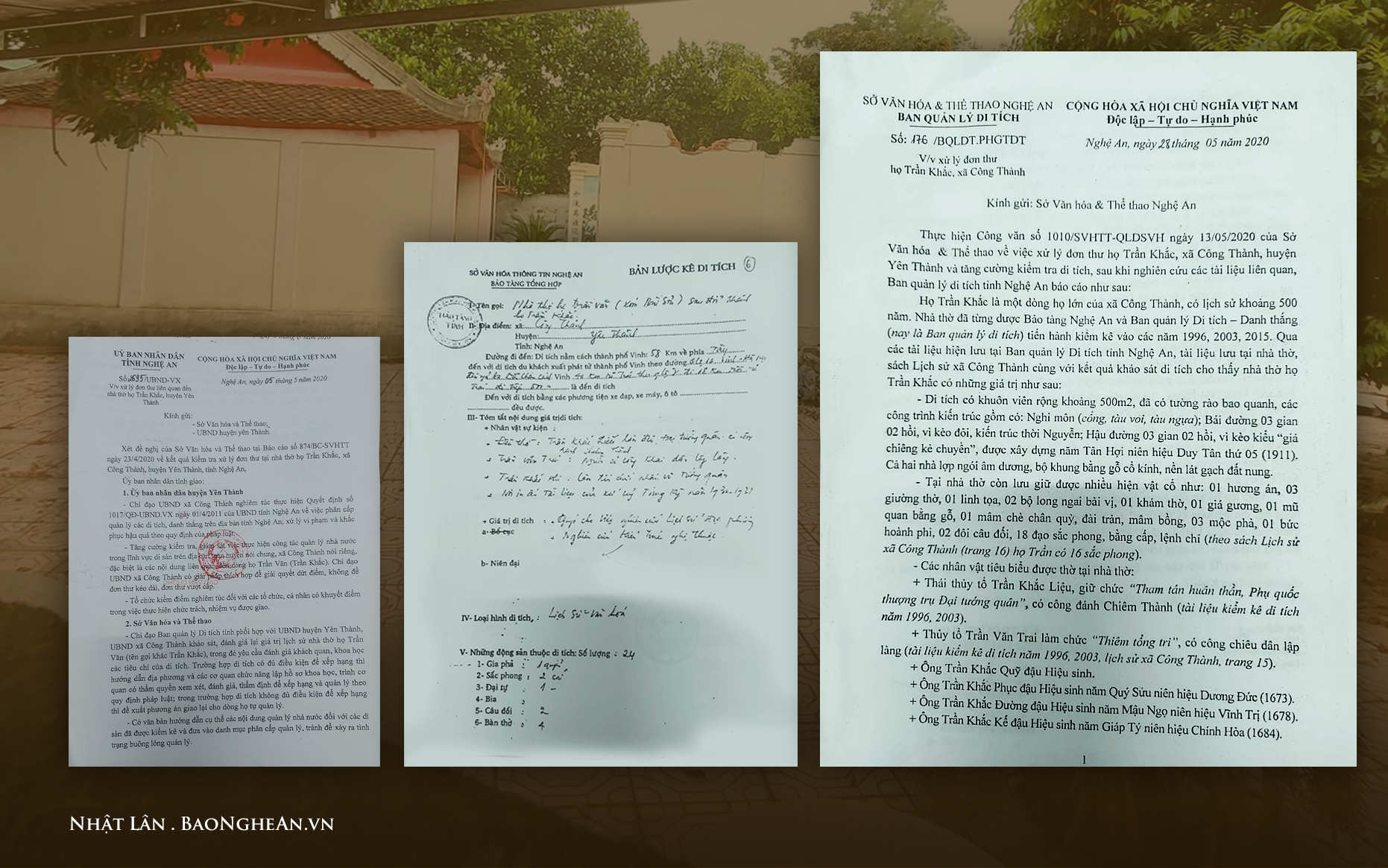 |
| Document No. 2695/UBND-VX of the Provincial People's Committee; the Summary List of the Tran Khac Family Ancestral Temple compiled by the Nghe An Museum; Document No. 176/BQLDT.PHGTDT of the Relic Management Board affirming the historical and cultural value of the Tran Khac Family Ancestral Temple. Photo: Nhat Lan |
Visiting Cong Thanh commune and Yen Thanh district to verify the relevant information was disheartening. It clearly showed that historical and cultural heritage is being disregarded, leading to lax state management and resulting in violations. It's also worth considering that descendants of any family wish to do their best to show their respect and deep gratitude to their ancestors. But "every tree has its own flower, every family has its own circumstances," and the thinking of each family differs, leading to disagreements and conflicts here and there. When such incidents occur at the local level, with their assigned responsibilities and duties in state management, the local government and political and social organizations should promptly address the situation and act as a bridge to mend and preserve unity. However, in the case of the Tran Khac family, the Cong Thanh commune government failed to do so. Even more reprehensible is the "laxity in state management in the field of heritage," failing to promptly prevent the dismantling of the Upper Palace...
Speaking about these issues, the Chairman of the People's Committee of Yen Thanh District, Mr. Pham Van Tuyen, assessed that this was not an overly complicated matter. However, there was fault on the part of the commune-level authorities, including some district officials who misunderstood and misinterpreted the legal regulations, leading to the situation becoming complicated and resulting in numerous complaints being sent to various places. The Chairman of the People's Committee of Yen Thanh District stated that, after being urged, the People's Committee of Cong Thanh Commune worked with the descendants of the Tran Khac family – those who dismantled and moved the main temple – to clarify the legal regulations and inform them of the directives from the Provincial and District People's Committees; and simultaneously drew up a report, requiring the restoration of the monument to its original state within 30 days. Chairman Pham Van Tuyen added: “Regarding the review, I request the establishment of a Disciplinary Council to seriously analyze and clarify responsibilities, before proposing disciplinary measures and handling violations by the relevant organizations and individuals…”