
Nghe An province implements the "4 on-the-spot" principle during the rainy and stormy season.
(Baonghean.vn) - Nghe An has successfully implemented the "four on-the-spot" principle in disaster prevention and control and search and rescue, namely: on-the-spot command, on-the-spot forces, on-the-spot materials and equipment, and on-the-spot logistics, which has somewhat minimized the damage caused by floods in the area.
Proactive prevention
The recent floods in the district.Ky SonNumerous landslides have occurred, threatening the lives of residents, with these landslides concentrated in the following communes:Muong Tip, Muong Ai, Bao Nam, Chieu Luu.
However, thanks to the effective implementation of the "four on-the-spot" principle, the district has been proactive in disaster prevention and control.
Immediately after discovering the situation, the district promptly mobilized over 200 people to evacuate residents. Specifically, they mobilized soldiers and police, in coordination with local authorities and the people, to urgently relocate 281 households from the communes of Muong Tip, Muong Ai, Bao Nam, and Chieu Luu to safe locations.
In addition, local forces were mobilized to relocate three houses in Luu Thang village, Chieu Luu commune, that were at risk.landslideThey arrived at a safe place. Notably, the district promptly constructed 120 temporary shelters, each measuring 24 square meters.2If necessary, it can accommodate approximately 1,200 evacuated households.
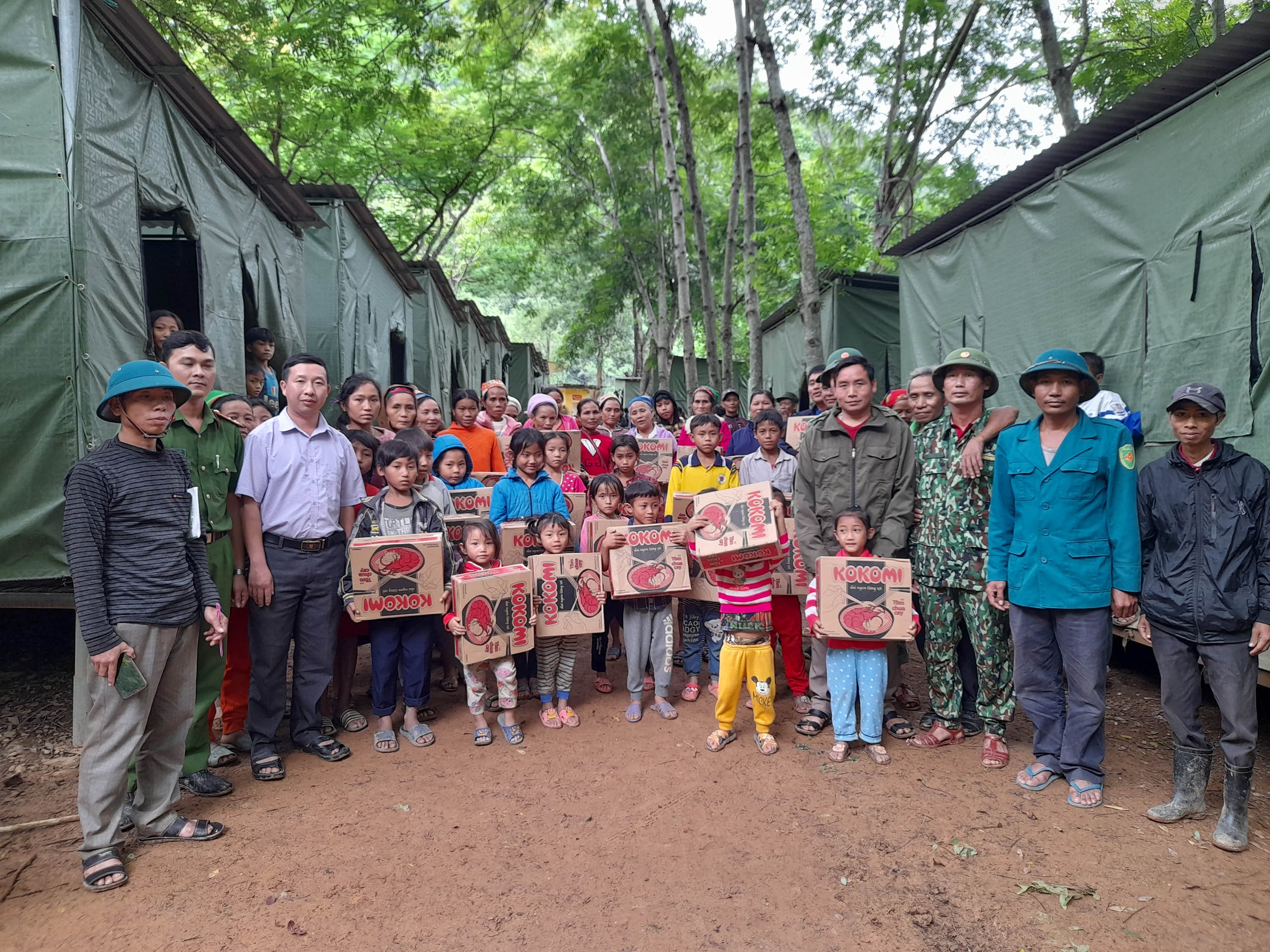 |
| To assist people in evacuation areas, the People's Committee of Ky Son district has allocated funds to provide food and drinking water to residents. Photo: Lu Phu |
To proactively prevent and mitigate natural disasters, Ky Son district has developed a plan for flood control, including flash floods and landslides. The district has issued warnings about areas at risk of such events.flash floodTo enable localities and the people to proactively develop prevention plans, maintain communication to organize relief and rescue operations, protect infrastructure such as schools and health centers in areas at risk of flash floods, and stockpile food supplies before the rainy season.
The district has also established teams that regularly visit the grassroots level to inspect reservoir projects and review flood and storm prevention and control plans in the communes. They have compiled a summary table of the number of people evacuated for flood and storm prevention and control, and formed rapid response teams to go to villages and hamlets to provide timely assistance when incidents occur.
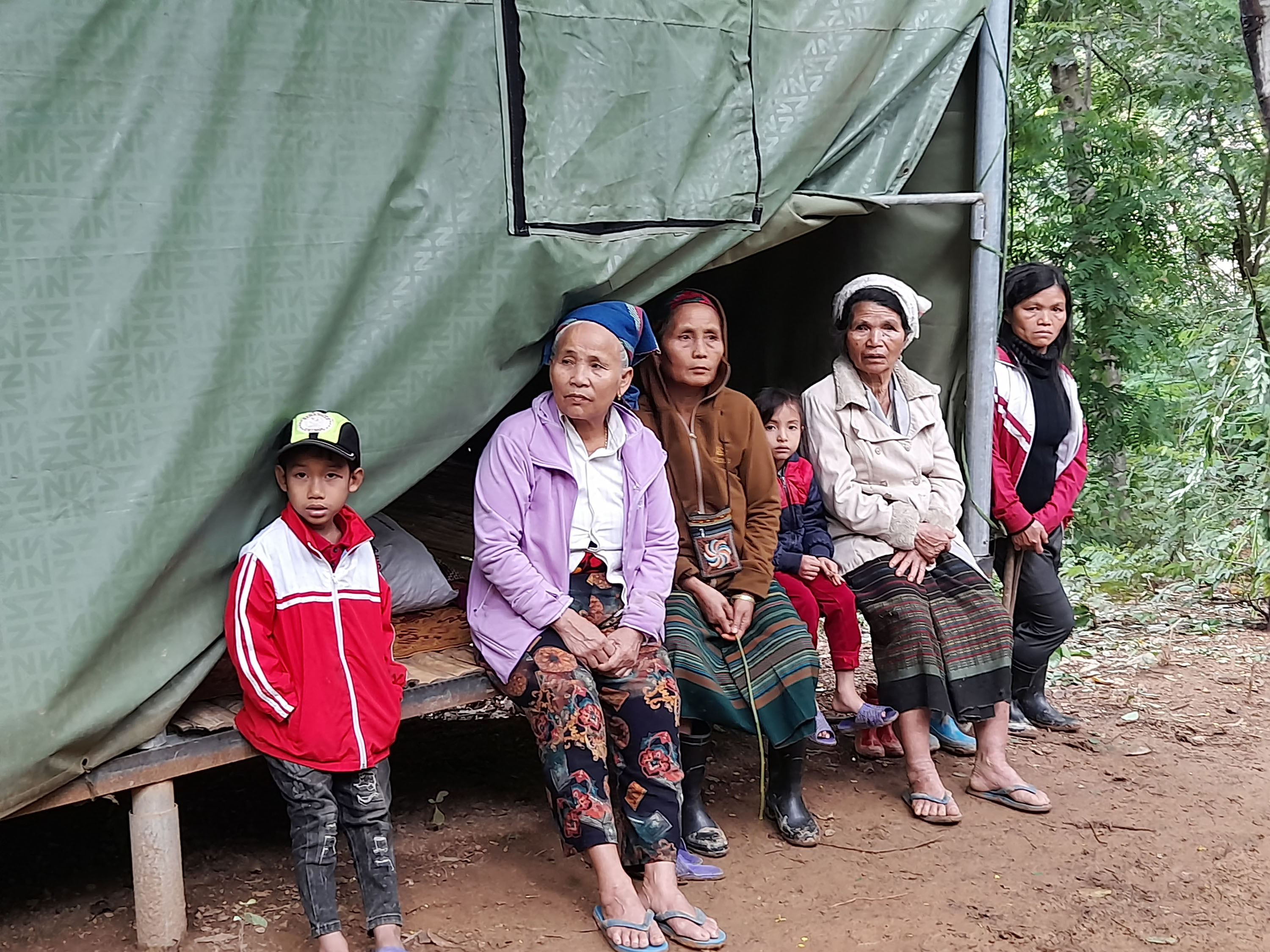 |
| Residents of Ky Son district are moving to safe evacuation areas. (Photo: Lu Phu) |
Other localities such as Vinh City and the districts often face similar situations.floodingThe province is also prepared for the "four on-the-spot" principle to minimize damage during the rainy season and floods. A typical example is Trung Phuc Cuong commune in Nam Dan district, formed by merging three communes: Nam Trung, Nam Phuc, and Nam Cuong – a former flood-prone area of the district. Currently, five hamlets (800 households) are located outside the dike, and during the rainy season, the Lam River rises, causing frequent flooding.
A representative from the Trung Phuc Cuong Commune People's Committee stated: To proactively prevent and mitigate natural disasters, the commune has proactively developed a flood control plan. They have reviewed weak points in the dike system that are frequently subject to erosion and subsidence, and have prepared a sufficient quantity of sandbags, stones, and bamboo stakes to reinforce the dikes at vulnerable points when needed. In particular, the commune has strengthened its mobile force of over 200 people to assist in relocating five hamlets outside the dike system to safe areas when necessary.
To proactively implement the "four on-the-spot" principle, Nam Dan district has reviewed and developed plans, arranged and mobilized necessary forces and resources for each area, and proactively coordinated with the People's Committees of communes and towns to establish rapid response teams to guard dikes, dams, and sluices when an alert is issued. The district has implemented plans to protect dikes, directing communes along the dikes to coordinate with dike management units to prepare materials such as soil, sand, and sandbags for emergency use.
For areas around lakes and dams, direct communes to inspect sluices under dams, spillways, the spillway's flood discharge capacity, and the extent of dam slope erosion in order to plan for repairs before the rainy season. Communes inarea outside the dikeThe district has developed a "scenario" for relocating residents when the river water rises.
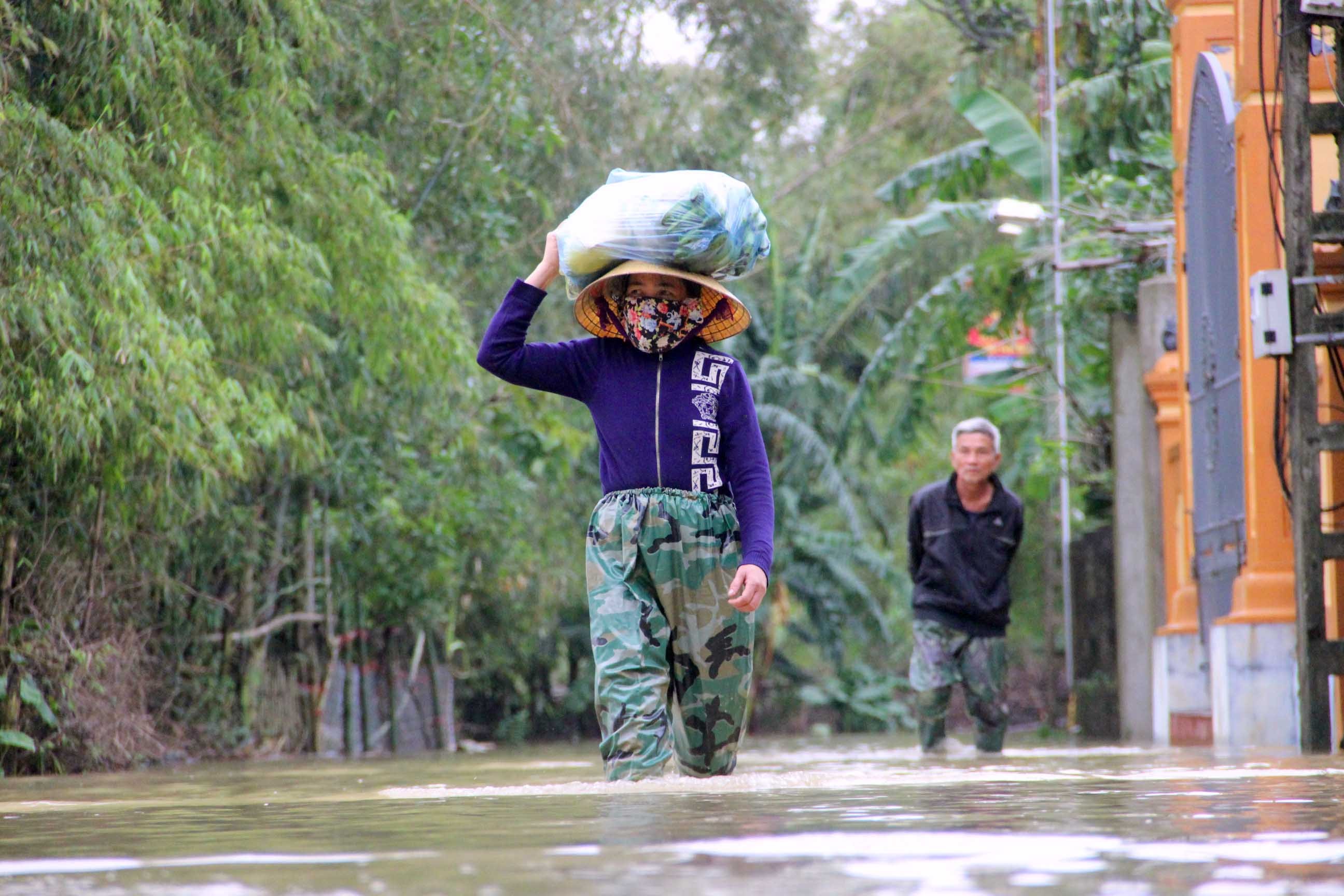 |
| Chau Nhan commune is one of the areas most severely affected by flooding in Nghe An province. Photo: Quang An |
Implement solutions in a coordinated manner.
According to the assessment of the Provincial Steering Committee for Flood and Storm Prevention and Control, during the recent rainy season, Nghe An province has effectively implemented the "four on-the-spot" principle in flood and storm prevention and control. Local authorities have reviewed the types, equipment, and essential supplies for flood and storm prevention and control and search and rescue operations, providing a basis for timely adjustments and additions to their plans.
Review and develop plans, arrange and mobilize necessary forces and resources for each region and locality to participate in timely response and handling of emergency situations related to floods, storms, and search and rescue operations, ensuring that the military is the main force in this work. Organize inspections of staging areas and road transport vehicles for transporting rescue forces, supplies, and equipment when major floods or storms occur. Proactively coordinate with the People's Committees of communes and towns to establish rapid response teams to guard dikes, dams, and sluices when alert orders are issued.
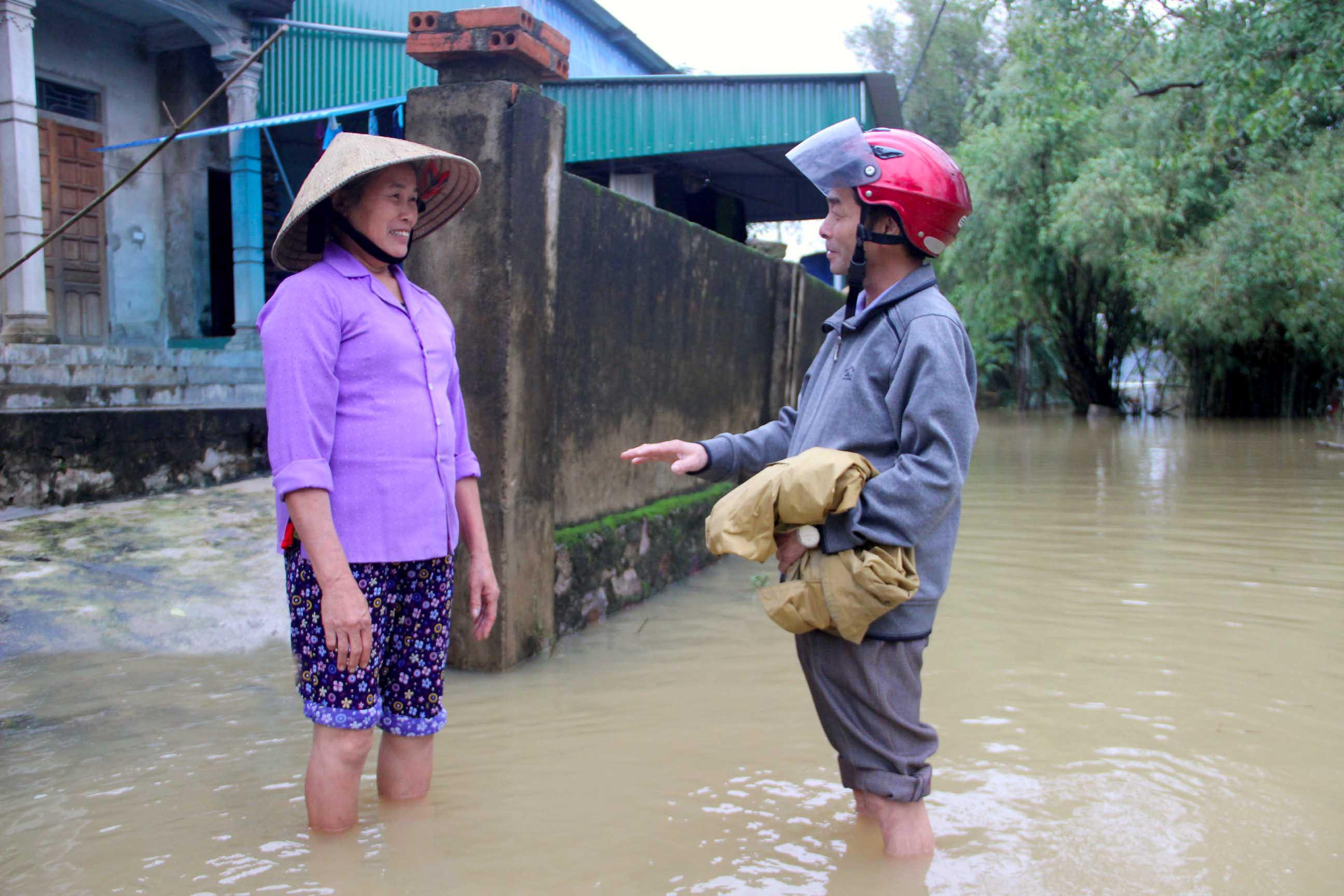 |
| Leaders of Chau Nhan commune are educating residents about the importance of strictly adhering to the "four on-the-spot" principles in disaster prevention and control. Photo: Quang An |
Review search and rescue plans and strategies to ensure they are realistic and reflect the characteristics of storms, floods, landslides, tornadoes, and other incidents and accidents, in order to proactively prevent and respond to all situations. In particular, ensure that personnel, including police, military, and mobile teams at the commune and village levels, are ready to respond when needed. Local authorities should strengthen and consolidate communication networks serving flood and storm prevention and control, ensuring uninterrupted communication in all situations.
Local authorities are preparing contingency supplies for dike and dam repairs when mobilized. They are also stockpiling food to support flood- and storm-affected areas. In particular, they are concentrating supplies (medicines and medical equipment) prioritizing key areas prone to frequent flooding.
Develop plans to organize mobile medical examinations, treatment, and drug services in key areas. Develop plans to prevent and suppress outbreaks of diseases in humans and livestock during and after storms and floods. Educate the community on environmental protection before and after floods and storms. Address environmental issues in areas affected by flooding, storms, and other disasters.
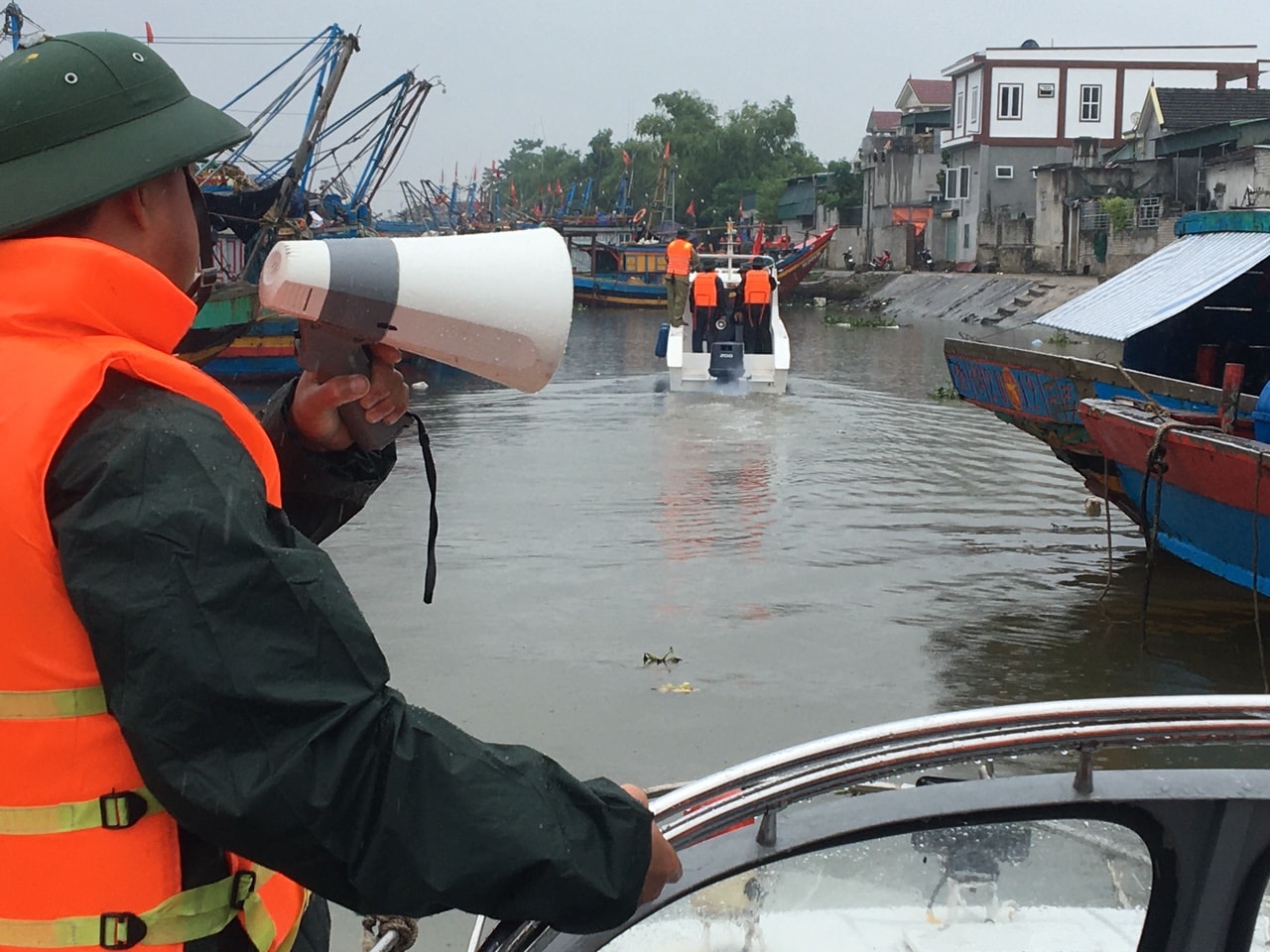 |
| Border guards in Nghe An province assist local people in anchoring their boats during storms. Photo: Le Thach. |
However, the "4 on-the-spot" approach still has limitations, such as in many places where people in remote districts like Ky Son, Que Phong, Con Cuong, and Quy Chau are still negligent, complacent, and not proactive in taking measures.disaster responsePeople are still building houses and shelters along rivers, streams, and at the foot of hills. This shows that public awareness campaigns alone are insufficient; the awareness of the people is also crucial. Professional disaster response teams have not yet been formed to coordinate and handle any incidents involving dikes, reservoirs, dams, and other potential natural disasters. Local disaster response teams are largely untrained, lacking adequate equipment, and their capacity to respond to disasters, especially in the initial stages, remains very limited.
In various sectors and localities, officials working on disaster prevention and control are mostly performing these duties on a part-time basis, and in many districts, there are no officials with specialized training. Therefore, the quality of advice provided is limited and does not meet the requirements, especially in the context of extreme natural disasters and the emergence of many new situations.
The weather situation continues to be complex and unpredictable.Nghe AnIt has been identified as a key area for flooding, storms, flash floods, and landslides.
To proactively prevent, combat, and effectively respond to incidents and unusual developments of natural disasters, in addition to relying on the people's strength, sectors and localities need to continue to better promote the "four on-the-spot" principle. The People's Committee of Nghe An province has directed localities to organize inspections and reviews of safe residential areas for people, especially in areas at high risk of flash floods and landslides. They are also preparing plans to proactively respond to situations, particularly by deploying rapid response forces, supplies, and equipment on-site, and implementing measures to ensure the safety of the people.
The Provincial Steering Committee for Disaster Prevention and Search and Rescue, along with relevant departments, localities, and units, are implementing decisive and coordinated measures, expanding the deployment of disaster prevention and response task forces in each commune, village, and hamlet, with militia and self-defense forces as the core, to proactively respond to and mitigate the consequences of natural disasters from the very beginning, and to prepare well for all three stages: prevention, response, and recovery.
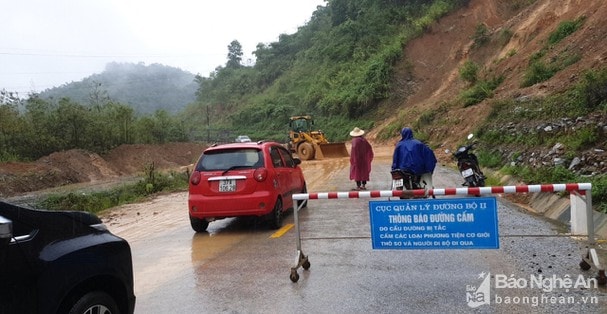 |
| Warning signs indicating danger of landslides are placed at the Cho Slope, Lang Khe commune, Con Cuong district on October 18, 2020. (Photo courtesy of a contributor) |
Organize inspections to ensure the safety of reservoirs and dams, especially vulnerable ones, small hydropower reservoirs, and projects under construction or repair; deploy personnel, materials, machinery, and equipment to be ready to respond to and handle any situations that may arise.
Proactively deploy forces to control and guide traffic, especially through underpasses, overflows, and areas with deep flooding and strong currents; proactively arrange forces, materials, and equipment to khắc phục incidents and ensure smooth traffic flow on major transportation routes.
Van Truong