

The tumultuous UK-EU 'divorce' comes to an end.
(Baonghean.vn) - After months of relentless negotiations, the United Kingdom and the European Union (EU) have finally reached a post-Brexit trade agreement, just seven days before the UK leaves one of the world's largest trading blocs.
This breakthrough helped avert the "no-deal" scenario that many feared would erupt, threatening to ignite economic turmoil and severely disrupt the flow of goods and medicines…
Light at the end of the tunnel
“The deal is done” – that was the statement released by Downing Street on the afternoon of December 24th, and quickly confirmed by Brussels. All of Europe received the long-awaited Christmas gift, even though at times the glimmer of hope seemed to have faded as the clock ticked towards the December 31st deadline. Speaking immediately after the official announcement, British Prime Minister Boris Johnson affirmed that the agreement reached was a “good deal” for “all of Europe” – an agreement signifying “a new and certain state of stability in a relationship that has at times been difficult and challenging.”
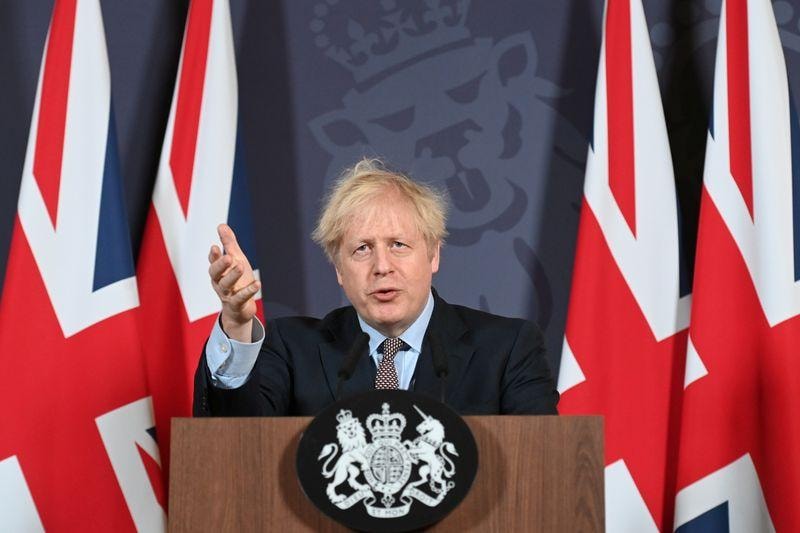 |
| British Prime Minister Boris Johnson held a press conference on the results of Brexit negotiations at Downing Street, London, on December 24. Photo: Reuters |
Repeating the strongly nationalist tone that was so evident inreferendum campaignRegarding Brexit, the British leader said: “We have regained control of our own laws and destiny… from January 1st, we are outside the customs union and outside the single market; British law will be created solely by Parliament, interpreted by British judges sitting in British courts; and the jurisdiction of the European Court of Justice will end.”
Johnson also asserted that Britain had secured a “Canada-style” trade deal worth £660 billion (equivalent to $893 billion) and referred to the fisheries agreement – a key point of contention in the negotiations – claiming that Britain had regained “full control” over its waters.
On the other side of the "battle lines," following news of a satisfactory settlement of the contentious issues in the sensational "divorce" case, European Commission President Ursula von der Leyen expressed agreement that the EU had reached a consensus.trade agreementA fair and balanced post-Brexit scenario is needed. However, at a press conference, she still hinted that her bloc still held the upper hand in negotiations: "As we know, in any case, a hard Brexit would not be good for either side, but it would harm the United Kingdom more than the European Union with its entire strength of 450 million citizens. And therefore, from a strong position, we are able to offer the most comprehensive agreement ever."
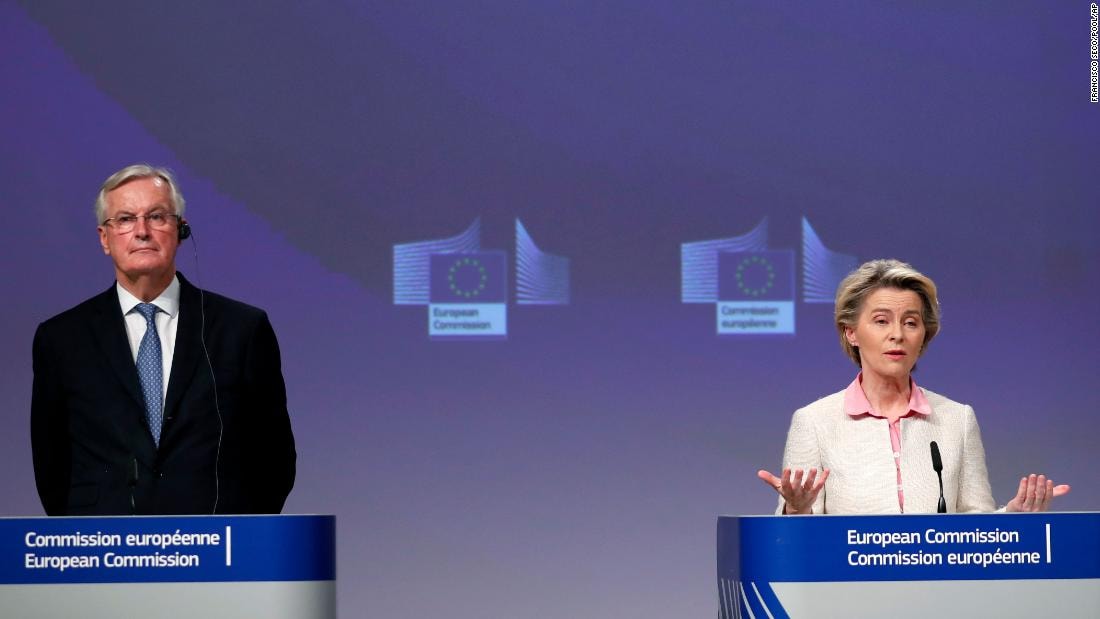 |
| European Commission President Ursula von der Leyen (right) speaks after the EU-UK agreement was reached in Brussels on December 24. Photo: AP |
Leave the past behind, look towards the future.
Now, the EU leaders, the European Parliament, and the UK government all need to ratify the agreement. First, the full legal text of the agreement will be translated, reviewed, and approved by all 27 EU member states. Generally, most of these leaders have expressed their welcome of this week's breaking news. For example, French President Emmanuel Macron stated that "European solidarity and determination have paid off," and described the agreement as "necessary." Meanwhile, Irish Foreign Minister Simon Coveney welcomed the fact that the Good Friday Agreement will be protected and affirmed that it is a "fresh start" for the country.Britain's relationsMeanwhile, Belgian Prime Minister Alexander de Croo declared that the only thing that mattered to him was ensuring the best possible protection for Belgium's economic interests. He asserted: "We must protect Belgian companies from unfair competition from the UK. Initial reports seemed to indicate that this agreement would provide us with that essential guarantee."
Once all member states have signed the agreement, the document will be sent back to the European Parliament, where members will vote to ratify it. However, the European Parliament has stated that it is not possible to hold an emergency meeting to conduct a vote before the end of the transition period on December 31st. Instead, they plan to "temporarily" apply the EU-UK agreement, and members of Parliament will officially convene to ratify the agreement on New Year's Day. In the United Kingdom, lawmakers will return after the Christmas break to discuss the agreement on December 30th. On December 24th, the opposition Labour Party announced they would approve and vote in favor of the trade agreement.
Many believe that the trade agreement reached by both sides this week marks a significant milestone in the past four and a half years, sinceBritain voted to leave the EU.However, it still struggles to close the door on years of political controversy and hidden dangers in the UK. Eurosceptic lawmakers are now working to ensure the agreement leaves no room for Britain to return to the EU. Following Thursday's announcement, Johnson had to reinforce his support for leaving the bloc, asserting that while the EU has been and continues to be an "extraordinary concept," "Britain's own relationship with the bloc has always been difficult." He also stressed: "The extremely dense integration program is not suited to the United Kingdom, and that is why taking back control in the way we have done is right. I think this agreement reflects what the people of the country voted for in 2016 and I think what they decided was wise."
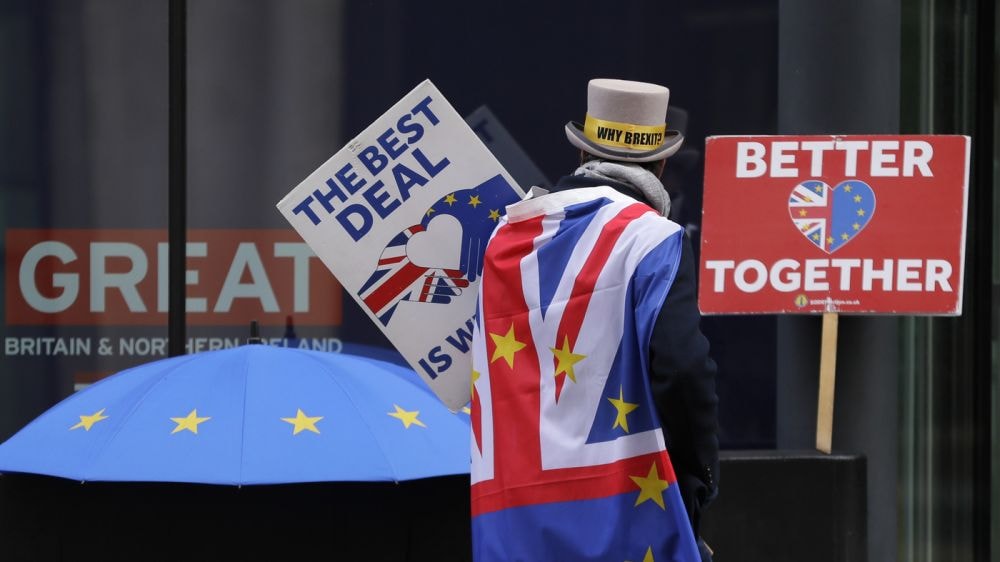 |
| Britain and the EU have reached a historic post-Brexit trade agreement after a record-breaking series of "marathon" negotiations. Photo: AP |
Meanwhile, pro-European voices are brimming with hope that, at some point in the future, Britain – perhaps under new leadership – will be able to strengthen its ties with Brussels.
Returning to the other side of the negotiating table, European representative Von Der Leyen confirmed that while some parts of the United Kingdom may have had a difficult day, Europe was ready to forge its own path. Quoting the poet Ts. Eliot, she said: “What we call a beginning is often the end, and creating an end is opening a new beginning.” With that in mind, she urged all Europeans that it was time to leave behind the much-discussed Brexit saga and focus on the future, which is being built within Europe itself.
Key points of the agreement:
* There are no tariffs or quotas on the goods;
* Ending freedom of movement means that British citizens will no longer have the right to work, live, study, or start a business in the EU without a visa;
* Border checks will be implemented between the UK and EU member states;
* There will be no hard border on the island of Ireland between the Republic of Ireland and Northern Ireland;
* The UK will be allowed to further develop its fishing activities for at least five and a half years; during this time, European fishing communities will be protected;
* We are committed to protecting the environment, combating climate change, and setting carbon targets.
* We are committed to protecting social and labor rights;
* Maintain standards of tax transparency;
* Rights of passengers and workers in the transportation sector;
* The UK will continue to participate in many EU programs until 2027, such as Horizon Europe, while fulfilling its financial obligations.