

Is a political earthquake about to strike Germany?
(Baonghean.vn) - In Germany, the first state elections of the year have shown the potential for seismic changes to the political landscape. Many questions are arising: Will the end of Chancellor Angela Merkel's term also mark the decline of the CDU party? Is Germany about to see the centrist Green Party as its new leading star?
Is the CDU losing ground?
The recently released figures show that there were few changes in the first major elections of Germany's "super-election year." Both incumbent state governors in the West – Green Party politician Winfried Kretschmann in Baden-Württemberg and Social Democratic politician Malu Dreyer in Rhineland-Palatinate – were easily re-elected and seem to have the freedom to begin the process of forming their new governments.
But the crucial context of 2021 – with six state elections and one federal election, Merkel about to leave the Chancellorship this fall, and the ongoing Covid-19 pandemic – has amplified the importance of each party's activities. For most observers, this reality suggests a simmering possibility of a seismic shift that could shake Germany's otherwise relatively stable political landscape.
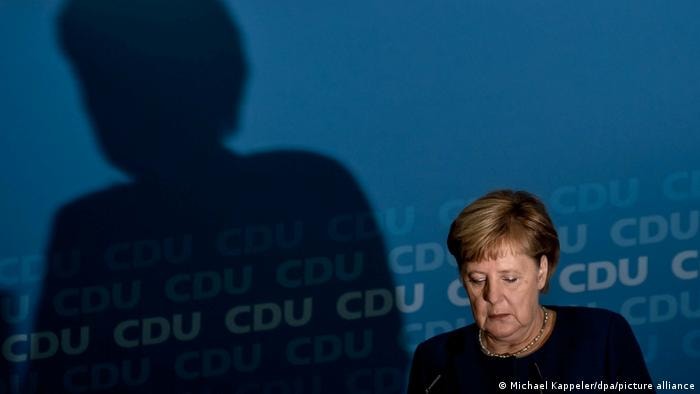 |
| Poor results in regional elections are putting new pressure on the CDU party. Photo: dpa |
The Christian Democratic Party (CDU) has the biggest reason to worry. It is the party that...Mrs. MerkelThe party that has led for over two decades and has dominated German politics since the federal republic was established in 1949 has suffered its worst results ever in both states: The latest forecasts show the CDU has fallen by almost 3 percentage points in Baden-Württemberg and more than 4 percentage points in Rhineland-Palatinate, securing only 24% and 28% of the total vote, respectively.
The results in Baden-Württemberg were particularly damaging. A wealthy southern state, home to many renowned multinational corporations, Baden-Württemberg has been known as a conservative stronghold for decades. While the victory there was clearly predictable given the unwavering public support for the aging Premier Kretschmann, the CDU also needed to reflect on its own failures by March 14th.
In a brief statement, the party's General Secretary, Paul Ziemiak, acknowledged that the corruption scandals that cost three Conservative MPs their seats in the Bundestag (Parliament) last week had shaken voter confidence in the CDU, as well as public dissatisfaction with Germany's slow rollout of Covid-19 vaccines.
Olaf Scholz, the Social Democratic Party (SPD) candidate for chancellor and currently Finance Minister in Merkel's cabinet, dropped a "grenade" on the ruling coalition debate when he declared that "it was a beautiful day because it showed that it is possible to form a government in Germany without the CDU."
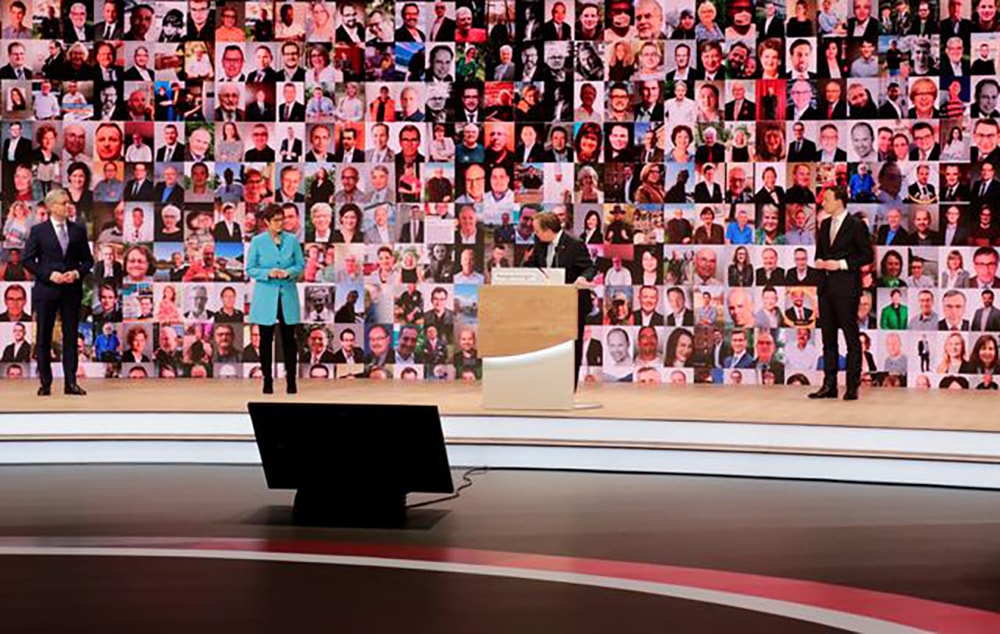 |
| Candidates during the CDU party leadership election on January 16, 2021. Photo: Reuters |
All of this places new pressure on the shoulders of the CDU's new leader.Armin Laschet, at a time when he may also face a challenge from Bavarian State Premier Markus Söder to become the Conservative bloc's candidate for chancellor in the federal election in September.
Perhaps that's why it's not surprising that Laschet chose to launch his attack during his press conference on March 15th. While not naming Scholz directly, Laschet stated: "The Treasury Secretary is busy enough overseeing finances." And in contrast to what he called swift action from his party to curb bribery scandals, Laschet declared: "There are still legal proceedings taking place within the SPD and other parties for violations of the law."
Is the Green Party on the rise?
Kretschmann's victory in Baden-Württemberg is expected to boost his confidence.Green PartyAhead of the federal election in September, analysis by ARD television channel shows that the state has seen a significant shift – up to 145,000 votes from the CDU to the Green Party (compared to only 75,000 voters switching to the other side).
The pragmatic stance of the current state premier seems to have convinced the vast majority of people in this southwestern German state that the Green Party is capable of leading. However, he also has limitations in terms of age, being 72 years old and having been in office for a decade, having held power in a partnership with the CDU for the past five years.
Now, the results suggest he also has the option of a three-way coalition with the SPD and the Free Democratic Party (FDP). If this move materializes, it would sound alarm bells at the CDU headquarters in Berlin, although initial signals suggest that, with his innate judgment, Kretschmann feels voters desire stability, which would lead him to continue cooperating with the conservatives.
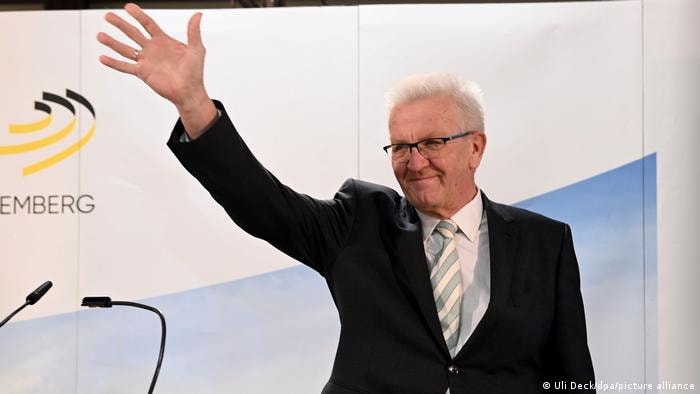 |
| The Green Party's chief minister of Baden-Württemberg won a resounding victory in the recent vote. Photo: dpa |
The rise of the Green Party also comes with warnings as the September election approaches. Kretschman's age contrasts with the youthfulness of the party's national leaders: Robert Habeck (51) and Annalena Baerbock (40), politicians who have yet to announce who will run for Chancellor later this year.
However, what they clearly realized was that Kretschmann's style didn't resonate with German voters. On Sunday night, Habeck told ARD: "Vision and pragmatism: That's the task set for the Green Party on election night." This was a clear signal that the conservative state of Baden-Württemberg had outlined the Green Party's strategy – to move toward the center and win over CDU voters. Time will tell, but in the current context, it seems unlikely that Germany's next government will lack the "Green element."
Compare the bundles of chopsticks, choose the flagpole.
According to DW, with the Green Party and the CDU now established as the two largest parties in Germany, the rest of the political arena is struggling to gain ground. According to the latest polls, the Dreyer Party secured a victory for the SPD in Rhineland-Palatinate, albeit with a slight drop in their vote share, and the Social Democratic Party is still striving to surpass the 16% nationwide support threshold.
Nevertheless, Scholz displayed confidence on election night, highlighting the contrast between the SPD's assertive choice of him as their leading candidate and the hesitation and indecisiveness of the CDU and the Greens. He told ARD: "This is all part of a clear strategy needed to lead us week after week, month after month, closer to our goal."
 |
| Germany's recent state elections took place just six months before the general election that will decide Chancellor Merkel's successor. Photo: Reuters |
The regional election results also allowed the Free Democratic Party (FDP) to take a short break after their efforts to gain more than 2 percentage points and secure 10% of the total vote in Baden-Württemberg, while maintaining 5% in Rhineland-Palatinate. This was a welcome boost for leader Christian Lindner, whose strategy of supporting businesses and constantly criticizing the government's handling of the Covid-19 pandemic has been quite effective against the opposition, but given the current situation, the greatest hope for the FDP to enter government still lies in a three-way coalition with the Greens and the SPD or the CDU.
As for the left-wing parties, there was no "revival" in the western states, as they once again failed to secure enough votes to enter the state legislature. Nevertheless, with their newly elected leadership, the left-wing parties are still striving to regroup ahead of more important elections later this year. Meanwhile, the clear loser in Germany's recent election night was the far-right Alternative for Germany (AfD), which lost a third of the vote. Current predictions suggest that this nationalist party will win less than 10% of the vote in both states, with its decline attributed to recent revelations about extremism within the party, as well as its inability to capitalize on the anti-lockdown protests it began supporting last year.