

Nghe An: Investors are not yet enthusiastic about rural clean water projects.
(Baonghean.vn) - Instead of investing sustainably in business, enterprises in Nghe An are showing little interest in rural clean water projects; many projects remain unfinished with no one to take over...
Investment capital for water supply is limited and spread thin.
Previously, the rural areas of Nghe An province received tens of billions of VND annually from various investment and funding sources to upgrade water supply infrastructure, as well as to produce and test water quality to ensure it was clean and hygienic.
In addition to sourcesNational Target Program for Clean WaterRegarding environmental sanitation, while there were previously projects funded by Danina, loans from the Asian Development Bank (ADB), UNICEF, etc., now the only remaining source of funding is operational budget and integrated funding from the National Target Program for New Rural Development each year. Specifically, the amount is only about 2 billion VND per year, of which 1.617 billion VND comes from the state budget and 400 million VND from the New Rural Development Program.
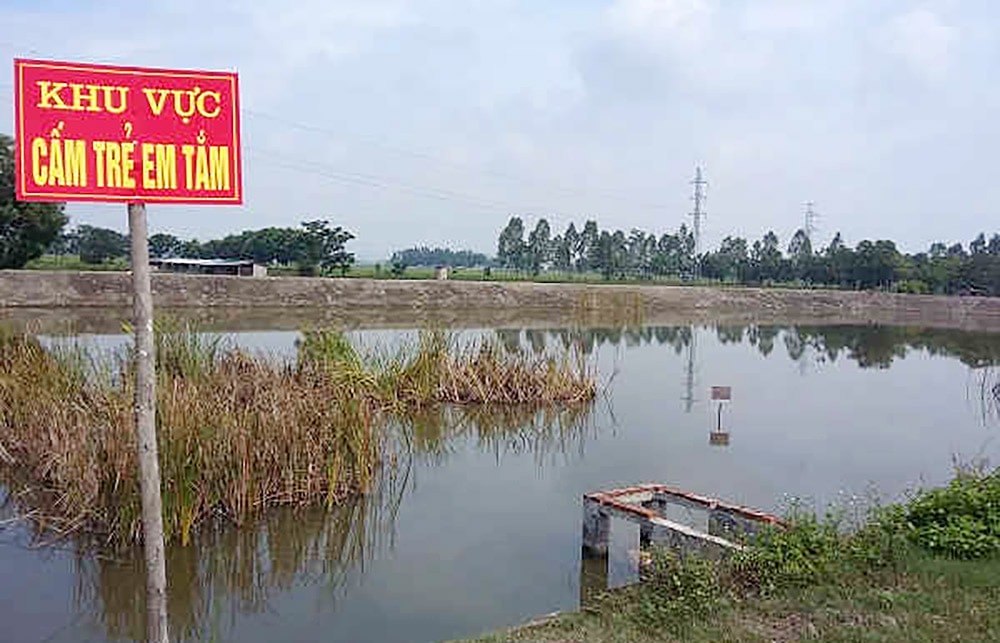 |
| The sedimentation and filtration tank for the Dien Thap water supply project is under construction but not yet complete due to a lack of matching funds from the local government. Photo: Nguyen Hai |
For the reasons mentioned above, although the Provincial Rural Water Supply and Sanitation Center annually takes water samples from rural water supply plants for testing and monitoring, investment in upgrading, repairing, and especially in raising awareness about the use of clean and hygienic water is very limited.
In areas with chronic water shortages, such as the coastal communes of Nghi Loc, Quynh Luu, Hoang Mai town, and Dien Chau, during the hot summer months, residents have to pay exorbitant prices for clean water. On average, a 4-5 cubic meter truckload of water costs around 200,000 VND (50,000 VND/cubic meter).3While people in coastal areas and downstream of irrigation canals lack fresh water for daily life, in high mountainous districts, despite significant investment from the State and other funding sources in constructing gravity-fed water systems, these projects deteriorate rapidly due to lax management and insufficient maintenance funds.
This reality, combined with climate change, resource exploitation, and indiscriminate deforestation in upstream areas, means that many gravity-fed water systems fail to retain water upstream, rendering downstream water reservoirs ineffective.
Funding and support are increasingly limited, preventing the Center and local authorities from continuing to upgrade water supply infrastructure or complete unfinished projects aimed at increasing the rate of access to clean water in rural areas. Some clean water supply facilities managed by the Center, notably those in Hung Tan and Hung Phuc communes supplying water to six communes in Hung Nguyen district, are severely dilapidated but lack the resources for major upgrades and repairs.
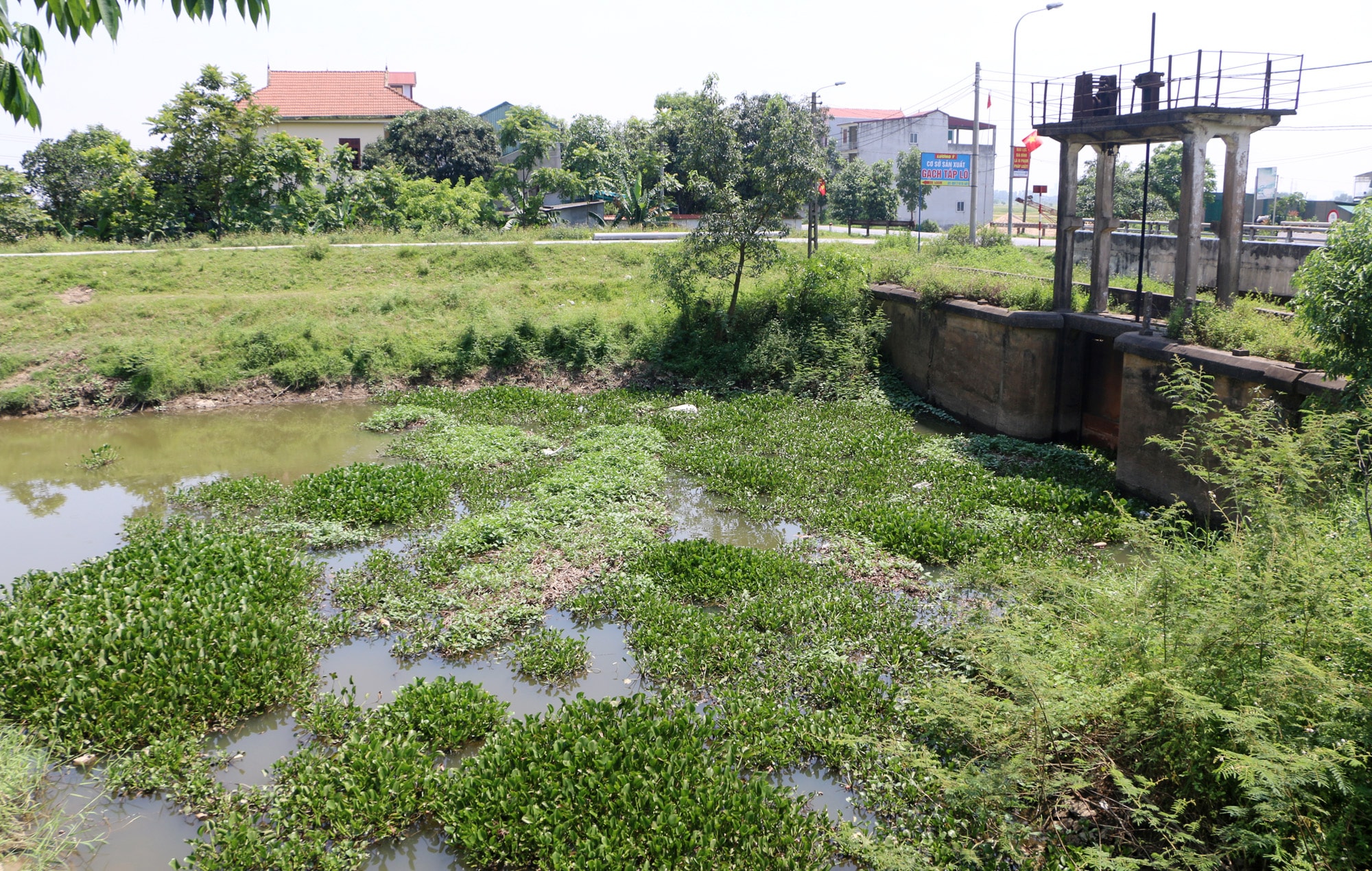 |
| The water source at Hung Tan Station is not truly clean, causing local residents to feel uneasy about using it for drinking purposes. Photo: Nguyen Hai |
According to the Center for Rural Water Supply and Sanitation, from 2012 to the present, the province has 517 centralized water supply systems, of which 29 are operating sustainably, 174 are relatively sustainable; the remaining 187 are less sustainable, accounting for 36.2%; and 124 are not operating, accounting for 24.6%.
The National Target Program on Clean Water and Environmental Sanitation ended in 2015, but to date, 15 projects remain unfinished or behind schedule, significantly impacting water supply goals and creating difficulties for management and investment in construction projects.
What is the solution to ensure that 86% of households have access to safe water?
According to the target set by the Provincial People's Council Resolution, by 2022, 86% of rural households in the province must have access to safe drinking water. Currently, the rate has reached 85%. Although this rate is the result of the province's efforts, compared to the national average of 88%, the rate of households using safe drinking water in Nghe An is still low and lags behind the two neighboring provinces of Thanh Hoa and Ha Tinh, which have achieved 95% and 92% respectively.
Although there are more than 6 months left and the target of a 1% increase will be achieved, implementing it in practice is not simple at all.
Besides the objective reason that 15 domestic water supply projects are unfinished and behind schedule, leaving 109,723 people in rural areas without access to safe drinking water, the Ministry of Health will soon issue new standards for clean and hygienic water, according to which the quality criteria will be raised.
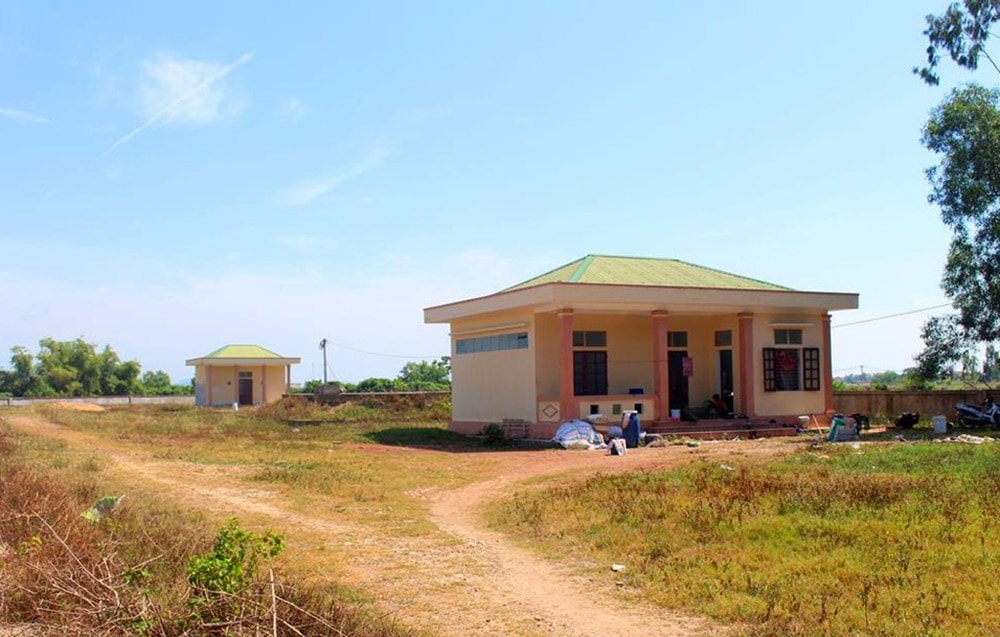 |
| The freshwater supply project is under construction but remains unfinished in Quynh Tho commune. Photo: Nguyen Hai |
Currently, clean water and sanitation are business sectors encouraged for socialized investment, but businesses and investors are not enthusiastic. Along with the reason that investment budgets are too spread out, and local authorities are passive, leaving many unfinished projects without funding for further implementation, the large investment costs and slow return on investment are obstacles that make investors hesitate.
In discussions with us, representatives from the People's Committees of Quynh Lam and Quynh Tho communes (Quynh Luu district) stated: Since 2020, the support policies and programs for low-lying mountainous communes (Quynh Lam) or coastal communes (Quynh Tho) have ceased to be in effect. As these communes have only recently emerged from poverty, local budgets are unable to provide matching funds. Mobilizing resources from the people is also extremely difficult, so they can only rely on businesses or loans.
For the reasons mentioned above, the province currently has 15 unfinished construction projects, of which 6 are considered difficult to resolve and very difficult to raise capital for further investment. A preliminary estimate suggests that 101.1 billion VND is needed to continue these unfinished projects, of which 57.055 billion VND is the remaining budget deficit for the 6 unfinished projects, and 44.056 billion VND is from local funds, contributions from the people, and other sources.
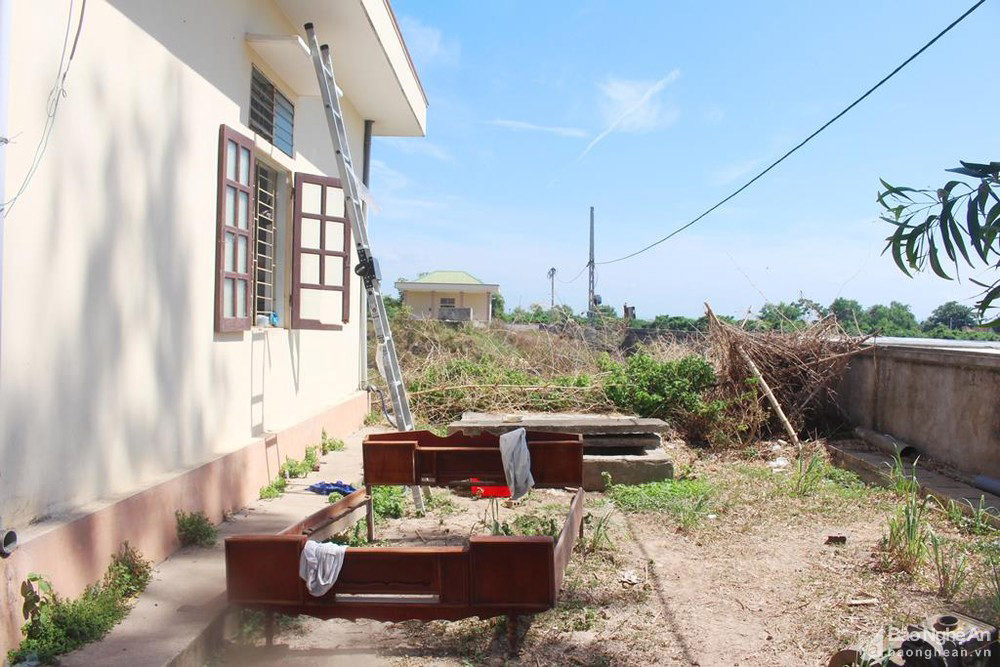 |
| Construction work at the Quynh Tho commune water supply project is unfinished and deteriorating. Photo: Nguyen Hai |
In our opinion, the direct and underlying reason why investors and businesses are not enthusiastic about investing in clean water supply is that the profits from this are not high and the capital recovery period is long. Currently, although the price of domestic water in rural areas has been approved by the Provincial People's Committee, the lowest price is 2,500 VND/m³.3The maximum price is 9,000 VND/m² per month.3/month, but unlike urban areas, rural residents use tap water quite sparingly (using other sources), so revenue is quite low.
To solve this problem, on the one hand, the province needs to review and provide targeted support to projects nearing completion to increase the percentage of households with access to clean water; on the other hand, it needs to establish a mechanism and assign responsibility for local authorities to contribute matching funds to unfinished water supply projects, instead of passively waiting for investment capital from the budget as is currently the case.