
Yen Thanh's spring rice crop is bountiful and fetches good prices.
(Baonghean.vn) - In recent days, farmers in Yen Thanh district, known for its rice production, have been actively harvesting their spring rice crop with great joy and excitement due to a bountiful harvest and good prices. According to the farmers, this is the most profitable rice crop they have ever had.
Bountiful harvest
In the rice fields of Nhan Thanh commune, the atmosphere of harvesting the winter-spring rice crop is quite bustling. Throughout the fields, farmers are actively harvesting their rice. Mr. Chuong, a resident of Trung Hong hamlet, was happily packing rice into sacks, saying: “My family harvested 10 sao (approximately 1000 square meters) of rice (Thai Xuyen 111 and Phu Uu 978 varieties) and all yielded high productivity, nearly 4 quintals per sao. The rice only needed one day of sun drying before traders came to buy it at 700,000 VND per quintal. I've never seen rice prices this high before.”
This spring, Nhan Thanh commune planted rice on over 534 hectares, using purebred rice varieties such as TR 225, hybrid varieties like Thai Xuyen 111, Phu Uu 978, and glutinous rice M97… This spring crop yielded an outstanding harvest, averaging 7.9 tons/ha, an increase of 50-70 kg/ha compared to the previous spring crop. With both a good harvest and good prices, farmers were able to sell their rice immediately after harvesting, with traders coming directly to the fields to buy it at prices ranging from 700,000 to 720,000 VND per quintal. The commune directed farmers to strictly adhere to the district's planting schedule, incorporating high-quality rice varieties into their crop structure. They also effectively applied scientific and technical methods, combined with intensive farming according to each growth cycle of the rice plant. In addition, the synchronized investment in Nhan Thanh's irrigation system, facilitating convenient irrigation and drainage, along with the experienced care and investment of the local people, also contributed to the success of the spring rice crop.
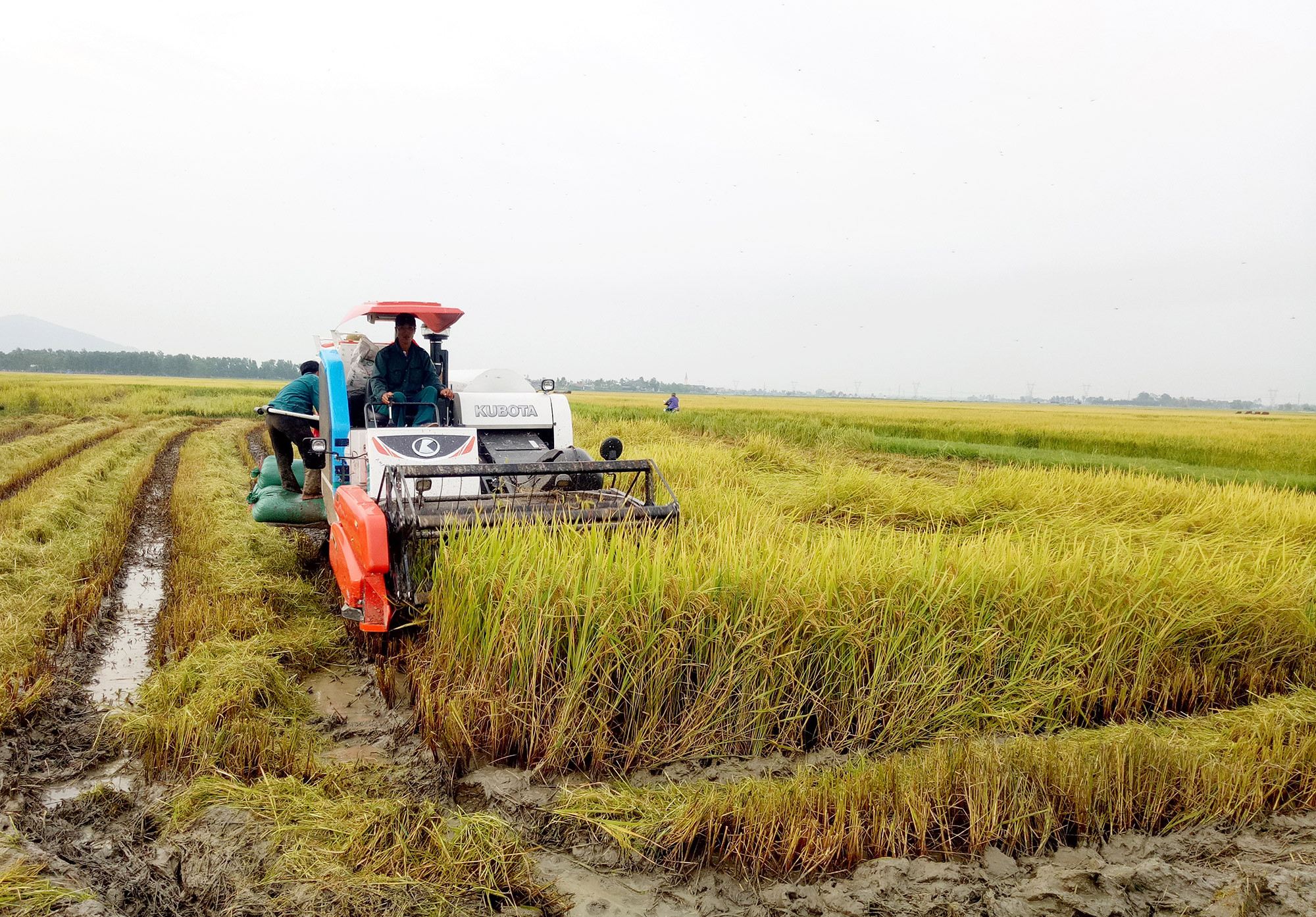 |
| Harvesting spring rice in Yen Thanh. Photo: Van Truong |
In the fields of Xuan Thanh commune, farmers are busily harvesting the spring rice crop. Multipurpose combine harvesters are conveniently used for harvesting, threshing, and bagging the rice. Farmers are preparing the land for the summer-autumn crop as soon as they finish harvesting. Mr. Phan Hoang Thu, Chairman of the People's Committee of Xuan Thanh commune, said: “It can be affirmed that the spring crop was a success. The commune planted 346 hectares, achieving a rice yield of 7.4 quintals/hectare. A new feature this year is that the commune has experimented with planting seedlings in trays on an area of over 10 hectares, which reduces labor and achieves high yields.”
The district's agricultural sector has directed the communes to implement the following production plans:
Organize early and sufficient fertilization, and follow proper technical procedures as instructed to ensure good plant growth and development from the start. Use the correct type of fertilizer for each stage of plant growth and development.
Develop a scientific irrigation plan that thoroughly conserves water. Areas at the end of canals, around lakes, dams, and pumping stations must have proactive plans to cope with droughts in order to ensure both spring crop production in 2021 and summer-autumn crop production in 2021.
Implement crop restructuring in drought-prone areas and inefficient rice-growing regions. Integrate scientific programs and projects to develop models for transferring advanced scientific and technological knowledge into production.
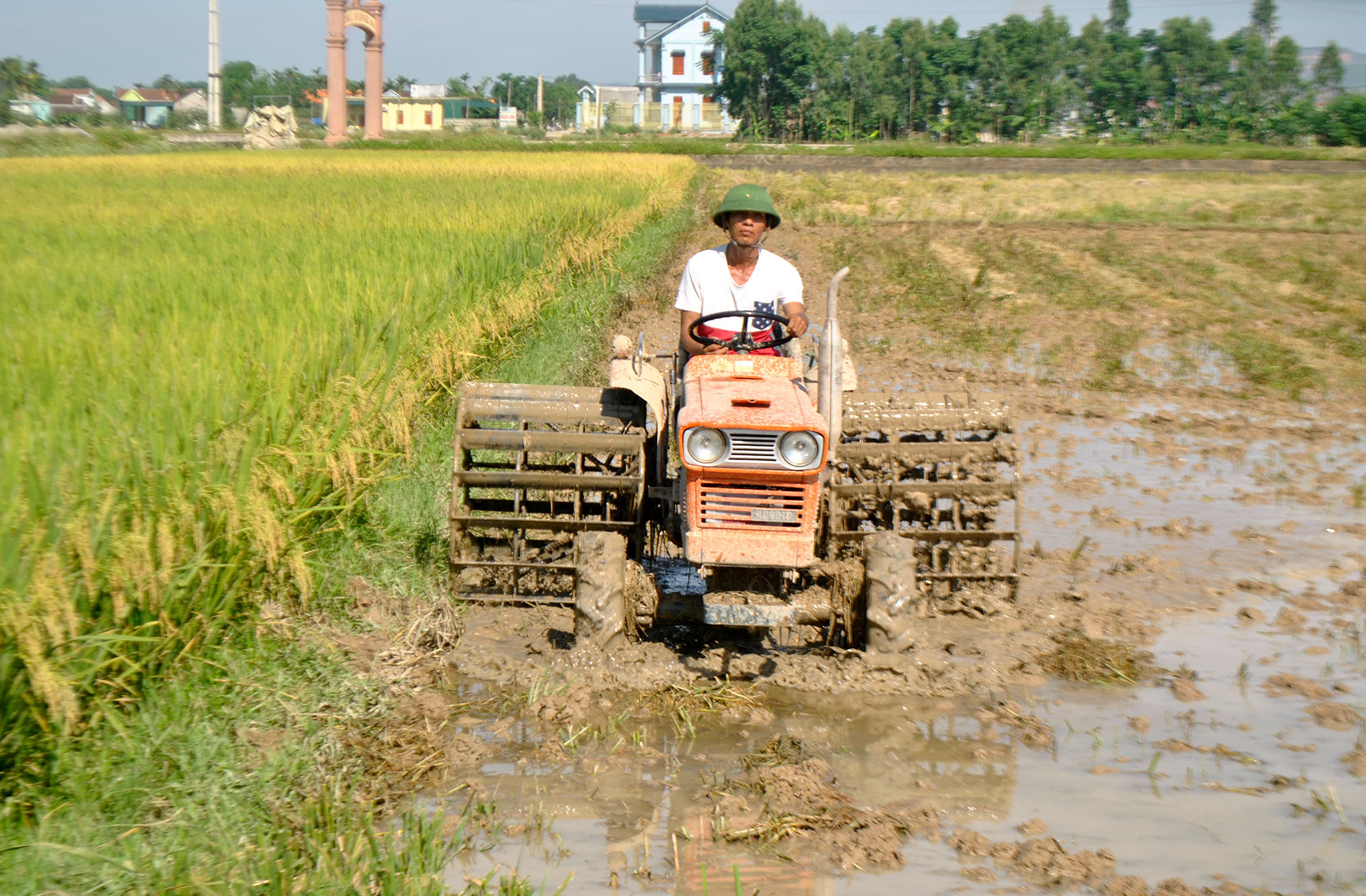 |
| Farmers in Yen Thanh district are preparing the land as soon as they harvest their crops to get ready for the summer-autumn planting season. Photo: Van Truong |
Developing intensive farming system models oriented towards commercial agricultural production.clean agricultureSafe and sustainable development according to VietGAP standards. Implementing high-tech agricultural production models in suitable localities; such as applying tray seedling and machine transplanting, which has contributed to saving labor and improving efficiency in agricultural production. This spring, Yen Thanh district has planted over 400 hectares of rice using tray seedling and transplanting methods. Strengthening efforts to attract businesses to link with cooperatives in organizing production and product consumption, it is expected that in the spring of 2021, the linkage and consumption of products for farmers will reach over 2,500 hectares of rice. Currently, investors are accelerating the construction of the TH rice processing plant, which is a favorable condition for localities to expand the production of high-quality rice varieties to supply raw materials to the plant. This aims to enhance the value chain of rice grains and bring the highest profits to farmers.
Speed up the land preparation and planting of summer-autumn rice.
Mr. Phan Van Tuyen, Chairman of the Yen Thanh District People's Committee, said: "As of now, Yen Thanh district has harvested over 80% of its rice crop. Currently, localities are preparing the land and repairing field and plot embankments to serve the summer-autumn crop. The goal for this year's summer-autumn crop in Yen Thanh district is to plant 11,500 hectares, yielding 59,000 tons of rice. To achieve this goal, experience shows that strict adherence to the planting schedule is essential."
The district is structuring the crop varieties rationally across the fields to avoid flooding. For flood-prone areas, short-day varieties with a growth period of less than 100 days are used, such as LC270, improved Khang Dan (DCG72), mutant Khang Dan, HN6, TBR279, and Huong Thom 1. In highland areas with less or no flooding, varieties like Thai Xuyen 111, Kinh Su Uu 1588, and VT 404 are used. To keep up with the planting season, Yen Thanh district plans to use tray seedling cultivation in many communes such as Xuan Thanh, Trung Thanh, Lien Thanh, Tho Thanh, and Hong Thanh this year.
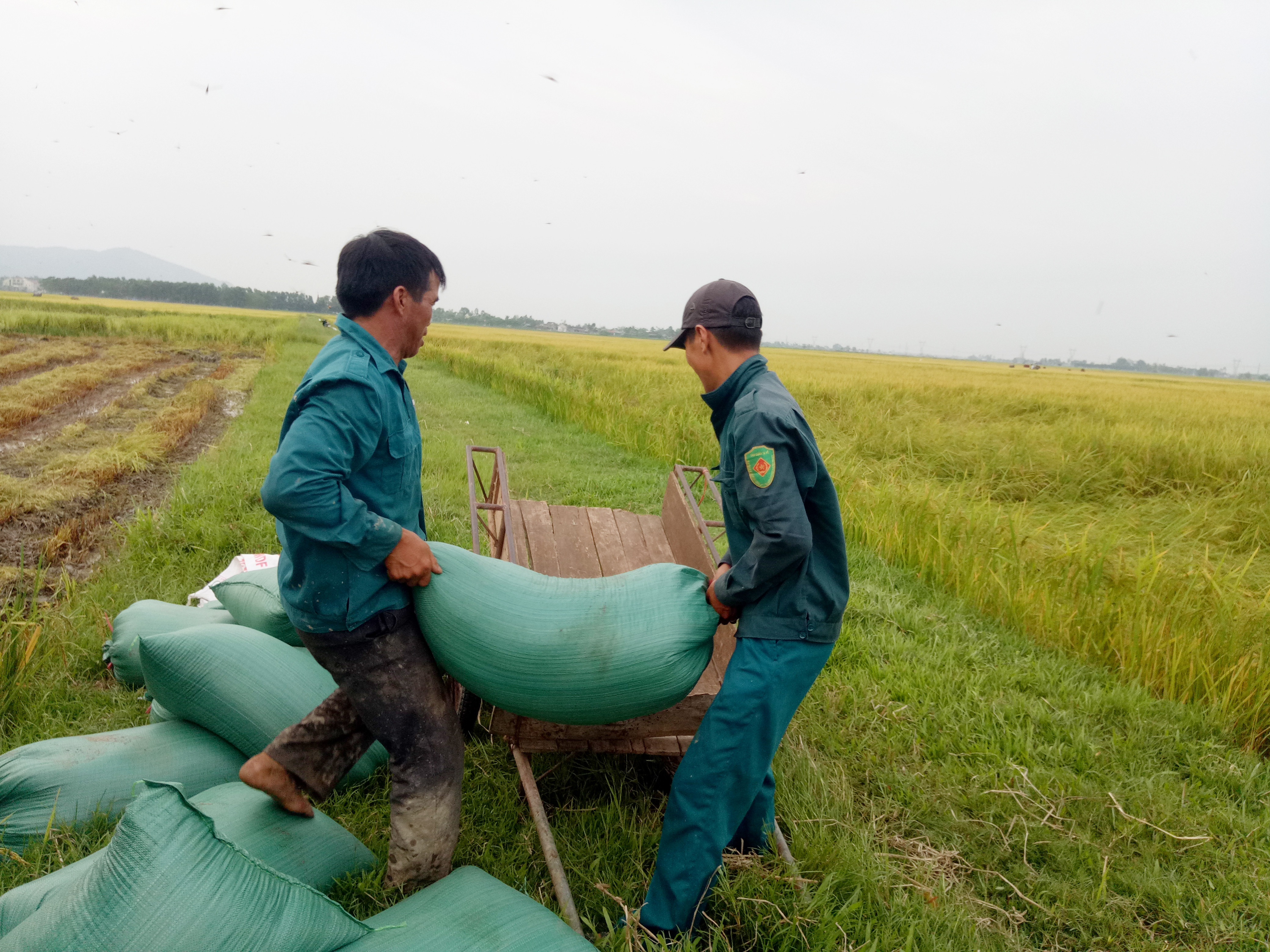 |
| People in Yen Thanh district have a successful spring crop. Photo: Van Truong |
According to the survey, over 700 hectares of summer-autumn rice fields in the district, which could not be planted due to insufficient water, have been converted to early autumn and autumn-winter crops such as corn, peanuts, and vegetables. The district is also reviewing and balancing water resources to allocate planting areas and develop specific water use plans for each region to ensure sufficient water for planting, caring for the rice plants, and ensuring safe growth and flowering. Repairing lakes, dams, canals, field embankments, dredging canals to improve drainage, and building dams along internal drainage channels are being carried out to utilize water efficiently and use water economically. Strengthening linkages between farmers, cooperatives, and businesses; and developing value chains to ensure the consumption of high-quality commercial rice for farmers are also being promoted to improve economic efficiency per unit area.
Van Truong