

June 5, 1911, marked a turning point in the course of world history.
(Baonghean.vn) - One hundred and fifty years ago, on June 5, 1911, at Nha Rong Wharf (Saigon), President Ho Chi Minh, then only 21 years old, boarded the French ship L'Admiral Latouche Tréville and applied for a job as a kitchen assistant, thus beginning his great ambition. From here, the course of world history changed…
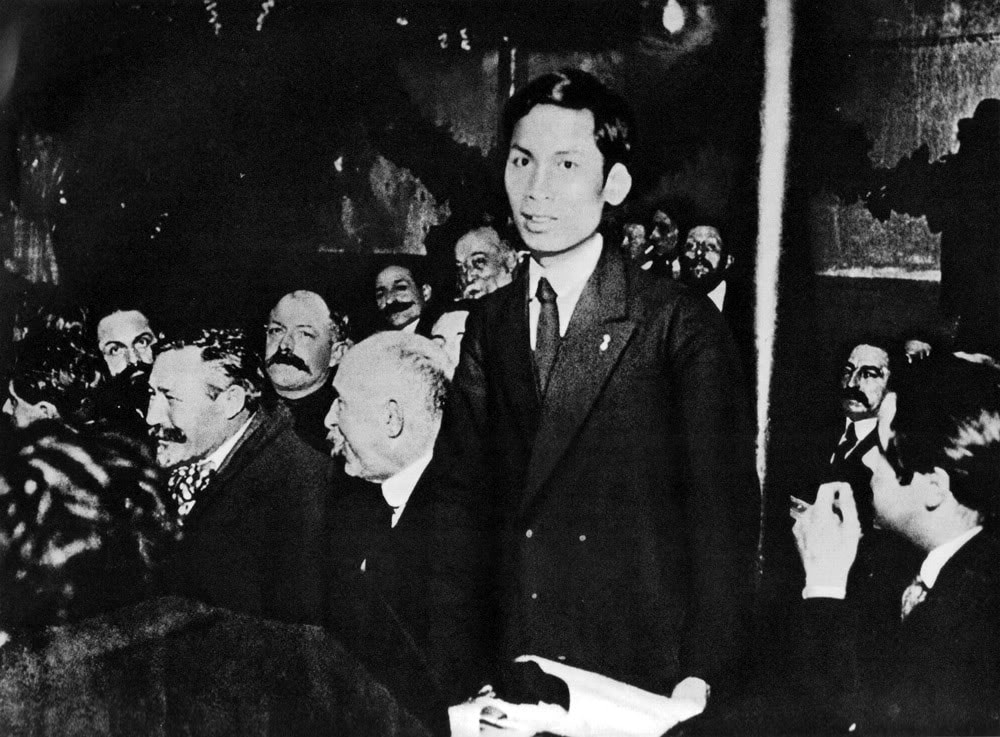 |
| President Ho Chi Minh at the 18th Congress of the French Socialist Party in 1920, where he participated in the founding of the French Communist Party. (Historical archival photo) |
The first to condemn and enforce the sentence against colonialism.
On his journey to find a way to save the country, President Ho Chi Minh traveled to France, the United States, England, and other places. There, he studied some of the most representative bourgeois revolutions of the modern era and realized the true nature of Western capitalism."Internally, it exploits the peasants and workers; externally, it oppresses the colonies."and conclusion"The capitalist revolution is an incomplete revolution.""
In 1919, President Ho Chi Minh joined the French Socialist Party. During meetings, he frequently denounced the crimes of colonialism, urged his comrades to support the revolution in the colonies, and criticized opinions that disregarded this issue.“If you don’t condemn colonialism, if you don’t defend the colonized peoples, what kind of revolution are you making? I didn’t just attend branch meetings; I went to other branches to defend ‘my’ position…”.
At the 18th Congress of the French Socialist Party, held in Tours from December 25 to 30, 1920, President Ho Chi Minh, as a representative of the Indochinese colonies, spoke on behalf of all humanity, calling for assistance to help the colonies achieve independence. He stated:“In the name of all mankind… we appeal: Comrades, save us!”.
In response to Comrade Rose's (the stenographer of the Congress) question about why he endorsed the Third International, he said:I understand that the Third International paid close attention to the issue of colonial liberation. The Third International stated it would help oppressed peoples regain their freedom and independence. The Second International, on the other hand, made no mention of the fate of the colonies; therefore, I voted in favor of the Third International..
Later, he became active in the French Communist Party and, together with several comrades from colonies such as Algeria, Tunisia, Madagascar, etc., founded the Union of Colonial Peoples (1921).
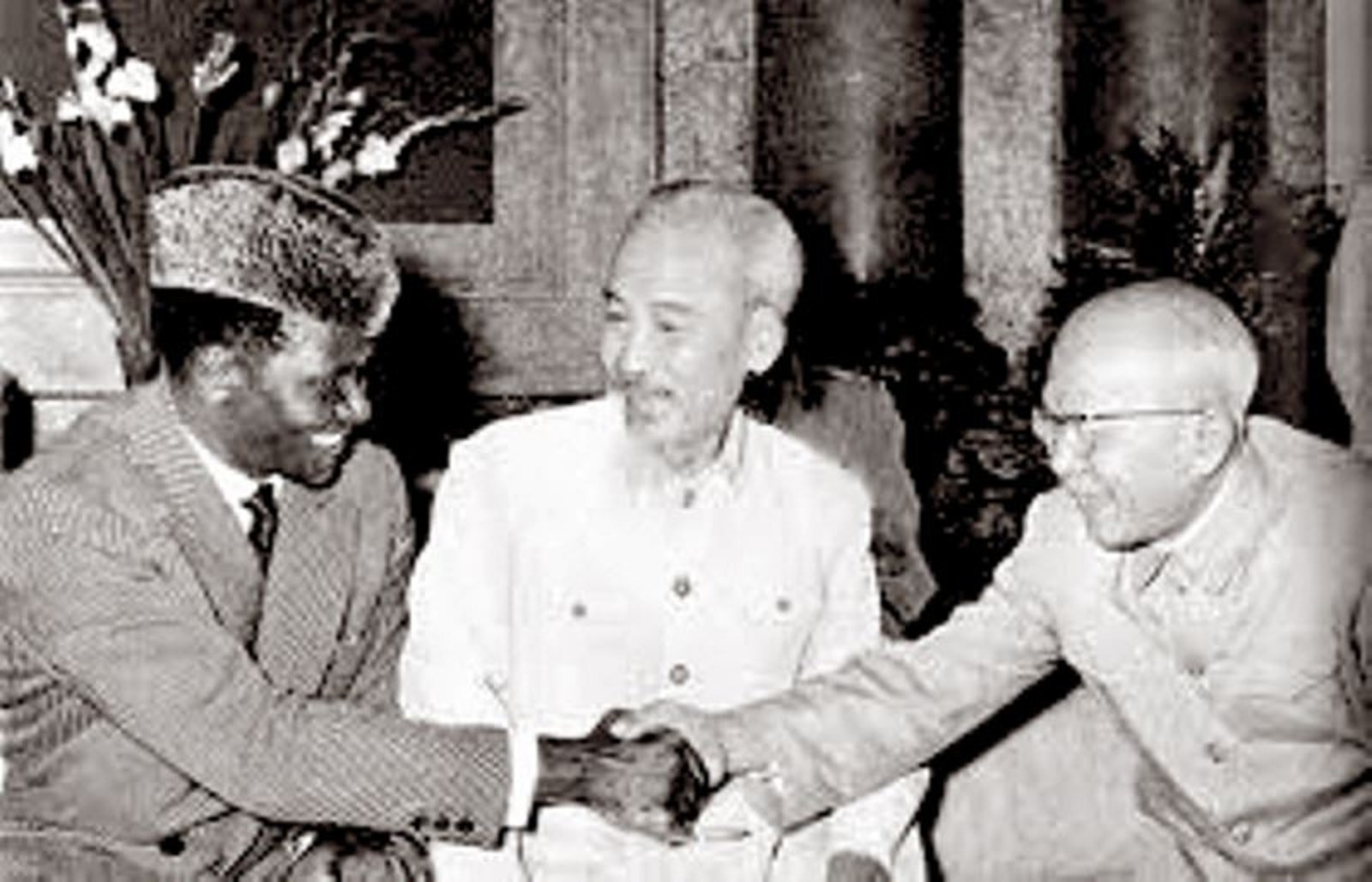 |
| President Ho Chi Minh and Vice President Ton Duc Thang received the President of the Republic of Guinea in Africa, Mr. Ahmed Sékou Touré, during his visit to Vietnam in September 1960. (Historical photo) |
President Ho Chi Minh was the first to clearly see the close connection between the proletarian revolution in the colonies and the proletarian revolution in the mother country. He analyzed that the power of capitalism was concentrated in the colonies, not in the mother countries. To suppress revolutionary movements in other colonies and revolutions in the mother country itself, the capitalists used the strength of soldiers within their colonial system, and this large army was commanded by those with colonial mindsets.
In the article "Indochina and the Pacific" published in the International Correspondence (Inprekorr) journal of the Communist International on March 19, 1924, he clearly stated:Today, imperialism has reached a near-scientific level of perfection. It uses the white proletariat to conquer the proletariat of the colonies. Then it sends the proletariat from one colony to fight the proletariat in another colony. Finally, it uses the proletariat of the colonies to dominate the white proletariat."
In June 1924, at the Fifth Congress of the Third International, President Ho Chi Minh emphasized:Colonial revolutions not only do not depend on the proletarian revolution of the mother country, but can achieve victory before it,” and “while eliminating one of the conditions for the existence of capitalism, namely imperialism, they can assist their brothers in the West in the task of complete liberation.”
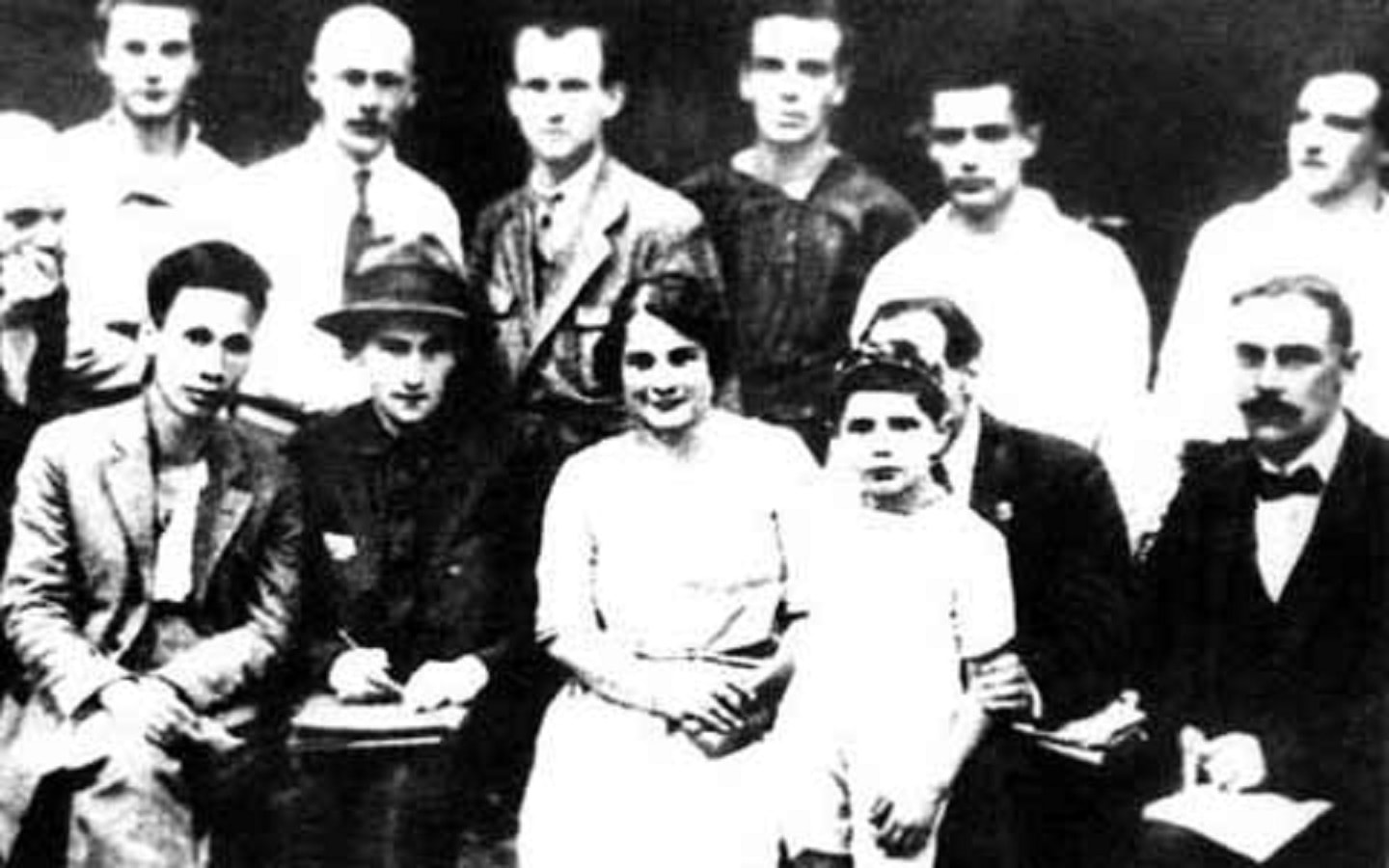 |
| President Ho Chi Minh (first on the left) with delegates attending the Fifth Congress of the Communist International in Moscow, Soviet Union, in 1924. Historical archival photo. |
He also criticized opinions that belittled the revolution in the colonies:“Forgive my bluntness, comrades, but I cannot help but tell you that, after hearing your speeches in the motherland, I have the impression that you are trying to kill the snake by its tail. You all know that the venom and vitality of the poisonous snake of capitalism are currently concentrated in the colonies rather than in the motherland. The colonies supply raw materials for the factories; the colonies supply soldiers for the imperialist armies. The colonies become the foundation of counter-revolutionary forces. Yet, when you speak of revolution, you show contempt for the colonies.”
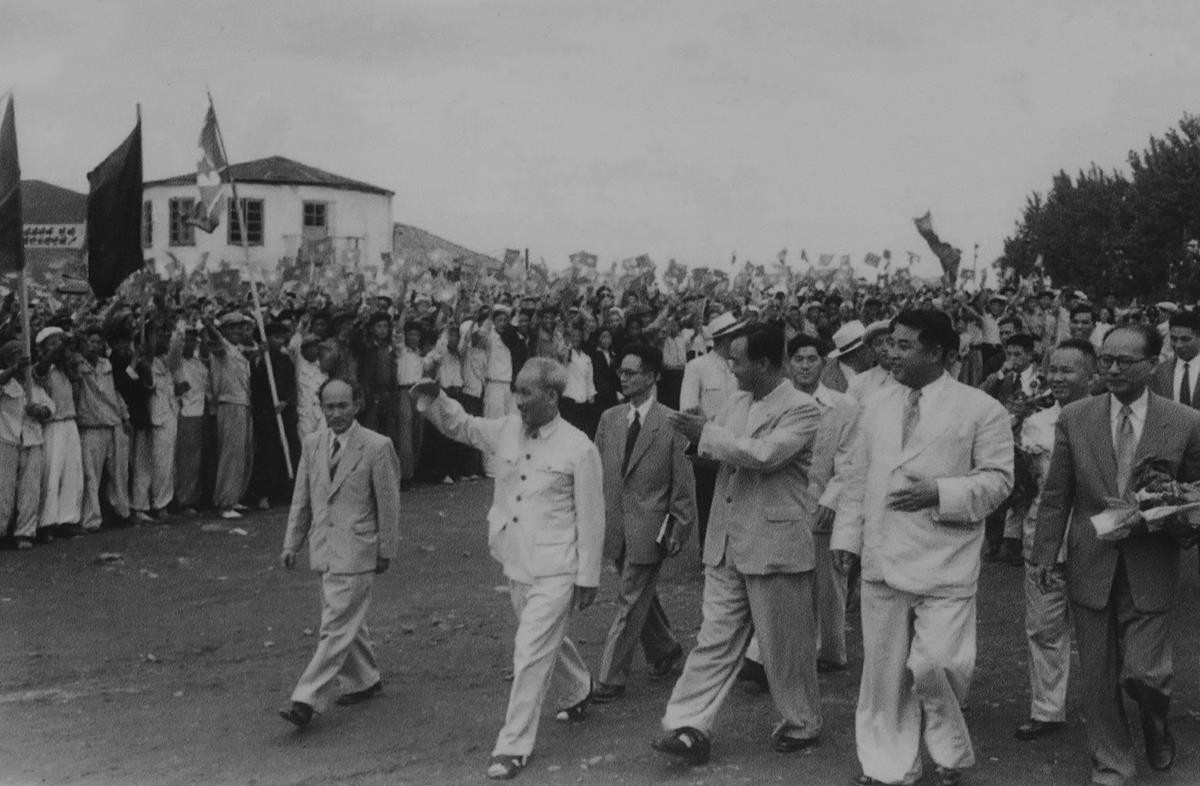 |
| President Ho Chi Minh visits an agricultural cooperative in North Korea in July 1957. (Archival photo) |
Later, he was elected a Standing Member of the Eastern Bureau, in charge of the Southern Bureau of the Third International. Subsequently, the Third International sent him to Guangzhou (China) to work on promoting the conditions for building a communist organization in Indochina and assisting revolutionary delegates in Southeast Asian countries.
In 1925, together with his comrades from China, India, Korea, Indonesia, Burma, and other countries, he participated in the founding of the Union of Oppressed Peoples. Subsequently, he founded the Vietnam Revolutionary Youth Association (June 1925) and later the Communist Party of Vietnam (February 1930).
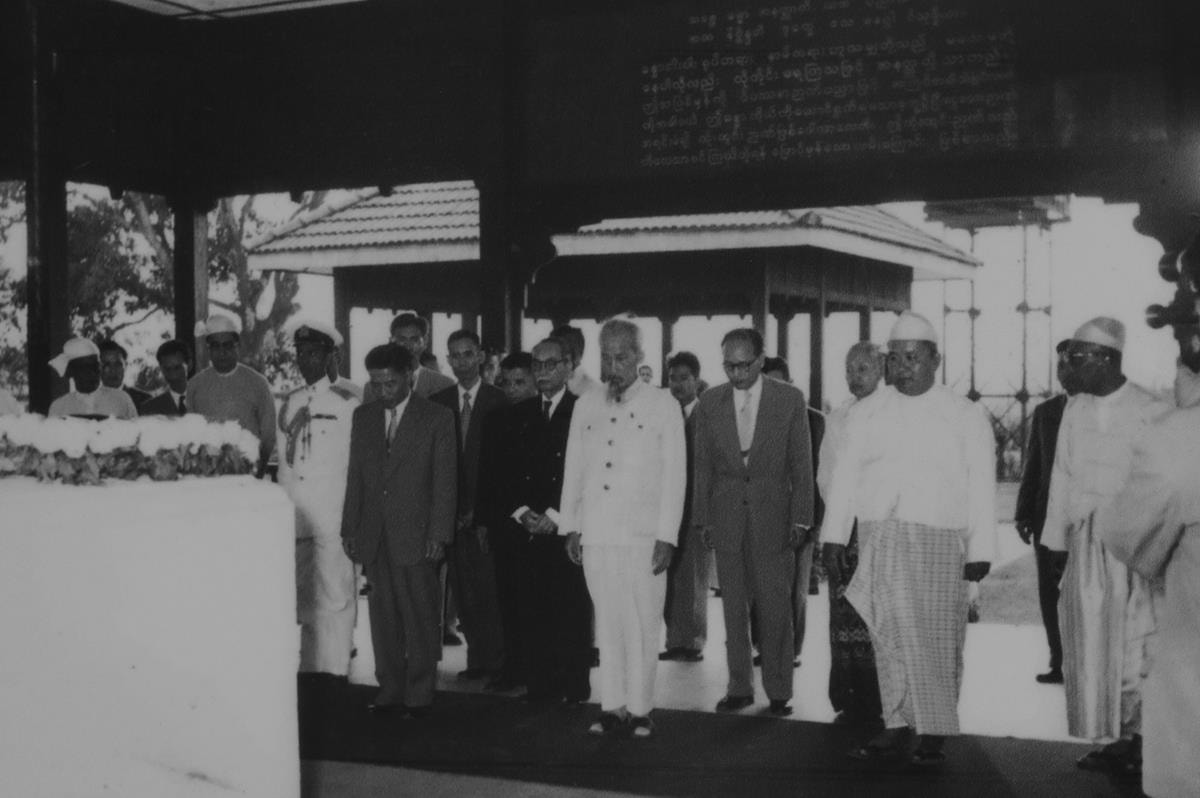 |
| President Ho Chi Minh observes a moment of silence before the graves of martyrs in Yangon (Myanmar) in 1958. (Archival photo) |
"He developed human rights into national rights."
At the international conference commemorating the 100th anniversary of President Ho Chi Minh's birth in 1990, General Vo Nguyen Giap, Vice Chairman of the Council of Ministers, stated:“With the Tours Congress, a colonized citizen became one of the founders of the French Communist Party in his own country. With the organization of the Colonial Union, a people who had lost their country not only worried about liberating their own nation but also about fighting for the liberation of their brother nations… Nguyen Ai Quoc was the first to write “The Indictment of the Colonial Regime,” and he was also the one who, together with his people, carried out that indictment.”
On September 25, 1969, at a rally in Tokyo (Japan) to commemorate President Ho Chi Minh, Professor Singo Sibata assessed:“First, we must recognize his contributions to deepening and developing Leninist theory on national and colonial issues... Ho Chi Minh's contributions truly opened a new phase in the theories of national and colonial issues. At that time, there were very few Marxists like Ho Chi Minh, born in a colonial country and having personally experienced life in Vietnam and many other colonies. Lenin himself did not have such experiences. Ho Chi Minh was one of the very few Marxists with such experiences. This is what allowed him to further develop the theory of national and colonial issues.”Professor Singo Sibata also emphasized"Ho Chi Minh's most famous contribution lies in the fact that he developed human rights into national rights."
This flag promotes peace, national independence, democracy, and social progress in the world.
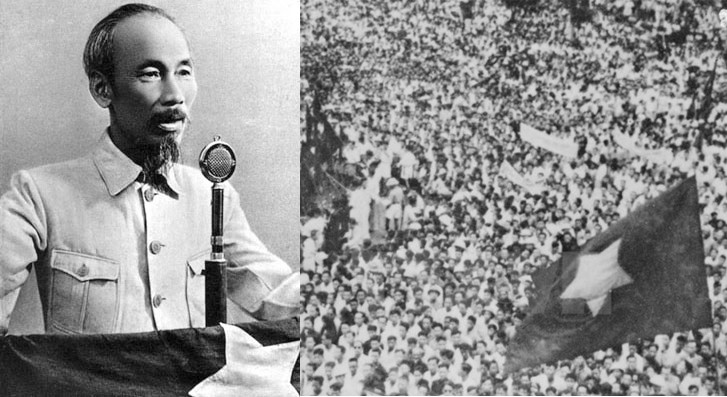 |
| President Ho Chi Minh reading the Declaration of Independence, giving birth to the Democratic Republic of Vietnam (now the Socialist Republic of Vietnam). (Historical archival photo) |
The success of the August Revolution in 1945 inspired national liberation movements around the world. Just as the American Declaration of Independence signaled the collapse of British colonial rule in the 13 North American colonies, the Declaration of Independence of the Democratic Republic of Vietnam, with its statement: "All nations are born equal; every nation has the right to life, happiness, and freedom," signaled the collapse of colonialism worldwide. (In the book...)In his book "The World on Vietnam," British scholar Thomas Hodgkin assessed the August Revolution of 1945 in Vietnam as "the most important event in world history since the Russian October Revolution.""
Thomas Hodgkin wrote that:“It was a revolution led by the Communist Party, a party that had only been in existence for 15 years. It was the first revolution to successfully overthrow the colonial regime… Thus, the August Revolution marked the beginning of a new era, drawing a line between the colonial age and the era of decolonization.”.
Signaling the disintegration of the colonies
However, the French colonialists quickly returned to invade Vietnam. But they were defeated by the Dien Bien Phu victory, "renowned throughout the world and shaking the earth" (May 7, 1954). Regarding the Dien Bien Phu victory, American historian Berna Fol assessed:"For the first time, a colonial power was defeated by a colonized country."French journalist Jules Roy noted:"That was one of the West's greatest failures, signaling the disintegration of the colonies."Jean Pouget, a former officer in the French expeditionary forces, remarked bitterly:"The French defeat at Dien Bien Phu marked the end of colonialism and the beginning of the era of independence for the Third World.".
Comrade William Foster, Chairman of the American Communist Party, also wrote in the Workers' Daily (USA) on May 10, 1954, as follows:This failure was not only a disastrous failure for the French colonialists, who had risked their lives to conspire to invade the rich and beautiful country of Indochina, but first and foremost, it was a great failure of the American imperialist war of aggression.
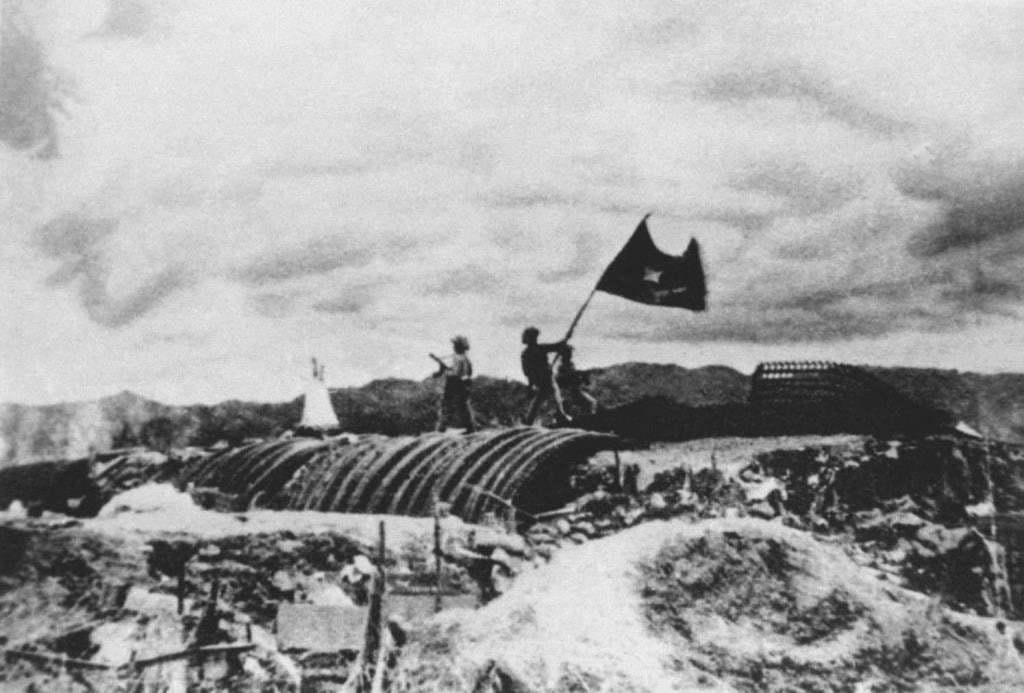 |
| The victory at Dien Bien Phu on May 7, 1954. |
In 1955, just one year after the victory at Dien Bien Phu, the Conference of 29 Asian and African Nations met in Bandung (Indonesia). For the first time in history, nations that had been marginalized for centuries united to openly condemn colonialism and cooperate in helping each other for the goals of peace and national independence. At this conference, the Vietnamese delegates were welcomed as heroes.
As a result, just four years after the victory at Dien Bien Phu, 1960 went down in human history as the "Year of Africa," with 17 African countries declaring independence. By 1968, as many as 39 countries on the continent (comprising 85% of the territory and 93% of the population) had achieved victory in their wars for national independence.
President Ho Chi Minh is inextricably linked to the Vietnamese people's resistance against the French and the Americans – a banner for the struggle of oppressed peoples worldwide against colonial imperialism. Ahmed Sékou Touré, President of the Republic of Guinea from 1958 to 1984, stated:"Outstanding and courageous, our brother Ho Chi Minh is a shining example for the peoples of Asia and Africa in their noble struggle against imperialism and old and new colonialism.".
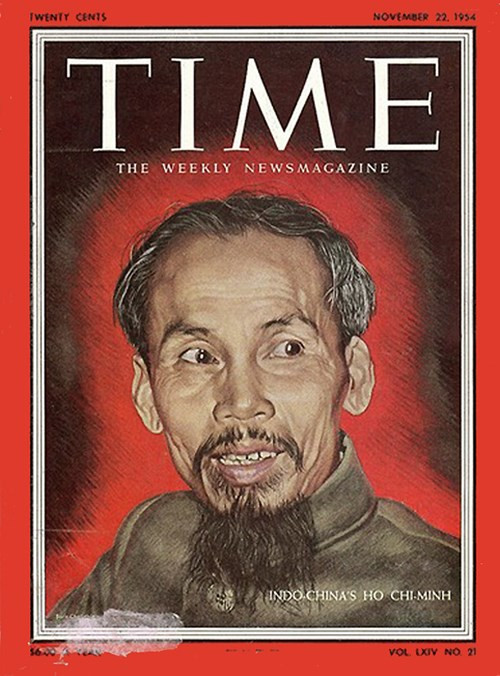 |
| President Ho Chi Minh on the cover of Time magazine. |
His life and career "transcended the borders of his homeland."
President Ho Chi Minh dedicated his entire life to the revolutionary cause of our people and the people of the world. The eulogy delivered by Comrade Le Duan, First Secretary of the Central Committee of the Vietnam Workers' Party, at the solemn funeral ceremony for President Ho Chi Minh on September 9, 1969, included the following passage:“President Ho Chi Minh dedicated his entire life to the revolutionary cause of our people and the people of the world… His heart and mind were devoted to the Vietnamese nation, but also to the proletariat and oppressed peoples throughout the world. As a loyal disciple of Marx and Lenin, President Ho Chi Minh was not only a great patriot, but also an outstanding fighter in the international communist movement and the national liberation movement of the 20th century.”Therefore, on September 9, 1969, the "Red Rights" newspaper of the Czechoslovak Socialist Republic published an article about the historic Testament of President Ho Chi Minh, in which it emphasized:"Uncle Ho, along with his Last Will and Testament, belongs to all communist, workers', and revolutionary movements in the world. He is considered one of those whose life and work transcended the borders of his homeland.".
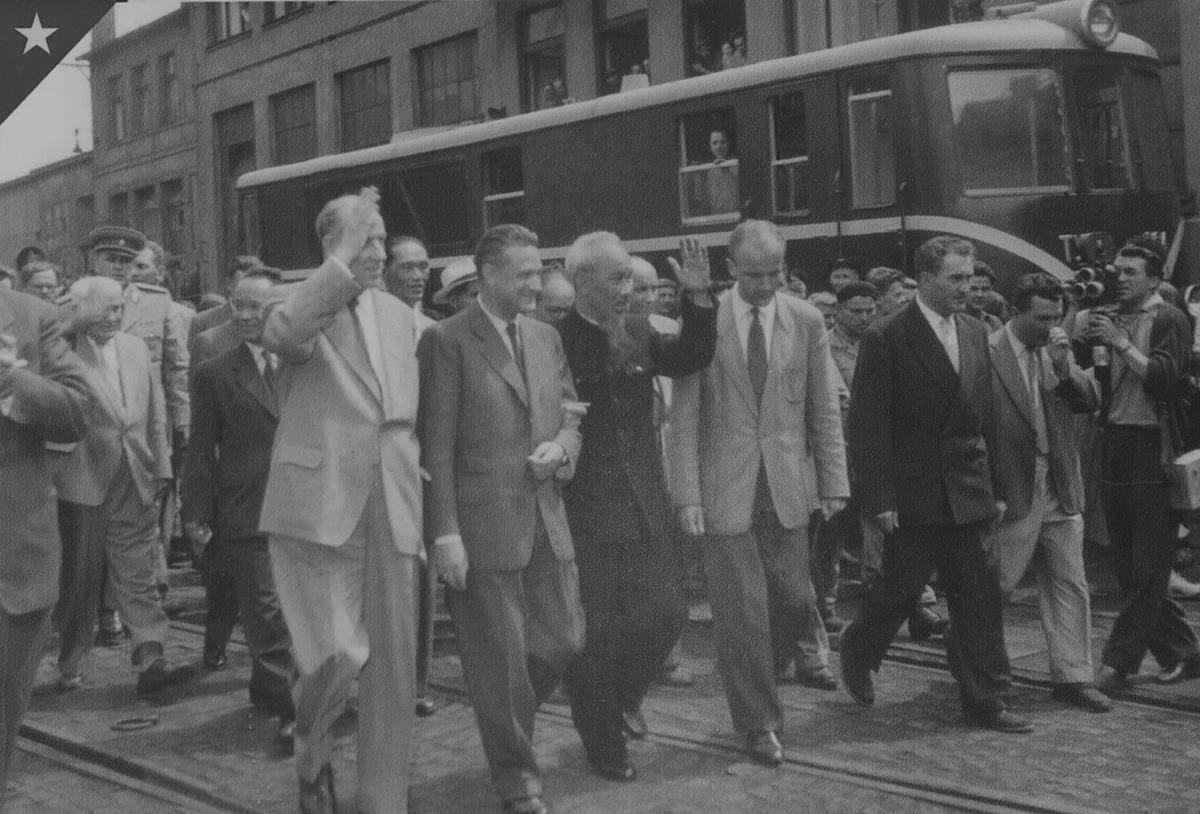 |
| President Ho Chi Minh visits the Sokolovo CKD locomotive manufacturing plant (Czechoslovakia) in 1957. (Archival photo) |
Speaking in Hanoi on September 12, 1973, during his first visit to Vietnam, Cuban President Fidel Castro emphasized:“The cause of national liberation and the cause of social liberation are two key points in his doctrine. President Ho Chi Minh also saw that backward nations, oppressed and exploited by colonialism, could make leaps in history and build their economies along the socialist path, without having to go through the sacrifices and horrors of capitalism… We believe that all oppressed nations around the world will find in the life of Comrade Ho Chi Minh, in his political thought, in his clear tactical and strategic views, an incredibly rich source of knowledge to solve their own problems.”.
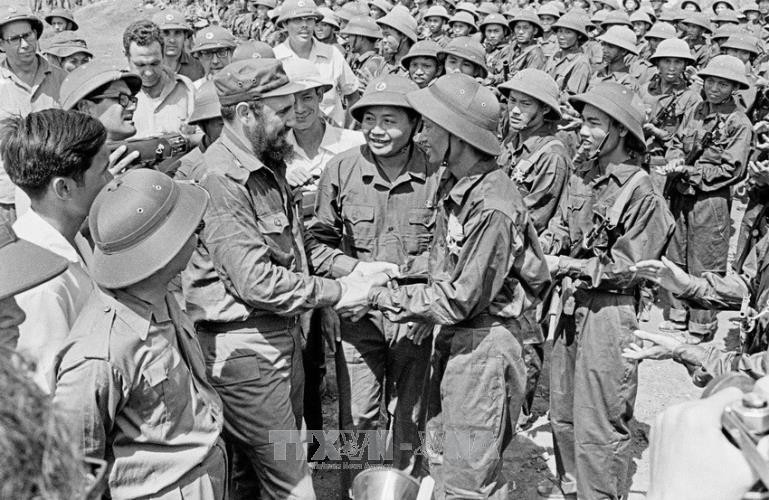 |
| Cuban President Fidel Castro with soldiers of the Khe Sanh Regiment, Tri Thien Hue Liberation Army, during a visit to the liberated zone of Quang Tri, September 15, 1973. Photo: VNA |
"Wherever there is a fight for peace and justice, there is Ho Chi Minh."
Romet Chandra, President of the World Peace Council from 1977 to 1995, stated:"Wherever there is a struggle for independence and freedom, there is Ho Chi Minh and the banner of Ho Chi Minh flies high. Wherever there is a struggle for peace and justice, there is Ho Chi Minh and the banner of Ho Chi Minh flies high. Wherever people fight for a new world, against poverty, there is Ho Chi Minh and the banner of Ho Chi Minh flies high."
At the international conference commemorating the 100th anniversary of President Ho Chi Minh's birth in 1990, Dr. Modagat Ahmet, Director of the United Nations Educational, Scientific and Cultural Organization (UNESCO) for the Asia-Pacific cultural region, stated:"He will be remembered not only as the liberator of his homeland and colonized humanity, but also as...""A modern sage who offers new vision and hope to those who relentlessly fight to eliminate injustice and inequality from this earth."
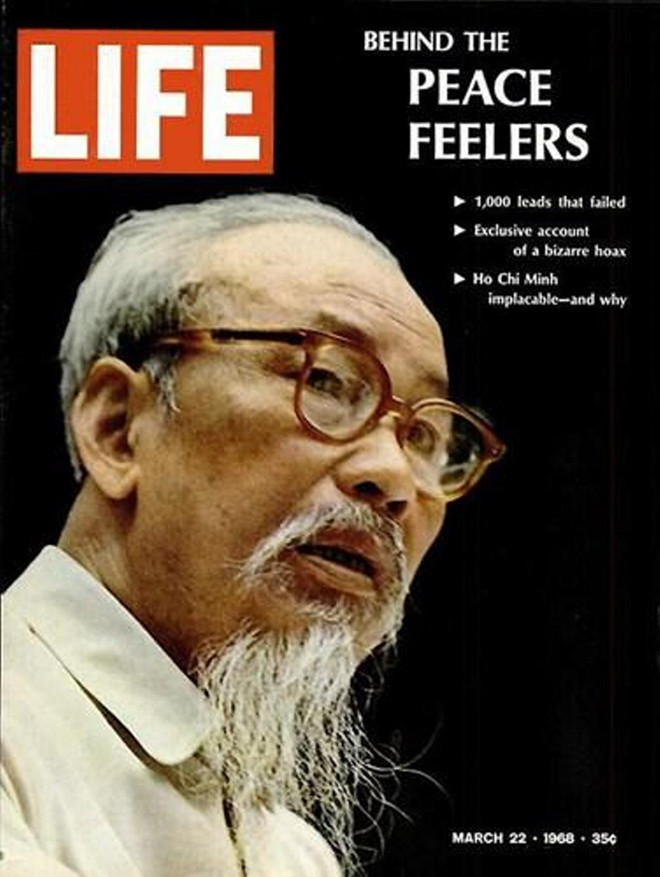 |
| A portrait of President Ho Chi Minh on the cover of Life magazine. |
Therefore, TIME, one of the most famous and prestigious newspapers in the United States, has stated:"President Ho Chi Minh was one of the figures who changed the course of human history, shaped modern history, and was the greatest Asian figure of the 20th century."
To date, 35 statues and monuments of President Ho Chi Minh have been erected in 20 countries across Asia, Europe, America, and Africa (India, China, Philippines, Singapore, Sri Lanka, Laos, Thailand, France, Russia, Hungary, Cuba, Venezuela, Argentina, Mexico, Chile, Panama, Dominica, Madagascar...). There are also numerous streets and avenues (7 in France alone, 21 in Italy), 16 memorial areas and parks, 6 commemorative plaques, and 6 schools named after him abroad.
Information and documents cited:
Ho Chi Minh: Complete Works, Volume 1, Volume 2, National Political Publishing House.
Central Committee for Ideology and Culture, Commemorating the 100th Anniversary of President Ho Chi Minh's Birth, Propaganda Publishing House, Hanoi.
The world praises and mourns President Ho Chi Minh, Truth Publishing House, Hanoi.
Thomas Hodgkin, "The World on Vietnam," Volume 2, Institute of Social Sciences Information, Hanoi.
Various authors, “Fidel Castro and Vietnam: Unforgettable Memories”, Publishing House.World.
UNESCO and the Vietnam Social Sciences Commission, International Conference on President Ho Chi Minh (excerpts from presentations by international delegates), Social Sciences Publishing House.