

Recovering assets obtained through corruption: Preventing the "sacrifice of the father's generation to enrich the son's generation"
Mr. Pham The Duyet: "Corrupt individuals always think about 'sacrificing the father's generation to secure the son's future,' but that's unlikely to happen in our generation. With a market economy, corrupt individuals might think that going to prison is fine, but their wives and children will definitely be happy."
Over the years, our Party and State have paid great attention to directing the handling of many major criminal cases involving corruption and economic crimes, which have been brought to trial with the principle of "no exceptions, no forbidden zones." Many officials under the management of the Politburo and the Secretariat who were involved in corruption have faced strict legal sentences.
However, the rate of recovery of assets lost or misappropriated due to corruption remains low, at just over 30%. This is also one of the reasons why many people in positions of power and authority are willing to engage in corruption, willing to cross boundaries to obtain illicit funds, and determined that if caught, they are willing to go to prison to keep their ill-gotten gains.
Speaking with a VOV reporter, Mr. Pham The Duyet - former Standing Committee member of the Politburo, former Chairman of the Central Committee of the Vietnam Fatherland Front - said that the retroactive application of the law needs to be considered, as it is unacceptable to divide resources among individuals without a basis for review.
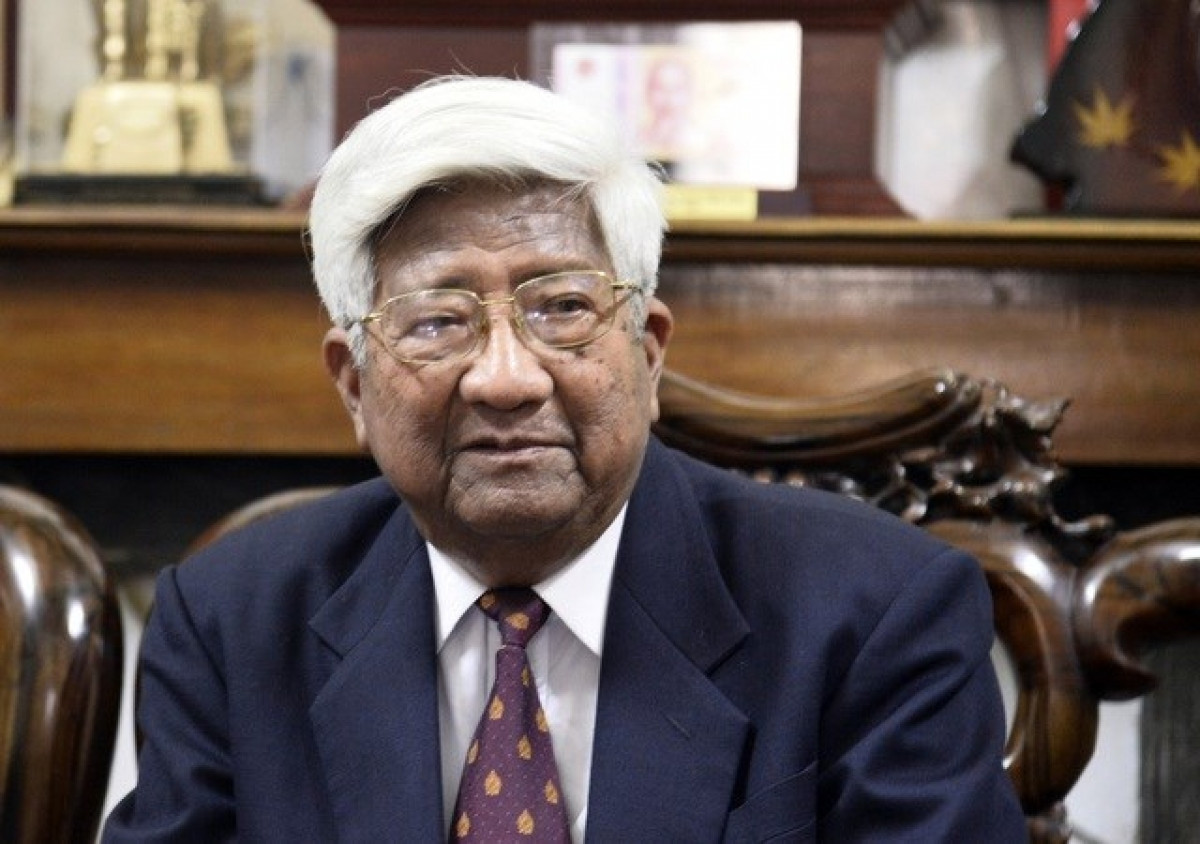 |
Corrupt individuals always think in terms of "sacrificing the father's generation to secure the son's future."
PV:From his perspective, how would he explain why asset recovery rates are so low?
Mr. Pham The Duyet:Regarding the low rate of asset recovery, the defendants and offenders who were dishonest in complying with the court's verdict are the ones who fully understand the situation.
The recovery of assets obtained through corruption is not substantial, and in my opinion, we need to reconsider this. "Every problem has a solution," we have a political system led by the Party, and a judicial system, yet we are unable to recover these assets. We appoint the wrong people, or elect them but allow them to become corrupt and degenerate without preventing them from committing crimes. When they commit crimes, it's merely an outward manifestation; in reality, they already have the intention to profit from any means necessary. Wherever they can find opportunities, they will use every means, at any cost, to find relatives, factions, and loopholes to "drain" the State and the people's resources.
How should it be managed? Where should it be hidden, to whom should it be given, and how should it be sent abroad? Only investigative and judicial agencies can deeply understand this issue. Under the leadership of the Party, these agencies must fulfill their responsibilities to the best of their ability.
PV:Those involved in corruption are always prepared to react, conceal assets, or even intentionally violate the law in order to "sacrifice the father's generation to secure the son's future." What are your comments on this reality?
Mr. Pham The Duyet:Corrupt individuals often think of "sacrificing the father's generation to secure the son's future," but that's unlikely to happen in our generation. In a market economy, corrupt individuals might think that going to prison is fine, but their wives and children will certainly be better off. This raises the need to consider relevant regulations and laws. When necessary, in cases where corruption has already occurred and the court has ruled, retroactive application of the law can be considered. There can be no question of distributing ill-gotten gains to one person or another without a basis for consideration. Those who have received ill-gotten gains can also be easily proven guilty.
As someone involved in mass mobilization and advocacy, I am concerned about what the people think. President Ho Chi Minh said..."Even the easiest task is impossible without the people's support; even the most difficult task can be accomplished with the people's cooperation."So, have the people voiced their opinions yet? From the residential area, the authorities, and those with connections to the perpetrator, I believe that clarifying responsibilities will resolve the issue.
A strong, healthy body is not easily invaded by disease.
PV:The shortcomings and difficulties in recovering assets obtained through corruption, and the very low recovery rates, are also issues of great concern to the people and are exploited by malicious elements to distort our policies and guidelines.
Mr. Pham The Duyet:Having been responsible to the Party for the work of Party building and rectification during the 8th Party Congress, I think this matter needs to be viewed from two perspectives.
On the one hand, we see that our Party has made great contributions to the people. For over 90 years of leadership, the people have placed great trust in the Party and always hope that it will remain strong and reputable to serve the people and the country, and to safeguard the regime. Even if malicious individuals intentionally try to exploit and undermine it, they are only a very small number, and we have no need to fear them. Our people are revolutionary and very good.
Secondly, I think that regarding this matter, we need to consider that we have had shortcomings for quite a long time, lacking the necessary resolve. If we had been consistently resolute, the problem might still exist, but it would have been less severe.
Fortunately, the Central Committee Resolution No. 4 of the 11th Party Congress, and then the Central Committee Resolution No. 4 of the 12th Party Congress, have rekindled the trust of the people, Party members, and officials in the Party. I believe that officials with power and authority have the opportunity to engage in corruption, so the selection of officials is a crucial step.
Speaking about Party building and rectification, General Secretary Nguyen Phu Trong once emphasized that if we do not persistently and resolutely fight corruption, negativity, bureaucracy, and alienation from the people, and do not have a clear stance on this issue, then it will be a test of the Party's leadership role and a challenge to the survival of the regime.
Reflecting on these things, I believe we must be more determined in building and reforming the Party and fighting corruption and negative practices. If we do that, we won't have to fear or be intimidated by bad elements. We will be strong and healthy, and disease cannot infiltrate us. However, we must also frankly point out that "a significant portion" of cadres are violating regulations. If this "significant portion" includes a small number of leaders, then it will be even more dangerous. This is an unpleasant issue to talk about, but we must frankly acknowledge it in order to resolutely address it.
 |
PV:Sir, ultimately, it all comes down to the personnel issue?
Mr. Pham The DuyetI completely agree with General Secretary Nguyen Phu Trong's view that the Party shouldn't just focus on disciplining officials; it must create conditions for selecting the right officials. That's the main point. There are children who have to struggle on their own, earning only a few tens of thousands of dong a day, but when they find tens or hundreds of millions of dong, they still return it. So why would a state official have such corrupt thoughts? This is where the Party needs to take responsibility in selecting, building, and educating its cadre. I believe that's the root of the problem.
The second point I welcome is that, no matter how humane the situation may be, right and wrong must be clearly defined, and the handling of cases must be decisive. We shouldn't resort to extreme or one-sided approaches, but we must determine the appropriate level of action needed, ensuring that everyone is satisfied and confident in the outcome. Only then will it be meaningful.
PV:On June 2, 2021, the Party Central Committee issued Directive 04-CT/TW on strengthening the Party's leadership in recovering assets lost or misappropriated in criminal cases of corruption and economic crimes. According to you, what should relevant agencies do to implement Directive 04, eradicate corrupt officials, and successfully recover assets that have been embezzled or misappropriated?
Mr. Pham The Duyet:The fight against corruption is a battle involving the entire political system, including the Party, the State, and the people. I believe that the Party's involvement has been relatively strong and decisive. However, this decisiveness has only reached the highest levels. If we look at the Party committees at the provincial, city, or even smaller levels like districts and communes, we shouldn't hastily assume that we have a movement to combat corruption.
In the fight against the Americans, there were soldiers who killed Americans, but in the fight against internal enemies, we haven't seen any commendation anywhere. Nowhere dares to say, "My Party Committee has done a good job on this issue." My Party Committee discovered this problem without waiting for the Central Committee's intervention. Have any exemplary cases been raised at the five-year emulation review conferences that address these issues? Only when we answer these questions will we see the solidity of the fight against corruption. Furthermore, if we do a good job of recovering assets, the people will greatly welcome it.
To select good officials, we must rely on the people.
PV:Our Party has many regulations for selecting, training, and screening cadres. So, in your opinion, which is the most important step?
Mr. Pham The Duyet:I am very concerned about the human factor. Who builds these cadres? Who trains them? Who nurtures, inspects, and controls them? It is the Party. And the Party relies on the people, because the Party belongs to the people.
Therefore, we must do a really good job in terms of personnel management.
In 1947, when the resistance war against the French began, President Ho Chi Minh wrote the book "Correcting Working Methods". In my opinion, simply by internalizing and applying that book, a Party member would mature, become much more steadfast, and overcome personal temptations.
Cadres must be self-critical, self-motivated, improve their skills, correct their mistakes, and be subject to the people's scrutiny. Cadres shouldn't boast!
All of those things Uncle Ho taught were very specific.
Now we must quickly ensure that the current cadre does not repeat those mistakes, and quickly build a successor team—a team that is not indifferent to revolutionary ideals. The future generation is something we cannot ignore from now on.
Specifically, I want to emphasize the importance of selecting officials. To select the best officials, we must rely on the people. Because there is nothing the people don't know. Let's use that knowledge to improve and develop our character.
Having been in a position of responsibility, I dare say that when officials are wrongly promoted, appointed, or promoted, the head of the organization must bear the responsibility. People are the most decisive factor. Any corruption that occurs in the personnel organization and human resource management stages is the root cause leading to other harmful forms of corruption.
PV:Thank you, sir!
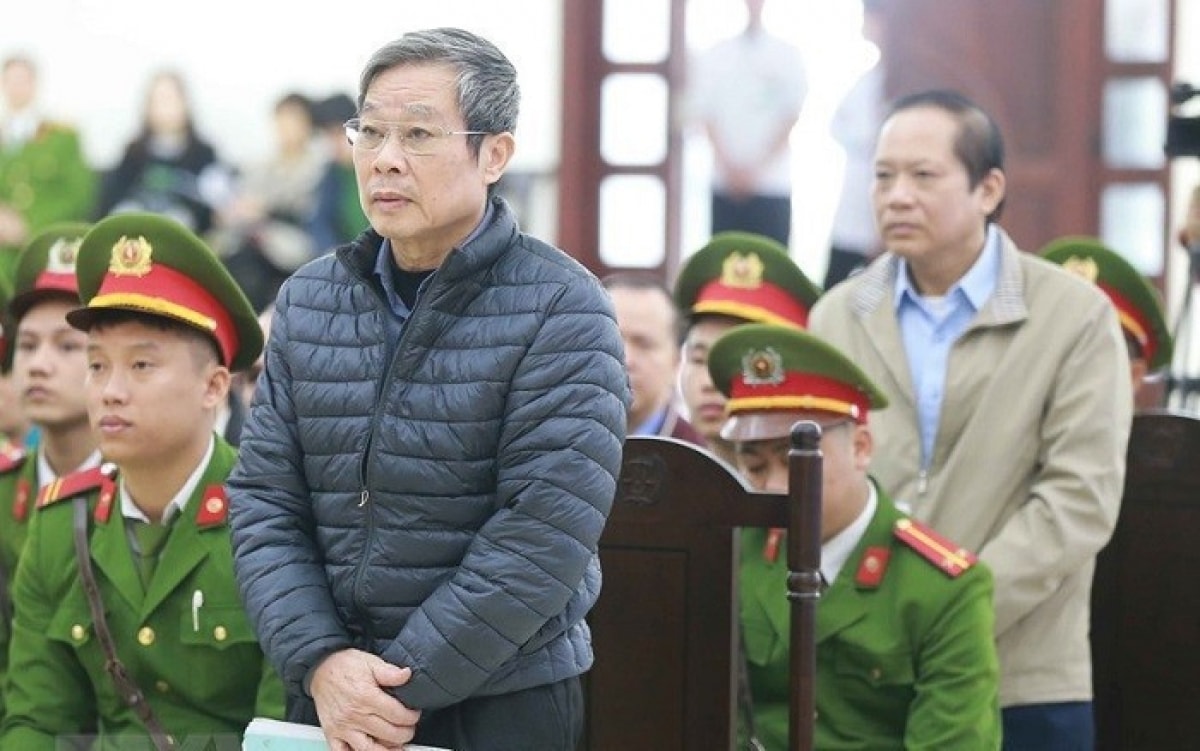
In the case of Duong Chi Dung - former Chairman of the Board of Directors of Vinalines - and his accomplices, they were ordered to pay 110 billion VND in compensation, but only over 21 billion VND has been enforced so far.
In the "major economic case" involving Huynh Thi Huyen Nhu, the court sentenced the defendant to forfeit 9,000 billion VND, but after verification and assessment, only over 500 billion VND was recovered for the State.
In the economic crime case of Hua Thi Phan, the court ordered the seizure and recovery of assets, specifically the land use rights to dozens of agricultural plots that Phan had mortgaged to embezzle money. However, more than 50 land use rights, estimated to be worth trillions of dong, have now expired. According to the law, only when Phan applies for renewal can the enforcement agency auction off these rights to recover the money for the State.
By the end of April this year, defendant Dinh La Thang had only paid 4.5 billion VND out of the total 630 billion VND he was required to pay in the two cases.
Defendant Trinh Xuan Thanh - former Chairman of the Board of Directors of Vietnam Petroleum Construction Corporation - has only paid 31 billion VND, leaving 91 billion VND still outstanding and unrecovered.
The asset recovery rate in corruption and economic crime cases currently stands at just over 30%, a threefold increase compared to 2013, but it remains very low.