
The image of Him is deeply etched in our minds…
(Baonghean.vn) - “Winter of 1961”… is a very familiar phrase to us – those of us who work as tour guides in President Ho Chi Minh's hometown. Because the memories, stories, and recollections of him during his two visits to his hometown are deeply imprinted on the land and in the hearts of the people of Kim Lien, Nam Dan.
Every December, when I recount stories of President Ho Chi Minh's visits to his hometown to tourists, I always feel as if I am living in that space, welcoming Uncle Ho, listening to him tell stories of his childhood; hearing his praise, encouragement, advice, and even his subtle criticism… I feel as if I see his image here, in every tree, every blade of grass, every simple house… so incredibly warm and happy!
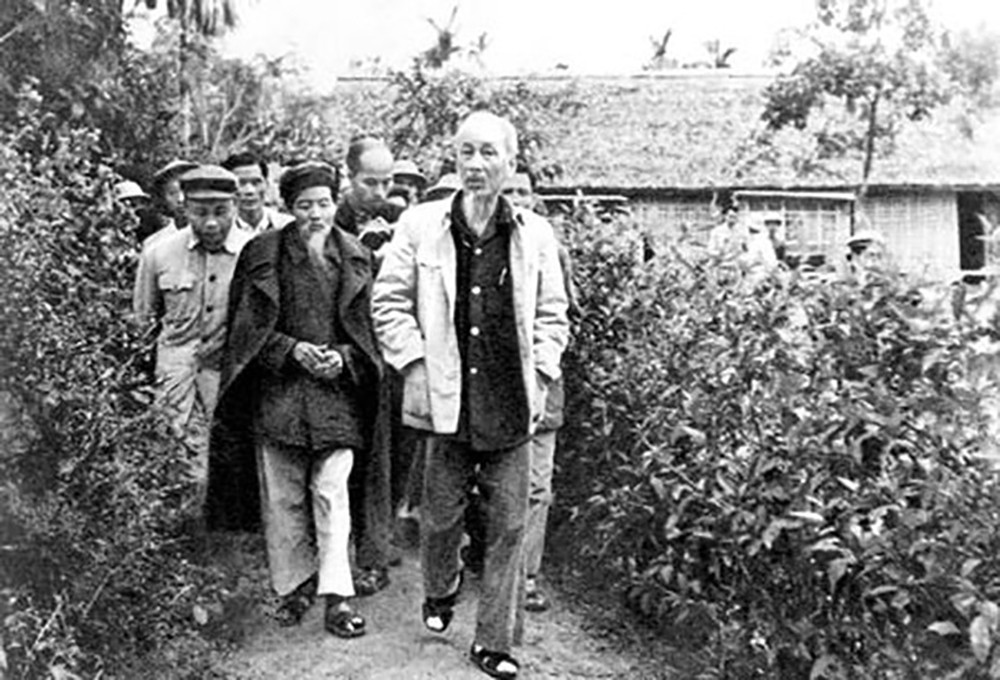 |
| President Ho Chi Minh visited his hometown in 1961. Photo: Archival material. |
On the morning of December 9, 1961, for the second time, the homeland of Kim Lien wasWelcoming President Ho Chi Minh on his visit.The people's radiant and excited expressions were no different from the first time they welcomed Uncle Ho back to his hometown (June 1957). Everyone was eager and hopeful to see him. This time, Uncle Ho visited his maternal hometown of Hoang Tru first. In the humble thatched house built in the garden of his maternal grandfather, Hoang Xuan Duong, was where the young Nguyen Sinh Cung was born. That place holds countless memories of Uncle Ho with his maternal grandparents, parents, and Aunt An.
Uncle Ho's father, Mr. Nguyen Sinh Sac, was orphaned at the age of four. He was lovingly taken in and educated by Mr. Hoang Duong, who later married his daughter, Hoang Thi Loan, to him. It was Mr. Hoang Duong and his wife who nurtured and cultivated the talent of Nguyen Sinh Sac, and who disregarded the social customs of the time to arrange this marriage, a union whose outcome would contribute to changing the destiny of a nation. Mr. Nguyen Sinh Sac and his wife lived in this land for over 12 years, and young Nguyen Sinh Cung was there from birth until he was five years old.
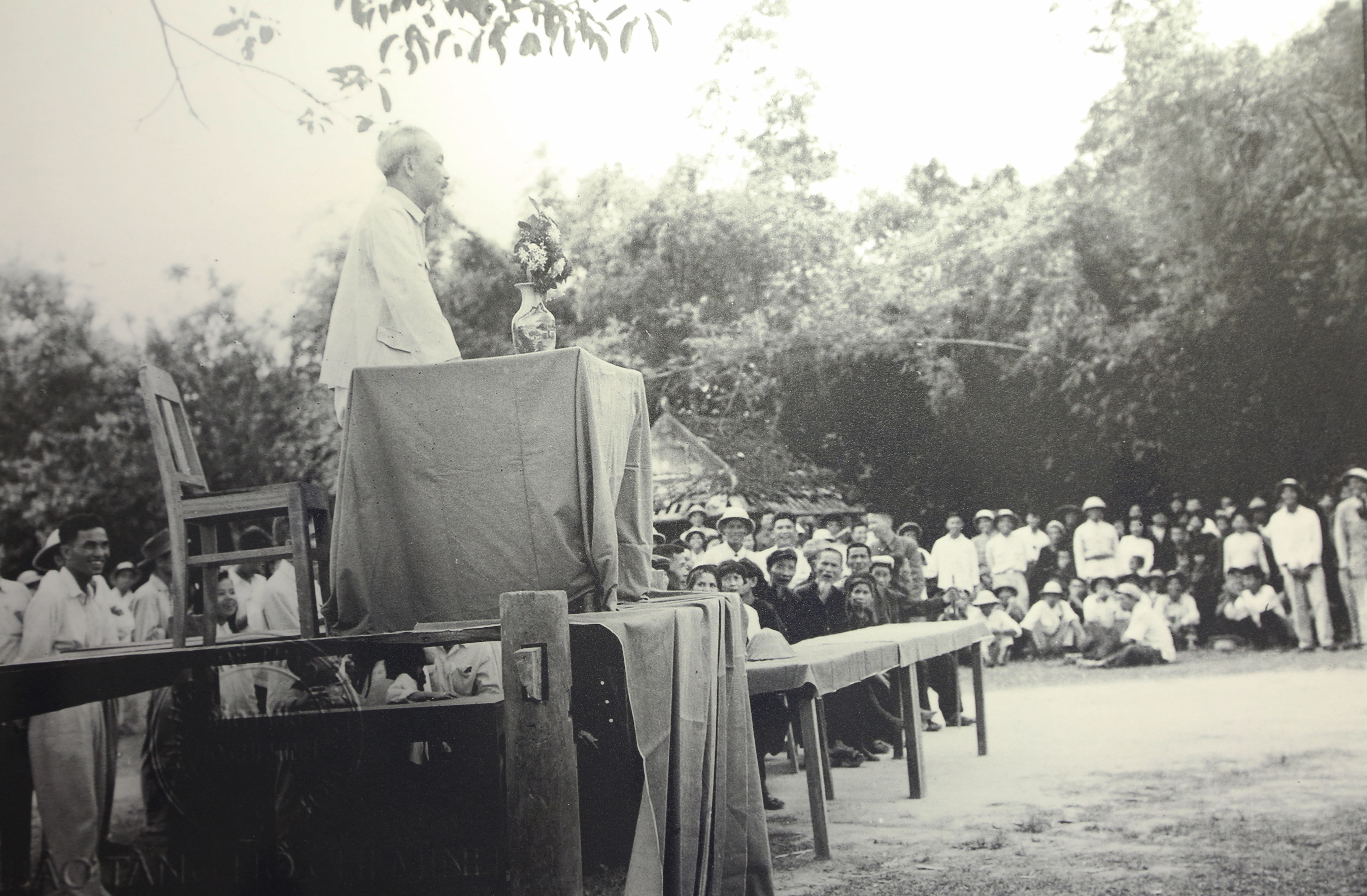 |
| President Ho Chi Minh converses with the people of Nam Lien commune (Nam Dan district). Photo: Archival material. |
When visiting his maternal grandparents' hometown, Uncle Ho went to light incense for his maternal ancestors at the branch ancestral temple of the Hoang Xuan family. He noticed that the altar was intact, but the house was much more spacious. He asked, "When was this ancestral temple built with walls and a tiled roof?" The temple was built by his maternal grandfather, initially just a thatched roof and bamboo walls. In the 1930s, relatives built walls and a tiled roof. Stepping out onto the porch, Uncle Ho was surprised to see...My maternal grandparents' jackfruit tree"It's still here," Uncle Ho said, "Grandma's jackfruit tree is still here, this tree used to bear so much fruit, with so many sweet segments..." Perhaps the most touching moment was when Uncle Ho returned to visit his family's small, three-room thatched house. He gently stepped inside; the mementos seemed perfectly preserved, but none of his family members were left. He caressed each family heirloom: the loom his mother used to weave cloth every night; the small bed where his siblings were born; the hammock where his mother rocked them to sleep. He stood silently before the wooden chest, a "dowry" gift his grandmother had given his mother when they moved out on their own. The 71-year-old's hands kept caressing it, as if trying to rediscover his childhood memories. Deeply moved, he turned to the people accompanying him and said, "You all are so good at preserving things. My mother's old wooden chest is still here." In those days, everything my mother painstakingly wove night after night into those smooth fabrics, she would neatly store in that chest. Uncle Ho's first hesitant steps were often taken along the wooden chest as he learned to walk.
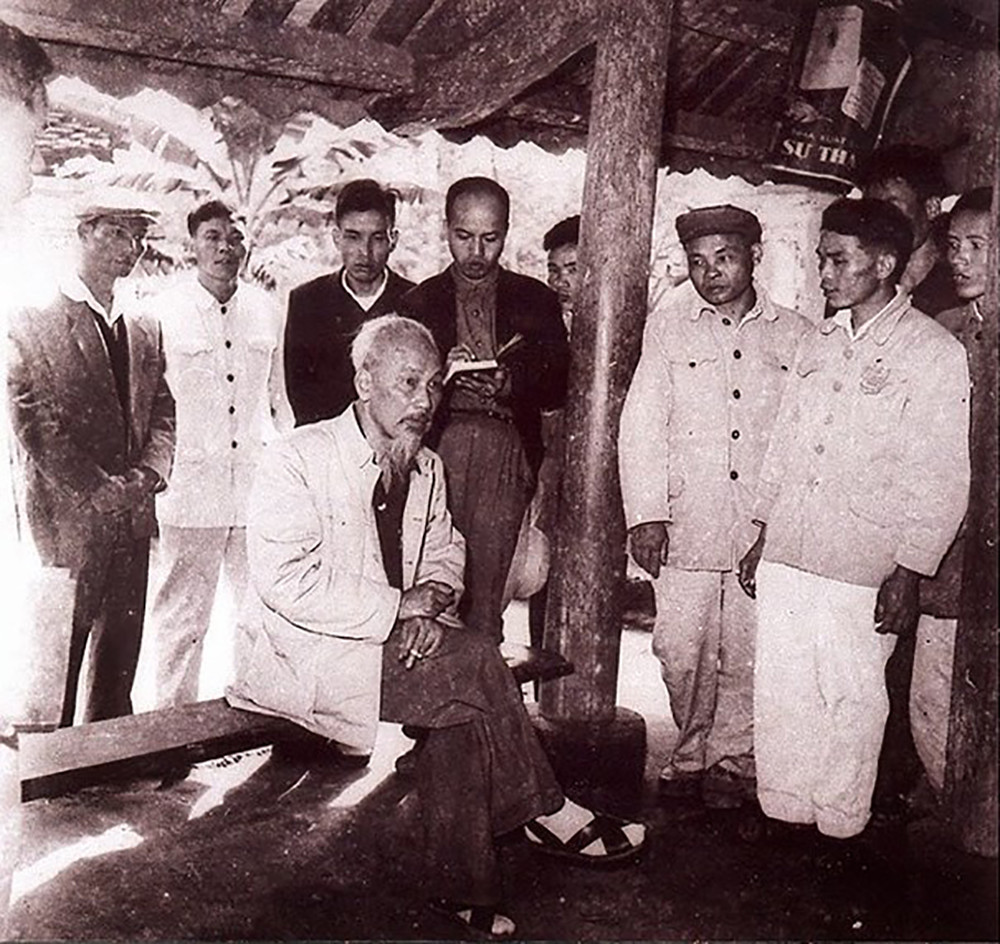 |
| In his old house in Kim Lien village, President Ho Chi Minh was deeply moved as he recalled his childhood memories. (Photo: Archival material) |
After visiting the cherished mementos in the house, Uncle Ho went to the front porch to chat with the neighbors. A truly touching moment came when he met Mr. Nguyen Thuyen, his close friend with whom he had flown kites and fished in their childhood. Putting his arm around Mr. Nguyen Thuyen's shoulder and playfully touching his earlobe, Uncle Ho asked, "My old friend, do you still remember me? The old scar is still there." Mr. Thuyen immediately recalled the old story. Once, the two of them went fishing in Mr. Tua's pond. Seeing the float move, Mr. Thuyen pulled hard, and unfortunately, the hook got caught in Uncle Ho's ear, causing it to bleed. Mr. Thuyen panicked, but Uncle Ho calmly removed the hook and used a wild betel leaf from the pond bank to stop the bleeding. The wound was small, but it left a scar. Uncle Ho touched his ear and recalled the old memory, and both men were moved to tears.
Bidding farewell to beloved Hoang Tru, Uncle Ho visited Lang Sen and then went to the stadium to speak with the villagers. He praised Kim Lien for its many advancements: “Last time I came, everyone was fending for themselves, each household using only their own cooking pot, and farming was scattered. Now the village has organized a cooperative, and the people are united and always helping each other. That is a great change. Last time I came, there weren't many schools like this (the brick-built, tiled secondary school next to the stadium), but now there are schools for the children in the village and surrounding hamlets to attend, forming a small cultural center. That shows cultural progress. The presence of soldiers and militiamen, in neat ranks here, also proves that our national defense forces are progressing.”
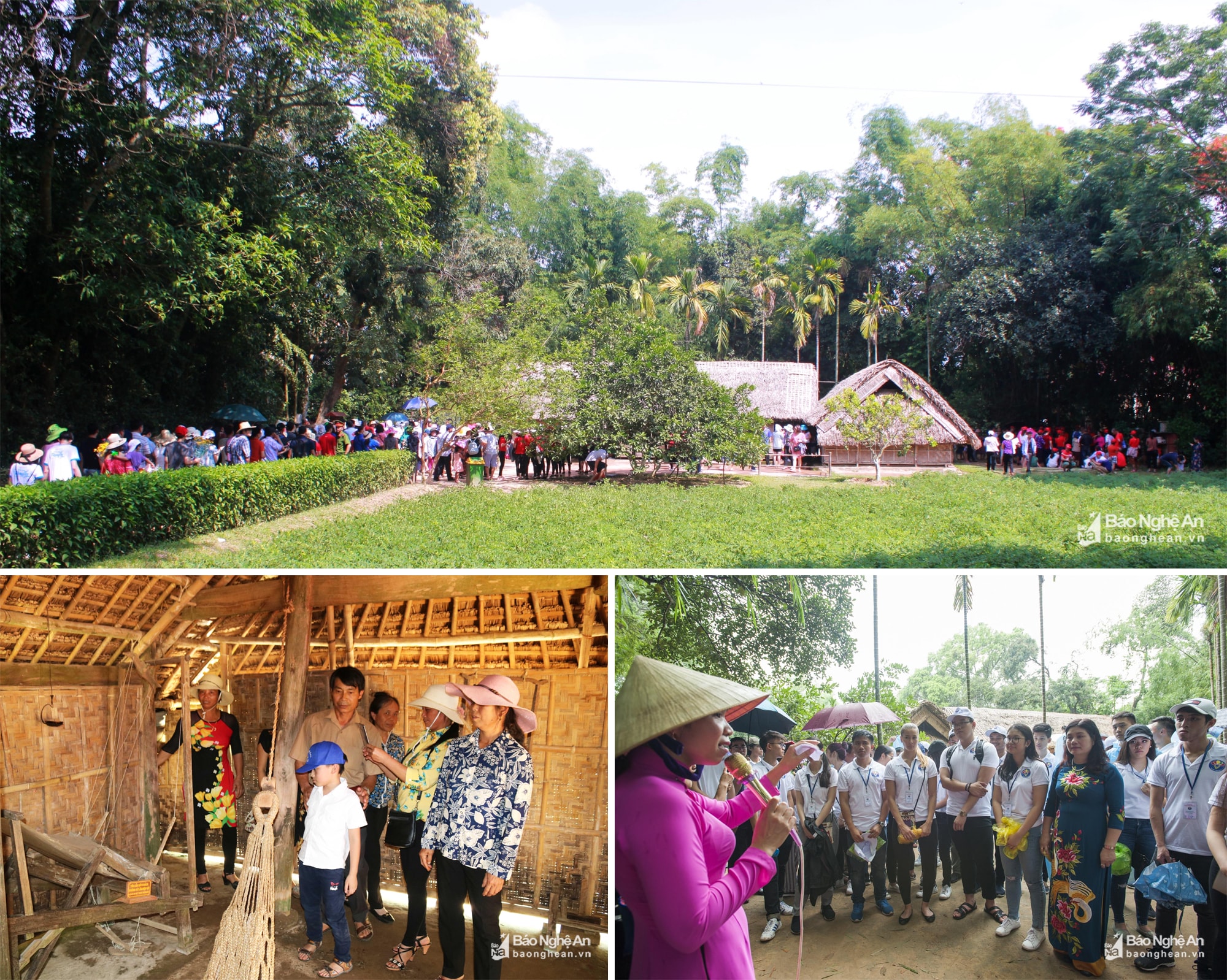 |
| Domestic and international tourists visit President Ho Chi Minh's birthplace. Photo courtesy of Canh Hung - PV. |
During this visit to his hometown, Uncle Ho instructed the people to build cooperatives well, upholding the spirit of self-reliance: mastering their villages, mastering their cooperatives, mastering their country. Each person should consider the work of the cooperative as their own work and have the responsibility to make the people prosperous, the country strong, and the national defense robust. They must help those living alone, the elderly, and those with poor health. In maintaining law and order, the army, police, and militia must rely on the people, and the people must provide maximum assistance and always remain vigilant.
The stories may end, but the emotions remain: admiration for a son of the homeland who dedicated his entire life to the independence and freedom of the nation, the happiness of the people, and only devoted a short time to his family and his hometown.
Sixty years have passed since the winter of 1961. This was the second and final visit of President Ho Chi Minh to his hometown, but the images, impressions, feelings, and advice he gave remain deeply etched in the hearts of the people of Kim Lien, serving as a driving force for the Party Committee and people of Kim Lien to resolutely build their commune into a thriving community.model new rural communeof Nam Dan district, just as Uncle Ho always wished. And personally, I feel incredibly fortunate.
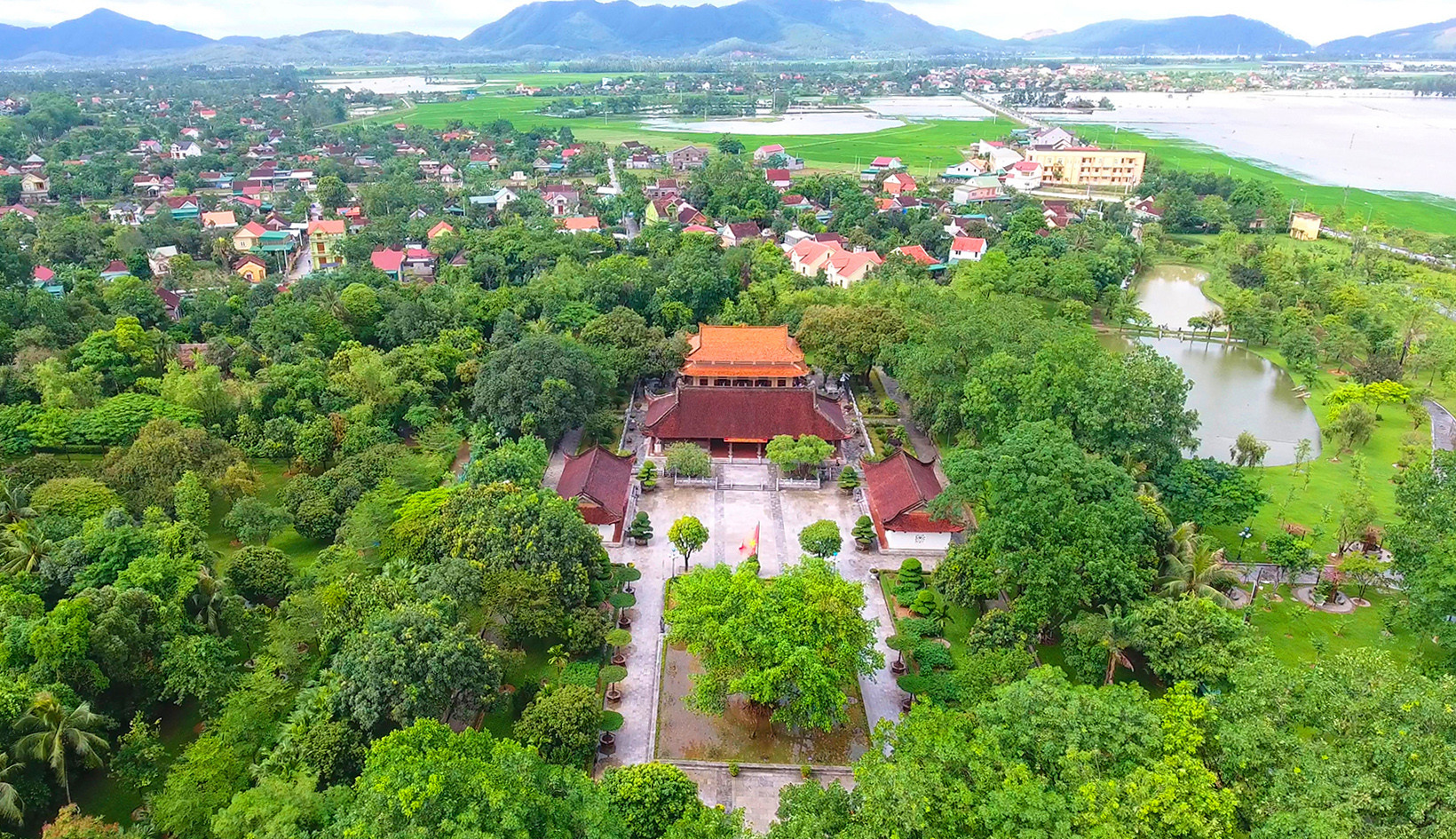 |
| A view of Sen Village, Kim Lien Commune, Nam Dan District. Photo: Sach Nguyen. |
Phan Thi Quy