

Protect your family with a smoke-free home.
(Baonghean.vn) - It has been scientifically proven that passive smoking also causes cancer, and the increased risk of cancer in passive smokers is no less than in active smokers.
Numerous scientific studies consistently show that if a husband smokes, in addition to respiratory cancers, his wife is up to 20% more likely to develop cancer compared to wives who have never been exposed to secondhand smoke. This rate is nearly equivalent to the wife directly smoking, according to a report by the International Agency for Research on Cancer, a division of the World Health Organization (WHO).
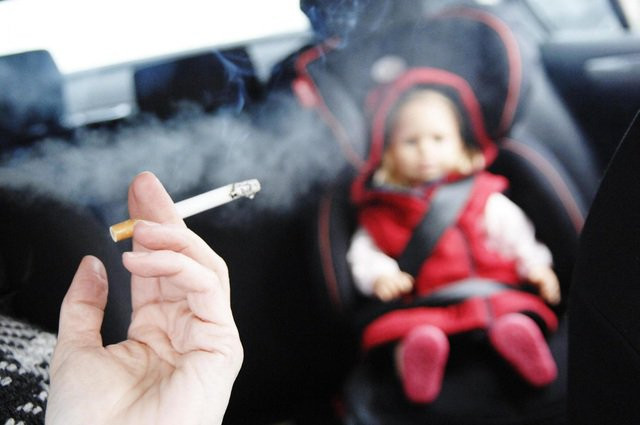 |
| Children exposed to cigarette smoke will experience stunted growth and be more susceptible to various illnesses. (Illustrative image) |
Children are the most vulnerable group becausepassive smokingChildren breathe faster than adults, so they inhale a higher amount of toxins from the environment. All studies on passive smoking indicate that it poses enormous health risks, especially for children. Most children live in families where one or both parents smoke.cigaretteThey all exhibit the following symptoms: susceptibility to lung infections; frequent coughing, wheezing, or asthma; and susceptibility to ear problems such as otitis media.
Tobacco smoke can spread throughout the house, not confined to specific areas, even with windows open. Therefore, if a parent in the family smokes, passive smoking for children is unavoidable, despite measures supposedly aimed at "protecting children," such as smoking near a window or in a separate room from the child's.
Almost 85% of cigarette smoke is invisible, yet it can linger in a room for up to 2.5 hours, even with windows open. Common measures, such as smoking outside a window or next to a fan, are ineffective at removing the smoke from the house. The smoke can remain on carpets, furniture, and walls, absorbing the toxins in the smoke and gradually releasing them back into the air, creating a further risk of secondary exposure.
In enclosed spaces, tobacco smoke contamination cannot be eliminated using conventional cleaning or ventilation methods. While the full impact of this is unclear, because children cannot control their behavior while playing or eating, it is easy for them to ingest food with high concentrations of tobacco smoke.
Today, children spend most of their time indoors. However, they lack the ability to recognize the harmful effects of cigarette smoke on their bodies and protect themselves. As mentioned above, children breathe faster than adults, so the amount of toxins inhaled from the external environment is also higher. Studies show that after exposure to cigarette smoke, cotinine levels in children are 70% higher than in adults (cotinine is a metabolite of nicotine in the body, used to assess smoke exposure). While there are no studies on the levels of other toxins in children exposed to secondhand smoke, this research is enough to sound an alarm about the potentially severe impact of cigarette smoke on young children.