

Nghe An: Focusing on controlling rice blast disease on rice panicles.
(Baonghean.vn) - Nghe An's spring rice crop will flower mainly from April 15th to 25th. With many favorable factors for the development and spread of rice blast disease, timely solutions are needed for this disease, which can only be "prevented" but not "eradicated," especially since it has the potential to severely impact rice yield.
Risk of disease outbreaks causing severe harm.
In the spring of 2022, the entire province planted over 91,664 hectares of rice. Recently, unfavorable weather conditions, with alternating sunshine and rain, have created favorable conditions for the development and spread of rice blast disease. Over 5,000 hectares across the province have been affected, including more than 416 hectares severely infected and nearly 18 hectares with "leaf burn," resulting in a complete loss of yield. Therefore, local authorities are focusing on directing communes to closely monitor the fields, zone the rice crops, and organize timely preventative spraying.
In previous years, Mr. Nguyen Dinh Than's family in Hamlet 6, Dai Son Commune, Do Luong District hardly needed to spray pesticides to control rice blast disease, but this spring he had to take his sprayer to the field five times.
“This year, I switched to planting AC5 and TBR225 rice varieties on 2 sao (approximately 0.2 hectares), but they were severely affected by rice blast disease. One sao planted with a different variety was less affected. Many households in the village also had to spray 4-5 times,” Mr. Than said.
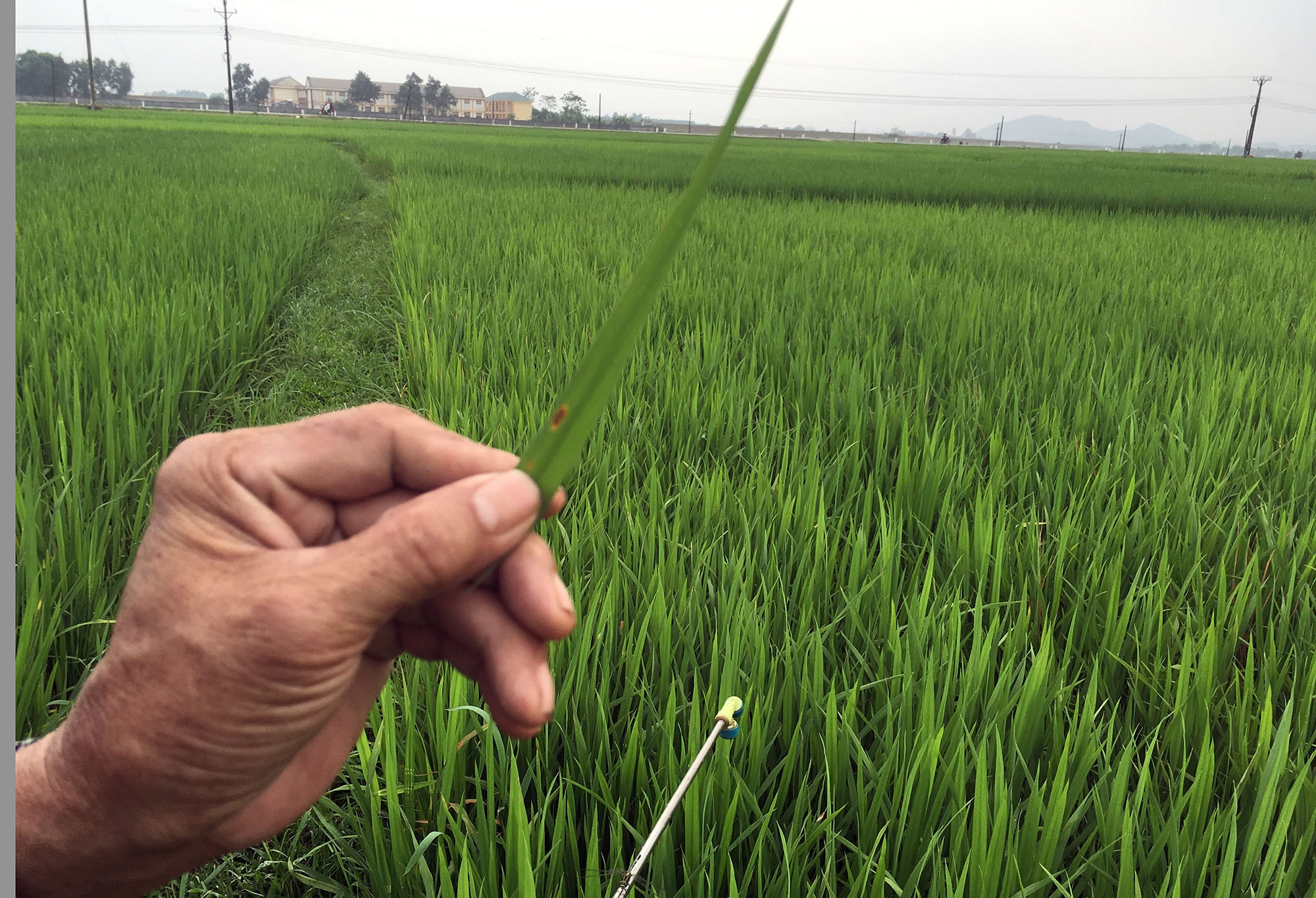 |
| Rice blast disease lesions on spring rice crops in Hung Nguyen district. Photo: Phu Huong |
Currently, over 7,600 hectares of spring rice in Do Luong district are in the heading to flowering stage. The entire district has 88 hectares of rice affected by rice blast disease, and worryingly, this year's weather is very favorable for the disease to develop. Approximately 1,000 hectares in the district are planted with susceptible varieties such as TBR 222, AC5, and Thien Uu 8. Many rice fields are sown very densely without thinning despite recommendations, and the crop is not properly cared for.
According to Mr. Nguyen Kim Ngoc, Deputy Director of the District Agricultural Services Center, the time when the spring rice crop in Do Luong is in full bloom may coincide with favorable weather conditions.rice blast diseaseDue to the outbreak of pests and diseases, the district is focusing on directing communes to closely monitor the fields, zone and categorize rice crops to organize timely spraying for prevention. From April 10th to 20th, approximately 1,000 hectares will be flowering in the district. After April 20th, the district will continue to focus strongly on directing efforts because the majority of spring rice in Do Luong will flower during that period.
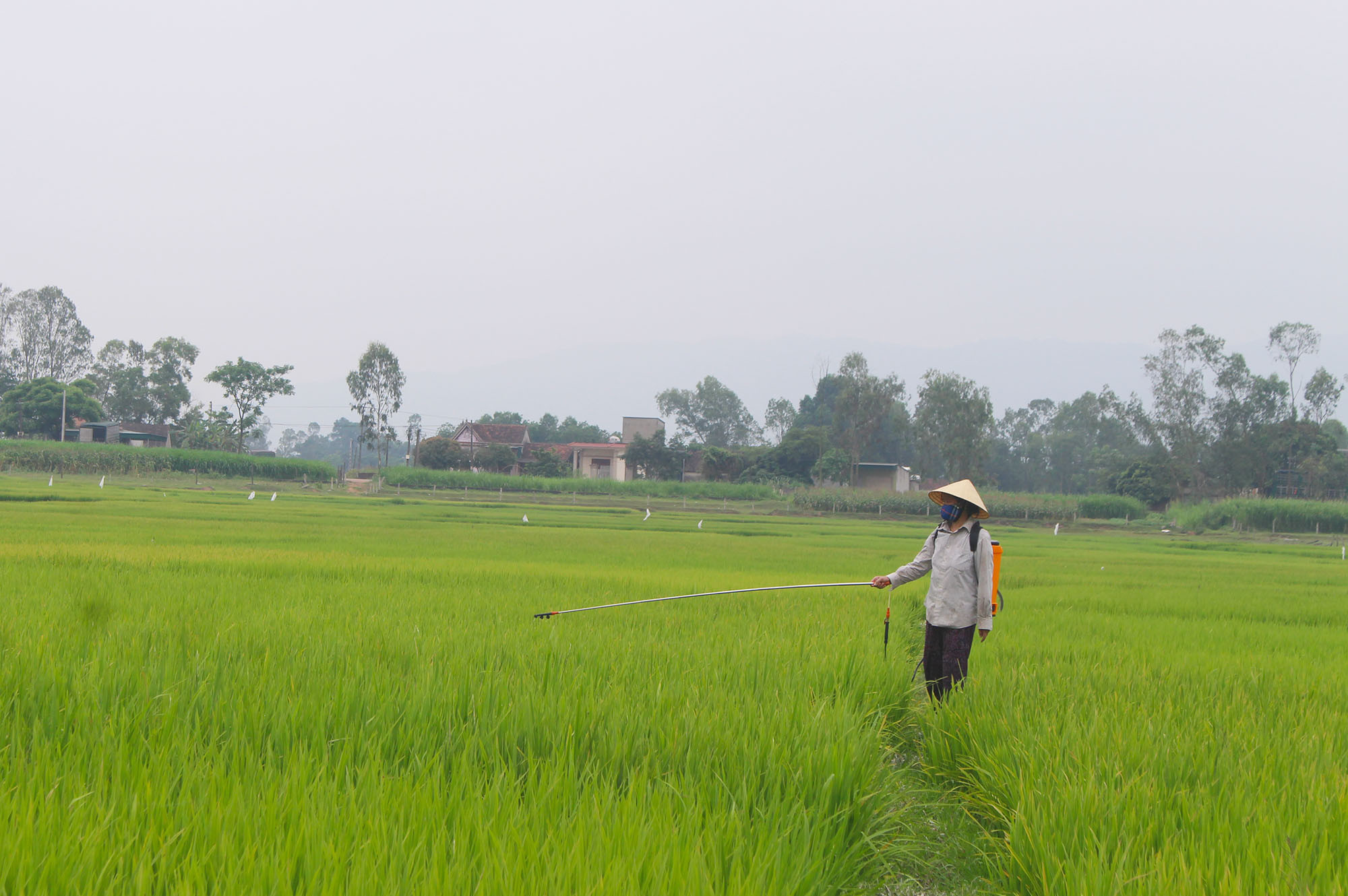 |
| Farmers in Do Luong spray to prevent rice blast disease on rice fields that have previously been affected by leaf blast. Photo: Phu Huong |
In Yen Thanh district, in addition to the 1,000 hectares that had bloomed before April 10th, the district has up to 7,000 hectares of rice that bloomed concentratedly between April 10th and 20th, with the remaining area blooming after April 20th.
According to Mr. Nguyen Van Duong, Vice Chairman of the District People's Committee: Yen Thanh district has been aggressively implementing rice blast disease control measures since early on. A directive was issued at the beginning of April to ensure timely control from the first areas of rice flowering. “The current problem is that farmers are still not following the recommendations of the authorities, buying cheap pesticides based on advice from stores, and mixing them with other growth stimulants and fungicides. Therefore, we are directing a focused inspection and correction of these practices.”business of plant protection products"In the area, we will disseminate information and guide farmers on proper pest control methods and the use of appropriate pesticides, limiting the situation where farmers use pesticides incorrectly or improperly, which reduces the effectiveness of pest control."
Focus on timely prevention and control.
According to information from the Department of Crop Production and Plant Protection, it is expected that approximately 37,000 hectares of rice in the province will flower before April 20th, with the peak flowering period for rice crops occurring in the next 10 days, from April 15th to 25th.
According to forecasts, the weather will be complex, with possible rain, cloudy skies, high humidity, and fog at night and in the morning during the rice flowering period, creating favorable conditions for pests and diseases to develop and cause damage.spring riceEspecially during the flowering and tillering stage of spring rice, conditions are favorable for the development and spread of rice blast and black kernel disease. If not regularly inspected, detected late, or if timely control measures are not taken, the disease can easily spread widely.
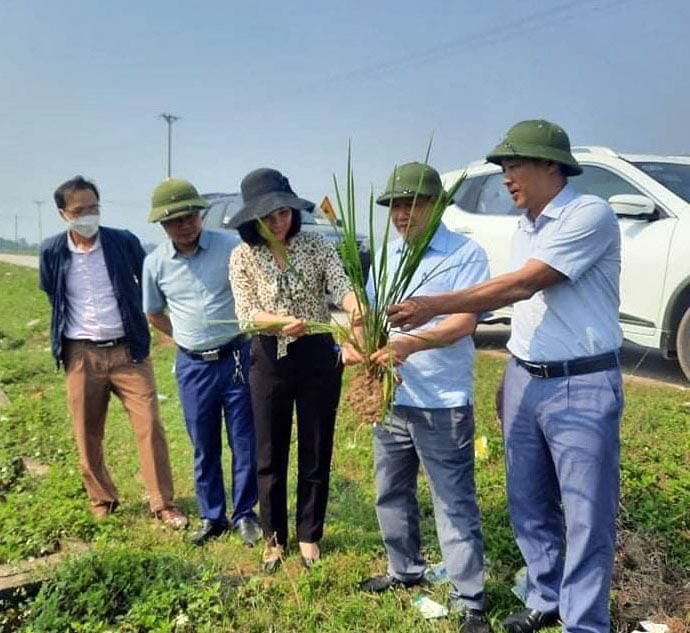 |
| Leaders of the Department of Agriculture and Rural Development inspect the rice blast disease situation in the spring crop. Photo: Phu Huong |
In fact, rice fields that have already been damaged by leaf blast, or fields producing susceptible seeds that have been affected annually, have a very high risk of severe damage from neck blast. However, according to Mr. Trinh Thach Lam - Head of the Plant Protection Department, Sub-Department of Crop Production and Plant Protection, even rice fields that have been well controlled and not infected with leaf blast can still be affected by neck blast, as this disease is highly dependent on weather conditions.
Farmers should note that in rice fields using susceptible or disease-sensitive varieties, the lesions are usually diamond-shaped, green when they first appear, and turn yellow as the disease worsens; as the lesions spread, they become ash-gray, surrounded by brown with a yellow halo in the center. These are typical symptoms to distinguish them from other rice diseases such as blast disease and brown spot disease.
However, on non-susceptible rice varieties, the lesions will not have a definite shape and will be smaller, so careful inspection is necessary to ensure timely control.
Rice blast is a very dangerous disease affecting rice plants, and depending on the severity, it can impact yield, even resulting in a 100% loss. To proactively prevent and minimize damage, localities and relevant sectors need to disseminate information, provide guidance, and instruct farmers on effective control measures.
It is necessary to closely monitor weather conditions from the time the rice begins to flower until it is fully flowered. If during this period favorable weather conditions for disease development occur, such as high humidity, rain, overcast skies, or prolonged fog, it is essential to immediately organize disease prevention spraying using specific pesticides with the recommended active ingredients.
Spray when 3-5% of the rice panicles have emerged, and spray again a second time when the rice has fully emerged if weather conditions continue to be favorable for disease development. Note that high priority should be given to areas where rice has already been infected with blast disease on the leaves, ears, panicles, and on annual varieties that are usually severely affected; a combination of blast fungicide and grain discoloration fungicide can be used to control both diseases simultaneously. In particular, farmers must ensure adherence to the following principles...4 is correctin the use of pesticides...