

A type of vegetable that detoxifies and cools the body in summer.
According to Traditional Chinese Medicine, water spinach is used to treat food poisoning and dysentery; centella asiatica is used to treat boils and itchy sores; and loofah helps to clear meridians, increase milk production, and promote a healthy pregnancy.
According to Dr. Bui Dac Sang, a general practitioner at the Vietnam Academy of Science and Technology, water spinach grows in water or on land, takes root at the nodes, has a mildly sweet taste, and a cooling nature. It has many uses such as clearing heat, promoting urination, and relieving hangovers. This vegetable is also rich in calcium and nutrients such as protein, carbohydrates, and iron, which are beneficial to health. Eating it boiled daily can also help treat high blood pressure.
Here are some medicinal uses of water spinach:
Boil 500g of water spinach, 30g of licorice root, and 120g of mung beans in water to make a concentrated decoction to help treat food poisoning. Alternatively, crush the same amount of water spinach, squeeze out the juice, mix with honey, and drink slowly to treat bleeding and hematuria (blood in urine).
Seven young shoots of the plant, crushed together and applied externally, treat hives and itching; or boiled with pomegranate peel (a handful of each) to treat dysentery.
A bunch of fresh water spinach is placed inside the belly of a cleaned, golden-yellow chicken. Then, the chicken is covered with water, a cup of wine is added, and it is simmered until tender. The chicken and broth are eaten. A course of three chickens is used to treat severe edema (unable to sit or lie down comfortably, with swelling of the face and body).
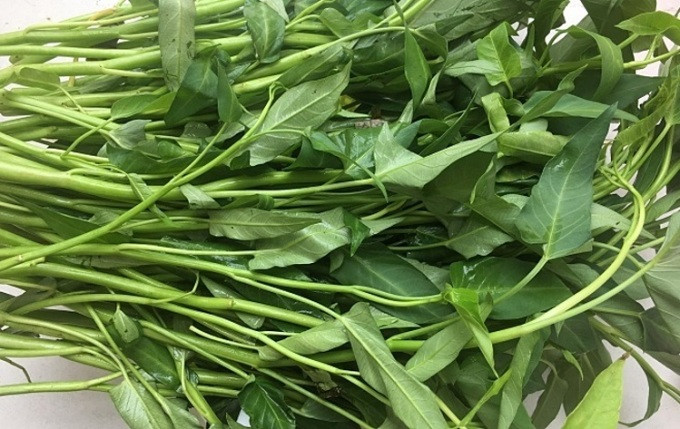 |
| Water spinach cools the body and has many medicinal uses. (Image)Cam Anh |
Centella asiatica
Centella asiatica (Gotu Kola) grows wild and is commonly eaten raw, pickled, boiled, or used in soups. In some regions, it is blended with sugar to make a refreshing drink. This herb contains 88.2% water, in addition to proteins and minerals. In Traditional Chinese Medicine, it has a bitter taste and a cooling nature, with effects of clearing heat, detoxifying, fighting infection, counteracting toxins, and promoting diuresis; it is mainly used to treat urinary tract diseases and stones, boils, sores, runny nose, and pharyngitis.
You can mix the juice of centella asiatica with coconut water to drink for refreshment and nourishment; or crush centella asiatica leaves to extract the juice for drinking and applying externally to relieve heat, treat fever, itching, and boils.
A handful of centella asiatica, 30g of kudzu root, and a handful of purslane are crushed together, boiled water is added, and the liquid is strained and drunk, or decocted to treat colds, fever, thirst, headache, hot skin, itchy rashes, minor abdominal pain, and constipation.
30g of Centella asiatica, 15g of Polygonum multiflorum, and 15g of Thuja orientalis, roasted until charred, are brewed into a decoction to treat bleeding gums and nosebleeds.
Fresh centella leaves can be boiled and eaten, and the resulting liquid is used as a lactation-boosting remedy; when crushed, the fresh juice is drunk, or a decoction is used to treat coughs, painful urination, and frequent urination.
loofah
Luffa gourd has a sweet taste and neutral properties, with many benefits such as clearing heat, detoxifying, promoting urination, expelling phlegm, cooling the blood, clearing meridians, increasing milk production, nourishing qi, and stabilizing pregnancy.
Many parts of the loofah plant are used medicinally, such as: loofah fiber, which is sweet in taste, neutral in nature, and has anti-inflammatory, vasodilating, diuretic, and hemostatic effects; it treats joint pain, muscle pain, chest pain, mastitis, and blocked milk ducts. 10-20g can be used daily.
Luffa leaves have a bitter and sour taste, are slightly cooling in nature, and have anti-inflammatory and expectorant effects; they treat whooping cough, headaches, and thirst in the summer; the recommended dosage is 10-15 g per day.
Luffa seeds are sweet in taste, neutral in nature, and have the effect of clearing blood vessels and dissolving phlegm; they treat coughs, excessive phlegm, roundworms, and constipation; the dosage is 5-20 g per day.
Luffa root has anti-inflammatory properties; it is used to treat rhinitis and sinusitis, with a dosage of 40-120 g per day.
The tendrils of the loofah plant have anti-inflammatory properties; they treat rhinitis and sinusitis; the recommended dosage is 40-60 g per day.
Here are some dishes and remedies made from loofah:
Fresh loofah gourd cooked in soup with pork trotters can treat insufficient milk production in postpartum women. Dried loofah gourd (not completely burned to ash, only about 70% of the outer layer is burned), powdered, and taken in doses of 8g with wine can treat blocked milk ducts. Loofah leaves, crushed and squeezed to extract the juice, can be applied topically to treat postpartum scalp sores.