

Nghe An: Cattle and buffalo prices plummet, yet sales remain stalled.
(Baonghean.vn) - Currently, the price of buffalo and cattle has dropped sharply, yet they are still not being sold. Buffalo and cattle fattening farmers in the province are facing many difficulties as the price of animal feed has increased sharply, and the prices of by-products used in livestock farming have also skyrocketed.
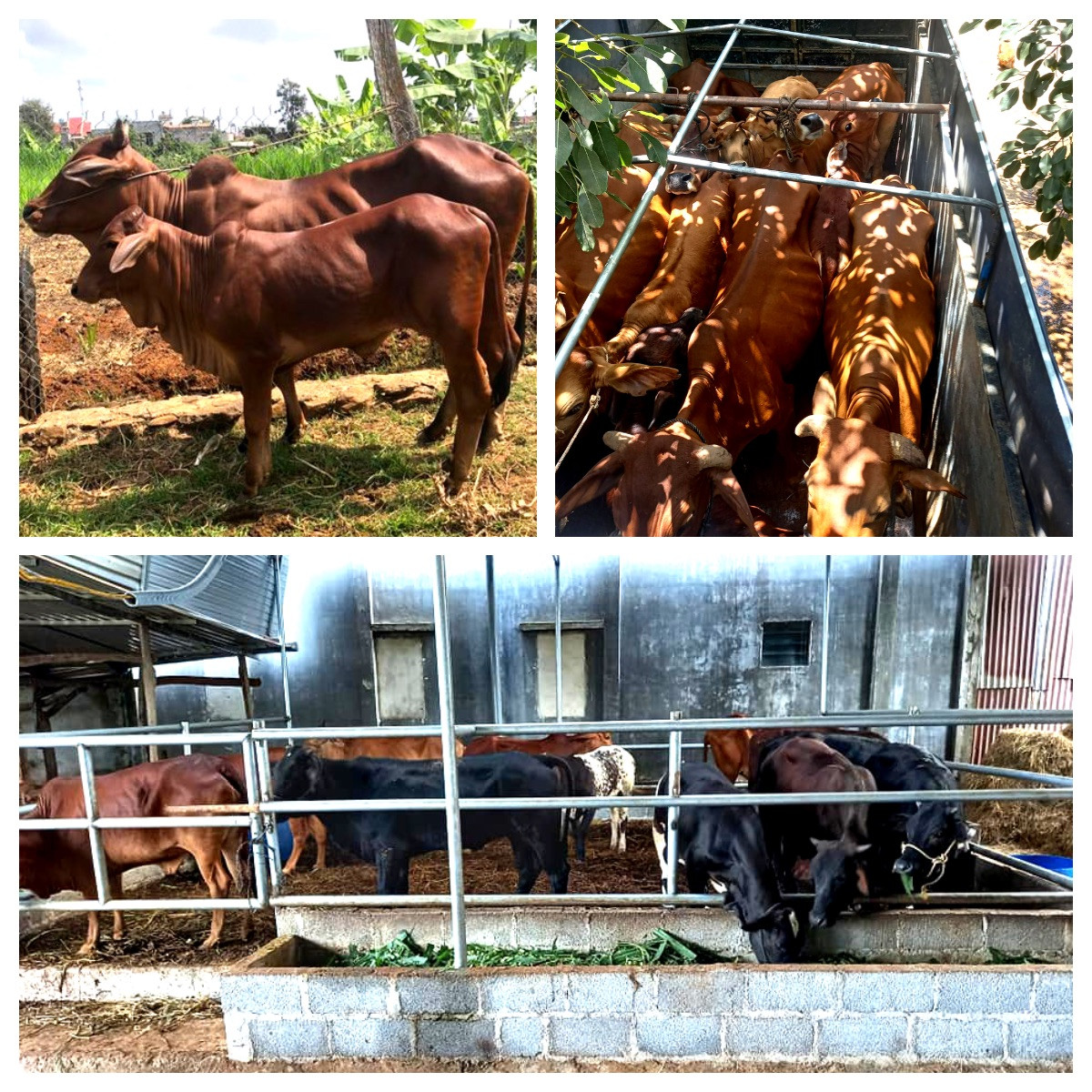 |
| Currently, beef prices have plummeted to 60,000-70,000 VND/kg, causing losses for livestock farmers. Photo: Thanh Phuc |
Since 2010, the family of Mr. Vuong Van Hoan (Hamlet 7, Nghia Dong, Tan Ky) has moved tofattening buffaloes.At its peak, the farm always had 40 buffaloes. On average, with good care and a stable market, it could bring his family hundreds of millions of dong in income each year. However, from the end of 2021 until now, buffaloes have been unsaleable, prices have dropped, and they haven't been able to be sold.
“Before Tet (Lunar New Year), buffalo meat prices were at 100,000-110,000 VND/kg, with buffaloes weighing 600-700 kg selling for 70-80 million VND. But since Tet, the price of buffalo meat has dropped to 90,000 VND, then 80,000 VND, and now only 70,000 VND. Each buffalo represents a loss of 35 million VND. And we can't sell them because no one is interested in buying. Twenty buffaloes, past their market value, have been unsold for 7-8 months now,” said Mr. Vuong Van Hoan.
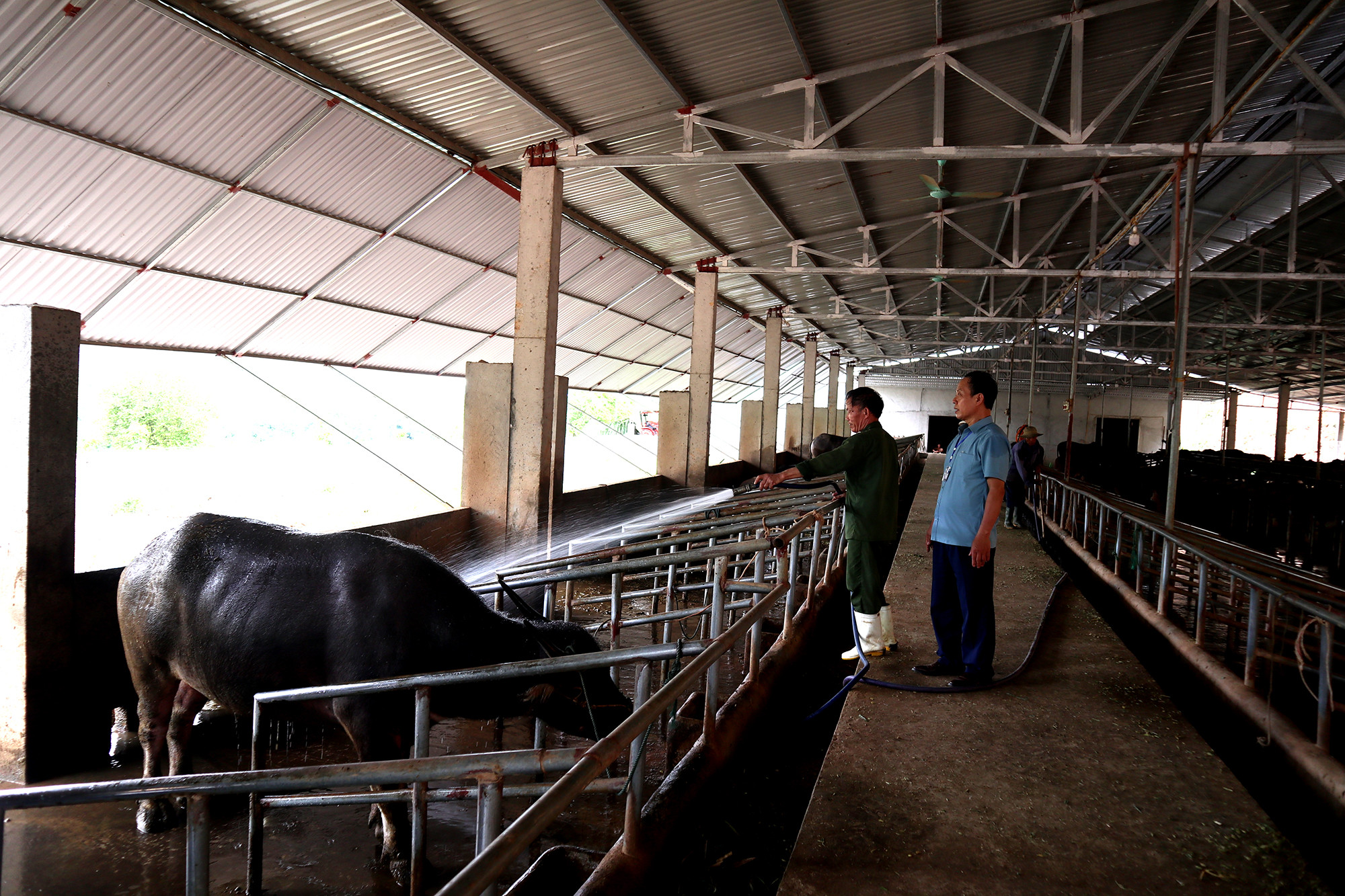 |
| The price of buffalo meat has also dropped sharply. Photo: Thanh Phuc |
Cattle fattening has always been a strength ofTan Ky district,These investments are most concentrated in the localities of Nghia Hoan, Nghia Dong, Nghia Binh, etc., bringing considerable income to the local people.
Mr. Nguyen Cong Trung, Head of the Agriculture Department of Tan Ky District, said: “The entire district has a total buffalo and cattle population of over 52,000, mainly raised by households, utilizing agricultural by-products and idle labor. Almost every household raises 2-3 buffalo and cattle; in particular, there are about 100 households engaged in fattening buffalo and cattle in industrial-scale farms with 20-100 animals each.”
On average, raising cattle every six months, with two litters per year, brings in a net profit of about 10 million VND per animal for breeders. Raising 20 animals would generate an income of approximately 200 million VND. However, for the past two years, especially from the end of 2021 to the present, cattle breeders have faced difficulties due to a lack of market outlets and low prices, resulting in losses for many farms.”
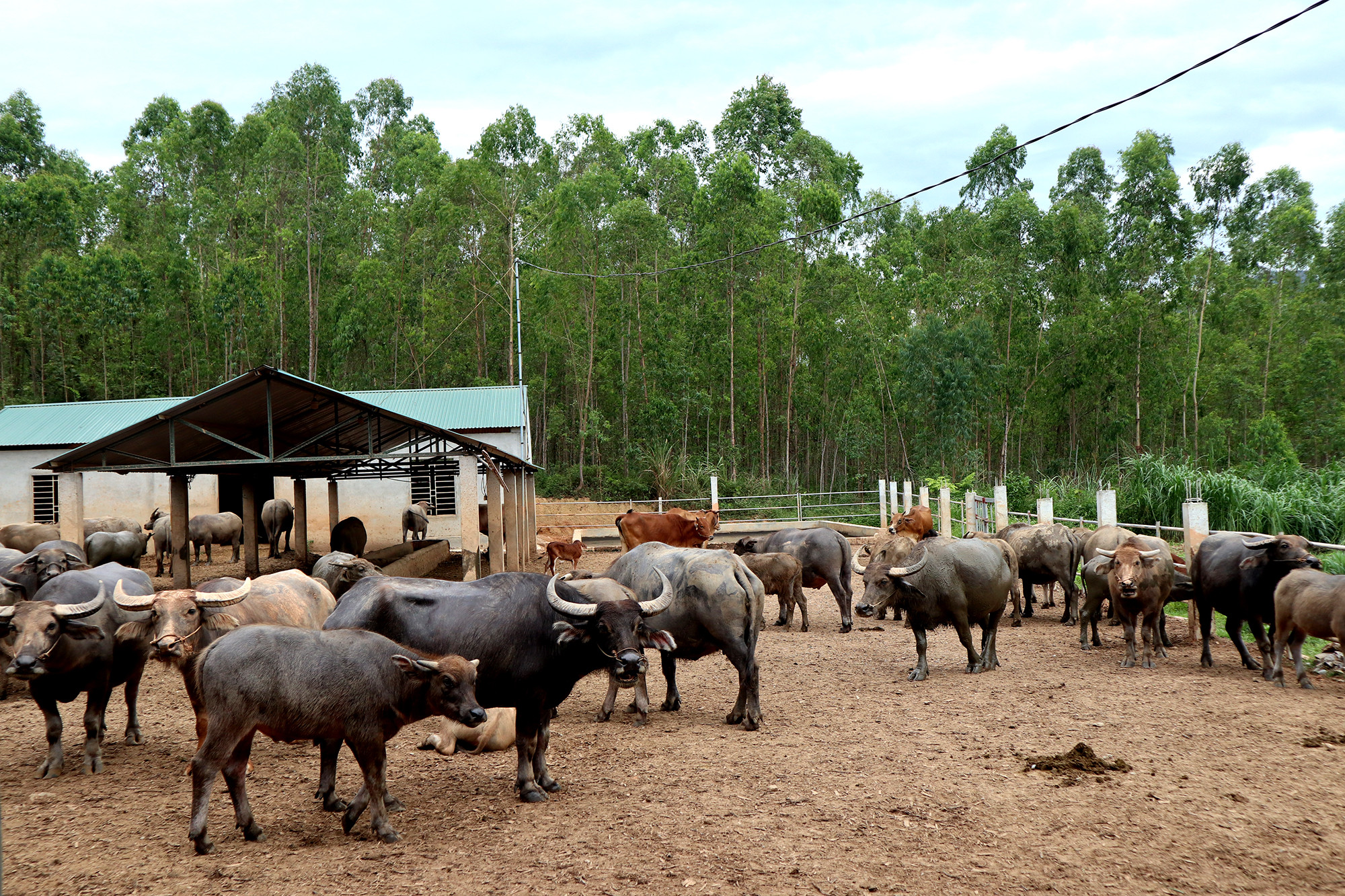 |
| Dozens of buffaloes have exceeded their weight limit but have no buyers and therefore cannot be sold. Photo: Thanh Phuc |
Mr. Nguyen Van Cong, the owner of a cattle fattening farm in Hien Son (Do Luong), said: “The price of beef has plummeted from 110,000-120,000 VND/kg to now only 55,000-60,000 VND/kg. Even then, there are no buyers, so we have to slaughter the cattle and sell the meat retail at markets. Currently, there are 10 overweight cows still sitting in the barn, unable to be sold.”
The reason forBeef prices have dropped.However, the difficulty in selling the meat stems from the fact that, for a long time, the main export of beef cattle has been to China through unofficial channels. Now, due to the Covid-19 pandemic, China has closed its borders, leaving no market for the cattle, and only small quantities are being sold within the province.
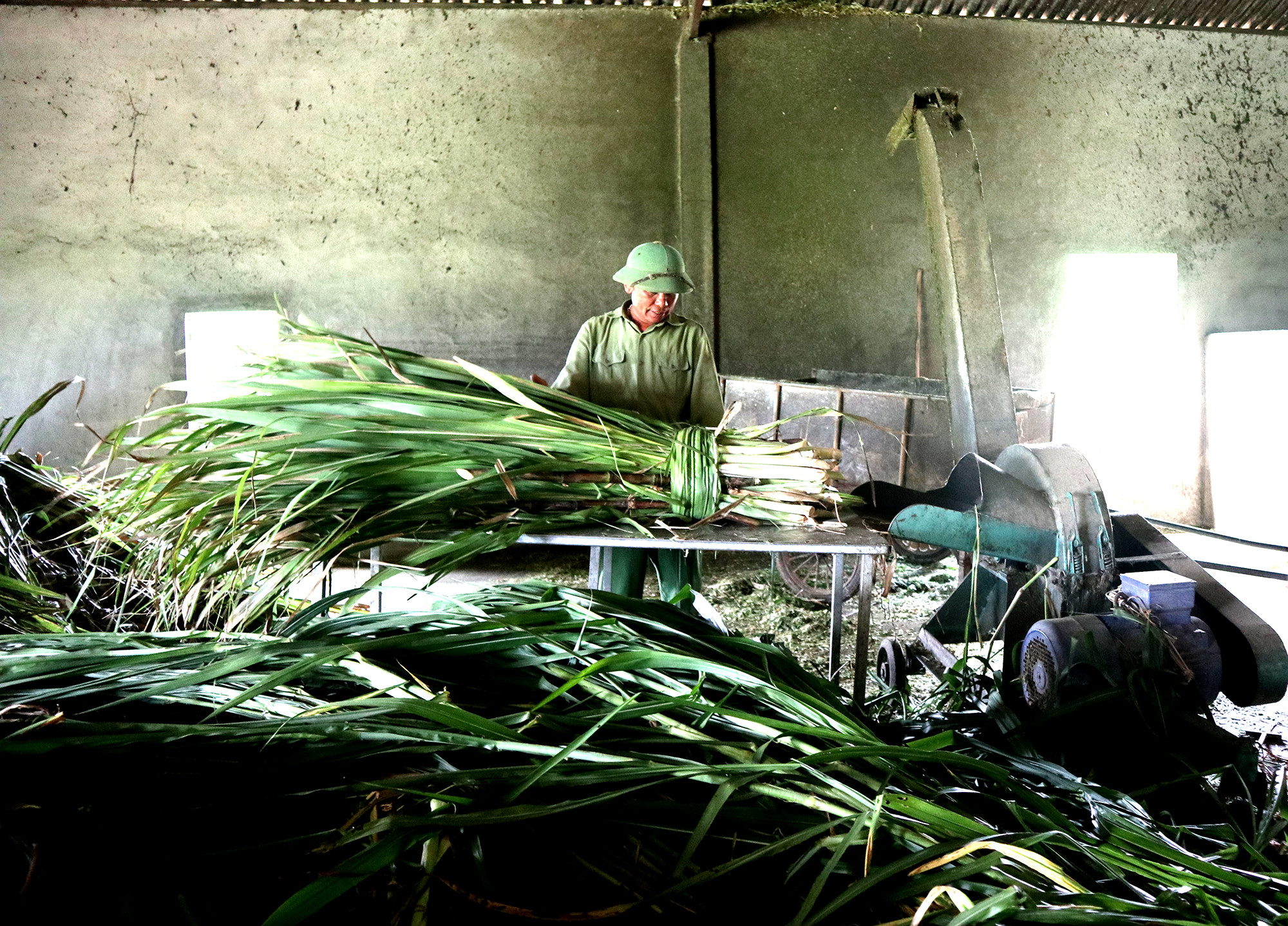 |
| Increasing the use of green fodder helps reduce livestock farming costs and limit losses. Photo: Thanh Phuc |
According to the Provincial Department of Livestock and Veterinary Medicine, the total buffalo population in the province currently exceeds 268,256, and the cattle population is 503,386. In recent years, buffalo and cattle farming has developed steadily, providing income for thousands of households in the province. Due to limited grazing land, in recent years, farmers in various localities have focused on growing grass to develop buffalo and cattle farming through confined fattening or semi-intensive grazing. Compared to pig or poultry farming, the market for buffalo and cattle is more stable, with less price fluctuation.
However, from the end of 2021 until now, the consumption of buffalo and cattle has faced many difficulties due to the impact of the Covid-19 pandemic, while selling prices have dropped sharply compared to before, resulting in buffalo and cattle fattening farmers making no profit, or even incurring losses.
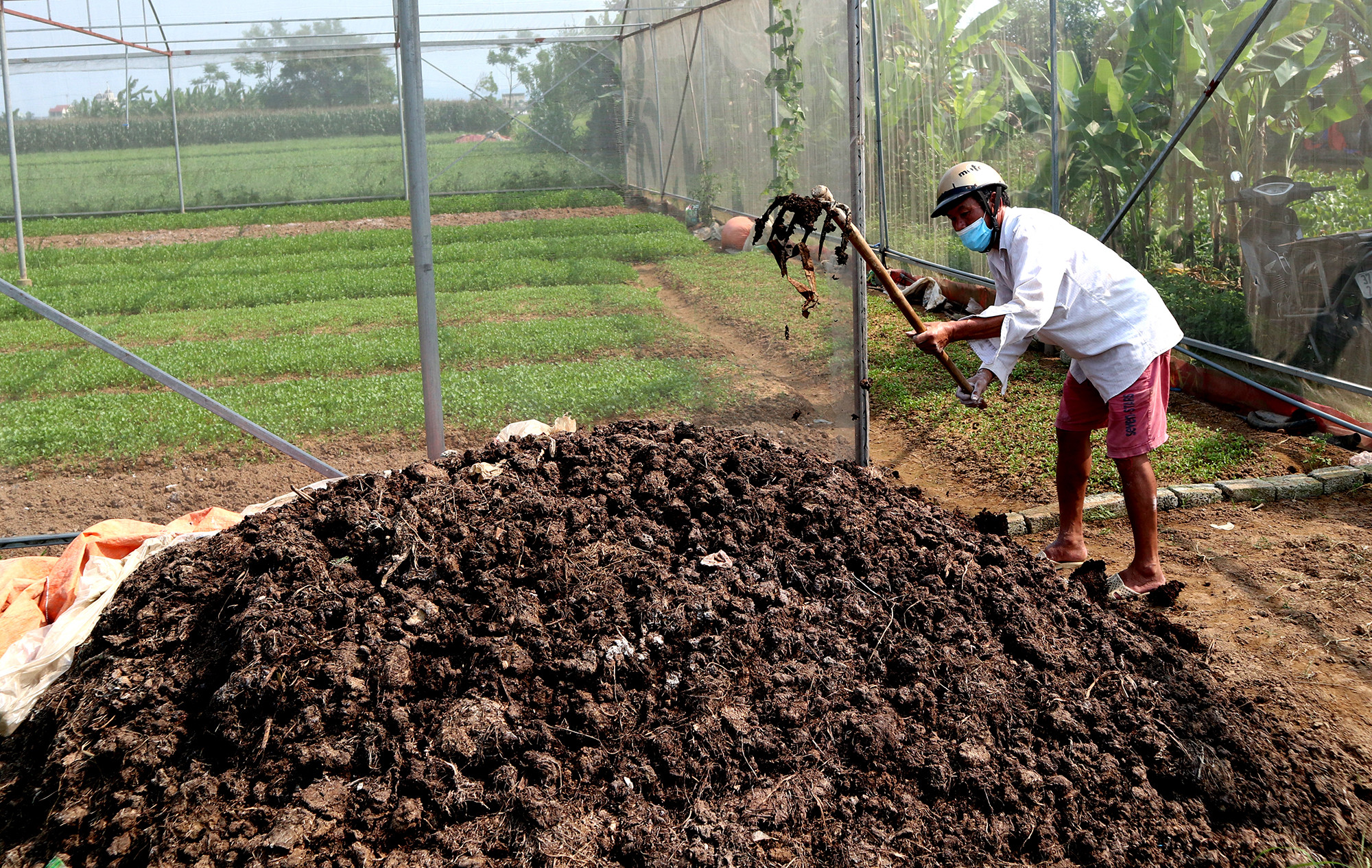 |
| Increase revenue from processing bio-fertilizer from buffalo and cattle livestock waste. Photo: Thanh Phuc |
In particular, most cattle are exported to China through unofficial channels; therefore, when China closed its borders due to the Covid-19 pandemic, the consumption of cattle became very difficult. Many cattle farms reached the point of being ready for slaughter but were unable to sell their animals.
Given the current difficult market conditions, authorities advise buffalo and cattle farmers to continue monitoring the market and not to increase their herds at this time. When buffalo and cattle prices fall, farmers should focus on implementing adaptive measures such as: changing feed rations, ensiling agricultural by-products for feed, and increasing income from processing bio-fertilizer from buffalo and cattle waste...
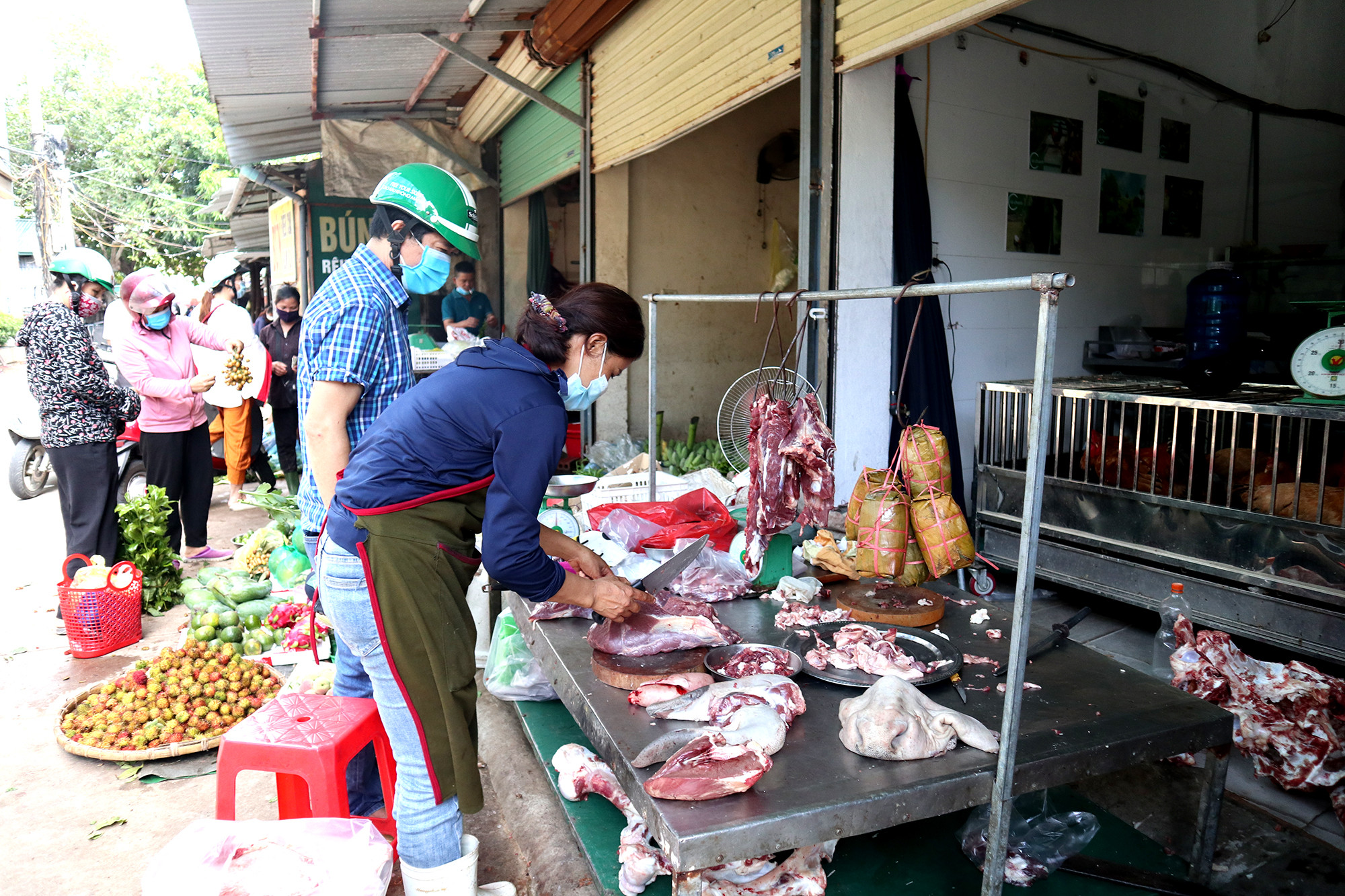 |
| Meanwhile, the prices of buffalo and beef at local markets have hardly decreased. Photo: Thanh Phuc |
At the same time, appropriate measures are needed to reduce the herd size, avoiding drastic cuts that disrupt the supply chain and leave no animals for sale when the market recovers. Furthermore, the establishment of cooperatives and linkages in livestock farming is necessary to prevent price manipulation and to connect producers with markets, thus avoiding bottlenecks in sales. Livestock farmers hope that government agencies and relevant sectors will pay attention to and connect them with markets to facilitate the sale of buffalo and cattle and ensure more stable prices.