

Nguyen Tat Thanh and the aspiration to save the country.
(Baonghean.vn) - With unwavering will, aspiration, and a fervent ambition to save the country and its people, 111 years ago, on June 5, 1911, Nguyen Tat Thanh overcame all difficulties and hardships in his 30-year journey to find a way to save the nation.
FINDING THE PATH TO NATIONAL LIBERATION
At the end of the 19th century, the Vietnamese people were under French colonial rule, and the feudal regime was increasingly corrupt. Patriotic movements broke out continuously and followed various directions. Many famous patriots such as Phan Chu Trinh, Nguyen Thai Hoc, Hoang Hoa Tham, Luong Van Can... sought ways to save the country, but ultimately all failed.
Amidst those bleak circumstances, on June 5, 1911, at Nha Rong Port, the patriotic young man Nguyen Tat Thanh, with his intense will to save the country and his deep love for his people, resolutely set out to find a path to national salvation for Vietnam, fulfilling his ambition to liberate his homeland from the yoke of colonial and imperialist oppression.
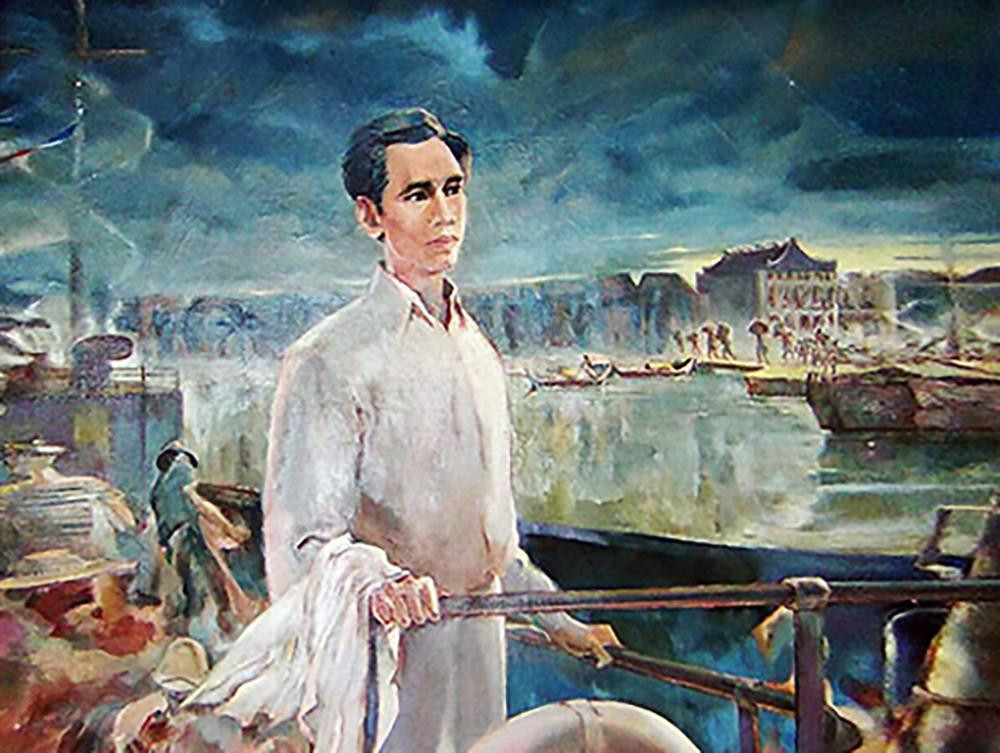 |
| Illustration depicting the young Nguyen Tat Thanh searching for a way to save the country. Source: Ho Chi Minh Museum |
Abovethe path to finding one's truthNguyen Tat Thanh traveled to "lands of freedom, skies of slavery," studying the lives of the working class, the laborers, the poor farmers, and even remote rural areas in New York, London, Paris, Thailand, and China... to understand, participate in, and organize revolutionary movements. He studied the successful revolutions in the most developed capitalist countries: the American Revolution (1776), the French bourgeois revolution (1789), and the national liberation movements in colonial countries against colonialism. He greatly admired the revolutionary spirit of these countries, but could not follow their revolutionary path. As he said: "The American Revolution, like the French Revolution, was a capitalist revolution, an incomplete revolution. While it claimed to be a republic and democracy, in reality it exploited the workers and peasants, and oppressed the colonies."(1).
November 1917,Russian October RevolutionThe great victory ushered in a new era in the history of human society. In mid-1923, Nguyen Ai Quoc left France for the Soviet Union to directly study and work in Lenin's homeland, learning about the experiences of the October Revolution, directly observing the first socialist country in the world, and participating in the activities of the Communist International. With the strategic vision of a revolutionary combined with the practical experience of the October Revolution, Nguyen Ai Quoc determined the path to national liberation, correctly explaining the issue that concerned him greatly: the path to national liberation from oppression, national independence, and advancement towards socialism. This contributed to guiding the path of national salvation, linking national independence with socialism for the Vietnamese nation.
From this point on, Nguyen Ai Quoc firmly sided with the October Revolution, with Marxism-Leninism, and with the Communist International. As he recorded in his work "The Revolutionary Path": “In the world today, only the Russian Revolution has succeeded and succeeded completely, meaning that the people enjoy true happiness, freedom, and equality, not the false freedom and equality that French imperialism boasts about in Annam. The Russian Revolution has driven out the king, capitalists, and landlords, and is now working to inspire workers and peasants in other countries and oppressed peoples in colonies to make revolutions to overthrow all imperialism and capitalism in the world.”(2).
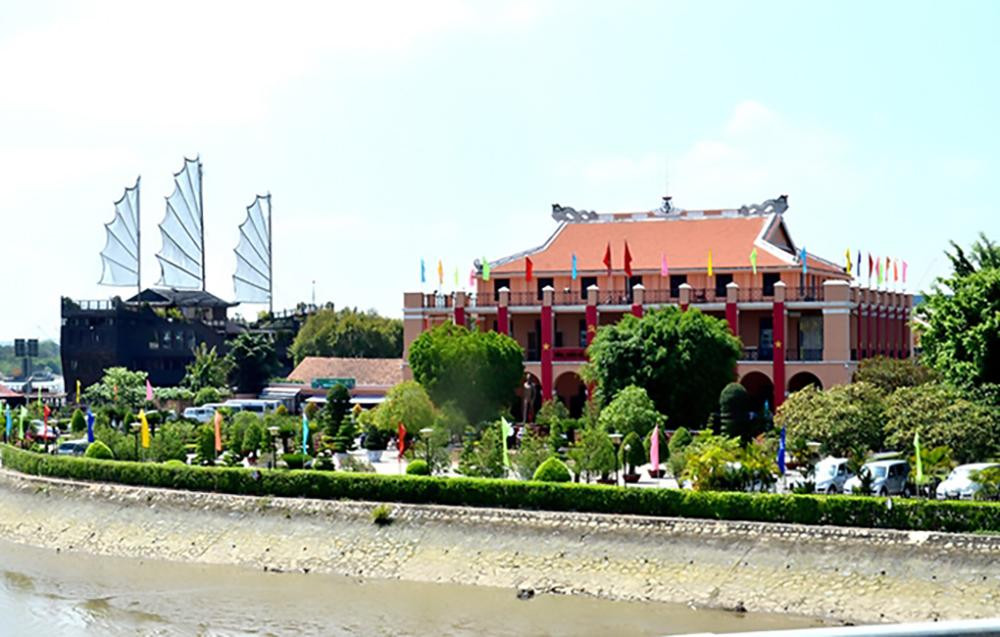 |
| Nha Rong Wharf, the place where young Nguyen Tat Thanh departed in 1911 to seek a way to save the country. Photo: Archival material. |
With his correct patriotic stance, he outlined the brilliant truth for the Vietnamese nation: "To save the country and liberate the nation, there is no other way than the path of proletarian revolution."(3)He further stated: "Only socialism and communism can liberate oppressed nations."
Along with these changes, the Vietnamese revolution at this time began to undergo new transformations closely linked to the activities of leader Nguyen Ai Quoc.
In 1921, Nguyen Ai Quoc, along with a number of revolutionaries in French colonies, founded the Union of Colonial Peoples, aiming to unite forces against colonialism.
In 1924, after 13 years of searching for a way to save the country, he left Soviet Russia and returned to the East, Guangzhou (China), near his homeland Vietnam, to spread Marxism-Leninism in Vietnam and directly lead the Vietnamese revolution. In Guangzhou, he, along with revolutionary leaders from China, Korea, India, Thailand, Indonesia, and other countries, founded the League of Oppressed Peoples of East Asia.
In 1925, Nguyen Ai Quoc founded the Vietnam Revolutionary Youth Association on the basis of reorganizing the Tam Tam Society. Along with the dissemination of Marxism-Leninism, which directly impacted the transformation of the workers' movement and the patriotic movement, he prepared politically, ideologically, and organizationally for the establishment of the Communist Party of Vietnam.
FROM PATRIOTISM, UNCLE HO ARRIVED AT COMMUNISM.
As the first Vietnamese person to embrace communism out of patriotism, during his 30 years of wandering abroad, President Ho Chi Minh visited 28 countries across 4 continents, earning a living through various professions to support his revolutionary activities. He deeply understood the importance of national liberation in the present era, the transitional period from capitalism to socialism worldwide, which began with the October Revolution: To liberate the nation, a proletarian revolution is necessary. The victory of the socialist revolution not only further consolidated the cause of national liberation politically but also achieved a higher level of economic liberation, realizing democracy, justice, freedom, and equality, bringing about socialist civilization and democracy. The socialist revolution transformed our nation into a scientific, intellectual, and modern nation, overcoming countless challenges and achieving ever-increasing victories.
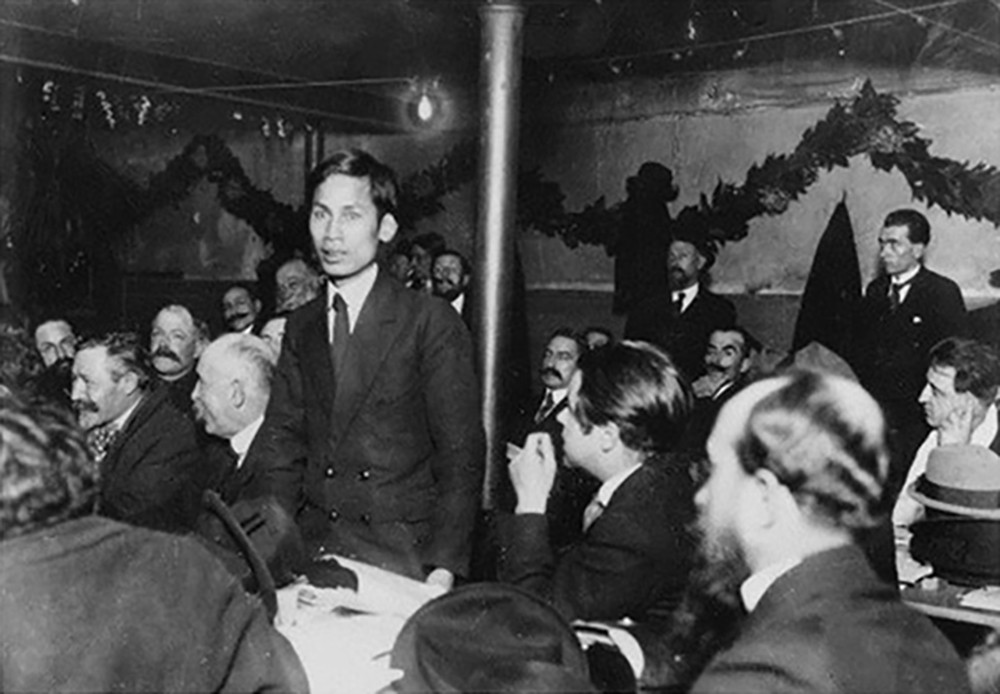 |
| Nguyen Ai Quoc speaking at the Tours Congress of the French Socialist Party, 1920. (Archival photo) |
National independence linked with socialism has been the consistent policy of our Party, State, and people since the founding of the Party. We have steadfastly and creatively implemented this consistent policy. On January 28, 1941, Nguyen Ai Quoc returned from abroad to directly lead the national liberation struggle, leading to the successful August Revolution and the establishment of the Democratic Republic of Vietnam, the first workers' and peasants' state in Southeast Asia. This marked a glorious milestone in the history of nation-building and national defense of the Vietnamese people; demonstrating the brilliant and correct leadership of the Communist Party of Vietnam, founded and nurtured by President Ho Chi Minh. Throughout his life dedicated to the nation and its people, the invaluable legacy he left to our country and our people is the Ho Chi Minh thought, morality, and style, which shines brightly through time.
Commemorating the 111th anniversary of President Ho Chi Minh's departure to seek a path to national salvation (June 5, 1911 - June 5, 2022), we always remember this as a precious milestone, a golden mark in the history of our nation, deeply meaningful in the hearts of every Vietnamese citizen. Remembering him, every cadre, Party member, and all strata of the people strive to follow the path chosen by the Party and President Ho Chi Minh. At the same time, we vigorously promote the study and emulation of Ho Chi Minh's thought, morality, and style, in conjunction with Central Resolution 4 (12th and 13th Party Congresses) on strengthening Party building and rectification, manifested through concrete and practical actions in our work and daily lives. Following President Ho Chi Minh's simple lifestyle, progressive spirit, and ambition to contribute as a guiding principle for thought and action, we must make studying his life and career a constant concern for every Vietnamese descendant, embodying the principle of "the superiors setting a good example, the subordinates actively following suit," strengthening the people's trust in the Party ("the Party's will, the people's hearts"), and contributing to the successful realization of the goal of a prosperous people, a strong nation, democracy, fairness, and civilization.
__________________
References:
(1) Communist Party of Vietnam, Complete Party Documents, Volume 1, National Political Publishing House, Hanoi, 1998, p. 31.
(2) Ho Chi Minh, Complete Works, National Political Publishing House, Hanoi, 2011, vol. 2, p. 304.
(3) Ho Chi Minh, Complete Works, National Political Publishing House, Hanoi, 2011, vol. 2, p. 603. Ths. Nguyen Thanh Hoang