

Unique model of raising sea crabs in plastic boxes.
While indoor crab farming is still relatively new in Vietnam, Ninh Binh province has seen the emergence of models for raising crabs in plastic boxes, yielding high economic efficiency.
Currently, the farming modelseaCrab farming in houses is still quite new in Vietnam, and people are hesitant to invest heavily due to limitations in technology, experience, and infrastructure. More than a year ago, Mr. Pham Van Duy (residing in Tien Hamlet, Ninh Nhat Commune, Ninh Binh City) discovered and introduced this crab farming technique for the first time in Ninh Binh province.
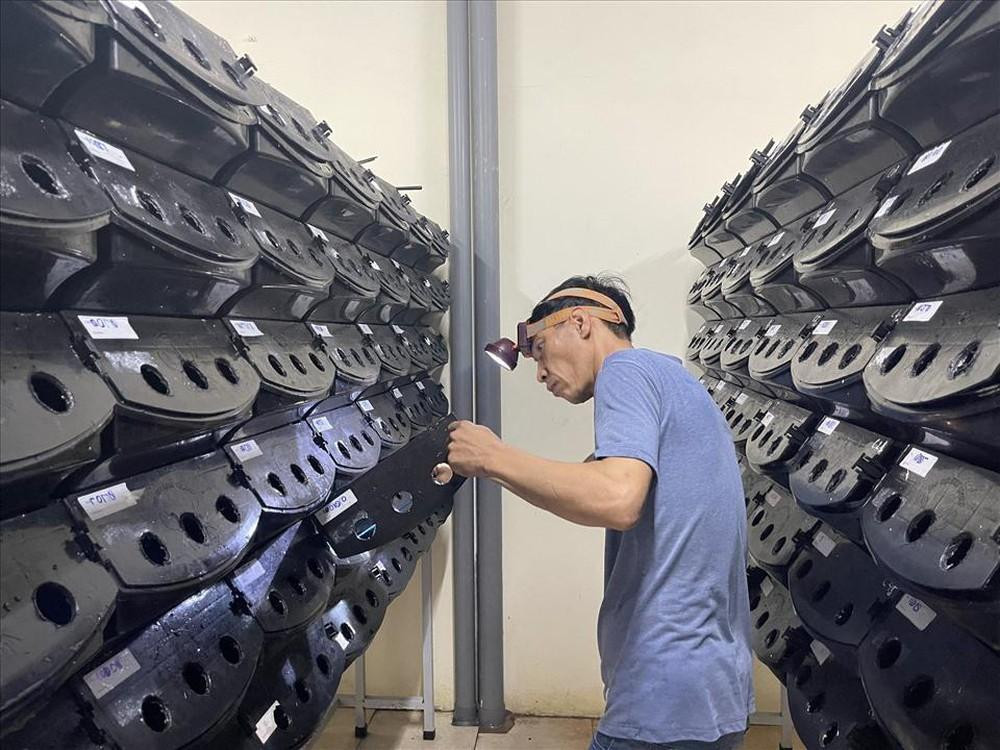 |
The model of raising sea crabs in plastic boxes by Mr. Pham Van Duy (Tien village, Ninh Nhat commune, Ninh Binh city) is the first of its kind in Ninh Binh. Photo: NT |
ModelDuy's crab farming project in plastic boxes started with just 50 experimental plastic boxes. After a year of farming, learning from experience, and experimenting on his own, Duy has now confidently expanded the model to 540 plastic boxes, and invested in a professional waste filtration system costing over 300 million VND.
According to Duy's assessment, the high-tech indoor crab farming system has the outstanding advantage of not requiring a large amount of water input thanks to its recirculating and aeration principle that creates oxygen. When water is introduced into the crab farming box, leftover food and waste are discharged and pass through a coarse filtration system, then into a biological treatment tank and a UV disinfection system.
Microorganisms living on Kaldnes plastic beads act like coral, filtering out leftover food and waste, thus keeping the crabs' living environment cleaner. As a result, 99.5% of the water in the model is reused, leading to higher survival rates for farmed seafood, increased productivity, and no environmental pollution.
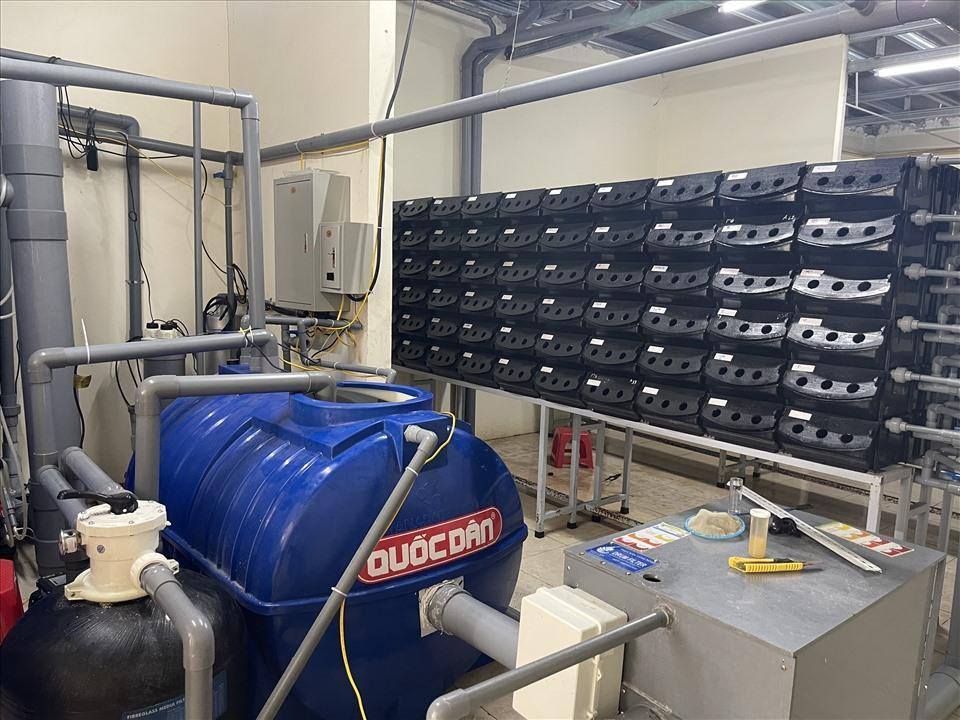 |
A recirculating water filtration system for raising crabs. Photo: NT |
"Raising sea crabs in boxes has a few differences compared to raising them in ponds. Feeding crabs in ponds is more time-saving, while raising them in plastic boxes requires dropping food into each box for the crabs to eat. Crabs eat twice a day, as they are nocturnal, so their main meal is dinner. Their food consists of fresh food such as chopped clams, shrimp, snails, and mussels," Duy shared.
According to biological characteristics, the structure of crab meat is not muscle tissue; therefore, its firmness is not affected by the amount of movement. The quality of crab meat depends on the nutritional composition of its food and the quality of its living environment. Customers can rest assured about the quality of crab meat when raised in boxes; the crabs are guaranteed to be fresh and clean.
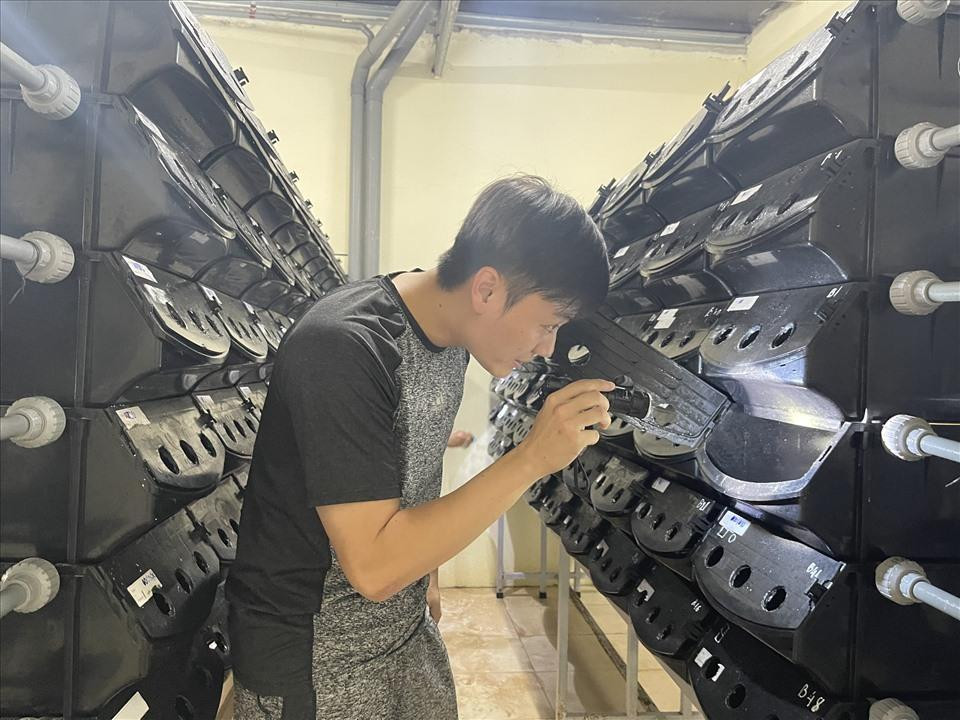 |
Each crab is kept individually in a plastic box. Photo: NT |
According to Duy, each crab is raised individually in a separate plastic box to prevent cannibalism and to reduce the size of the enclosure for easier management and to avoid cross-contamination. The crab boxes are arranged in multiple tiers, numbered sequentially, and daily records of care effectiveness are kept on the box's surface. After about 20-40 days, the crabs are ready for harvest, reaching approximately 4 crabs per kilogram.
"The crabs in the box are not affected by natural elements. To keep the crabs alive in the ideal temperature of 28 degrees Celsius, I use a temperature control machine to ensure the correct temperature regardless of the weather, winter or summer."
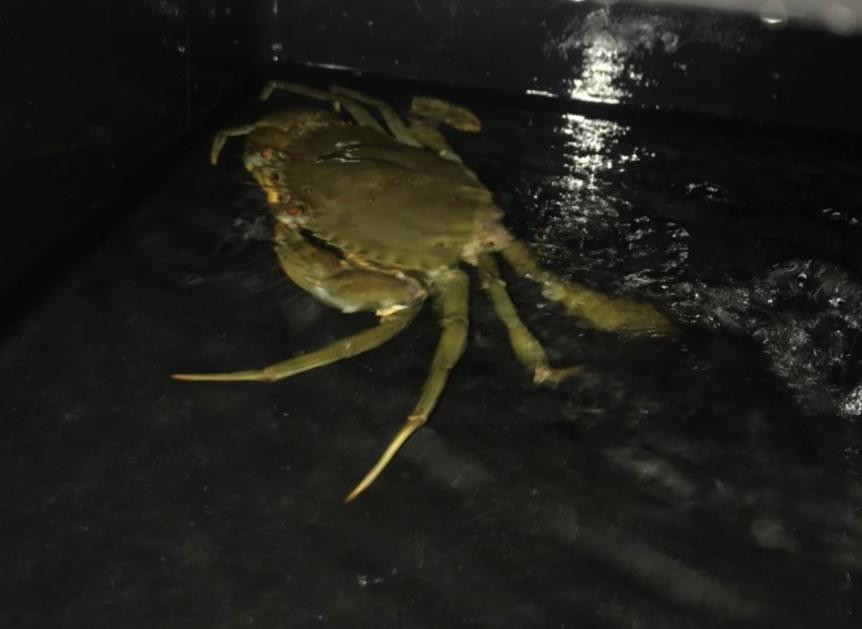 |
| After about 20-40 days, the crabs begin to be ready for harvest. Photo: NT |
"Furthermore, a major advantage of indoor crab farming systems is the maximum utilization of farming space. Crabs are raised and harvested continuously, and product quality can be easily controlled before being released to the market. The model requires little space but yields high productivity, and the product ensures food safety, being free of drugs and antibiotics," Duy added.
Currently, Duy's farm is raising two types of crabs: soft-shell crabs and four-bullet crabs. With the initial success of this model, Duy plans to expand it further in the future to meet customer demand.