
Where corruption is discovered spontaneously, the leader receives extra points.
Where corruption and wrongdoing are discovered spontaneously, it's considered a positive sign that encourages leaders to better fulfill their responsibilities.
In recent years, the Party and the State have focused on issuing regulations on controlling power in general and controlling power to prevent negative phenomena and corruption in particular. The work of building and perfecting institutions for socio-economic management and anti-corruption has been intensified and gradually improved... However, the institutions within the Party, as well as legal regulations on controlling power, especially controlling power in personnel work, have not yet created a sufficiently strong "barrier" to control power and prevent corruption in a way that ensures corruption is impossible, unthinkable, unwanted, and unnecessary.
The mechanisms for controlling power are not yet fully complete.
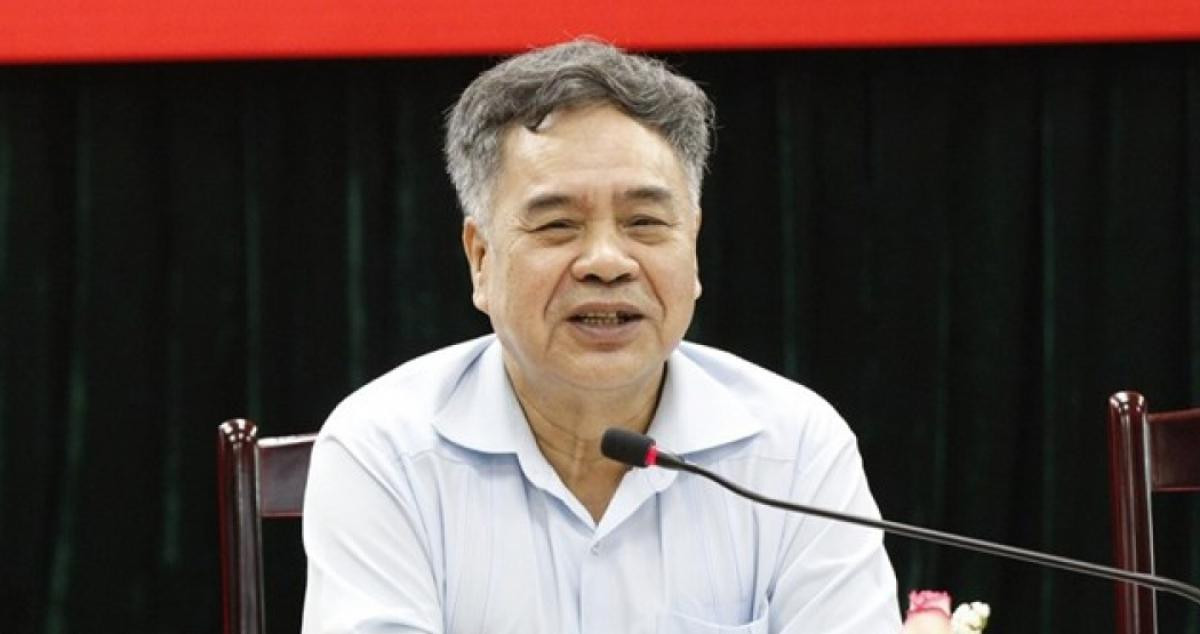 |
Dr. Nguyen Viet Thong - former Secretary General of the Central Theoretical Council. |
Looking back at the anti-corruption efforts over the past period, Dr. Nguyen Viet Thong - former Secretary General of the Central Theoretical Council - believes that the Central Committee, the Politburo, and the Secretariat have strongly, synchronously, decisively, and effectively directed the fight against corruption, leaving a prominent mark and creating high consensus in society... However, the mechanism for controlling power to prevent and combat corruption is still not truly complete, and the level of openness, transparency, and accountability still has certain limitations, which somewhat reduces the effectiveness of anti-corruption work.
“We all say that the people are the subjects of state power. Previously, we had Politburo Regulations 27 and 28 on social supervision and criticism, then the Law on the Vietnam Fatherland Front, and other related legal regulations all mentioned the role of the people in participating in controlling power, including the power of the Party, the State, and social organizations. However, those regulations still do not clearly define how the people – as subjects of power – exercise their power in supervising and controlling the power they have delegated to officials, public agencies, and Party organizations. Therefore, the people have not been able to understand and effectively exercise that right,” shared Dr. Nguyen Viet Thong.
Reviewing the violations that have been investigated and handled by the Central Disciplinary Committee, as well as corruption cases involving high-ranking officials and generals, it can be seen that, in addition to irresponsibility and lax leadership and management, the root cause of major violations and corruption cases is also due to individuals exploiting and abusing their positions and authority for personal and group gain. This is the abuse of power – the breeding ground for corruption and moral decay.
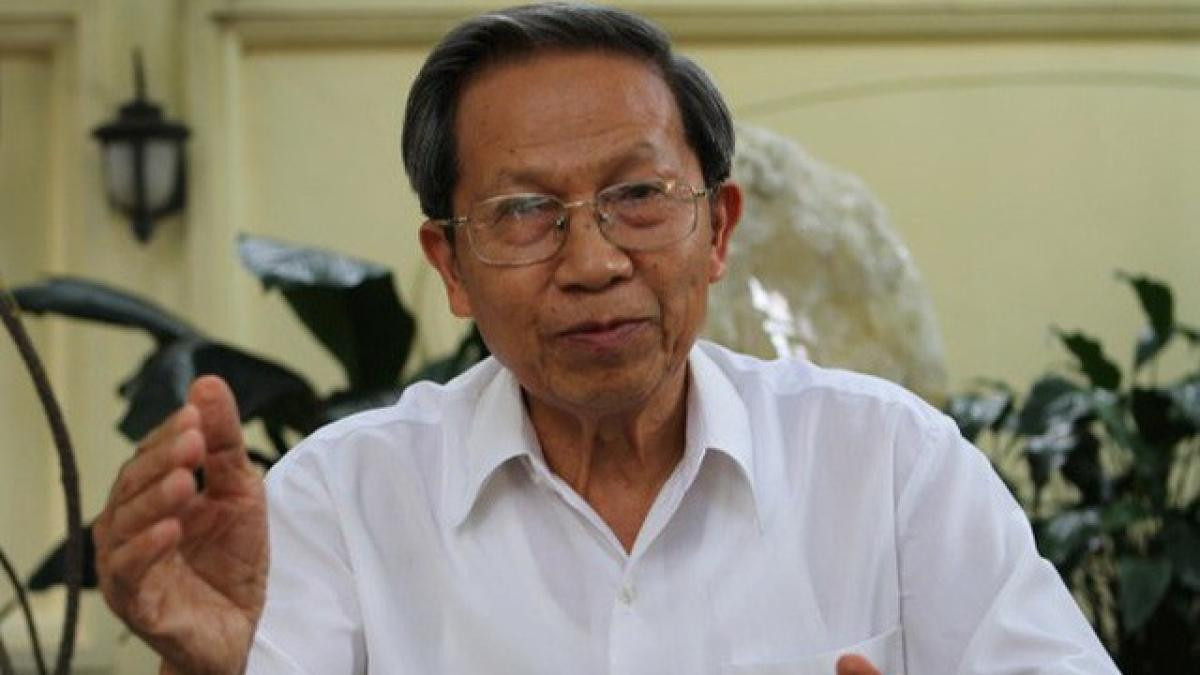 |
Dr. Le Van Cuong - former Director of the Institute for Strategic Studies, Ministry of Public Security. |
Dr. Le Van Cuong, former Director of the Institute for Strategic Studies under the Ministry of Public Security, believes that effective anti-corruption efforts require the control of power.
According to Mr. Cuong, first and foremost, the system of power oversight must be tightened. Next, the responsibilities of public authorities, individuals, and heads of agencies, organizations, and units must be clarified. Our current constitutional and legal system does not specifically and clearly define the rights and legal responsibilities of officials; there must be regulations from the Party as well as legal norms to ensure that each head of an agency or unit has specific powers coupled with concrete responsibilities.
"Another very important issue, mentioned in the resolution and stipulated in the Party's charter, is ensuring that state agencies operate openly and transparently so that the people can monitor them... I believe that if we do well in these four areas, we will certainly fundamentally overcome the problem of corruption," emphasized Dr. Le Van Cuong.
The number of corruption cases detected and prosecuted does not accurately reflect the true extent of corruption.
To effectively combat corruption, it is necessary to promptly perfect the mechanism for controlling power through legal institutions, primarily by effectively controlling abuse of power and arbitrary exercise of authority in personnel management and policy-making and implementation. Alongside this, it is also necessary to uphold public service ethics and the exemplary responsibility of Party members and officials – especially the heads of agencies and units.
In reality, in many places, the role and responsibilities of leaders in combating corruption have not been effectively utilized, and in some aspects, have not met the set requirements.
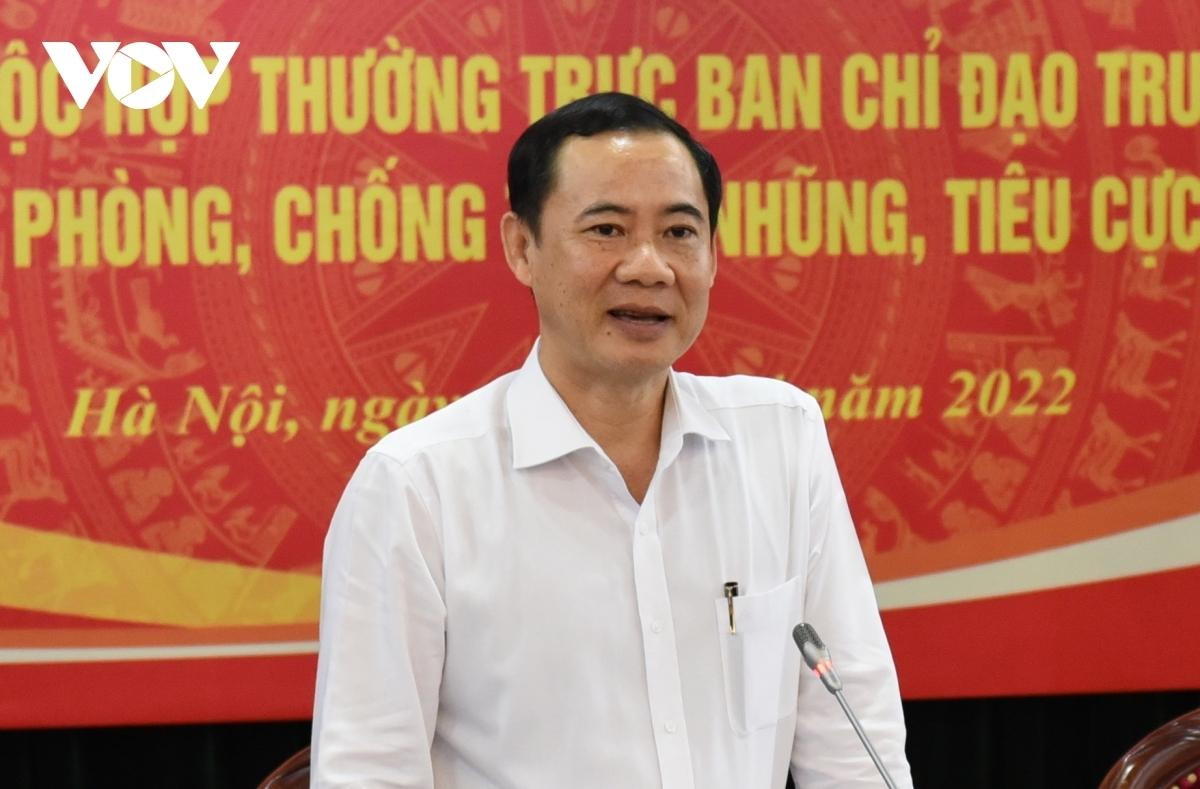 |
Deputy Head of the Central Internal Affairs Commission Nguyen Thai Hoc. Photo: Kim Anh |
Specifically, according to Deputy Head of the Central Internal Affairs Commission Nguyen Thai Hoc, there is still a situation where leaders do not genuinely care about leading and directing the detection and handling of corruption; in some cases, there is favoritism, avoidance, shirking of responsibility, and even cover-up of corruption and negative practices. More seriously, many leaders who have committed negative acts, corruption, or aided corruption have been discovered and punished. In the past, the number of corruption cases detected and handled within agencies and units does not accurately reflect the actual situation of corruption.
Mr. Huynh Ngoc Son, Vice Chairman of the Thang Long Club, believes that although we have complete regulations and mechanisms for the responsibility of citizens, officials, and Party members to participate in and implement anti-corruption measures, the actual implementation is not strict. There is still a situation where heads of agencies and units do not dare and do not want to fight corruption.
"The regulations on preventing and combating corruption already have a complete mechanism in which everyone must participate. But a mechanism is just a mechanism; the people implementing that mechanism are what matter. I know that some public agencies have corruption, but the heads of those agencies don't want to fight it, avoiding it because they fear it will affect their reputation and the reputation of the agency they are in charge of," said Mr. Huynh Ngoc Son.
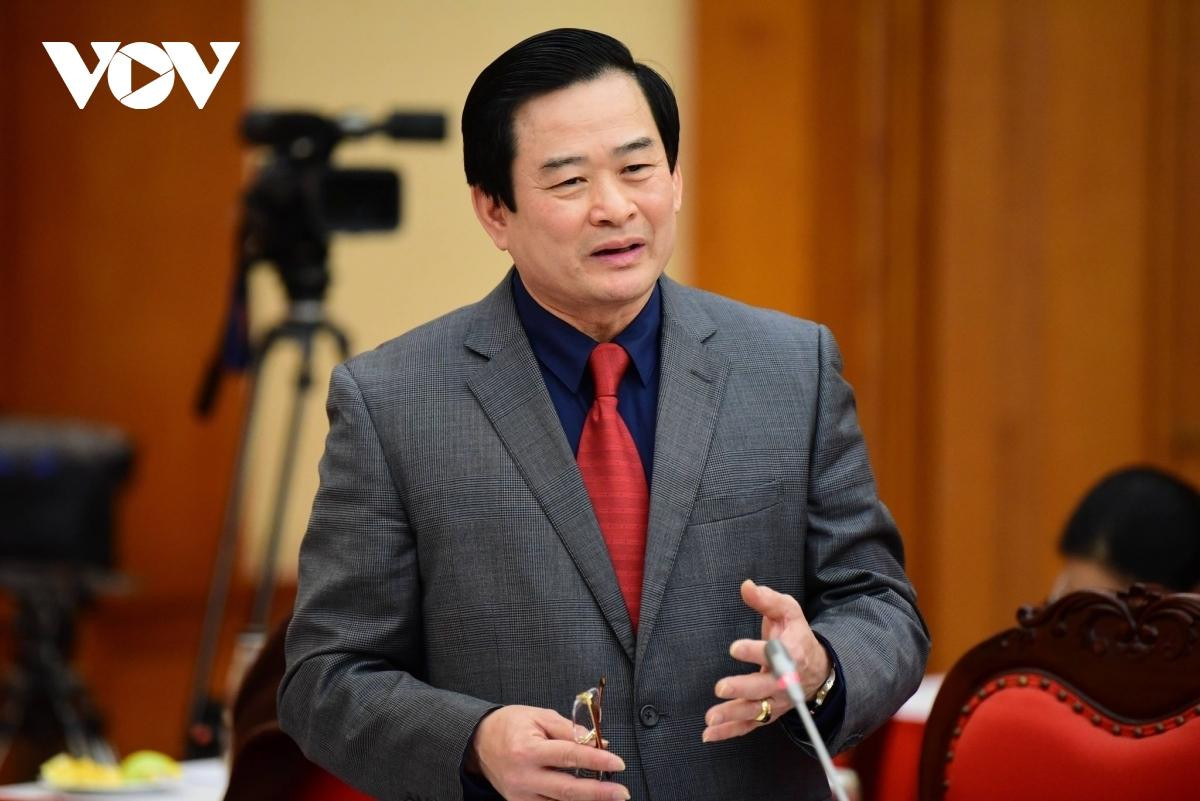 |
Mr. Nguyen Dinh Quyen - former Director of the Legislative Institute of the National Assembly. Photo: Kim Anh |
According to Mr. Nguyen Dinh Quyen, former Director of the National Assembly's Institute of Legislation, this reality is partly due to the decline and lack of exemplary conduct of leading officials, but it also shows that the obsession with achievements is still deeply ingrained in agencies and units. This obsession with achievements dominates the responsibility of leaders. Typically, we tend to judge agencies and units that uncover a lot of corruption and wrongdoing as weak in personnel management. Therefore, we should change this perception; areas that proactively uncover corruption and wrongdoing should be considered a positive point to encourage leaders to better fulfill their responsibilities.
Recent serious corruption cases, such as the case of former Binh Duong Provincial Party Secretary Tran Van Nam, the case of former Minister of Science and Technology and former Chairman of the Hanoi People's Committee Chu Ngoc Anh, and former Minister of Health Nguyen Thanh Long, have been reported by these agencies and units as having found no internal corruption. This shows that the heads of some agencies and units have not truly paid attention to the fight against corruption, and have even neutralized this work within their own agencies and units…
To effectively monitor power, we must do so through institutions, or in other words, these institutions must be concretized by law. According to Minister of Finance Ho Duc Phoc, to curb corruption, many solutions are needed, including focusing on evaluating, planning, training, and developing cadres; selecting and appointing heads of agencies and units who truly possess "Heart, Talent, Intellect, Courage, and Integrity"; and boldly granting autonomy and responsibility for personnel matters to the heads of agencies and units.
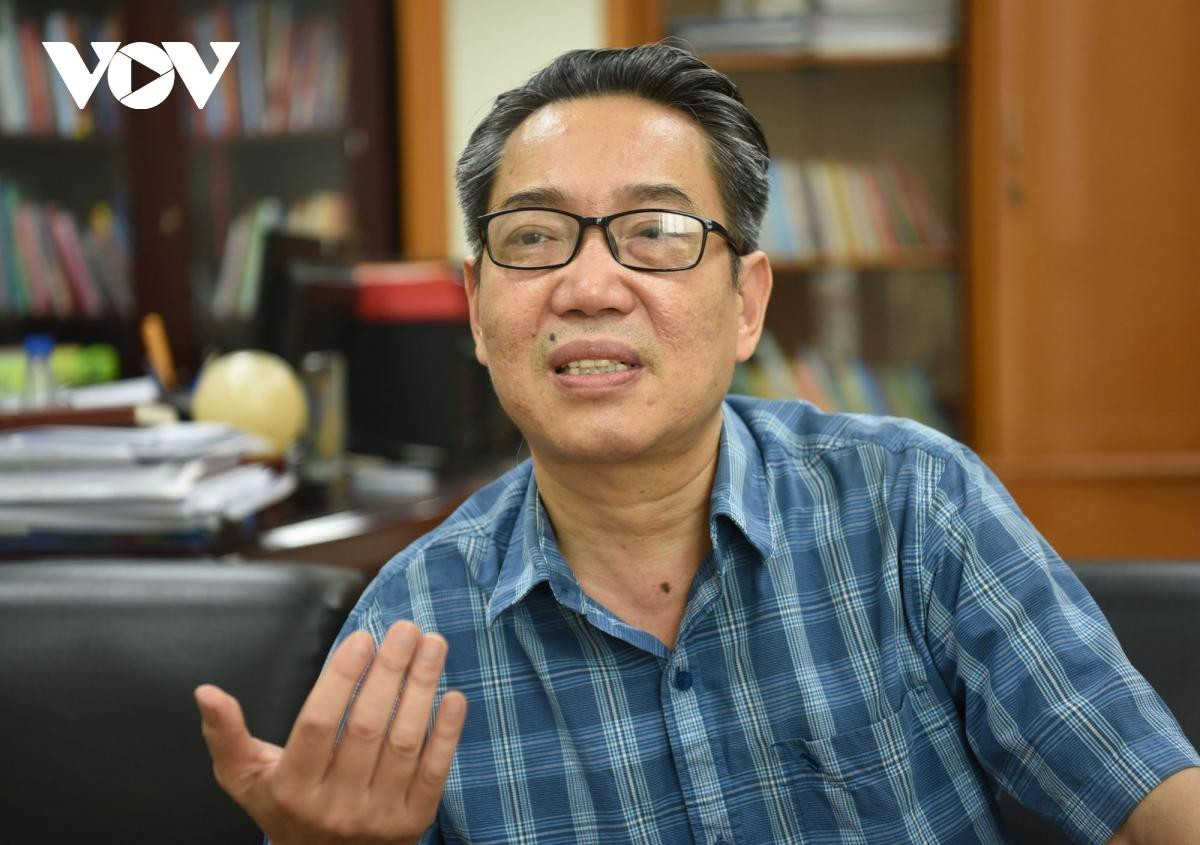 |
Dr. Dinh Van Minh - Director of the Legal Department - Government Inspectorate. Photo: Thi Uyen |
Dr. Dinh Van Minh, Director of the Legal Affairs and Inspection Department of the Government, believes that the role and responsibility of local leaders in detecting and handling corruption cases are extremely important and urgent. However, in reality, leaders in some places and at some times have not truly paid attention to preventing and combating corruption; in some cases, they have condoned and covered up for corrupt officials, or even engaged in corruption themselves. Therefore, regulations are needed to emphasize and hold leaders accountable, both ethically and legally.
Along with strengthening the oversight of power and improving the capacity to implement policies and laws openly and transparently under the supervision of the people, Party committees at all levels must also regularly strengthen inspection and supervision to promptly detect and correct signs of violations and corruption from their inception.
Tien Anh