

The souls of the martyrs are as vibrant as the sacred forest.
(Baonghean.vn) - The Ma Forest - a sacred forest, where so many of our compatriots and comrades lie buried. In the rainy season, their bodies hang from the trees; in the dry season, they are buried in the earth. No one has a tombstone...
Editor's Note:During the brutal years of the resistance war against the American imperialists, countless troops from the vast rear area of North Vietnam crossed the Truong Son Mountains to support the battlefields in the South. Among these vast, sprawling columns were educators dedicated to supporting revolutionary education in the South. In Nghe An province alone, approximately 200 teachers joined these "going to the South" troops. From there, these education cadres were present in almost all battlefields in Southern Vietnam, South Central Vietnam, the Central Highlands, Dong Thap Muoi, the border regions between our forces and the enemy, and even in Cambodia.
The following article is a heartfelt reflection from Mr. Ngo Duc Tien, a former teacher who spent many years working, contributing, and fighting on the battlefields of Southern Vietnam. His words are like a tribute to the heroic martyrs.
During the rainy season of 1970, after several months at the Education Sub-Committee's guest house, we had undergone a training course on the new situation and tasks, and listened to reports from new comrades returning from the battlefields of the Western and Southeastern regions, as well as Saigon-Gia Dinh... including some who had been operating undercover, who, when sharing their experiences in the outskirts, still wore scarves covering their faces, only their eyes visible... we were very excited.
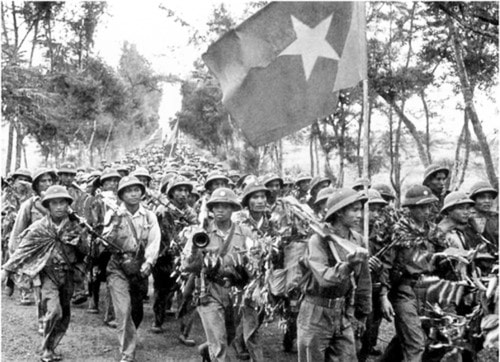 |
These soldiers set off to reinforce the battlefields in the South when they were just 18 or 20 years old. Photo: Archival material. |
The marching route from the Central Committee's base at that time, which led to the mountainous region of Kampong Cham province in Cambodia, required us to travel from the mountains down to the plains. Our group consisted of six people: two messengers and four of us. We traveled at night and rested during the day, setting off around 5 pm and marching all night until dawn. We stopped at a liaison station to cook rice, set up hammocks, and rest. Around mid-afternoon, we would get up again to cook and prepare for the night march. After more than ten days of traveling through villages in the highlands, we began our march down to the plains.
It was the flood season then, and the messenger took us down to the Moc Cau - Mo Vet area by boat. The closer we got to the Vietnamese border and enemy territory, the more difficult and fierce the situation became. The messenger had to constantly watch ahead for enemy ambushes while rowing the boat carrying us.
Upon reaching the Tien River, in the section where several Vietnamese expatriate villages such as Vinh Phuoc and Vinh Loi were located, we had to wait at the edge of the forest for over a week before we could cross the river because a group of South Vietnamese soldiers were on a field trip and stationed themselves in these villages. Although called a "visitor's landing area," it was merely a flooded forest with a few tall, large Olea europaea trees rising above the water's surface, while the rest were low, dense vegetation.
During the day, we would sit in our small boat with the locals, casting lines, setting nets, catching snails, and picking water lilies and wild sunflowers to cook. But whenever we saw a helicopter or OV10, we would dive down and hide in clumps of water hyacinths or wild sunflowers, occasionally surfacing to breathe.
After the enemy withdrew a few days later, we were transported across the Tien River to the Hau River by a liaison officer. Around midnight, as we were dozing off, we suddenly smelled a terrible odor coming from the forest ahead—the smell of death. Our liaison officer, Tư Ný, told us: "Our boat is near the 'Ghost Forest,' where many corpses are hanging from trees. So, you 'three ready' guys should endure a little hardship because going around the Ghost Forest is safer. The 'national' side doesn't often go lurking and making arrests in this forest."
Then the liaison officer explained that in the border region above Moc Cau - Mo Vet, Vietnamese expatriates made their living by fishing and farming on barren fields, often living together along the canals. During the rainy season, they would raise their houses higher as the water level rose, relying on the river for their livelihood. However, when someone died during the rainy season, their body was taken to the Ma Forest. The corpse was wrapped in mats or sandbags provided by the Americans, then hung on a tree in the Ma Forest, waiting for the dry season when the water receded before being taken down and buried in the ground, forming a grave.
After the Tet Offensive of 1968, the enemy launched a fierce offensive, and our bases in the border provinces temporarily took refuge here. Our soldiers and civilian officials who died were also brought back here to be laid to rest with the people. Last year, a special forces soldier died while using a mine to attack an enemy ship on the Tien River; a few days later, his body surfaced near Goi outpost, and the locals recovered it and brought it here. Then, Nurse Chin T2 was ambushed by the enemy while on duty; the locals brought her body to the outpost to fight back, and she was also laid to rest here...
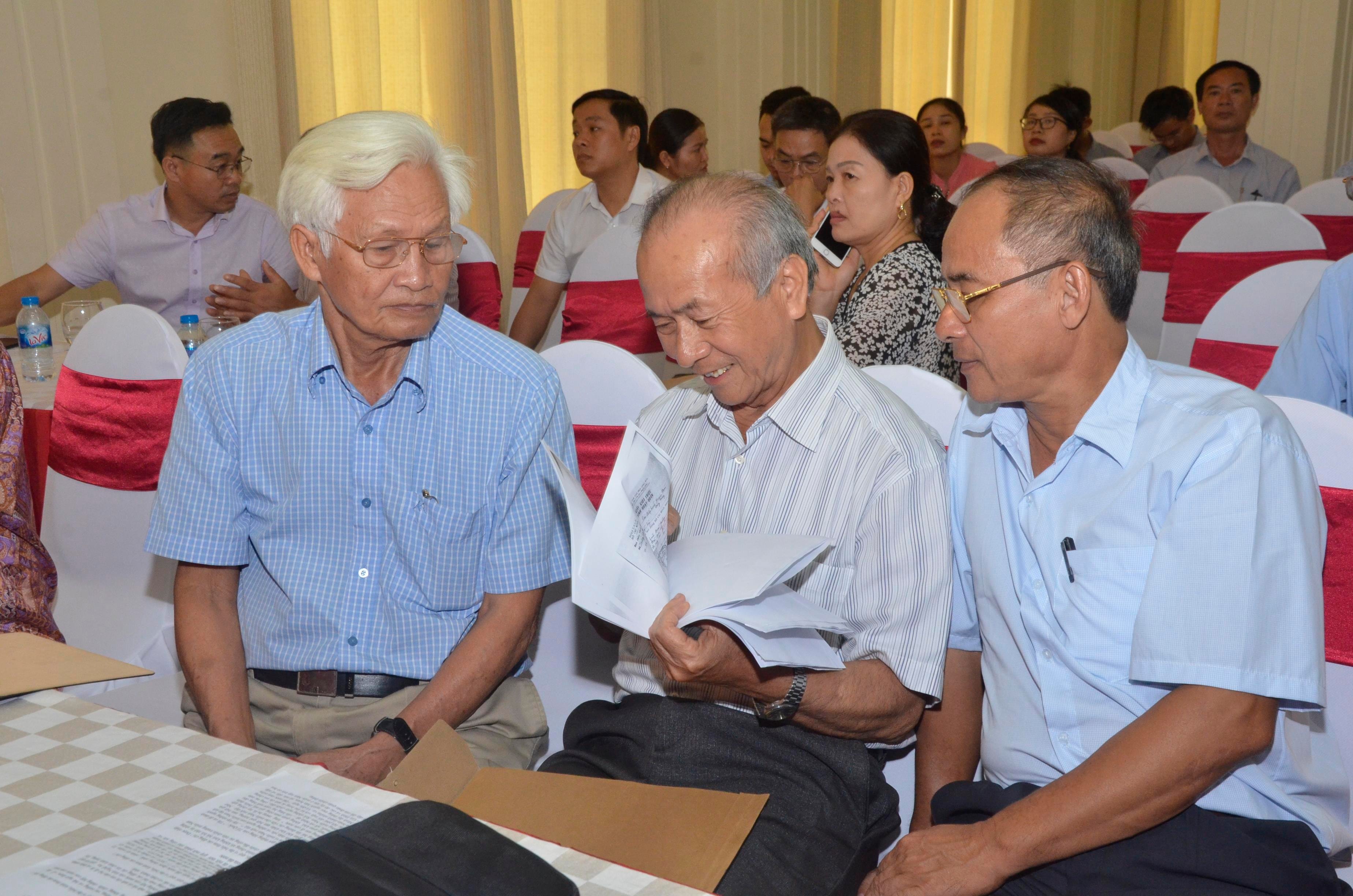 |
The officers who went to the South during the war were overjoyed and moved as they reviewed the files, documents, and mementos. Photo: Thanh Le |
After passing through the Ma forest, we traveled by boat until the next morning to Tam Be Tam Ban, where two Vietnamese villages were located. Our plan was to go down to An Giang and then return to the T2 Propaganda Department, but upon arrival, we received news that the entire T2 agency had moved to the Cambodian side of the forest. We were assigned to stay in K1 to build a revolutionary base.Open teacher training classes, open adult education classes.For officers and staff of Zone 1.
During my two years operating in this area, I frequently passed through the Ghost Forest. In the rainy season, we often traveled by boat at night; in the dry season, we walked through the forest canopy. Whenever we approached this forest, we would hear the cawing of black crows echoing across the sky, and the scurrying of rats. I don't know how many of our compatriots and comrades perished here.
On the day our group parted ways, the brothers and sisters from K1 asked to go to the Ma Forest – a sacred forest – to light incense one last time. As we tied the half-burnt incense sticks to the Omoi tree at the edge of the forest, we couldn't hold back our tears. After the 1973 Paris Agreement, we returned to the Education Sub-Committee in Tay Ninh, and then on April 30, 1975, we went to take over Saigon-Gia Dinh. In the joy of victory, we fondly remembered the arduous years in the border region along the Tien and Hau rivers.
In 2015, I was nominated by my friends to join.Visiting the old battlefieldAs we passed through the Moc Bai border gate, arriving at the former Moc Cau - Mo Vet area, sitting in the car speeding along National Highway 1, near the Nec Luong bridge, Thai Duy Trap and Le Anh Tuong asked to stop. Looking at the peaceful and tranquil villages of our neighbor beside the green canals, we were filled with nostalgia for the Vietnamese expatriate mothers and fathers who sheltered and cared for us during the years of war, and for the sacred forest of Ma, where so many of our compatriots and comrades lie buried, their bodies hanging on trees in the rainy season and buried in the earth in the dry season, without any tombstones... I think that anyone who marched from the Tien River to the Hau River during the years of the war against the US must have passed through the sacred forest of Ma more than once. Suddenly, I remembered a poem by someone, the gist of which was:The souls of unknown martyrs / The blue waves of the sea, the green trees of the mountains.
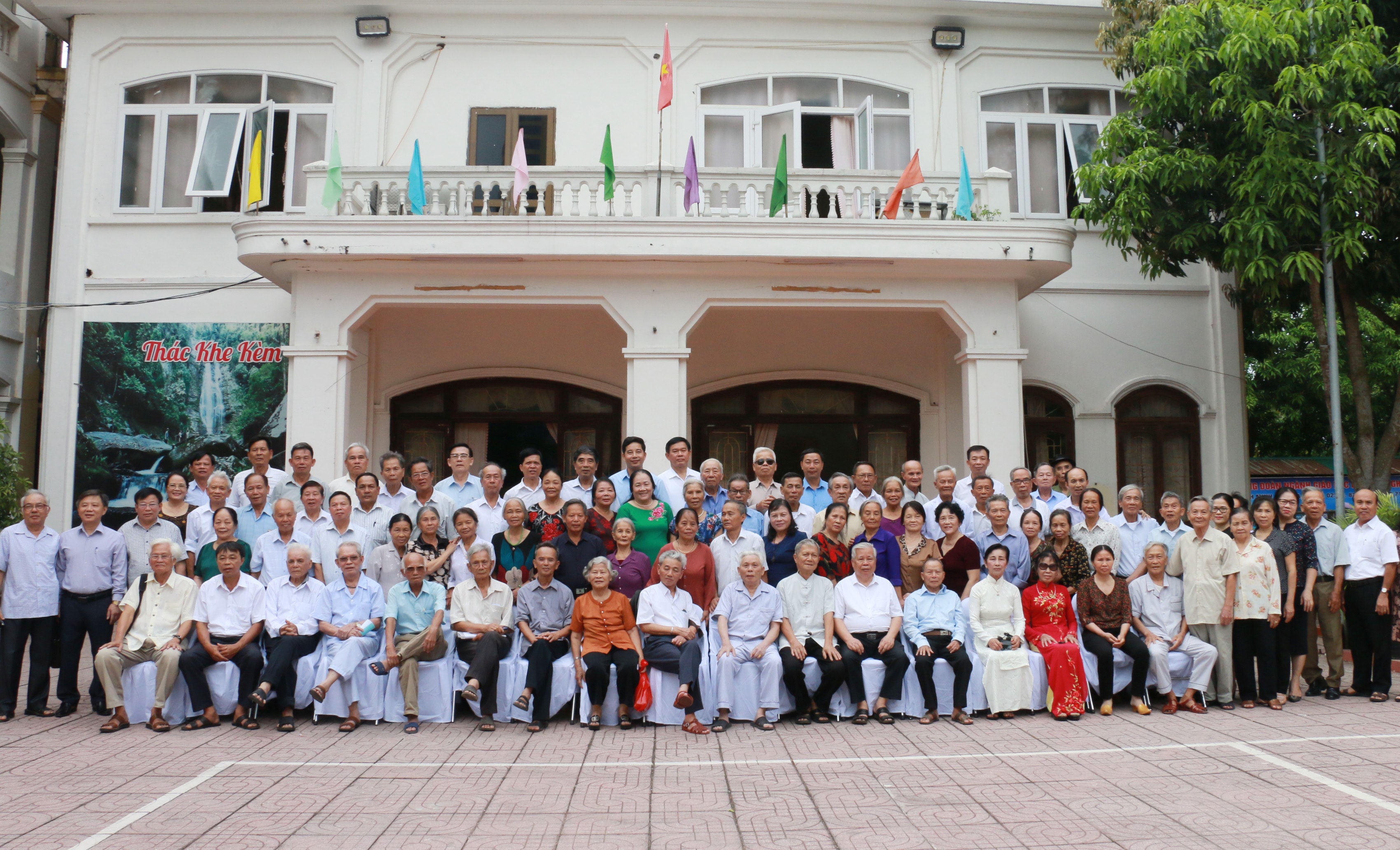 |
Teachers who went to the South during the war pose for a commemorative photo. Photo: My Ha |