

I can't rest easy while my teammates haven't returned.
(Baonghean.vn) - Although over 70 years old, veteran Tran Dai Nghia (Block 7, Le Loi Ward, Vinh City) has for many years still deeply cared about his fallen comrades. On the occasion of the 75th anniversary of the Day of War Invalids and Martyrs, Baonghean.vn had the opportunity to hear him share his special story.
'Once we become special forces soldiers, we know that when we go, we don't come back.'
PV:Sir, you were born during a time of war when millions upon millions of young people volunteered to go to the battlefield. Surely, you haven't forgotten those first days of military service?
Veteran Tran Dai Nghia:I grew up in Vinh Tan ward, in neighborhood 2 of Vinh city. Although I grew up in the city, my parents were farmers, and our family circumstances were very difficult. My parents had 11 children, but 8 died when they were very young, and they only managed to raise 3. I am the youngest, the ninth child, but I became the eldest son and the head of the family.
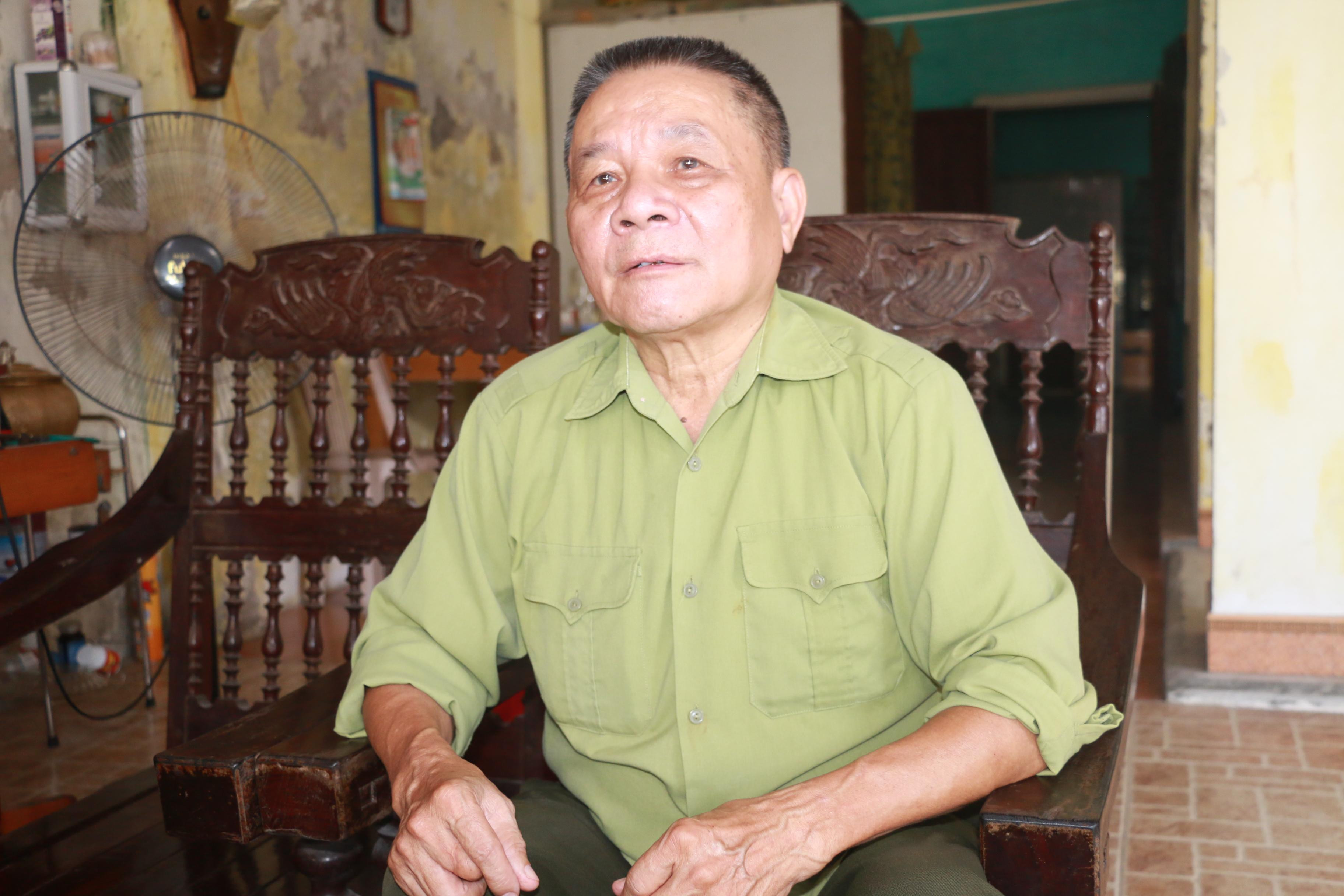 |
| Veteran Tran Dai Nghia is currently the Chairman of the Association of Victims of Agent Orange in Le Loi Ward, Vinh City. Photo: My Ha |
My family circumstances at the time, according to regulations, would have allowed me to be exempt from going to the battlefield. However, in 1968, when the resistance war against the US was at its most intense, with the slogan "The South calls, the North answers," I still voluntarily pricked my hand and wrote a letter of surrender to the front lines. When I enlisted, I was only 20 years old and set off with a joyful heart, eager to fight the enemy in the South. On the day I left, my parents were very worried, but because the country was still divided, they kept their personal feelings to themselves so that I could enlist with peace of mind.
PV:After enlisting, he became a special forces soldier. So, compared to other forces, what was special about his mission?
Veteran Tran Dai Nghia:Upon joining the army, I was assigned to the special forces, and before going to the battlefield, my comrades and I underwent a year of training at Military Region 4 (under D31 Special Forces). After completing the training, we were transferred to the 33rd Special Forces Battalion to reinforce the Quang Tri - Thua Thien Hue battlefield.
Our battalion at that time consisted of 5 companies, including 1 reserve company, each with 64 men. With a special mission, the special forces soldiers were highly trained and rigorously selected. In battles, the special forces often infiltrated deep into the enemy's heartland, so the level of danger was usually higher. To ensure safety, before going into battle, we were all disguised, using crushed taro leaves mixed with soot to smear on our faces to deceive the enemy. During the resistance war against the US, our D33 Battalion had many resounding battles that struck fear into the enemy at Khe Sanh, Lang Vay, Con Tien, Doc Mieu, Bai Son, Hill 241, Hill 544…
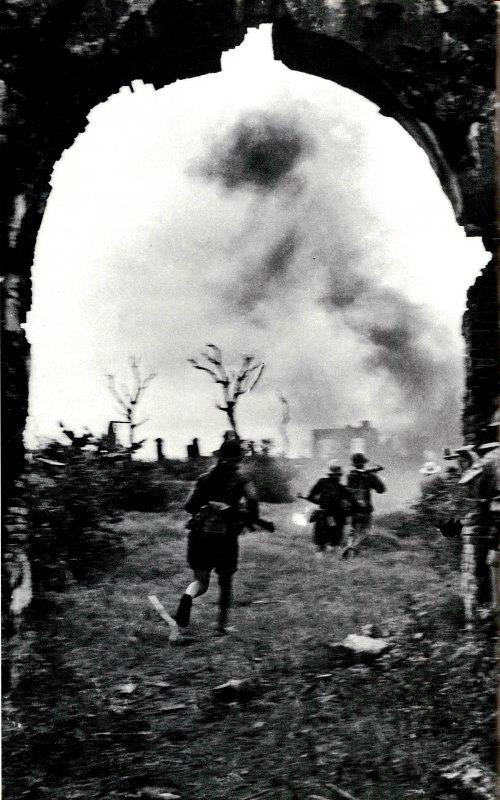 |
| Guerrillas, along with local troops and the people, rose up to attack and destroy enemy military bases, seizing control of Gio Linh, Quang Tri, in 1969. Photo: archival material. |
PV:Of all the battles you participated in, the Battle of Quan Ngang (Gio Linh, Quang Tri) seems to have left the most special memories and also the most casualties?
Veteran Tran Dai Nghia:In April 1969, we arrived in Quang Tri, and in June 1969, we received orders to destroy the enemy's artillery battalion at Quan Ngang (Gio Linh, Quang Tri). At that time, Quan Ngang was a large-scale base for administrative and military operations, serving as a "launching pad" for invading North Vietnam. During the years of operation at the base, the US-backed South Vietnamese forces focused on expanding their operational scope and investing in modern technical equipment, weapons, and powerful firepower for the purpose of defense, support, sweeps, and attacks against the revolutionary movement in the area.
In addition, they maintained a large garrison force, including advisors, infantry, and American artillery, in areas such as C1 Post, the military zone, and the administrative area. The Saigon government gathered people from five communes—Gio Ha, Gio My, Gio Le, Gio An, and Gio Son—into a concentration camp in the Quan Ngang base, implementing the "rural pacification" policy and the "draining the pond to catch the fish" plan in the southern part of the demilitarized zone. From Quan Ngang, the enemy plotted to pour artillery into the Vinh Linh front line to suppress the resistance movement of our army and people. To prevent this, we mobilized a special forces battalion to attack the enemy's stronghold.
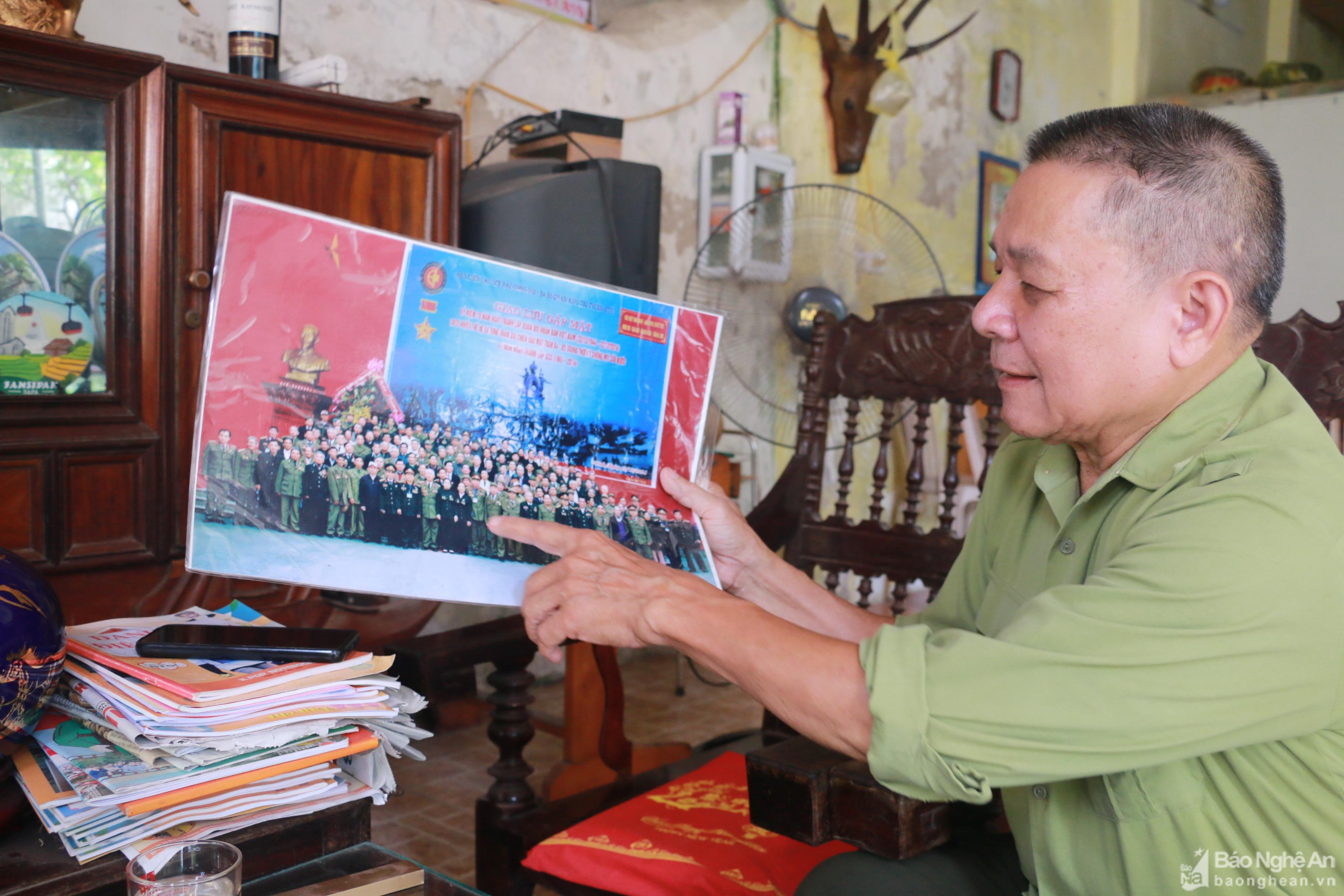 |
Mr. Tran Dai Nghia and a photo taken at the meeting of the Liaison Committee of Special Forces soldiers in Quang Tri. Photo: My Ha. |
At that time, I was just a soldier, participating in my first battle. I heard the terrifying sound of artillery fire coming from Vinh Linh along the Ben Hai River; the explosions were deafening. Both sides were locked in a struggle, with special forces troops attacking deep into the enemy's stronghold. Outside, there were layers upon layers of barbed wire, up to nine rows of fences, but we only managed to reach the seventh. The fighting was fierce from the very first minutes, but the enemy's firepower was too strong, so we only managed to control a portion of the battlefield. This was also the most costly battle, with nearly 100 special forces soldiers killed.
After this battle, at the end of September 1969, we had another unforgettable battle: the battle at the Dau Mau bridge outpost in Cam Lo district. I remember that at that time, President Ho Chi Minh had just passed away, and our unit was determined to "turn grief into action." At that time, I was a B40 gunner, carrying four rounds, crossing the Cam Lo river to participate in the battle. We won this battle decisively, and afterwards I received a medal.
PV:Sir, Quang Tri was one of the fiercest battlefields. When facing the enemy, did you ever waver?
Veteran Tran Dai Nghia:As I said, special forces are a special unit, penetrating deep into enemy territory, so they are always facing danger. I remember, after a battle, eight of us special forces soldiers were trapped by the Ben Hai River. While trying to cross the river back to base, we spotted 13 enemy tanks approaching. I was the company commander at the time, and I instructed my men that if the enemy discovered us, each of us, with the few weapons we had left, had to fight to the end. If we were surrounded, we had to be ready to sacrifice ourselves and absolutely not fall into enemy hands. With our experience in camouflage and concealment, we managed to outsmart the enemy and preserve our forces.
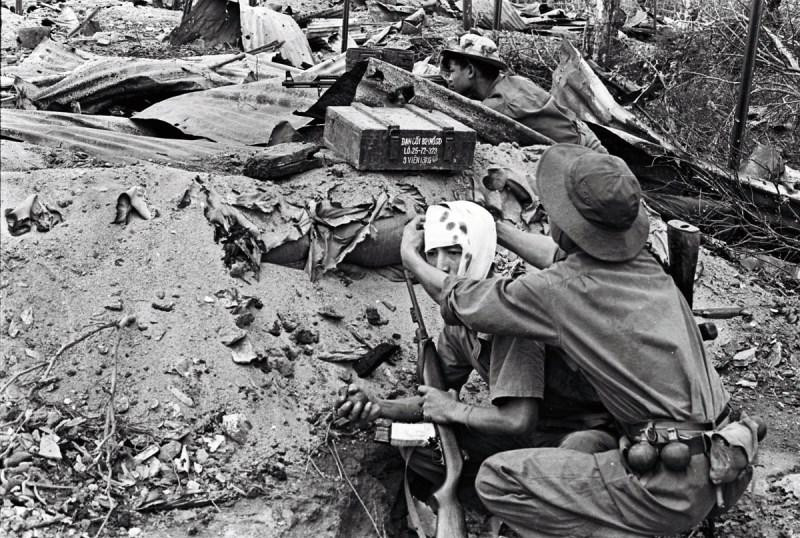 |
These soldiers were wounded while fighting on the Quang Tri battlefield. Photo: archival material. |
During our years of combat, we faced danger many times. In 1971, while fighting on Hill 288, I was discovered and ambushed by the enemy while conducting reconnaissance. I was wounded in the head and hand. After recovering, I fought alongside my comrades through thick and thin until the complete liberation of South Vietnam.
As soldiers, we have all faced life and death situations many times, witnessed the sacrifice of our comrades, but we have never wavered. We only hoped to defeat the enemy to win independence and freedom for our country. Moreover, as special forces soldiers, we were prepared to go and never return.
Heartbroken for my teammates.
PV:Sir, the war ended more than 40 years ago, but every time you think about the war that you and your comrades went through, what is your biggest concern?
Formerwarrior Tran Dai NghiaAs I've mentioned, my comrades and I have been through many battles. There were victories, defeats, and many losses and sacrifices. There were people like my battalion commander; in just a split second, I saw him shot through the body and fall right before my eyes.
Later, many of my comrades also perished on the battlefield. I have accompanied the families of my comrades back to the old battlefields many times to search for their remains, but without success. Now, every year on July 27th, I visit the homes of some of my comrades in Vu Quang (Ha Tinh) to light incense and pay my respects.
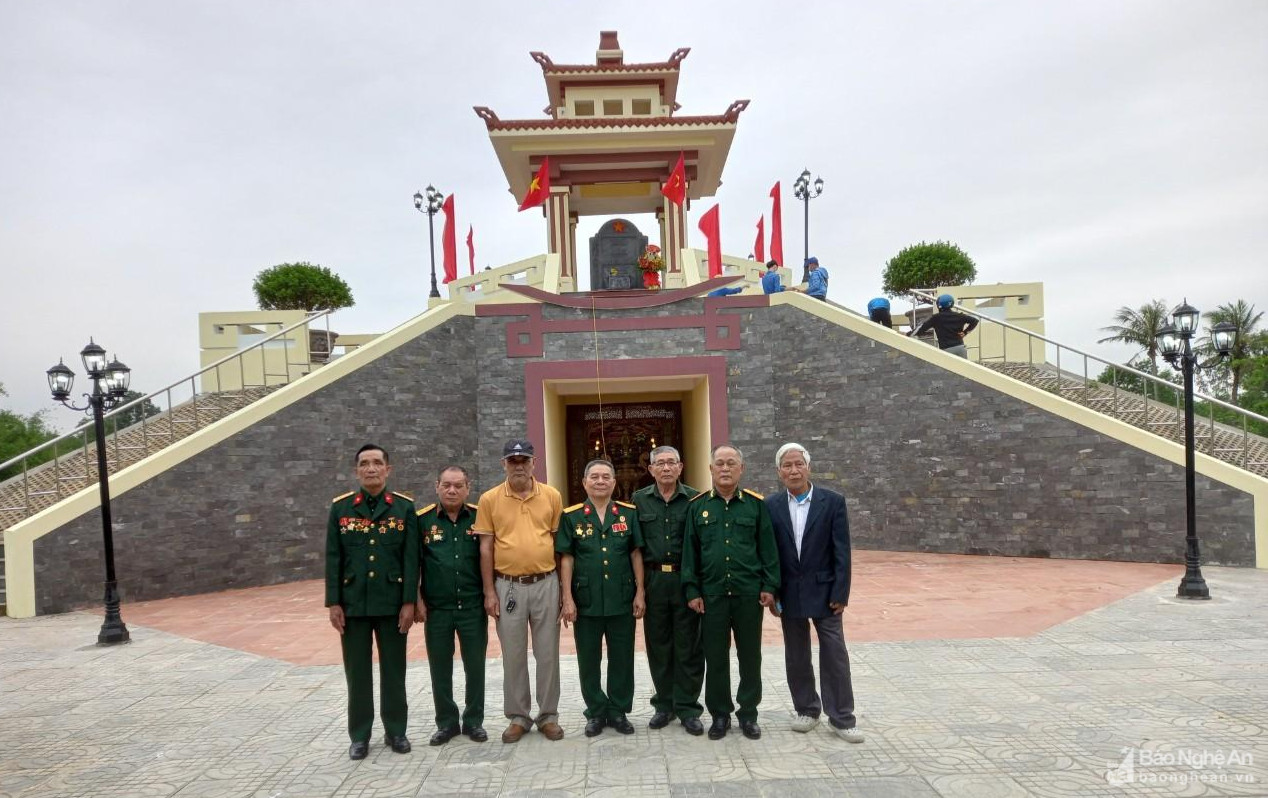 |
Mr. Tran Dai Nghia (center) and his comrades at the inauguration ceremony of the Quan Ngang Memorial Monument. Photo: Provided by the author. |
In 2014, despite the difficult conditions at the time, I managed to reconnect with all the former special forces soldiers of Battalion 33 and organize a reunion in Vinh City. It was a very memorable event; we were able to meet again after so many years of fighting. Many people, including myself, couldn't hold back their tears. Those years left an indelible mark on each of us, an opportunity for us to reminisce about the victories, hardships, and sacrifices we made during the resistance war against the US to save the country.
PV:It is known that three years ago, Hero of the People's Armed Forces Truong Duc Hai, along with him and his former comrades, started the construction of the memorial in Quan Ngang, which has now been completed. Could you share some information about this particularly meaningful project?
Veteran Tran Dai Nghia:Driven by a sense of responsibility as a survivor and affection for his comrades, after the reunification of the country, Hero of the Armed Forces Truong Duc Hai proposed the construction of a monument or memorial to commemorate the heroes and martyrs who sacrificed their lives before the complete liberation of his hometown of Gio Linh. This would serve as a place for surviving soldiers to visit their fallen comrades and as a place to educate the younger generation about revolutionary traditions. Following Truong Duc Hai's idea, after nine years of campaigning from the South to the North, the memorial was completed in March 2022 within the Quan Ngang Historical Relic Area.
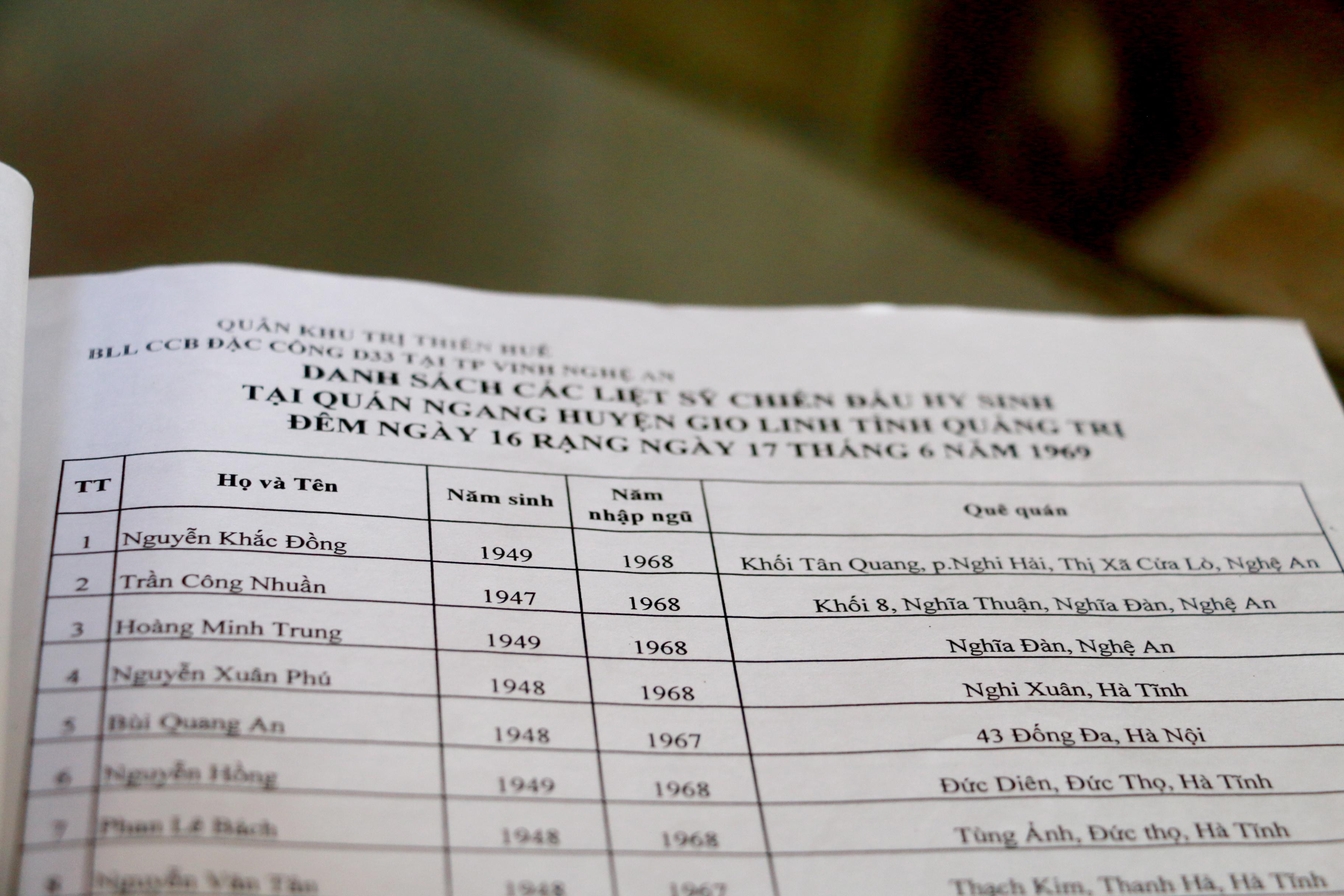 |
The list of fallen comrades was compiled by Mr. Tran Dai Nghia with the hope of gathering complete information and erecting a memorial plaque at the common grave of the martyrs in Quang Tri. Photo: My Ha |
During the construction process, thanks to the connections of my comrades, I and Mr. Truong Duc Hai were able to contact each other, and I was able to provide him with the list and names of 36 martyrs out of the 120 who bravely fought and sacrificed their lives in the battle at the artillery base in Quan Ngang, so that the memorial ceremony and prayers for the heroic martyrs could be held.
PV:For nearly 10 years, as the Head of the Liaison Committee of Battalion 33, he has also been deeply concerned about his fallen comrades. Could he share what he has done to honor his fellow soldiers?
Veteran Tran Dai Nghia:I retired in 1988 with the rank of Major and subsequently spent over twenty years involved in local movements, in various roles. Throughout the years of peace, despite the many hardships of life, I was always concerned about my former comrades, especially those who sacrificed their lives at Quan Ngang and other locations in Quang Tri. Through the information I gathered, I learned that many of my fallen comrades who died in Quang Tri could not be exhumed and brought back to their hometowns. They were buried together in a mass grave, many without names or addresses in their hometowns.
Thinking of my comrades, at the age of 70, I wrote a letter to the block's leadership and the local government requesting retirement from duty. Later, I reconnected with my old comrades and together we gathered information to compile a list of 120 special forces soldiers who died in Quang Tri. Part of this list has been compiled and inscribed at the Quan Ngang Memorial. For the remaining soldiers, my greatest wish is to contact all their families, find their portraits, and erect a memorial plaque at the collective grave in Gio Linh District Cemetery.
PV:This is certainly not an easy job, is it, sir?
Veteran Tran Dai Nghia:Since the establishment of the Special Forces Liaison Committee, we have not hesitated to contribute our efforts and resources to search for the graves of fallen soldiers and identify our comrades who sacrificed their lives. The work is truly difficult; in some cases, we have gone four or five times without success. Time is running out, and finding remains will undoubtedly become even more challenging. Therefore, although our work is small, I hope it will be completed soon so that the families of the fallen soldiers, when they return to Gio Linh (Quang Tri), will find some comfort, and we will also have peace of mind when we think of our comrades…
P.V:Thank you for joining this conversation, and I hope your wishes will soon be fulfilled!