

Waste of over 9.3 billion VND in water treatment plant in Hoang Mai town.
(Baonghean.vn) - Once expected to provide sufficient clean water for the people of Quynh Loc commune (Hoang Mai town), the Quynh Loc commune water supply plant, after its construction, has been unable to operate. Now, after 16 years, the project, worth over 9.3 billion VND, lies exposed to the elements, with many assets deteriorating and becoming damaged.
One violation followed another.
Quynh Loc commune is located next to Hoang Mai Industrial Zone. For a long time, residents in this area have faced difficulties in finding water sources, as the southeastern area bordering Lach Con is affected by salinity, while surrounding areas are enclosed by factories and enterprises. In 2006, with funding from the Danish International Development Agency (DANIDA), the state budget, and contributions from residents in the beneficiary area,domestic water supply planthas a total capacity of 45m³3/h, the project aims to provide clean water to all residents of Quynh Loc commune and is being invested in for construction.
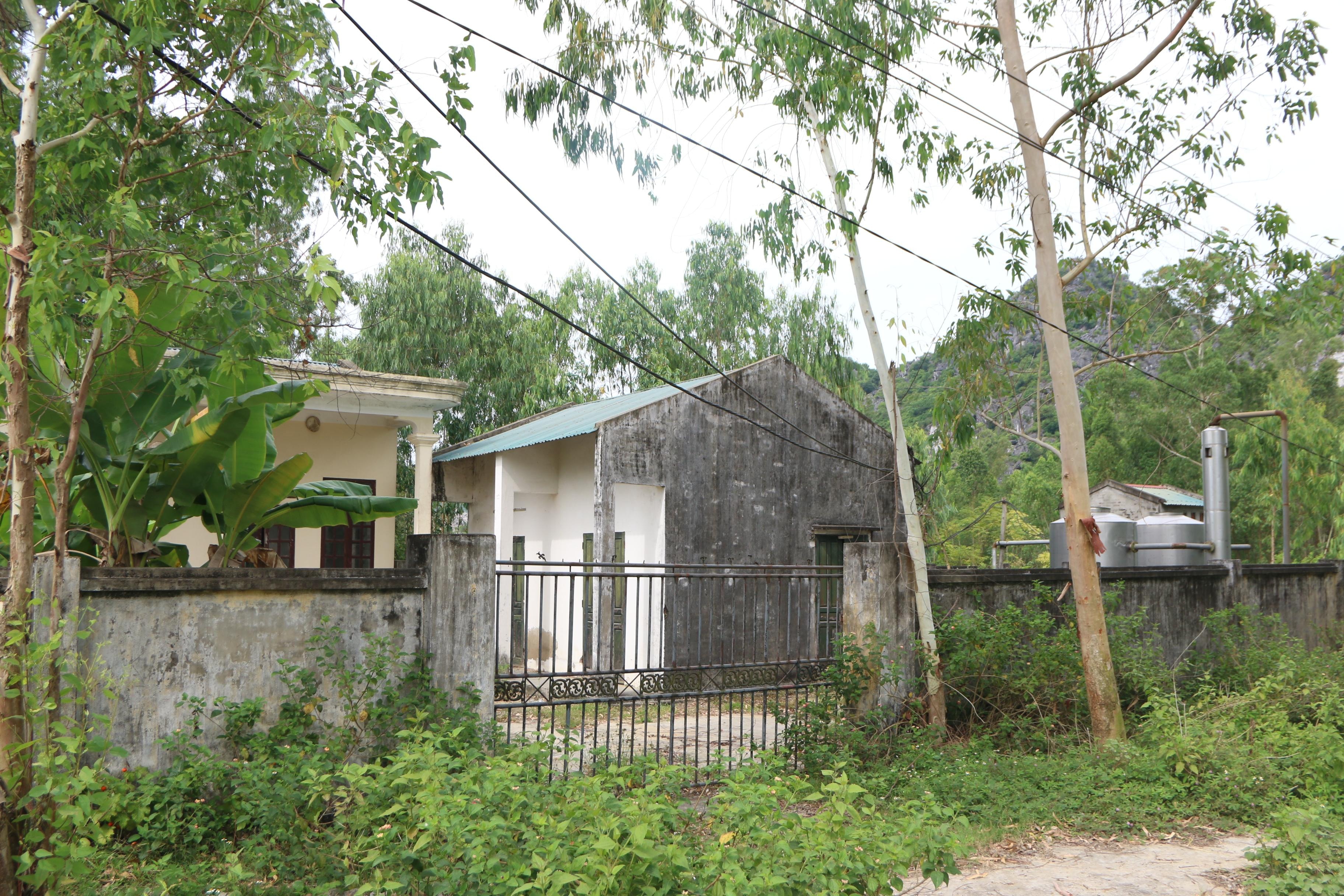 |
The Quỳnh Lộc commune's water supply plant is located at the foot of a limestone mountain. According to local residents, after using the water, a lot of limestone sediment has accumulated on household appliances, so they are hesitant to use it. Photo: Tiến Đông |
This project was divided into two phases. Phase 1 commenced on April 1, 2006, and was completed on May 5, 2006, with the goal of providing domestic water to hamlets 6 and 7 of Quynh Loc commune, with a capacity of 15m³.3On May 17, 2006, the project was inspected and put into use, and the final settlement was approved according to Decision No. 513 of the People's Committee of Quynh Luu District (before the separation of Hoang Mai town) with a total approved value of over 1.686 billion VND, of which DANIDA contributed 80%, and the beneficiaries contributed 20%.
After the project was completed and put into operation, it supplied water to hamlets 6 and 7. However, it only operated for 3 months. Furthermore, no water fees were collected from the residents during operation. Many households who benefited from the project claimed that after using the water, limescale deposits accumulated on their appliances, making them hesitant to use it. In addition, some areas experienced difficulties with water flow due to elevation differences. Therefore, the water plant had to cease operations.
 |
The factory's equipment has been left exposed to the sun and rain for some time now, and it has yet to be dealt with. Photo: Tien Dong |
It is worth noting that when this project had just completed phase 1, it was accused of construction not conforming to the design and exceeding the approved budget. Therefore, on August 28, 2006,People's Committee of Quynh Luu DistrictAn inspection team was established to handle the matter. The inspection team subsequently pointed out several irregularities in phase 1 of the project, including: procedural deficiencies and errors; some sections not yet constructed; the supervisory consultant not regularly present at the construction site; and the investor and the Project Management Board of Quynh Loc commune neglecting to inspect, supervise, and manage capital. This resulted in incorrect acceptance of construction work worth over 197 million VND; the failure to construct 466m of 48mm diameter pipeline and 1,619m of 34mm diameter pipeline worth over 51 million VND; the use of incorrect materials leading to discrepancies of over 37 million VND; and overpayment of other expenses totaling nearly 23 million VND. On December 28, 2006, the People's Committee of Quynh Luu district approved the inspection report, recovering over 100 million VND due to incorrect acceptance and payment of construction work and overpayment of costs for preparing the economic and technical report.
Despite shortcomings and low efficiency immediately after the completion of phase 1, the plan for phase 2 was approved at the end of 2006, and construction began in April 2009. This phase aimed to supply water to hamlets 1, 2, 3A, 3B, 4, 5, 8, 9A, 9B, and 10 of Quynh Loc commune, with an approved investment cost of over 7.656 billion VND. Of this, 94% came from the National Target Program for Clean Water and Rural Environmental Sanitation, and 6% from the commune budget.
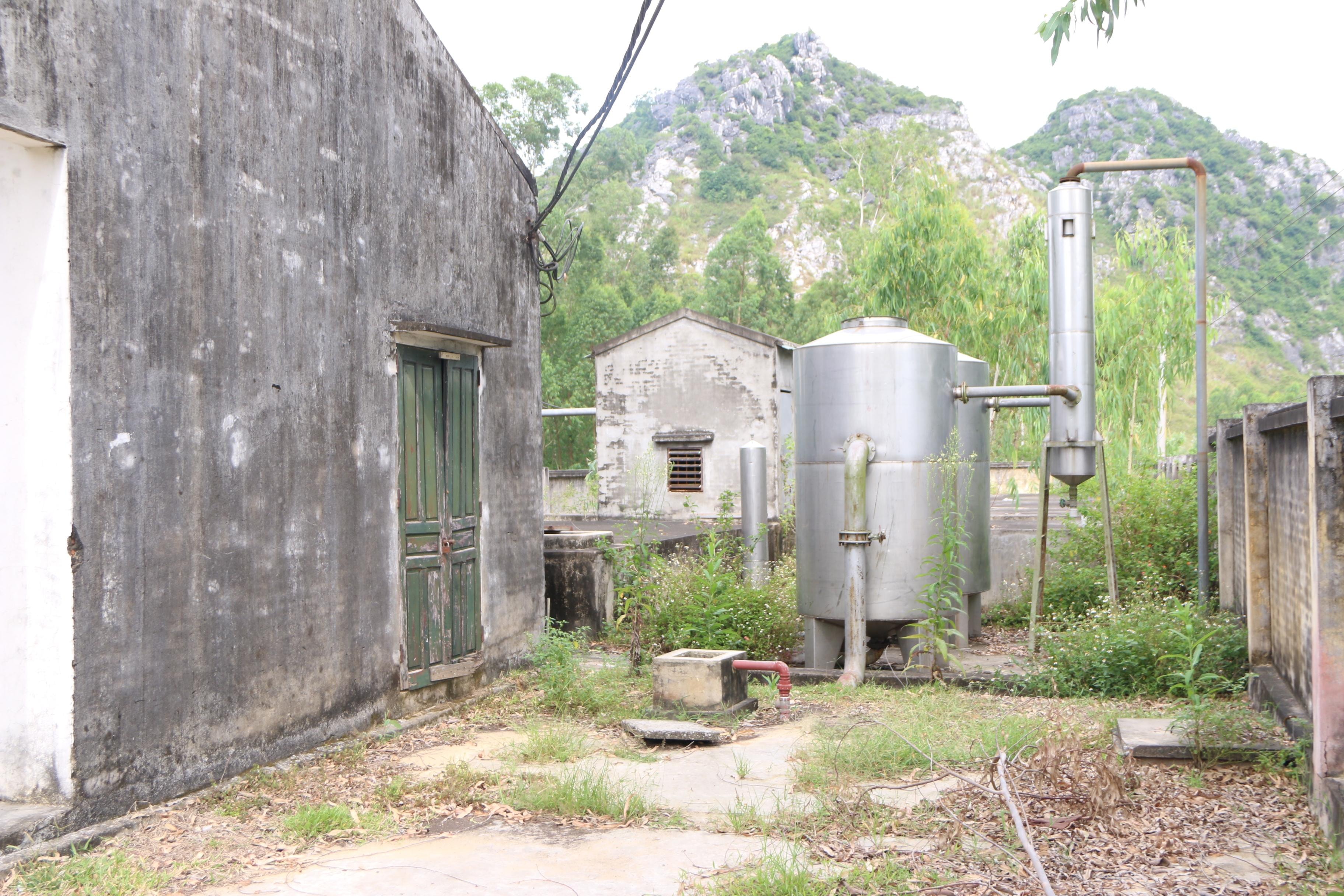 |
Since its completion, this project has only been operational for a short time before being... put on hold. Photo: Tien Dong |
Entering phase 2, the project continued to reveal irregularities, including irresponsible basic construction management leading to missing and lost documents; an inspection of the bid documents of the main contractor, Phu Hai Limited Liability Company (headquartered in Vinh City), revealed that the company's capacity and experience did not meet the requirements of the tender documents (it did not have a business registration for the construction of technical infrastructure projects), yet the bidding consultant still approved it; the bidding expert team lacked bidding professional certificates for its members; and the water quality showed high levels of CaCO3.3With a concentration of 390 mg/liter exceeding the regulated limit, the consulting unit designed additional water softening equipment, but this equipment was not tested during or after installation. The water quality after installation was not tested. The equipment was not tested for the required 72 consecutive hours; the acceptance report for the equipment's trial run on May 29, 2010, was not signed, yet the project was still accepted and put into operation.
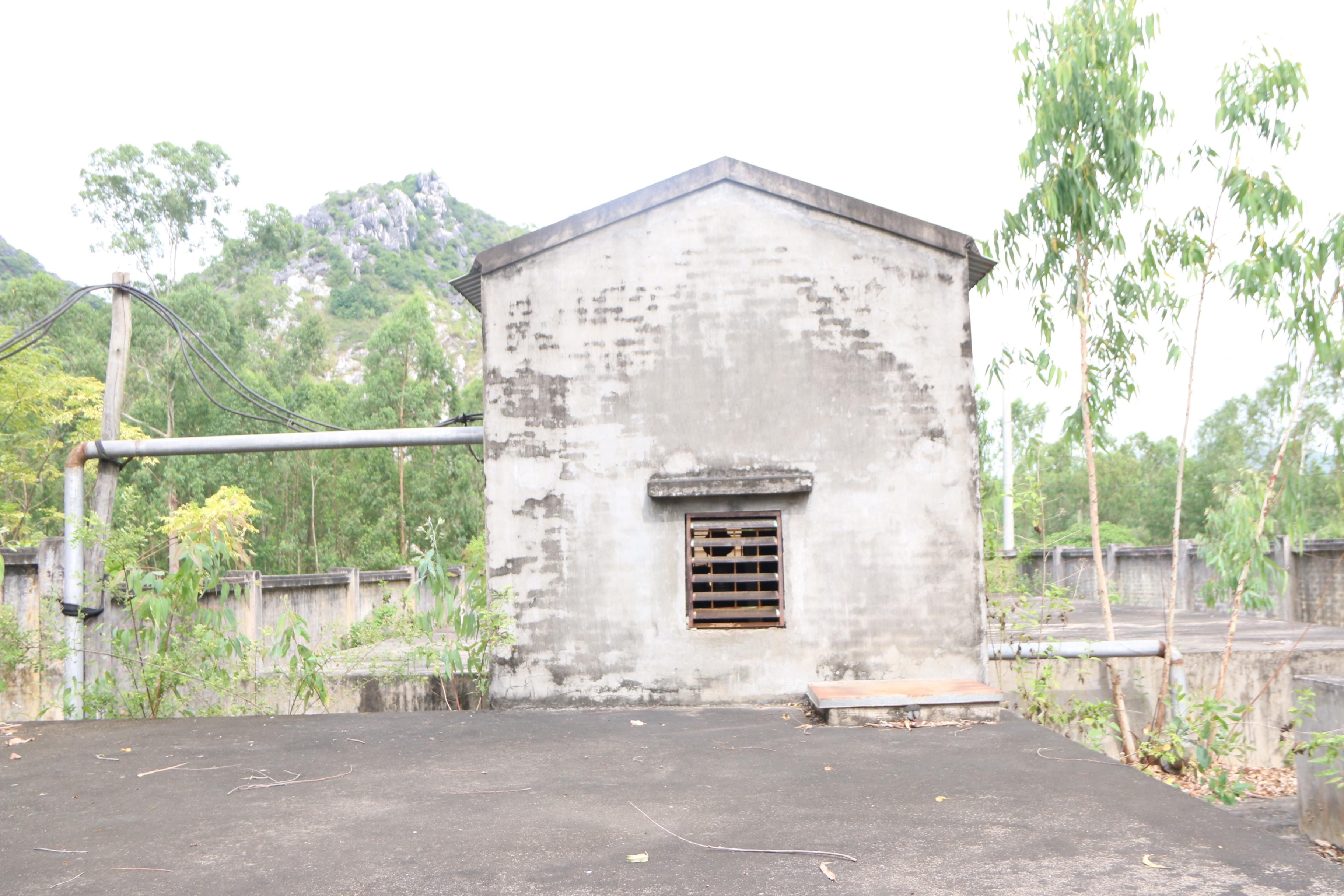 |
In 2017, after resolving pipeline issues in hamlets 6 and 7 to allow for trial runs, the plant's power station caught fire, ultimately preventing the plant from operating. The photo shows the building housing the pumping system. Photo: Tien Dong |
Struggling to find a solution
Although completed in July 2010, the Quỳnh Lộc commune's water supply plant has been inactive ever since. Notably, in early 2015, the Quỳnh Lộc commune People's Committee, under the direction of the Hoàng Mai town People's Committee (which had by then separated from Quỳnh Lưu district), held a meeting and invited relevant units to discuss solutions to address the issue with this facility.
According to the plan, phase 1 of repairing the water supply system serving villages 6 and 7 would continue if it operated stably and received high consensus from the people. However, when a meeting was held to gather opinions, the percentage of people agreeing to the repairs was less than 20%, so the plan was postponed. Many local residents argued that the plant's location at a lower elevation, pushing water upwards, would lead to high energy consumption and weak, poor-quality water. They also argued that repairs would be costly and there was no guarantee of effective operation.
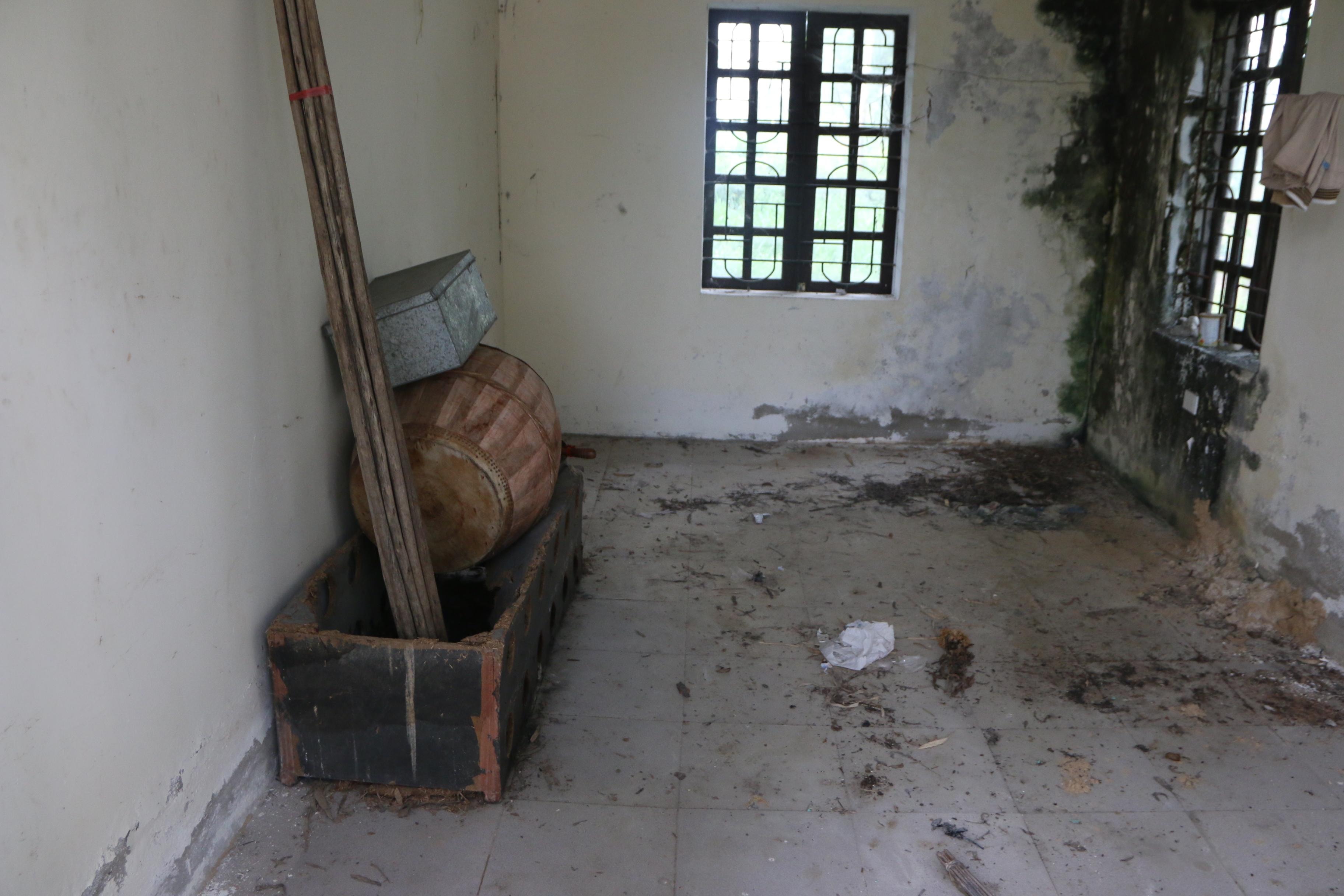 |
The interior of the administrative building was dilapidated. Photo: Tien Dong |
Finally, a temporary solution was proposed: holding a tender for the operation of the water treatment plant. However, the People's Committee of Quynh Loc commune announced the tender twice, but no one accepted the bid. In April 2017, the People's Committee of Quynh Loc commune once again held a meeting to discuss solutions and agreed on the first step: repairing and restoring the operation of the water treatment plant to serve villages 6 and 7, and then finding a solution. During the repair work, the local government mobilized 500,000 VND from each household in these two villages.
However, after fixing the pipeline problems in hamlets 6 and 7 to allow for trial runs, the plant's power station caught fire. At this point, local residents again argued that repairing the project was pointless, especially since the Hoang Mai town's clean water plant had already been completed, and connecting from there might be cheaper. Since then, the project has remained dormant.
Based on our observations, the control building, suction machines, filter tanks, storage tanks, and pumps at the center have deteriorated; the pipelines leading to the villages have been damaged due to prolonged disuse.
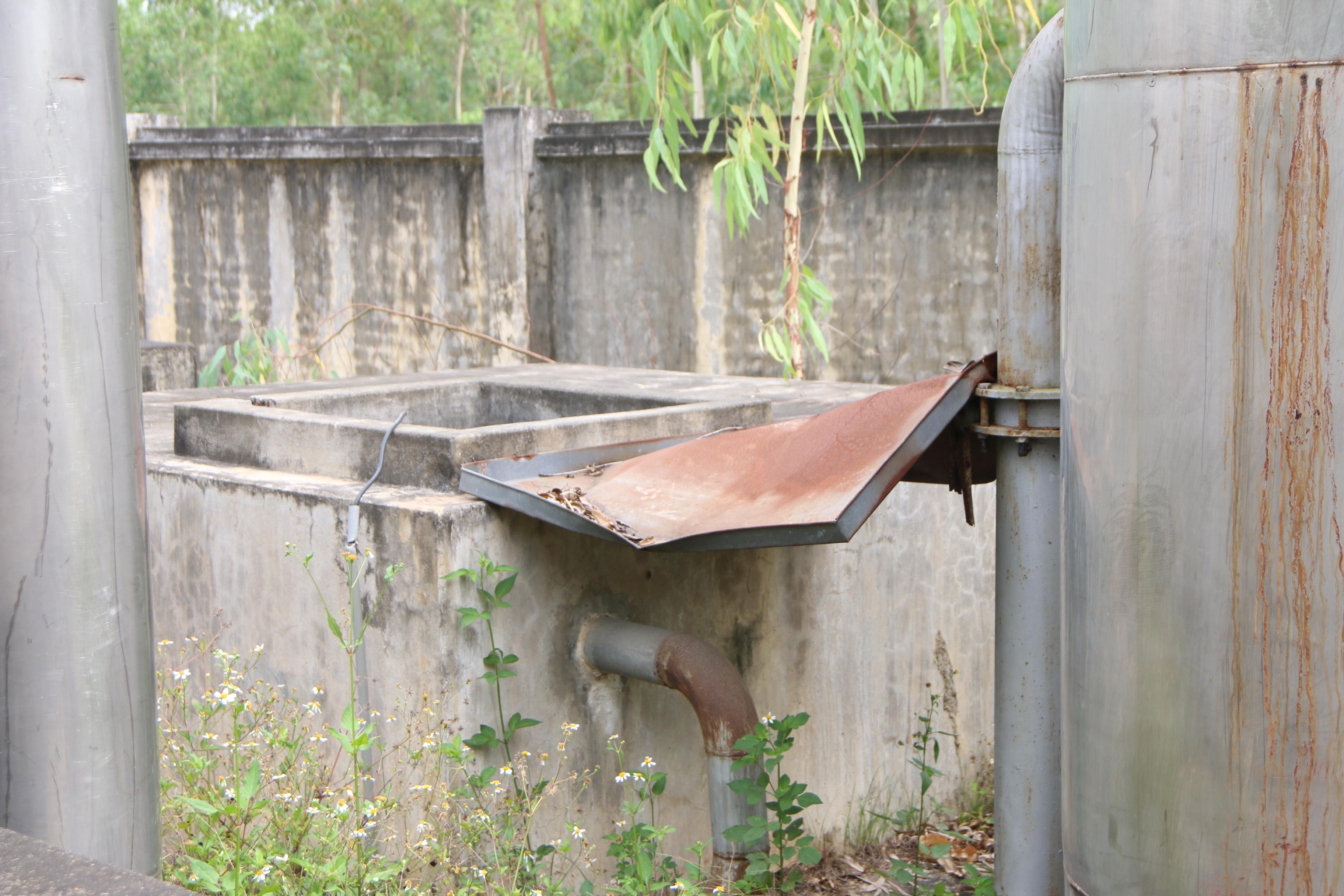 |
Currently, many of the factory's equipment is damaged. The photo shows a sheet metal water tank lid that has come loose. Photo: Tien Dong |
In the inspection report dated October 21, 2019,People's Committee of Hoang Mai TownThe request also requires the People's Committee of Quynh Loc commune to develop plans for handling this water treatment plant in accordance with regulations. Mr. Nguyen Huu Tuy, Chairman of the People's Committee of Quynh Loc commune, said that the handling of this facility cannot be carried out yet. Mr. Tuy stated that this project was undertaken during the tenures of previous chairmen, and since he has only recently taken over the position, he is not yet fully aware of the details and needs to review relevant documents and records before he can understand the situation.
It is evident that the investment in the construction of the Quỳnh Lộc commune water treatment plant has been ineffective, and the lack of corrective measures has resulted in significant waste and public dissatisfaction. To prevent further damage to this facility, the local authorities and relevant parties need to seriously address and resolve the issue definitively.