

National Assembly delegates from Nghe An province discuss the draft Law on Land (amended).
(Baonghean.vn) - On the morning of November 14th, continuing the working program of the 4th Session of the 15th National Assembly, the National Assembly held its meeting in the Dien Hong Hall, National Assembly Building.
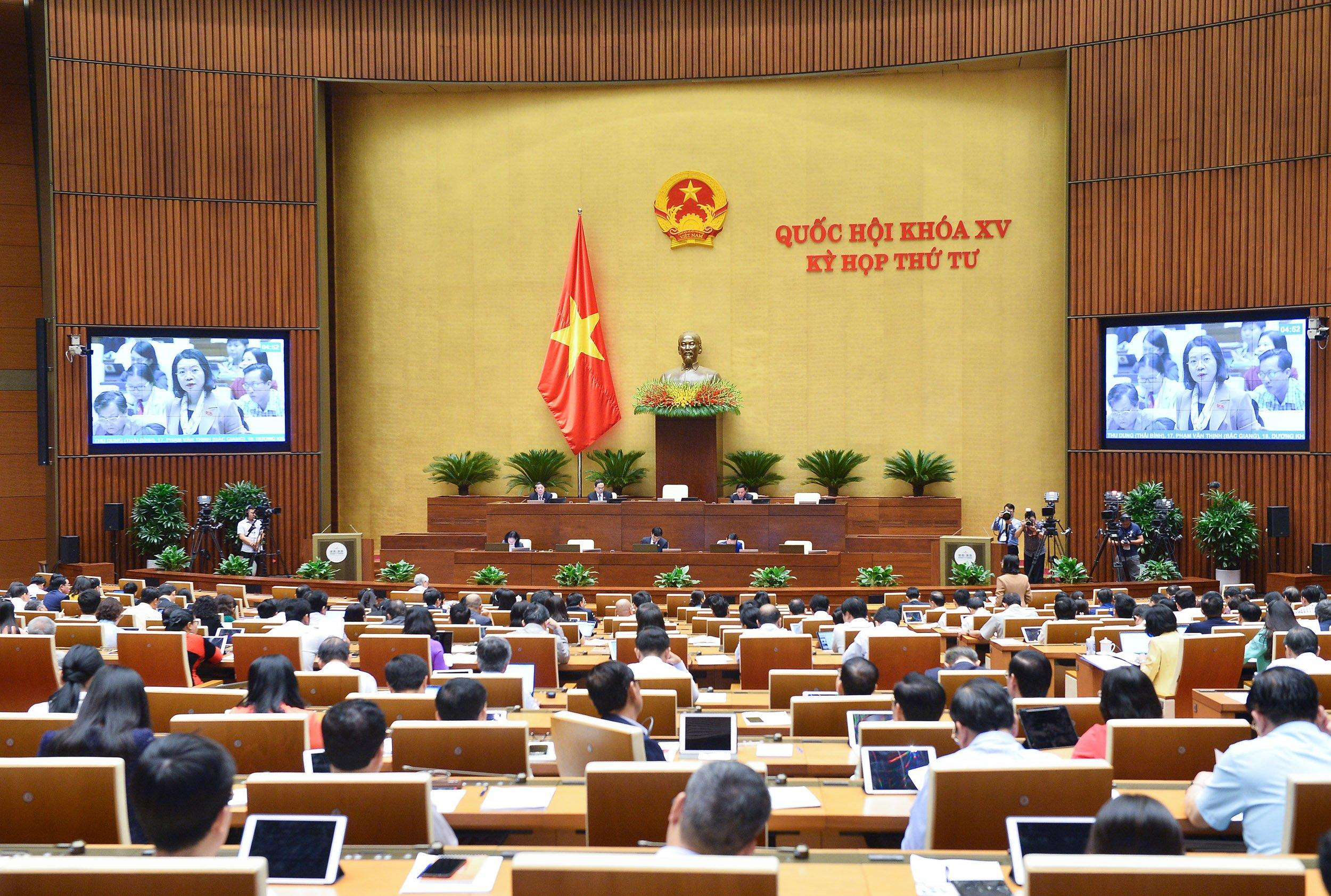 |
Overview of the morning session on November 14th at Dien Hong Hall, National Assembly Building. Photo: Quochoi.vn |
There should be no limits on the transfer of agricultural land use rights.
During the discussion on the draft Law on Land (amended), Mr. Tran Nhat Minh - a full-time National Assembly representative from Nghe An province - assessed that a limitation of the 2013 Law on Land is its failure to clearly define what constitutes a "socio-economic development project for the national and public interest".
The draft Land Law (amended) has addressed the aforementioned shortcomings of the 2013 Land Law, but according to him, it still does not fully meet the orientation of Resolution No. 18-NQ/TW dated June 16, 2022, of the Central Committee, which clearly states: "More specific regulations on the authority, purpose, scope of land acquisition, conditions, and specific criteria for the State's land acquisition for socio-economic development in the national and public interest."
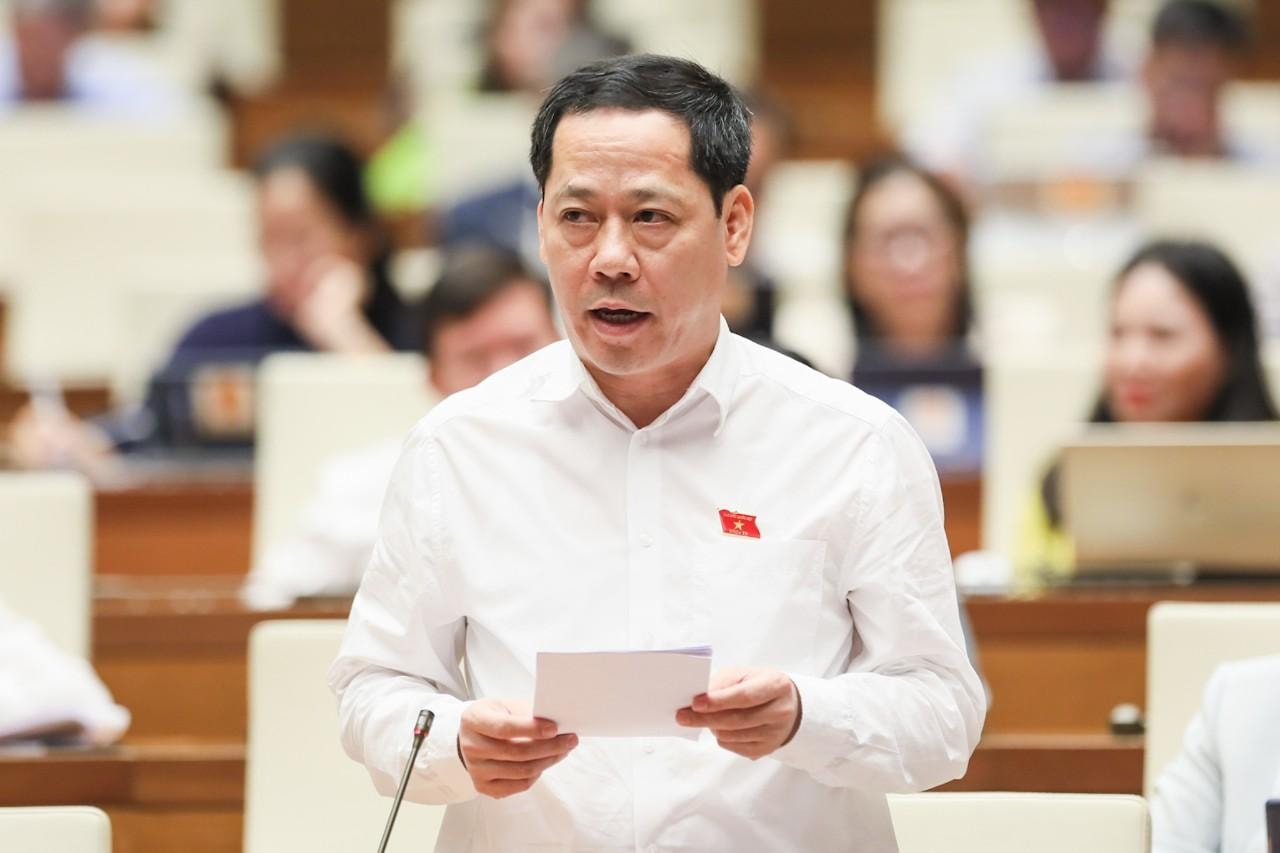 |
Mr. Tran Nhat Minh, a full-time National Assembly representative from Nghe An province, speaks during the discussion. Photo: Quang Khanh |
The provisions in Article 86 of the draft Law, compared to Article 62 of the Land Law, broaden the scope of land acquisition, but they are still unclear and lack distinction regarding the purpose of land acquisition by the State, making them susceptible to subjective and arbitrary application. In particular, the draft Law does not highlight the criterion of "in cases of genuine necessity" as stipulated in the 2013 Constitution.
“This is a major shortcoming, causing difficulties, obstacles, and limitations in land acquisition, compensation, resettlement, and support in the past. Therefore, in my opinion, it is necessary to clarify the conditions and criteria for socio-economic development projects for the national and public interest, separating them from economic development projects purely for the benefit of the investor. This will prevent subjective, mechanical, and widespread imposition when the State acquires land, leading to disagreement from those whose land is acquired; and at the same time, to apply appropriate mechanisms for land acquisition, compensation, support, and resettlement,” said delegate Tran Nhat Minh.
Regarding projects subject to land acquisition for socio-economic development in the national and public interest, Article 86 of the draft Law stipulates that these projects include urban projects, rural residential projects, and commercial housing projects. According to the delegates, it is necessary to clarify the criteria for land acquisition for urban and residential projects; because without clear criteria to ensure adequate compensation, complaints will arise, affecting social security and order, and more importantly, the rights of those whose land is acquired will not be guaranteed.
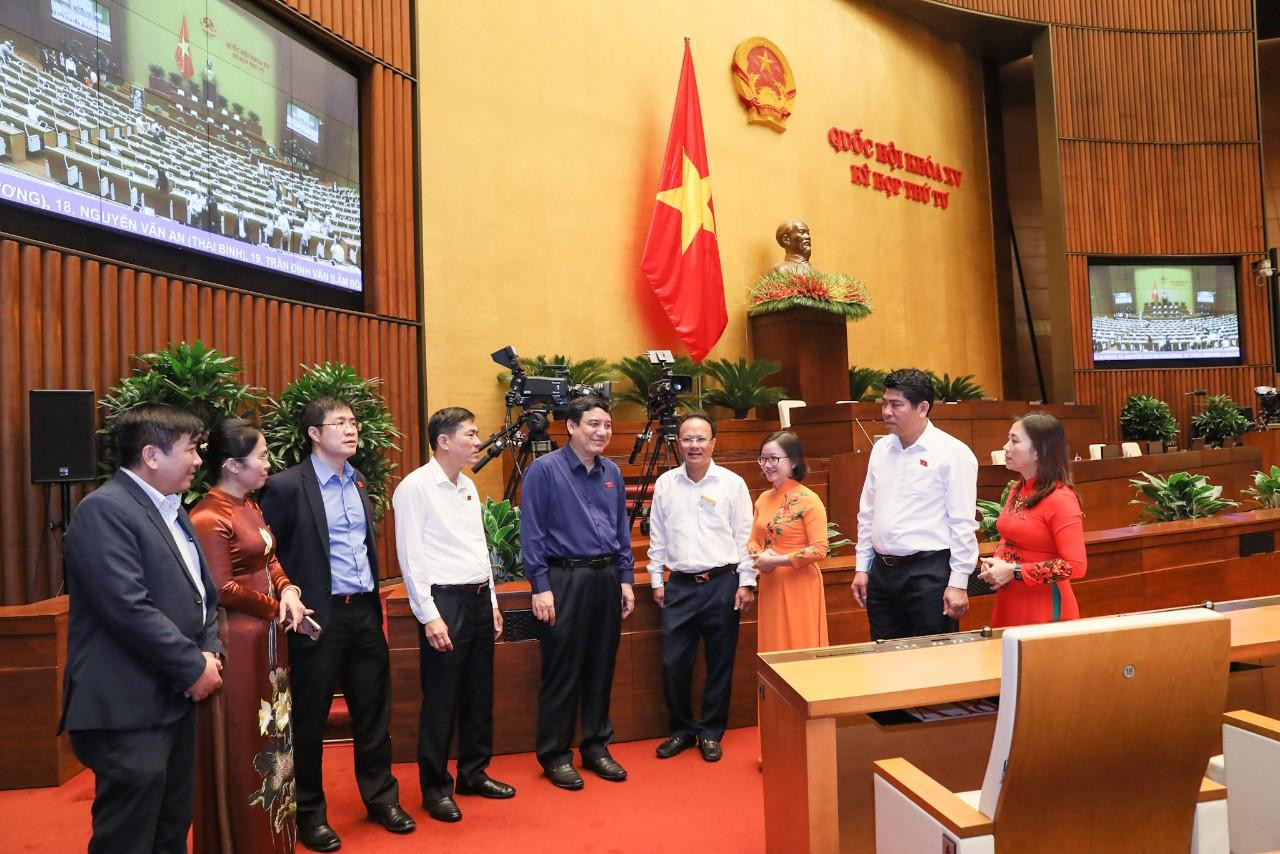 |
Members of the National Assembly delegations from Nghe An and Tuyen Quang provinces exchanged views with leaders of the Provincial People's Councils who were observing the working session on the morning of November 14th at the Dien Hong Hall, National Assembly Building. Photo: Quang Khanh |
Regarding the limits on agricultural land use, the draft Law stipulates that the limit on receiving the transfer of agricultural land use rights by households and individuals shall be: "not exceeding 15 times the limit on agricultural land allocation to households and individuals for each type of land specified in Clauses 1, 2, and 3 of Article 180 of this Law." Compared to the 2013 Land Law, the limit on receiving and transferring agricultural land use rights in this case has been increased by 5 times. Representative Tran Nhat Minh requested that the drafting agency clearly state the scientific and practical basis for amending and increasing the limit, because, according to him, this regulation is not suitable in the context of developing large-scale, concentrated commodity agricultural production, especially with the mechanization of production to increase labor productivity in agriculture, where the regulation on the limit on receiving and transferring agricultural land use rights is becoming an obstacle.
To address the above issue, the delegate from Nghe An province proposed amending the regulations on agricultural land use limits, suggesting that only the limit on agricultural land allocation should be stipulated, and that limits on receiving transfers of agricultural land use rights should not be included; this should be linked to a strict management mechanism to ensure the proper use of this type of land.
RESEARCH AND SUPPLEMENT REGULATIONS ON THE MECHANISM FOR SHARING BENEFITS BETWEEN INVESTORS AND THE PUBLIC
During discussions on the draft Law on Land (amended), Mr. Hoang Minh Hieu, Standing Member of the National Assembly's Law Committee, suggested that the drafting agency should continue to research ways to simplify administrative procedures related to land. In particular, close coordination is needed between the drafting committees of related laws, such as the Law on Investment, the Law on Bidding, and the Law on Housing, to minimize obstacles, ensure a strong connection between administrative procedures related to land and other administrative procedures, and importantly, the Government should be tasked with ensuring consistent application nationwide.
The delegate from Nghe An province also suggested that in this revision, the drafting agency should research and add regulations on the mechanism for sharing benefits between investors and local people in projects that have a significant impact on people's living environment, in order to create conditions for the long-term restoration and development of livelihoods.
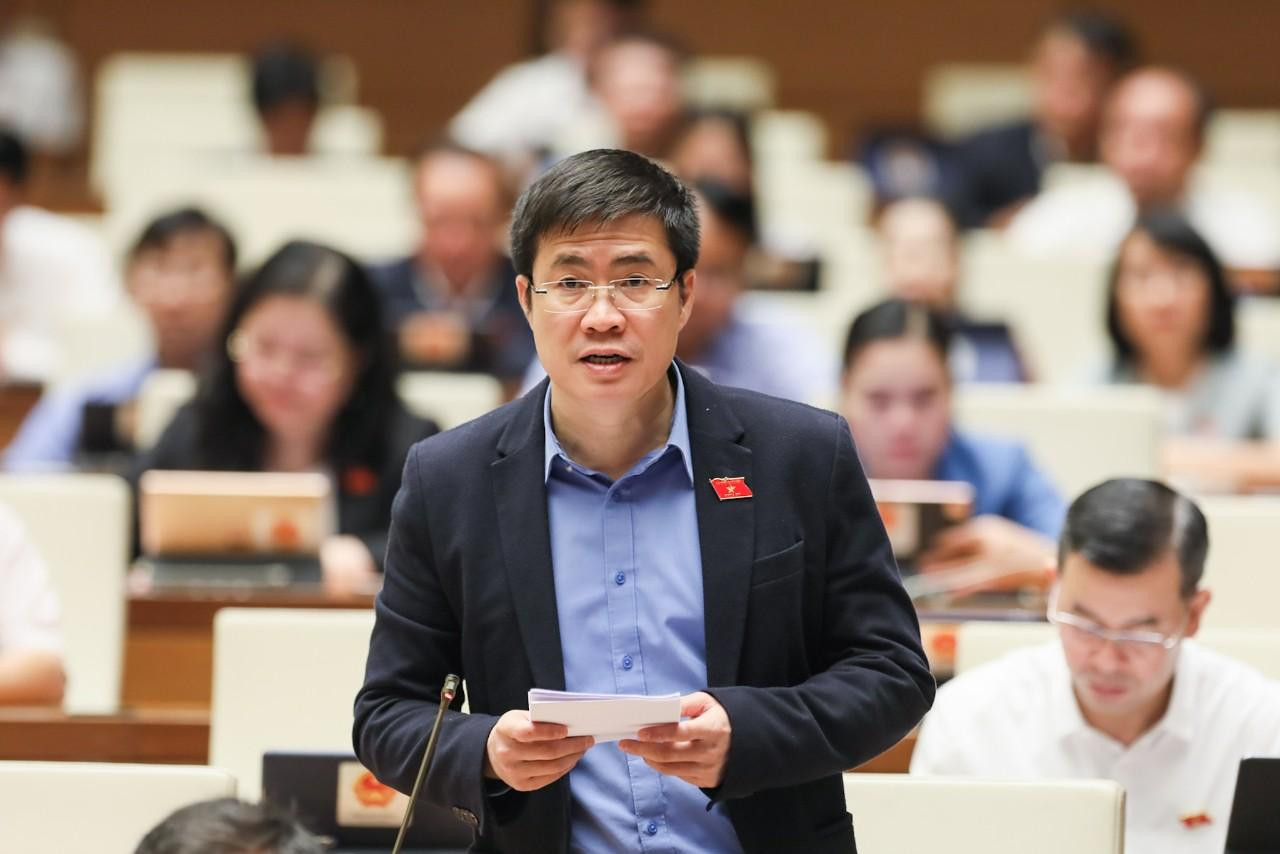 |
Mr. Hoang Minh Hieu - Standing Member of the National Assembly's Law Committee, National Assembly Delegate from Nghe An Province, speaks during the discussion. Photo: Quang Khanh |
“Benefit sharing is not just about directly supporting and compensating for damages, but also includes many other tools. For example, long-term sharing of profits from projects; applying preferential electricity prices; paying for environmental and ecological services; establishing community development funds… Or through measures aimed at improving the income and living environment of affected people, such as implementing health and education projects, supporting investments, and job transitions,” said delegate Hoang Minh Hieu.
Agreeing with the assessment that the draft Law on Land (amended) is a very important law with a significant impact on the socio-economic development of the country in the coming time, the delegate from Nghe An province suggested that, to ensure the quality of the draft law, the drafting agency and the agency in charge of verification should coordinate with relevant agencies. Based on the discussions of National Assembly deputies, they should identify the major policy issues of the draft law to focus on thematic research, for example, on land use planning, land allocation, land reclamation, land finance, etc. Based on that, there should be thematic discussions to clarify each content and each provision of the draft law, so that there is a basis for reporting to the Standing Committee of the National Assembly for their opinion on each content, and submitting it to the National Assembly at subsequent sessions.
Also during this morning's session, the National Assembly voted to pass the amended Inspection Law and the amended Petroleum Law.