
Addressing the problem of the 'spiderweb' of telecommunication cables and power lines hanging precariously in the air.
(Baonghean.vn) - To improve urban infrastructure and ensure the safety of its citizens, Nghe An province has been gradually undergrounding its telecommunications cables and power grid. However, many difficulties remain in the implementation process.
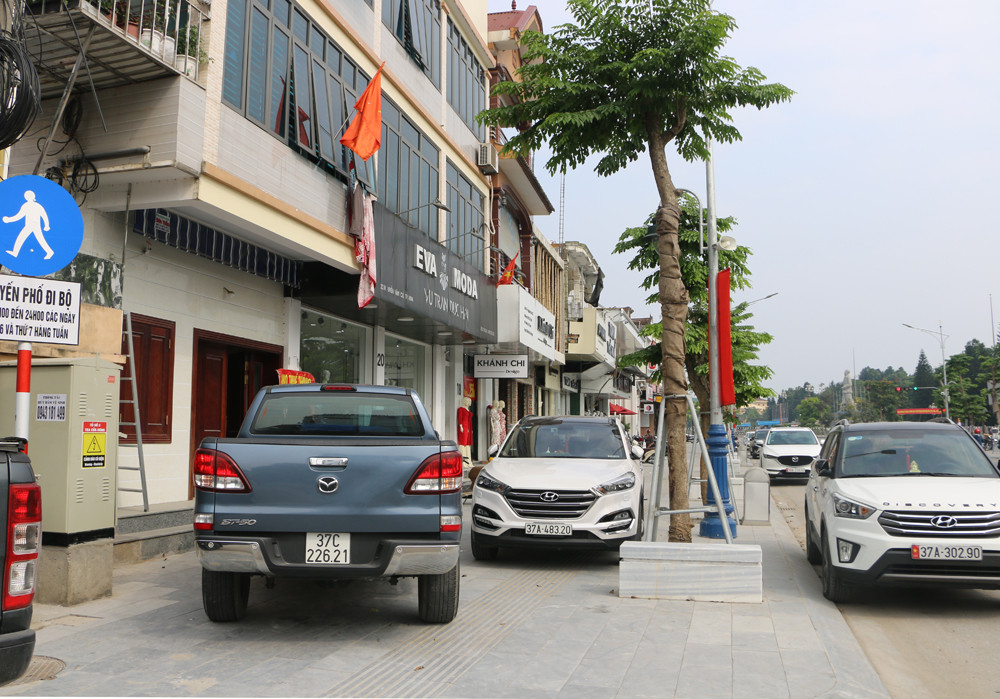 |
Integrating urban beautification with the construction of a pedestrian street and the undergrounding of telecommunications and power cables on Nguyen Van Cu Street in Vinh City has "freed" the existing overhead power lines. Photo: Nguyen Hai |
Currently, several major streets in Vinh City, such as Le Nin Boulevard, Le Hong Phong Street, Truong Thi Street, Cao Thang night street, and the pedestrian areas on Ho Tung Mau and Nguyen Van Cu streets, have received tens of billions of VND in investment to bury telecommunications cables and power lines underground beneath the sidewalks.
Similarly, when investing in and upgrading key roads, towns like Hoang Mai and Cua Lo require relevant units to have plans for undergrounding cables and not simply using overhead cables on utility poles as before.
This work makes a very positive contribution to urban beautification, ensuring the safety of people during the rainy and stormy season; at the same time, it saves maintenance costs for electricity and telecommunications service providers, and reduces the occurrence of short circuits and power outages due to objective reasons.
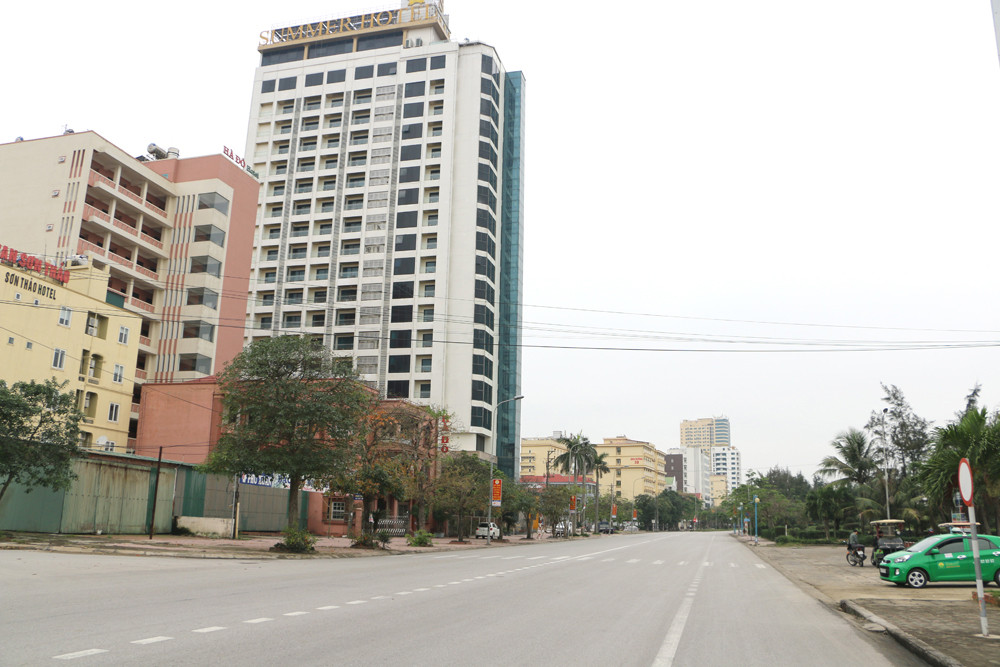 |
Binh Minh Street in Cua Lo town was well-planned, so the telecommunications and power cables were laid underground right from the sidewalk construction phase. Photo: Nguyen Hai |
In fact, the plan to underground telecommunications and power cables was approved by the Provincial People's Committee in 2015, but due to limited resources and a lack of real interest from telecommunications and power companies in investing, the implementation progress has been quite slow and the results have been modest.
To address the shortcomings, safety hazards, and aesthetic issues caused by the tangled mess of power and telecommunication cables hanging haphazardly over roads and residential areas, on September 15, 2022, the People's Committee of Nghe An province issued Decision 2790/QD-UBND approving the plan for undergrounding and beautifying the telecommunication cable network from 2022, 2023 to 2025 for several key projects in the province.
Decision No. 2790/QD-UBND of the Provincial People's Committee requires Vinh City, and district-level towns and townships, when investing in national and provincial highways, to integrate and coordinate the undergrounding of telecommunications and power cable systems instead of investing in poles and overhead cables as before; at the same time, it assigns responsibility for 2022 and 2023 for telecommunications and power service businesses to coordinate with provincial and local departments and agencies to support and facilitate land clearance for the investment in upgrading and undergrounding a total of 581.03 km of parallel cables across 342 routes and locations in 18 districts, cities, and towns.
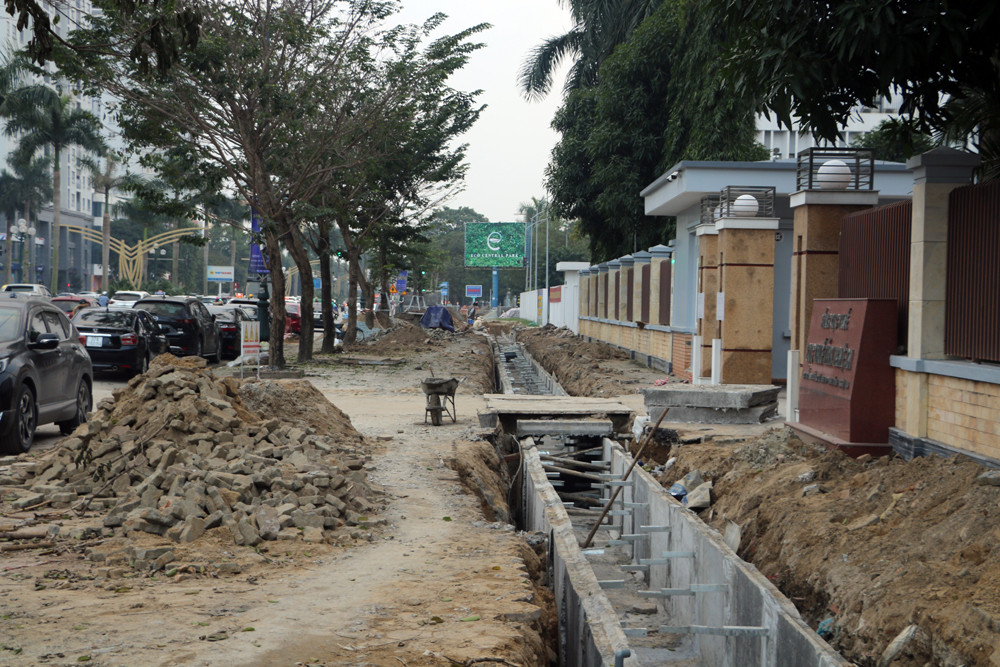 |
Construction of underground cable conduits for shared use by various network providers along the sidewalk of Le Nin Avenue, Hung Phuc Ward, Vinh City, in early January 2023. Photo: Nguyen Hai |
In the same decision, the Provincial People's Committee requested that units organize the undergrounding of cable lines by sharing existing underground conduit and manhole infrastructure or constructing and installing additional underground conduits and cables; for some routes where complete undergrounding up to the cable boxes and cabinets is not possible and cables must continue to be suspended, a portion of the capacity must be reduced to alleviate the load on the cable poles, contributing to the improvement of cable line infrastructure.
In compliance with the above regulations, since June 2022, several telecommunications companies have coordinated with residential areas to remove the tangled network of signal wires leading to individual customer households, replacing them with a common wiring system that follows the building's design; other companies, along with investing in the conversion to new generation cables, have buried their cable systems underground… Most recently, VNPT Nghe An has constructed an underground cable conduit system running parallel to the drainage system along the sidewalk of Le Nin Boulevard.
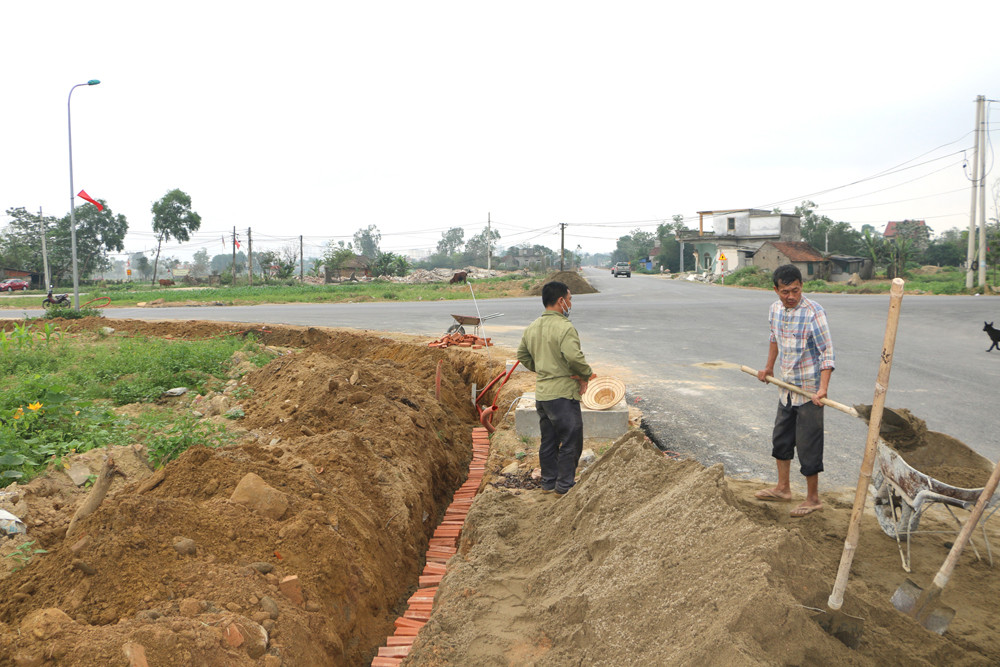 |
Construction of traffic lights and street lighting on the Vinh-Cua Lo Boulevard section passing through Nghi Duc commune. Photo: Nguyen Hai. |
However, with tens of thousands of kilometers of telecommunication cables currently running alongside and "following" the existing power pole system, and with the infrastructure not yet properly planned, the goal of burying the overhead cable system faces many challenges.
Recently, when Vinh City planned urban beautification and upgrading of night streets and pedestrian zones, it was very difficult to persuade telecommunications or electricity companies to invest and cooperate in the construction. Although the planning direction for each street was clear, the situation arose where, as soon as one unit finished the drainage ditches, sidewalks, and lighting, other units would come to request permission to dig up the road and sidewalks to install cable equipment...
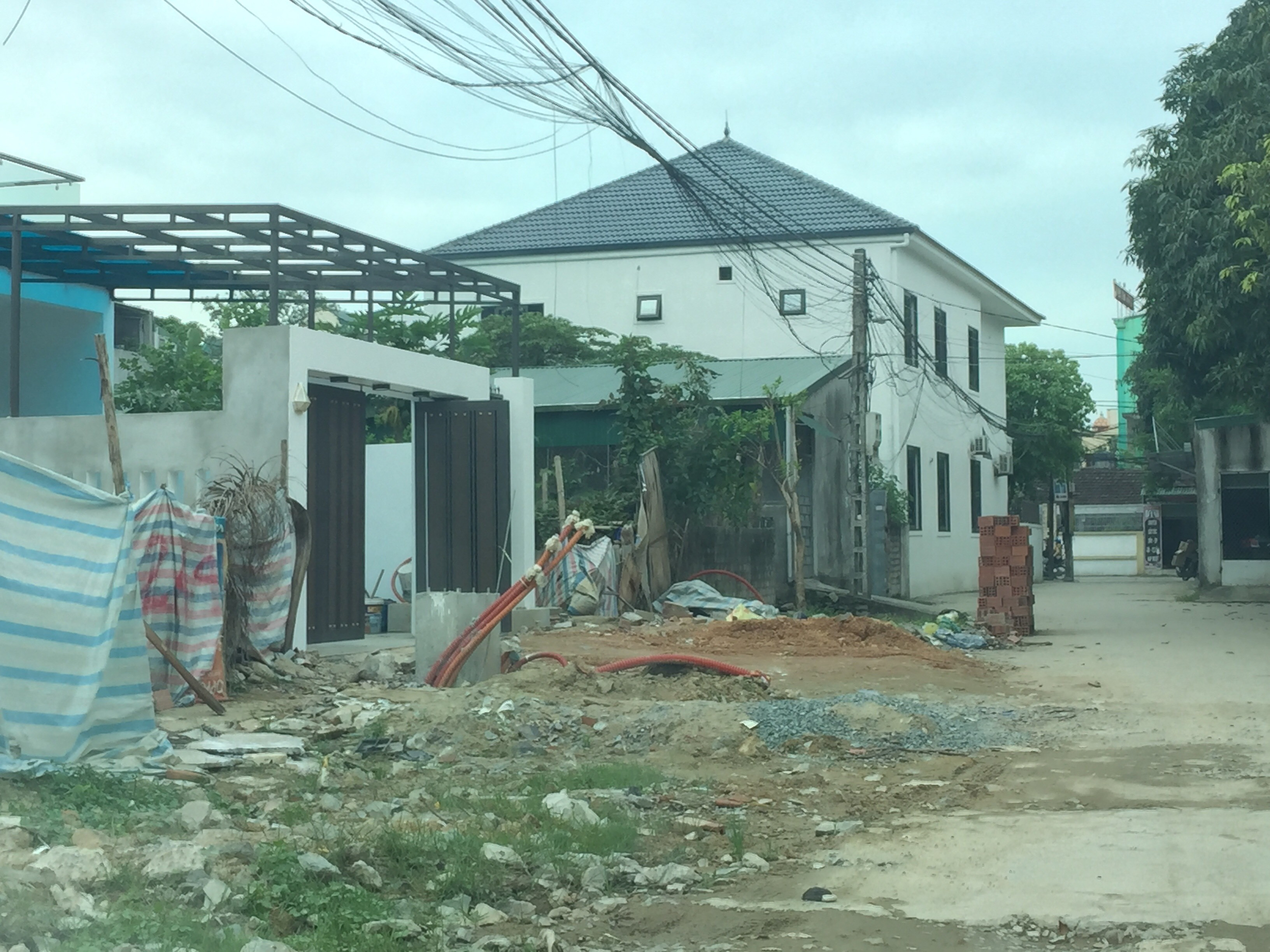 |
Electrical and telecommunication cables are being installed haphazardly in a residential area behind the Vietnam-Korea Industrial Technical College, Nghi Phu commune, Vinh City. Photo: Nguyen Hai |
According to the roadmap, telecommunications companies such as Viettel, VNPT, Mobiphone, and FPT will sooner or later have to invest in infrastructure to provide services, but due to a lack of coordination, each company acts independently, causing waste and expense of spatial resources.
In reality, it's not difficult to notice that in residential areas and along roads, the infrastructure of cable lines is constantly changing, but telecommunications companies don't remove them; instead, they leave them on utility poles or discard them on the rooftops of high-rise buildings, making already heavy lines even heavier; and the buildings become unsanitary and unsafe during rain and storms.
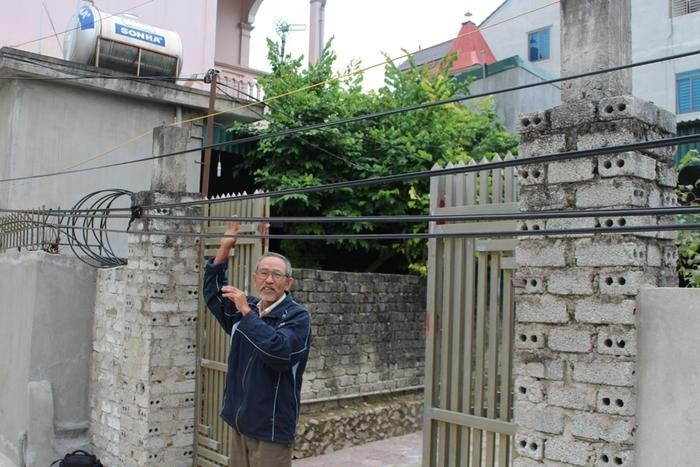 |
A telecommunications cable has sagged down, blocking the pathway at a household in Hamlet 6, Quynh Hong Commune, Quynh Luu District. (Photo courtesy of reporter Thanh Nhan) |
According to a telecommunications company, one of the biggest challenges in underground cable installation is the investment capital. Because it's a new generation of cable systems, the initial investment cost is quite high. Building underground cable conduits and junction boxes along sidewalks requires a substantial investment due to land acquisition. Ideally, the government should invest in this infrastructure and then lease it to businesses.
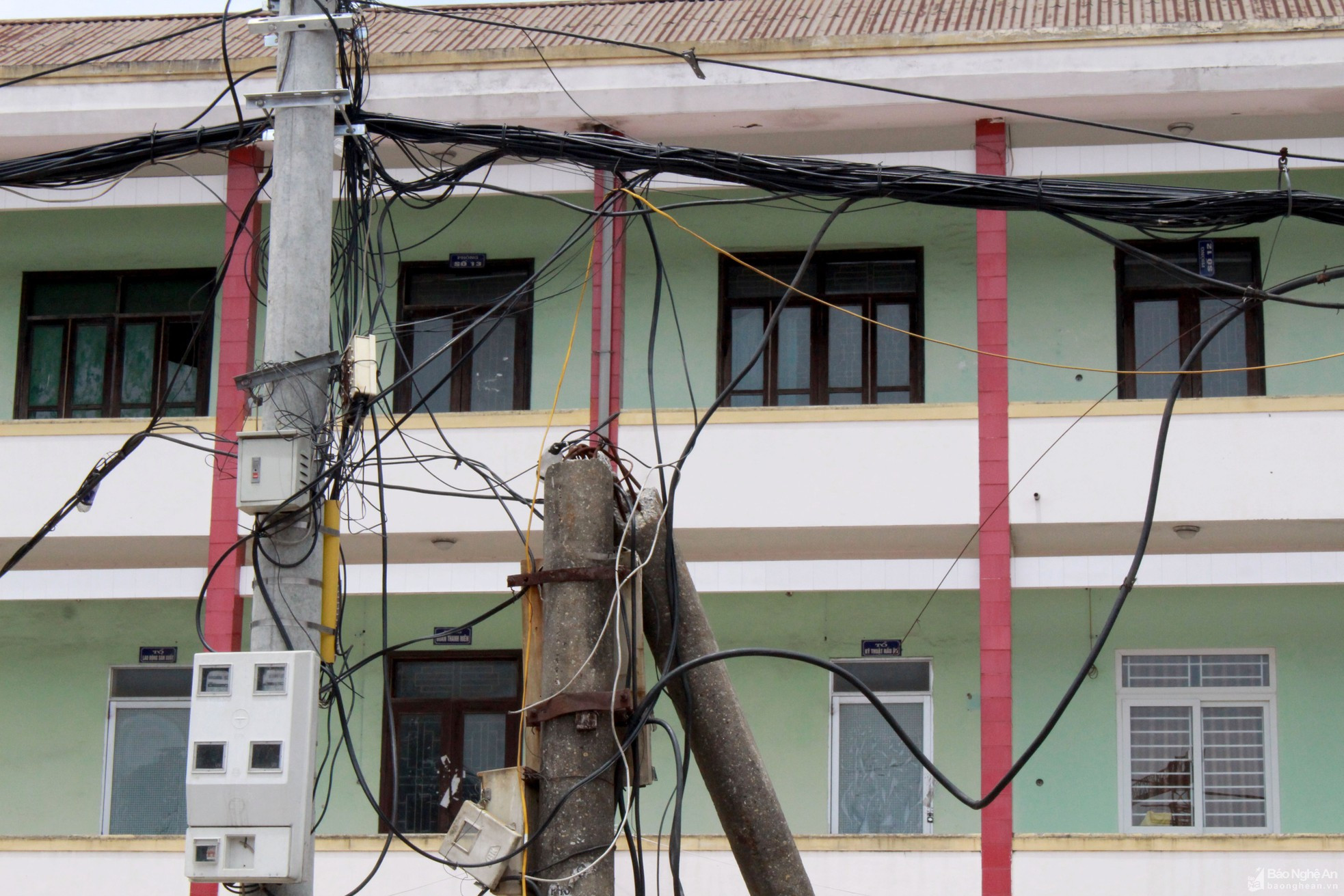 |
An electric pole in Trung Do ward collapsed due to the weight of the cables, posing a danger to residents. (Photo: Nghe An Newspaper archives) |
Mr. Nguyen Viet Duc, Head of the Urban Management Department of Vinh City, said: Undergrounding the cable system brings many benefits and is a trend in civilized and smart cities. Along with advising and proposing the continued undergrounding of cables on the streets, the city is strengthening supervision and management to prevent the re-encroachment and hanging of cables on the already undergrounded routes.
Nguyen Hai