

7 early signs of leukemia you should know.
Blood cancer is a malignant cancer that is very difficult to cure; early recognition of the signs of the disease will help make treatment more effective.
Leukemia is a condition where the number of white blood cells increases too rapidly and excessively in a short period of time. This leads to the destruction of red blood cells, causing a deficiency in the patient. If not treated early, death is only a matter of time.
Another group of blood cancers is called lymphoma. This type of cancer affects the lymphatic system. When the body produces too many lymphocytes, it becomes overloaded and uncontrolled, damaging the immune system. In addition to lymph nodes, lymphoma can also develop in the bone marrow, spleen, and other organs.
Blood cancer is a malignant cancer that does not form tumors like many other cancers.
Early signs of leukemia
Leukemia is a dangerous disease, and often patients only discover it when the disease is in an advanced stage with clear symptoms. Leukemia is usually accompanied by a significant decrease or complete elimination of the number of blood cells (red blood cells).
Without early treatment, the mortality rate for patients with this disease is very high.
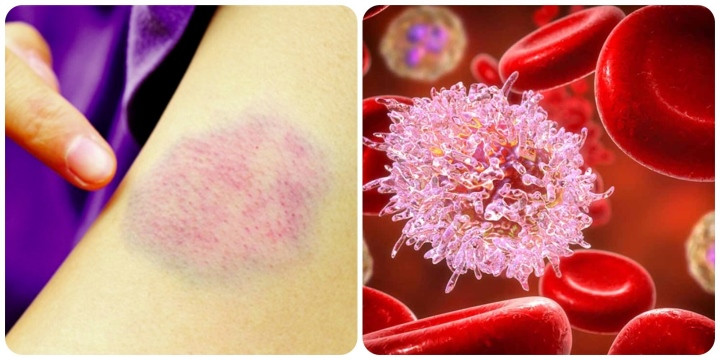 |
Blood cancer is a malignant cancer that is very difficult to cure. |
Some of the most common signs and symptoms of leukemia include:
Red spots:If you notice red or purple spots on your skin, you should see a doctor for diagnosis; prevention is better than cure. This could also be a result of a decrease in the number of platelets in the body.
Headache:Not all headaches are a sign of a headache.blood cancerWhile it can also be caused by many other medical conditions, leukemia often presents with severe pain, accompanied by sweating and pale skin. This is due to a decrease in blood flow to the brain, resulting in insufficient oxygen supply and causing headaches.
Bone pain:One of the main symptoms of leukemia is bone pain. The pain can vary depending on the stage of the disease and often occurs in the joints of the legs, knees, arms, back, etc. The source of this pain is the bone marrow – where blood cells are produced.
Swollen lymph nodes:Lymphocytes gradually lose their ability to provide immunity to external pathogens, and lymphadenitis is a form of leukemia caused by bacteria. Therefore, swollen lymph nodes often appear under the skin of leukemia patients and are painless.
Pale and tired:When suffering from leukemia, the number of red blood cells in the blood is significantly reduced. This phenomenon is more easily understood as "anemia." Red blood cells are blood cells whose main function is respiration; they transport oxygen to all organs and tissues. Anemia causes the body to become tired and pale because the body cannot meet its oxygen exchange needs.
Nosebleeds:Nosebleeds are quite common, and many people tend to underestimate this condition. Usually, nosebleeds are mild and easily stopped. However, if you experience heavy bleeding that occurs continuously for several days, you should immediately go to the hospital and see a doctor. This is because you may have leukemia, as this could be a consequence of a decrease in the number of platelets – cells that help stop bleeding.
Frequent high fever:Patients with leukemia often experience a severe decline in their immune system. This is because white blood cells gradually lose their ability to destroy bacteria and viruses from the outside, making it easy for external factors to invade the body and cause disease. This weakened immune system often manifests as high fevers and infected wounds that are slow to heal.
Blood cancer spares no one; both children and adults are susceptible. According to statistics from the American Cancer Society, blood cancer accounts for approximately 10% of all cancer cases in the United States each year. This means that, on average, more than 175,000 people are diagnosed with blood cancer annually. Of those, about 18% have multiple myeloma, 48% have lymphoma, and the remaining 34% have leukemia.
After years of research and development of cancer treatments, many cases have now shown improvement, bringing positive results and hope to those suffering from leukemia.
According to the American Leukemia and Lymphoma Association, approximately 66% of those diagnosed with leukemia can survive for about 5 years, or even longer. This rate increases to 89% for Hodgkin lymphoma and 75% for non-Hodgkin lymphoma.
Experts advise people to maintain a healthy lifestyle and have regular health checkups so that various types of cancer can be detected and treated early.