

Understanding and belief
(Baonghean.vn) - Healthcare is a highly specialized field. Any impact, whether unintentional or intentional, or an action taken without sufficient consideration, can have a significant effect on a person, even their entire life.
As a tradition, on the occasion of Vietnam Doctors' Day on February 27th each year, I usually set aside some private time to reflect on my past and present professional journey. This year, based on my practical experience in medical examination and treatment, I have a few concerns.
On social media platforms, when someone posts information about an illness and searches for a reputable clinic, we easily come across posts like "Trust me," "My family member recovered completely after taking this medicine," "Try this medicine, it's safe,"... Then there are rumors about a skilled "healer" in the mountains or a talented traditional healer in the coastal areas... Some even guarantee that this "healer" or "healer" can completely cure illnesses, with clinics packed with patients, and offer refunds or even free treatment if treatment fails!
From a positive perspective, these shared experiences demonstrate concern and hope that patients will find the right doctor and treatment. However, a broader perspective raises many concerns: the responsibility of the patients themselves towards their own bodies; and the responsibility of those who share the addresses of these "healers" without verifying their effectiveness with their relatives, friends, and the community.
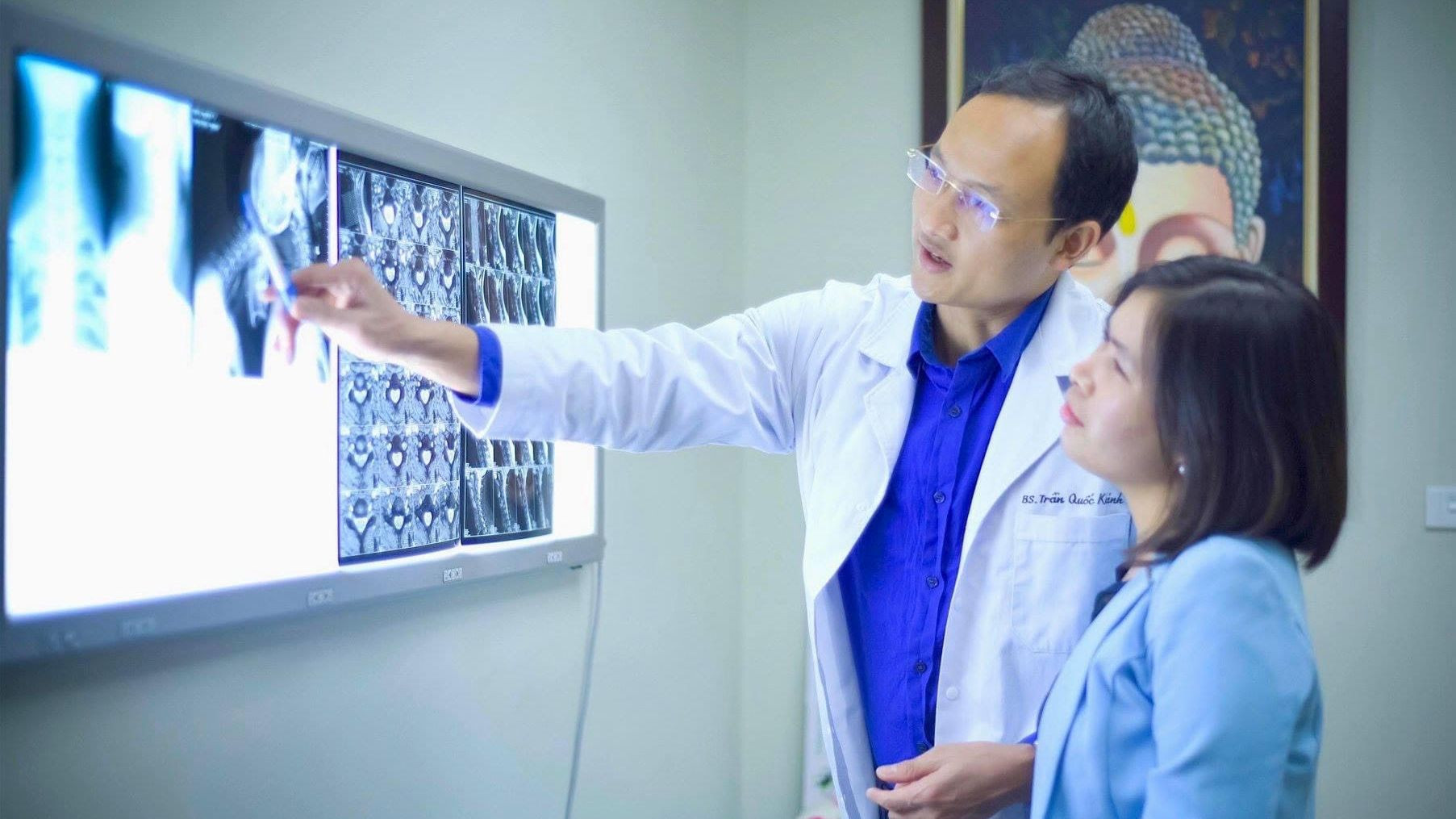 |
| Doctor Tran Quoc Khanh is examining and advising a patient. Photo: Provided by the interviewee. |
How can we dare seek out traditional healers—those who may not have a license to practice medicine—based solely on hearsay? How can we dare try their remedies? How can we know what ingredients are in herbal medicines and whether they are safe when the person dispensing the medicine may never have received any formal medical training? I once watched a video provided by a patient's family member who came to my clinic for a consultation about back pain. The video showed a woman (the patient's family member said she was a famous traditional healer from the Northwest region) pointing at an MRI scan of the patient's spine to explain his injuries. I was shocked by the "technical" jargon she used, and by her complete lack of knowledge, not even basic anatomical landmarks on the scan!
In matters of health, even well-intentioned words need to be spoken with caution, as they can affect a person's life and well-being. Those who naively share addresses of traditional healers don't realize that everyone's illness is different. Even with the same illness, the severity, stage, and individual constitution vary, so the approach, treatment, and prognosis will differ. How can we, based on just a few pieces of information provided by acquaintances, "declare" that someone has the exact same illness as we once had, and then direct them to seek treatment elsewhere?
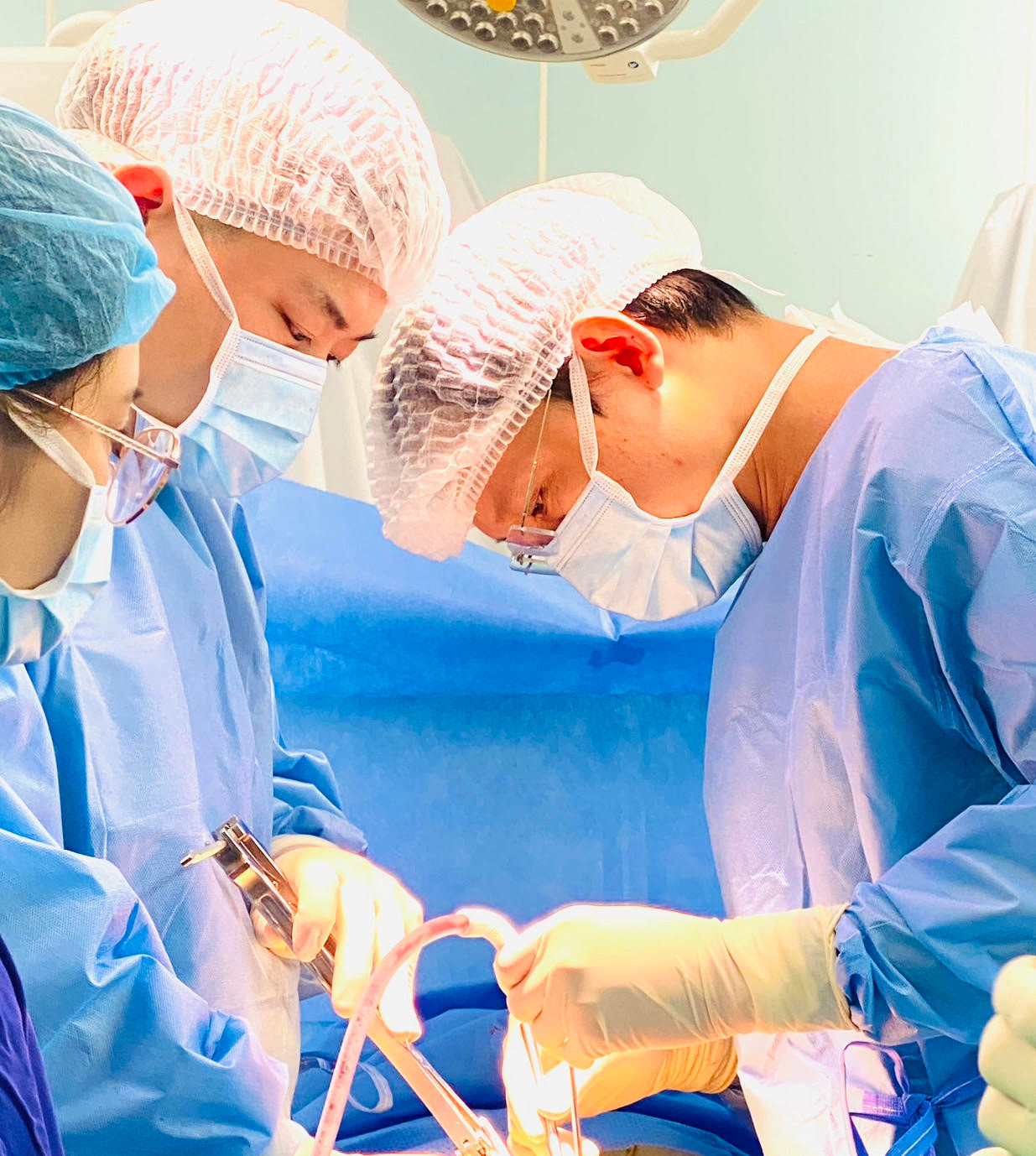 |
Doctor Tran Quoc Khanh (far right) and his colleagues perform surgery on a patient. Photo: Provided by the interviewee. |
I am also deeply concerned that, in reality, there are very few suggestions on social media for patients to seek treatment at legitimate medical facilities, both traditional and Western. Many people (who know nothing about medicine) even offer advice like, "You'll have to live with this disease for life," "Don't have surgery for this disease, it will cause paralysis," "Just pick these leaves and fruits... boil them and drink the decoction for a few days and you'll be cured"... Personally, I consider this advice to be both uncultured and irresponsible. Even well-trained and skilled doctors wouldn't dare give such detailed advice, prescribe medication remotely, or make such definitive diagnoses, let alone people with no medical knowledge. The person who utters these words may never pay attention to them again, sleeping soundly under the covers, but they haunt the patient immensely, causing them nightly suffering and pain. We should only offer advice or information to someone when they seek it from us, and we ourselves must have a firm understanding of that information before sharing it. This is especially true when it comes to information related to the health and lives of others.
There may be many reasons for this situation (deeply ingrained habits of seeking treatment from traditional healers; a preference for treatment based on experience or hearsay; fear of crowded hospitals and long wait times; fear of high costs; fear of doctors discovering serious illnesses, etc.), but whatever the reason, the continued existence of such useless and harmful advice in the 21st century, instead of recommending medical examinations at legitimate healthcare facilities, is a problem that we all must acknowledge and reflect upon. As the country progresses and the culture and knowledge of its people improve, the words and actions of each individual increasingly require understanding, careful consideration, and appropriateness.
February 27th this year also reminds me of another story – a story about the boundless possibilities of medical knowledge. Two years ago, a young man from Ho Tay (Hanoi) brought his mother to the doctor because of lower back pain radiating to both legs. She had great difficulty walking and could only stand for a few minutes before needing to sit down. After a careful examination and X-rays, I advised surgery and shared that, given her condition, she should have been scheduled for surgery years ago. Hearing this, she shared: She had previously consulted another doctor who said something that has haunted her ever since: “Your condition can only be treated with medication and physical therapy; surgery is not an option. You should live with it for the rest of your life and don’t seek medical help again.”
That doctor's words had "nailed" his life for years; even in excruciating pain, he refused to seek further medical treatment elsewhere. This time, because his son persuaded him, showing him many videos of my surgeries, he temporarily set aside his old beliefs and came for another examination. After that visit, I successfully performed the surgery, and his life took a new turn; the pain disappeared, and his quality of life improved significantly.
I'm sharing this story not to belittle my colleagues or elevate my own value, but to share the message: "Human knowledge is boundless, but even the most brilliant individual understanding is limited." Therefore, in any counseling or treatment situation, when our abilities are insufficient to help patients solve their problems, the best solution is to support, connect, and guide them to more specialized medical facilities and to more outstanding colleagues. That way, we've already helped the patients a great deal, and we're also creating more merit for ourselves.
Personally, I always maintain a network of highly skilled colleagues in various specialties such as neurology, rehabilitation, traditional medicine, cardiology, pediatrics, etc. Whenever a difficult case arises, one that exceeds my diagnostic or treatment capabilities, I proactively contact and refer the patient to more specialized and excellent colleagues, hoping that the patient will find the right place to seek help. Only in this way can the patient be cured, and I, as a doctor, can always feel at ease and cheerful.