
The new policies came into effect in March 2023.
(Baonghean.vn) - Issuing ordinary passports with electronic chips to citizens; tightening management in receiving donations; increasing in-kind compensation for dangerous and hazardous work… are some of the policies that will take effect from March 2023.
Issuing ordinary passports with electronic chips to Vietnamese citizens.
Starting March 1, 2023, the Ministry of Public Security will begin issuing electronic chip passports to citizens in accordance with the Law on Exit and Entry of Vietnamese Citizens. Accordingly, electronic chip passports are a prerequisite and a basis for automating border control, facilitating travel and entry/exit between countries. Holders of electronic chip passports will receive priority from foreign authorities when applying for entry visas.
|
Image of the new electronic chip passport. |
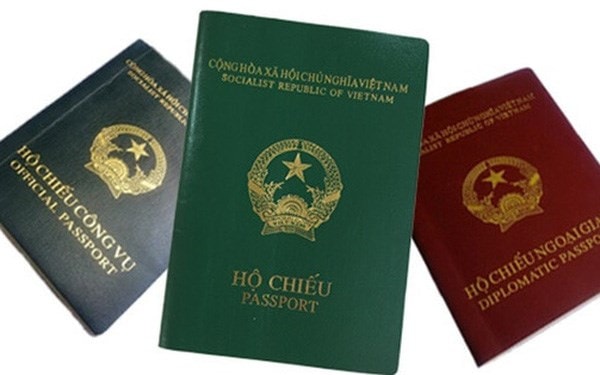
In terms of appearance, electronic chip passports are basically the same as non-electronic chip passports, with a dark blue cover and pages featuring beautiful landscapes and cultural heritage of Vietnam. All content and images printed in the passport are produced using modern technology to meet security requirements, prevent forgery, and comply with ICAO standards. To distinguish them from non-electronic chip passports, the first cover page of an electronic chip passport displays an electronic chip symbol. The electronic chip is located on the back cover of the passport to store the passport holder's personal information and biometric data (including facial image, fingerprints, etc.) and the digital signature of the issuing authority.
Both non-chip and chip-equipped ordinary passports are used interchangeably. When applying for a passport, Vietnamese citizens aged 14 and above have the right to choose between a non-chip or chip-equipped passport (the application form already includes a passport type option for citizens to fill in). Vietnamese citizens who have been issued a non-chip ordinary passport can continue to use it until its expiration date; there is no obligation to switch to a chip-equipped passport.
Tighten management in receiving donations and sponsorships.
According to Circular 04/2023/TT-BTC, from March 19, 2023, the unit assigned by the festival organizing committee to receive, manage, and use funds for festival organization is responsible for opening a deposit account at the State Treasury or a commercial bank to reflect the receipt, management, and use of donations and sponsorships for historical sites and festival activities via bank transfer or electronic payment methods.
Regarding cash receipts, appoint a designated person to receive the money and maintain a complete record of all received funds. For money in the donation box, conduct a daily or weekly count and record the total amount received. Any money placed in inappropriate locations or inconsistent with civilized conduct at the historical site should be collected for counting or placed in the donation box for general counting. Any unused cash should be deposited into an account at the State Treasury or a commercial bank to ensure the safe and transparent management of donations and sponsorships for the historical site and festival activities.
Regarding the acceptance of valuable securities, religious institutions must maintain a register recording the names of the securities, the amounts recorded on them, and the issuing organization. For the acceptance of precious metals and gemstones, religious institutions must also maintain a register recording the names of the precious metals and gemstones and their corresponding values, based on documentation provided by the donating organizations or individuals.
Guidelines for "legitimate reasons" for absence from military service examination.
Officially effective from March 14, 2023, Circular 07/2023/TT-BQP clearly stipulates the cases considered to have "legitimate reasons" to avoid penalties for absence from military service health examinations, failure to appear at the correct time or location specified in the conscription order, etc.
Specifically, this includes individuals who are required to undergo medical examinations for military service; medical examinations for reserve officer selection, etc., but become ill, injured, or suffer an accident en route and require medical treatment. It also includes relatives of those performing military service, such as: biological parents; father-in-law, mother-in-law, or husband's parents; adoptive parents; legal guardians; spouse; biological children, legally adopted children who are seriously ill or injured and receiving medical treatment. Furthermore, it includes relatives of those performing military service who have died but whose funerals have not yet been held or have not yet concluded.
The residence of a military conscript or the residence of a military conscript's family member is located in an area severely affected by natural disasters, epidemics, or fires. The military conscript does not receive the conscription order, or receives an order but the order does not specify the time and location due to the fault of the responsible person or agency, or due to obstruction by others.
Increase in-kind compensation for hazardous and dangerous work.
According to Circular 24/2022/TT-BLDTBXH, from March 1, 2023, the in-kind allowance for workers working in hazardous or toxic conditions will be calculated on a daily basis and valued in monetary terms as follows: Level 1: 13,000 VND, Level 2: 20,000 VND, Level 3: 26,000 VND, Level 4: 32,000 VND (increases of 3,000 VND, 5,000 VND, 6,000 VND, and 7,000 VND respectively compared to the current allowance).
If an employee works 50% or more of the normal working hours of the workday, they are entitled to the full allowance. If they work less than 50% of the normal working hours of the workday, they are entitled to half of the allowance. In the case of overtime work, the allowance in kind is increased proportionally to the number of overtime hours, according to the above principle.
Circular 24/2022/TT-BLDTBXH also clarifies that compensation cannot be paid in cash or included in wages as a substitute for in-kind compensation. Compensation in kind must be provided during working hours, ensuring convenience, safety, and food hygiene. In cases where employees work in mobile, dispersed, small-scale jobs, or other jobs with unstable labor organization where centralized on-site compensation is not feasible, the employer must provide in-kind compensation to the employees so that they are responsible for their own compensation as prescribed.
Appointment and dismissal of members of the Management Board in public non-profit organizations in the finance sector.
Circular No. 11/2023/TT-BTC of the Ministry of Finance guiding the Management Board and the standards and conditions for appointing and dismissing members of the Management Board in public non-business units in the finance sector came into effect on March 31, 2023.
According to the Circular, the structure of the Management Board includes: Representatives of the superior management agency of the public non-business unit, including representatives of ministries, ministerial-level agencies, government agencies, organizations established by the Government or the Prime Minister that are not public non-business units, provincial People's Committees and the direct superior management agency (if any); the head of the public non-business unit; staff of the public non-business unit; and representatives of related organizations and units.
The Management Board consists of 5 to 11 members, including the Chairman, Secretary, and other members. Depending on the task requirements, the Management Board may include a Vice Chairman. The number and structure of members of the Management Board for each specific public service unit are decided by the head of the competent authority that approves the unit's autonomy plan.
The Chairman of the Management Board is selected and appointed by the head of the competent authority that approves the autonomy plan of the public service unit from among the leadership representatives of the public service unit or representatives of the superior management agency of the public service unit.
The term of office for a member of the Management Board shall not exceed 05 years.
The functions, duties, and powers of the Management Board are implemented in accordance with the provisions of Clause 3, Article 7 of Decree No. 120/2020/ND-CP.
From March 15th, 7 positions will periodically rotate in the field of science and technology at the local level.
Circular 20/2022/TT-BKHCN of the Ministry of Science and Technology stipulates the list and periodic rotation of job positions in agencies, organizations, and units in the field of science and technology at the local government level, effective from March 15, 2023.
The circular clearly states that the list of job positions subject to periodic rotation in the field of science and technology at the local level includes:
1. Managing scientific and technological research tasks:
+ Receiving and processing dossiers for the identification, ordering, selection, direct assignment, evaluation, and acceptance of scientific and technological tasks;
+ Receiving and processing applications for the appraisal of funding for science and technology tasks;
+ Inspect and evaluate the implementation process and post-acceptance of scientific and technological tasks using state budget funds;
+ Evaluating and issuing certificates of registration for the results of scientific and technological tasks.
2. Appraisal and assessment of technology for investment projects and technology transfer:
+ Appraise and assess the technology of investment projects in accordance with legal regulations;
+ Assessing and issuing certificates of registration for technology transfer, and certificates for renewal, amendment, and supplementation of technology transfer content.
3. Radiation and nuclear safety activities:
+ Managing and implementing the process of receiving declarations, conducting safety assessments, issuing licenses, amending, supplementing, renewing, and reissuing licenses for conducting radiation work using diagnostic X-ray equipment in medicine;
+ Issuing radiation worker certificates to safety officers at diagnostic X-ray facilities in healthcare.
4. Intellectual Property Activities
Evaluating, issuing, reissuing, and revoking certificates for industrial property appraisal organizations in accordance with the law.
5. Standard activities for measuring quality:
+ Reviewing applications for certificates, confirmations, and licenses in the field of standards, measurement, and quality control according to regulations;
+ Evaluating and issuing certificates of registration for the field of activity eligible for product and goods quality awards for organizations and individuals; Evaluating application dossiers for the National Quality Award submitted by organizations and businesses at the preliminary selection stage.
6. Appraise, issue, renew, amend, supplement, revoke, and cancel Certificates of Registration for Scientific and Technological Activities; Certificates of Scientific and Technological Enterprises. Appraise dossiers for the establishment of scientific and technological organizations; issue certificates for the operation of representative offices and branches of scientific and technological organizations.
7. Cooperation and exchange in science and technology involving foreign elements.
The circular clearly states that the periodic rotation period for civil servants and public employees directly involved in handling the aforementioned work is from 2 to 5 years. The time for calculating the rotation period is the time when a document assigning, arranging, or delegating duties is issued by the competent authority in accordance with the law.
List and periodic rotation of job positions in the field of information and communication.
Circular 01/2023/TT-BTTTT of the Ministry of Information and Communications stipulates the list and periodic rotation of job positions in the field of information and communications at local governments, effective from March 17, 2023.
The Circular stipulates that the periodic rotation period for job positions as prescribed in Article 4 of this Circular is from 3 years (36 months) to 5 years (60 months), excluding the probationary or trial period.
The time limit for job rotation is calculated from the date of the official assignment, placement, or task allocation document issued by the competent authority as prescribed.
In addition, the Circular specifies the list of job positions subject to periodic rotation in the field of Information and Communications Technology at local governments.
10 leadership and management positions in the banking industry.
Circular 21/2022/TT-NHNN, guiding leadership and management positions and specialized professional titles in public non-business units in the banking sector, takes effect from March 1, 2023.
The circular clarifies that leadership and management positions and specialized professional titles in public non-business units in the banking sector are determined based on the principles stipulated in Article 3 of Government Decree No. 62/2020/ND-CP dated June 1, 2020, on job positions and civil servant staffing.
The basis for determining leadership and management positions and specialized professional titles in public non-business units in the banking sector shall be in accordance with the provisions of Clause 1, Article 4 of Decree No. 62/2020/NĐ-CP.
The circular outlines 10 leadership and management positions in public non-profit organizations in the banking sector, including:
- Chairman of the Board of Directors;
- Member of the Board of Directors;
- General Director;
- Deputy General Manager;
- Department heads and equivalent positions;
- Deputy Head of Department and equivalent positions;
- Branch Manager;
- Deputy branch manager;
- Department heads and equivalent positions directly under the Branch;
- Deputy Head of Department and equivalent positions directly under the Branch.
In addition, the Circular also clarifies the content of job descriptions, including: job objectives; tasks and evaluation criteria; work relationships; scope of authority; required qualifications and competencies, etc.
|
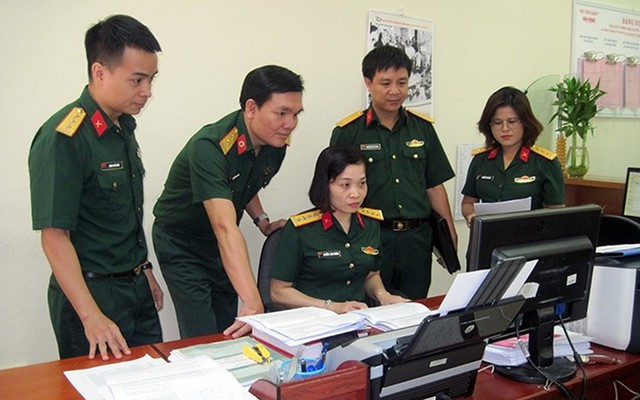
According to the new regulations in Circular No. 10/2023/TT-BQP, the standards for enforcement officers have been streamlined, eliminating requirements for foreign languages and computer skills.
Standards for military enforcement officers
Circular No. 10/2023/TT-BQP amending and supplementing a number of articles of Circular No. 19/2018/TT-BQP of the Minister of National Defense regulating the titles of officers in the Military Enforcement Branch takes effect from March 16, 2023.
According to the old regulations in Circular No. 19/2018/TT-BQP, junior enforcement officers had to possess a foreign language certificate equivalent to level 2 of the Vietnamese Foreign Language Proficiency Framework as stipulated in Circular No. 01/2014/TT-BGDĐT of the Ministry of Education and Training promulgating the 6-level foreign language proficiency framework for Vietnam; a computer skills certificate demonstrating proficiency in basic information technology skills as stipulated in Circular No. 03/2014/TT-BTTTT of the Ministry of Information and Communications regulating the standard for basic information technology skills; and a certificate of training and professional development for junior enforcement officers.
Intermediate-level enforcement officers must possess a foreign language certificate equivalent to level 3 of the Vietnamese Foreign Language Proficiency Framework as stipulated in Circular No. 01/2014/TT-BGDĐT of the Ministry of Education and Training promulgating the 6-level foreign language proficiency framework for Vietnam; a computer skills certificate demonstrating proficiency in basic information technology skills as stipulated in Circular No. 03/2014/TT-BTTTT of the Ministry of Information and Communications regulating the standard for information technology skills; and a certificate of training and professional development for intermediate-level enforcement officers.
Senior enforcement officers are the Head or Deputy Head of a military district-level enforcement agency; possess advanced political theory qualifications; have a foreign language certificate equivalent to level 4 of the Vietnamese Foreign Language Proficiency Framework as stipulated in Circular No. 01/2014/TT-BGDĐT of the Ministry of Education and Training promulgating the 6-level foreign language proficiency framework for Vietnam; have an IT certificate demonstrating proficiency in basic information technology skills as stipulated in Circular No. 03/2014/TT-BTTTT of the Ministry of Information and Communications regulating the standard for basic information technology skills; and have a certificate of training and professional development for senior enforcement officers.
There are no longer any standards regarding foreign languages or computer skills.
According to the new regulations in Circular No. 10/2023/TT-BQP, the standards for enforcement officers have been streamlined, eliminating requirements for foreign languages and computer skills.
Specifically, junior enforcement officers must meet the standards stipulated in Clause 5, Article 18 of the Law on Civil Judgment Enforcement and Article 4 of this Circular; and possess a certificate of training in state management knowledge and civil judgment enforcement skills according to the content and program of the Ministry of Justice.
Intermediate-level enforcement officers must meet the standards stipulated in Clause 5, Article 18 of the Law on Civil Judgment Enforcement and Article 4 of this Circular; and possess a certificate of training in state management knowledge and civil judgment enforcement skills according to the content and program of the Ministry of Justice.
Senior enforcement officers must meet the qualifications stipulated in Clause 5, Article 18 of the Law on Civil Judgment Enforcement and Article 4 of this Circular; possess a diploma in advanced political theory or advanced political-administrative theory or a bachelor's degree in political science, or a certificate confirming an equivalent level of political theory as prescribed; and have a certificate of advanced training in state management knowledge and civil judgment enforcement skills according to the content and program of the Ministry of Justice.
PV (Compiled)