

'I heard it online'...
(Baonghean.vn) - A few months after retiring, I was assigned by the Party branch to be its rapporteur.
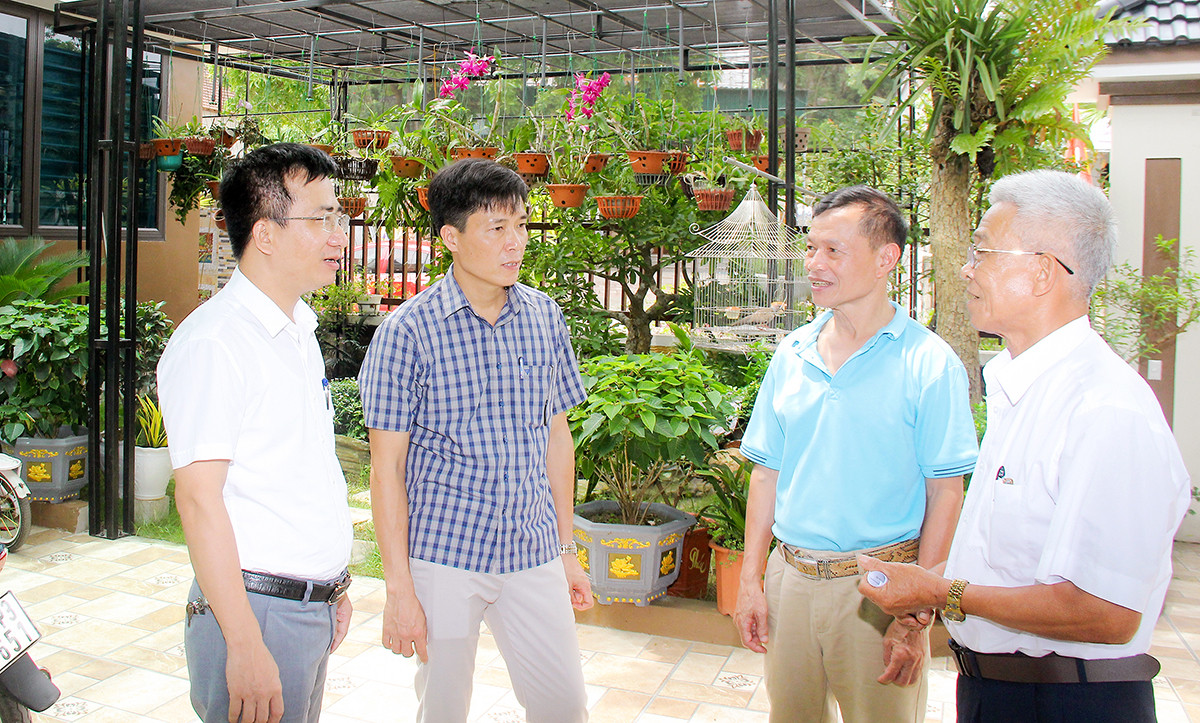 |
Leaders of the Thanh Chuong District Party Committee's Organization Department met with and exchanged information with Party branches in the area. (Photo: Archival image) |
The reason I became a "village-level speaker" is because many people thought I had free time, had many years of experience in propaganda work, had been a speaker for the district, and now with so many media outlets and the internet,... I figured that giving a 20-30 minute presentation to the Party branch each month would be a simple task.
But in reality, it wasn't that simple. In the first few months, I was very worried. Nowadays, people have access to so much information daily from newspapers, radio, television, the internet, etc., and I lacked official sources of information and materials, especially information that would guide public opinion on major policies, events, or sensitive issues.
In the first few months, based on the available resources, I provided some general, comprehensive content necessary for the minimum, basic understanding of grassroots party members, such as: The relationship between major powers in the current period; Regarding the "four dangers that our Party has warned about"; The South China Sea issue; Climate change; The Covid-19 pandemic; Food security; Energy security; Directing production and registering OCOP products; The policy of building new rural areas and civilized urban areas;...
My available resources were limited, and moreover, news reporting had to closely follow the context and time, and be connected to the pulse of life. So I listened to the "Journalism Overview" program, read articles in newspapers, including official online news sites (Party newspapers, the Government Information Portal, Vietnam.net, TuanVietNam.net, Nghe An Electronic Newspaper, etc.). I also leveraged my connections with senior or current reporters to request propaganda materials to supplement my information and documents.
There were many informal gatherings after news programs, with many gentlemen debating. Some offered very frank and honest feedback: "If only you had included more information about 'Our army is no longer involved in economic activities,' if only you had mentioned the construction of Cam Ranh port, if only you had included information about what Major General X said..." Then, they would open their phones, "backing up their claims with evidence," pointing out these "hot topics"...
So I have to prepare another special topic: "About information on social media."
It can be said that nowadays, everyone who goes online is not only a "journalist," but also an "editor-in-chief." Anyone can easily write, disseminate, and spread information online at a very fast speed. Typically, we go to Facebook, YouTube, TikTok, etc., to learn, exchange information, socialize, and connect. However, there are malicious individuals who exploit social media, frequently writing articles and posting videos that distort the truth and deceive readers. These are pages and groups that lack transparency regarding personal information, don't use real names, and have unclear addresses; many pages belong to reactionary groups from abroad; and some are disguised pages of disgruntled, reactionary, and subversive individuals. Much of this information is false, fabricated, and has a negative impact on public opinion. What is concerning is that this kind of "shocking" information, which arouses "curiosity," often spreads through the "crowd effect." Many people view and read it without distinguishing between truth and falsehood, real and fake, yet still casually participate in commenting and expressing their outrage. This inadvertently creates a wave of public opinion, exactly as intended by the person spreading it.
The internet and social media are "information highways," indispensable tools of modern times. They contain both true and false information, some wholesome and positive, others negative and harmful. Without the ability to filter information, it can be difficult to distinguish accurate information from unverified information, and we may even fall victim to scams.