

Signs that indicate a car engine is having problems.
A standard vehicle, when in operation, should only emit three sounds considered safe: the engine's roar, the horn, and the sound from the entertainment system. Any other unusual noises are considered warning signs and should be carefully monitored by the owner, as they could indicate engine malfunctions.
Unusual noises coming from the engine.
Some unusual noises coming from a car engine, including a consistent and rapid squeaking sound when first starting the engine, are caused by a worn or loose timing belt.
A dry, knocking sound is due to the vehicle not being used for a long time, preventing the oil from circulating throughout the engine parts. A gradually increasing, loud rushing sound indicates a lack of lubrication in the engine, causing the engine parts to rub against each other with difficulty and produce noise.
The aforementioned sounds are all abnormal for a vehicle in use; if not checked and rectified promptly by the owner, they can lead to more serious and difficult-to-resolve engine problems in the long run.
Unstable engine noise
If your car is running normally but suddenly you notice uneven engine noise, engine vibration, or instability, it could be a warning sign of an engine problem.
The advice is to listen to those sounds and "diagnose" the problem based on criteria such as the intensity of engine vibration (strong or weak); whether the engine sound is stable and smooth; and whether the engine accelerates smoothly or stalls when suddenly accelerating.
 |
The intermittent engine noise is most likely due to an engine malfunction. (Illustrative image) |
There are many reasons for this phenomenon, but mainly it is due to several causes such as a dirty air filter, dirty fuel filter, too much or too little fuel in the car engine, a leaking pressure regulator or worn fuel pump, faulty spark plugs, etc.
The advice for car owners is to try measures such as replacing spark plugs, replacing ignition coils, checking fuel pressure, cleaning the air flow meter, etc.
The front of the car shakes when moving.
A feeling of unexplained vehicle shaking can also be a warning sign of an underlying problem. When shaking occurs at the front of the vehicle, the driver should pay attention to the following:
If the vibrations are consistent and continuous, even at idle, it could be due to issues with the chassis and engine mounts. The solution is to inspect the engine mounts; if the damping components, such as the rubber mounts, are cracked or broken, it's time to replace them.
If the vibrations occur in rhythmic, irregular bursts, it could be due to one or more cylinders malfunctioning, causing a loss of engine power (weak engine). In this situation, you need to check the ignition system components such as spark plugs, ignition coils, and high-voltage wires.
The car is consuming more fuel than usual.
There are many reasons why an engine might consume more fuel than usual, such as worn tires, road conditions, vehicle load, and habits when using the brake and accelerator pedals. If these factors are ruled out, unusually high fuel consumption could also be a warning sign of engine malfunction, especially in the fuel control system.
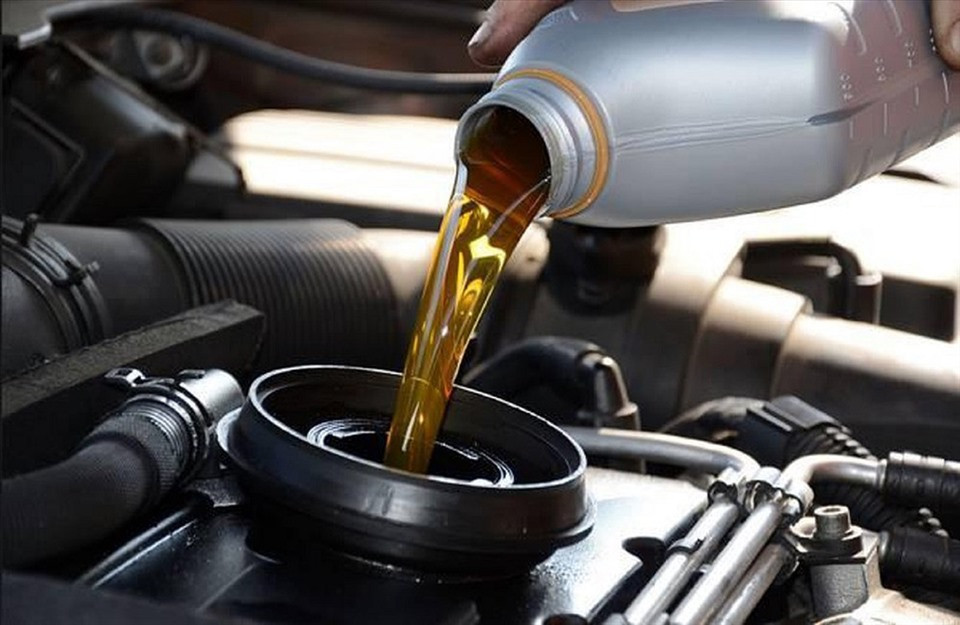 |
Vehicles that consume fuel excessively in unusual amounts are causing many car owners financial pain, and need to be checked and addressed as soon as possible. |
The advice is to have your vehicle serviced regularly, including addressing the engine's fuel system. This includes changing the engine oil, cleaning the engine air filter, and other components.
The engine oil warning light is on.
When the engine oil pressure warning light, with its oil pan icon, illuminates on the dashboard, the driver should stop the vehicle immediately. This means that the engine oil level is very low at that moment, unable to lubricate the parts, or it could be due to a faulty oil pump.
Regardless of the cause of the oil shortage, it is very dangerous because it can cause engine parts (connecting rods, pistons, cylinders, crankshafts, etc.) to rub against each other, leading to scratches, wear, and overheating.
Insufficient engine oil can lead to complete engine damage, resulting in extremely costly repairs. It is advisable to check the engine oil level using a dipstick or other methods.